Two stories from Nature show AI is moving very fast indeed

Is AI going to be a game-changer in science? We mean really, really, the way X-ray crystallography transformed our understanding of matter, or Carbon-14 techniques kickstarted a revolution in dating? Never get too carried away: but two stories from Nature Briefings suggest that it will soon be telling us things which we never guessed before. And so we present them unadorned, so you can judge for yourselves, gentle readers. There are a couple of good hyperlinks, which could be worth a quick delve in to if you have more time than a single cup of coffee.

Alpha Fold reveals how Viruses evolved Protein structures predicted by AI models have revealed some twists in the evolution of flaviviruses — a group that includes hepatitis C, dengue and Zika viruses. Researchers used DeepMind’s AlphaFold2 and Meta’s ESMFold to generate more than 33,000 predicted structures for proteins from 458 flavivirus species. They already uncovered some surprises. For example, the hepatitis C virus infects cells using an entry system similar to one seen in the pestiviruses — a group that includes animal pathogens like swine fever. Another big surprise was the discovery that some flaviviruses have an enzyme that seems to have been stolen from bacteria.Nature | 5 min read
Reference: Nature paper

Zeta class computer six years out Work to develop a supercomputer that could out-pace the world’s current fastest by 1,000 times is officially underway. Expected to cost the Japanese government around US$775 million, the Fugaku Next machine should be online by 2030. The world’s fastest current supercomputer functions in the realm of one quintillion (1017) calculations per second, or exaFLOPS. Fugaku Next is expected to operate in the realm of zetaFLOPS, 1,000 times that speed.Popular Mechanics | 3 min read

We await your responses with anticipation.

#AI #supercomputer #biochemistry #alphafold #virus #protein #nucleic acid

Antibiotic Resistance: Acute danger for the old

As if the threat from cancer, dementia and heart disease wasn’t enough, the world’s older inhabitants face a new danger. It’s our old friend antibiotic resistance-and it’s growing fast. That’s according to Kat Lay of the Guardian,[1] who has produced a fascinating review of the work of the Global Research on Antimicrobial Resistance Project.[2.3} They looked at data from 204 countries from 1990 to 2021, and have projected their findings forwards into the 2050s.

Young people will suffer from the problem it’s true. But their overall death rate from infections has been falling, partly from the success of things like improved hygiene and vaccination problems. It’s among the elderly that the situation gets bleak. Their death rates from antibiotic resistant organisms have skyrocketed by 80% over the last three decades. The authors estiamte by 2050 this demographic will be suffering 1.3 million deaths per year directly from resistant organism infections. And the resistance will be implicated, at least in part in a further 8.2 million annual deaths. Readers of LSS will observe, wearily, that every one of them will be avoidable.

So, what to say after all these years of blogging? After reporting on the work of so many fine researchers, and thanking so many fine journalists like Kat, and all her colleagues who labour tirelessly to keep this problem on the public eye? The fact that people are more aware of all this than when we started back in ’15 is something. And there have been signs of progress, as we have sometimes noted here. Keep people aware, readers. If you see a journalist who has raised it, try to find a way to thank them. Keep giving money to the charities who are trying to do something about it.[4] And, as with many things-don’t stop hoping

[1]https://www.theguardian.com/global-development/2024/sep/16/health-superbugs-antimicrobial-resistance-amr-39m-deaths-infections-bacteria-gram-study

[2]https://www.thelancet.com/journals/lancet/article/PIIS0140-6736(24)01867-1/fulltext

[3]https://www.tropicalmedicine.ox.ac.uk/gram

[4]https://www.antibioticresearch.org.uk/

#antibiotic resistance #medicine #health #hospital #2050

Could despised carrion feeders save us all?

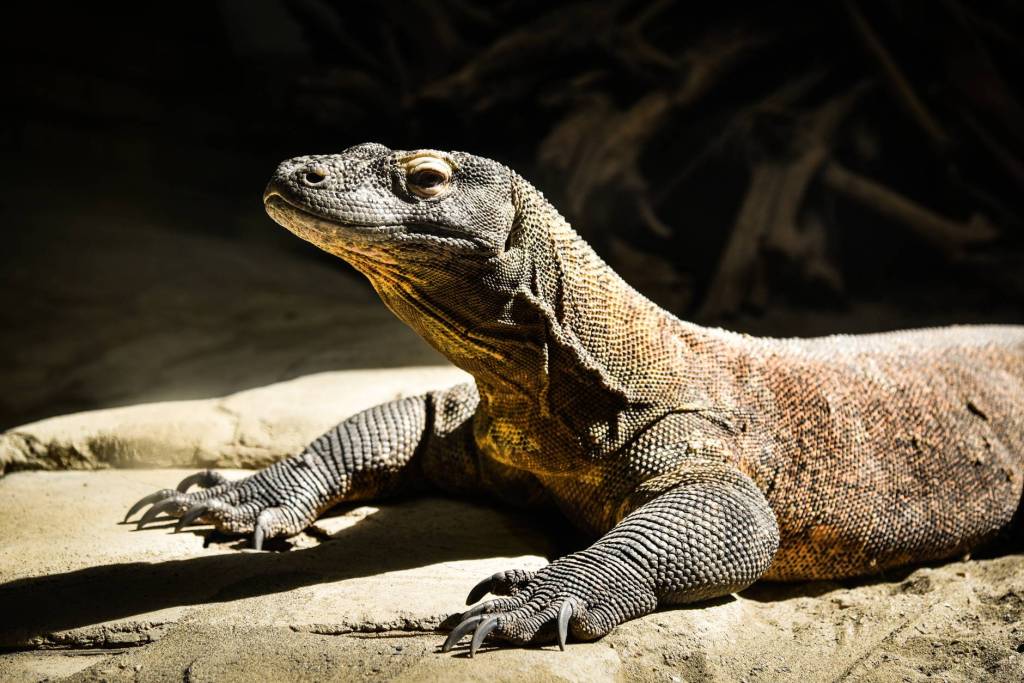
A few years ago we published a blog (LSS 27 10 20;6 9 21) wherein we hymned the praises of the Komodo dragon (Varanus komodoensis). Specifically, because these scary monitors could be a source of new antibiotics. Why might that be? Because they spend their lives feeding on filthy, rotting carrion and should therefore be all dead by now.

So why do carrion eaters (wolves flies, vultures are but some of the many types of animals that come to mind) not only survive, but thrive in their chosen niche? One which to us seems a little unpleasant and down market. According to Tim Cushnie, Darren Sexton and Vijitra Luang-In of the Conversation, these intrepid beasts have each developed a range of techniques to avoid bacterial infections which must be thriving on their dinners. What interests us most on this blog their chemical defences. They seemed to have evolved pathogen recognition and destruction systems which are far in advance of their carnivorous and herbivorous relatives. The authors cite several classes of compound which seem to ripe for exploration. And indeed are being explored by researchers in Germany, China and the US.[2]

And the moral of the story? Firstly, do not despise carrion feeders. They are Nature’s clean-up squad. Secondly, there must be hundreds of other plants and animals in nature which may have equally useful contents. So, if you tear down nature to build a car park you will probably have lost something. Finally, if used our Universities to train up a few more Biologists and a few less accountants, we are all going to be much, much richer.

[1]https://theconversation.com/antibacterial-discovery-how-scavengers-avoid-infection-and-what-we-can-learn-from-them-229828?utm_medium=email&utm_campaign=

[2]https://www.tandfonline.com/doi/full/10.1080/07388551.2024.2389175

scavenger #carrion #komodo dragon #immunology #bacteria #antibiotic

Mental Illness: Real hope at last?

Why is there no “cause and effect” model of mental disorders and problems? it’s a problem that has intrigued us for more than fifty years; and has more than once been lamented on these pages. Despite the heroic endeavours of thousands of hard working researchers and scholars, we seem little nearer tangible, reproducible solutions.

Until this week when we came across an article by Anthea Rowan of the New Scientist which honestly made our hair stand up.[1] Initially the article is about OCD.(obsessive-compulsive disorder) But in it, for the first time, we have come across what may be real hints of what is going on at a neurological and molecular level in the unfortunate victims of many mental abnormalities. And from that emerges the first possibility of real and lasting cures for their suffering.

We won’t steal Andrea’s thunder (you’ll need a paywall jump if you use the link), But we will try to summarise some of her salient points, and urge you to read further.

It’s the genes Get this quote from her:

“…half of the risk of developing OCD is down to our genes..[a study]…examined genomes of nearly 40000 people with OCD and identified 15 genetic signatures associated with the conditio including ones for proteins that influence brain function and development ….one of the signatures…. was associated with genes for the major histocompatibility complex(MHC)[2] ….a region of DNA that plays an important role in the immune system and has also been linked to other mental health conditions such as schizophrenia and bipolar disorder “(our bold)

It’s in the immune system

“…….a case in point is two related conditions called PANS and PANDAs in which children can suddenly develop OCD symptoms anxiety or tics seemingly in response to an infection….”

It’s in the gut

“… a team at Shanghai Jiao Tong University….transplanted faecal gut microbiota from humans with OCD into mice. Two weeks later the mice began to exhibit repetitive behaviours and signs of anxiety..….

Why are we so excited? Because here at last are three tangible, well defined pathways for research. Each contains definable, repeatable units like molecules, tissues and nerve ganglia. No more hard to prove social theories or endlessly debated diagnoses. Instead a chance to start again from the bottom up. And maybe find a pattern of molecular-level abnormalities which can be identified, defined and remedied in a controlled and repeatable manner. The research will be long. Cures are still very far away. But the right paths have now been identified. And that is some cause for hope.

[1]https://www.newscientist.com/article/mg26335082-600-a-fresh-understanding-of-ocd-is-opening-routes-to-new-treatments/

[2]https://en.wikipedia.org/wiki/Major_histocompatibility_comple

#mental illness #OCD #personality disorder #MHC #infection #immunology #infection #health #medicine

We couldn’t resist this story about Brits in Benidorm

Well, it was the end of the week, gentle readers, and we hoped that we had finished you off in a satisfactory manner with not one but two great stories (count em, two!). But then our researchers came to us with this great picture story and we just couldn’t resist.

It’s written by Perkin Amalraj of the Mail. But, before overseas readers dive into Perkin’s lapidary prose, a word of explanation. As both English and Spanish readers will know, the town of Benidorm is famous for its welcoming attitude to foreign holiday makers. Moreover it displays little of the snobby exclusivity that one might find in places like the Côte d’Azur or Gstaad. No, Benidorm welcomes all, at prices all may afford. To enjoy a week of sunshine, fine dining and gentle exercise in the balmy sea breezes. No prim or prescriptive demands to learn the local language customs or cuisine are enforced either. One might as well be in Basildon or Burnley, it’s just hotter.

But sometimes pictures speak more than a thousand words, every one of them. And so we invite you to click on the link and enjoy ad essay in photojournalism of the highest quality, and greatest interest. And remember-there is no one as interesting as the people next door. Well not next door, hopefully. From a few streets away

https://www.dailymail.co.uk/news/article-13838683/Forget-anti-tourism-protests-theres-one-Spain-welcome-holidaymakers-gloomy-autumn-arrives-theres-plenty-fun-sun-Brits-BE

#benidorm #tattoo #brits english #beer

Syphilis is Back. We need new tools

Syphilis, that terror of the early modern age, is back. Almost eliminated in the 1990s, by 2022 here were 200 000 cases in the US alone. And, if you are not worried start now. Because this is waht it does according to this short extract from Jessica Glenza of the Guardian [1]

More advanced stages of the disease can bring feared complications, such as neurosyphilis, with dementia-like effects, or ocular syphilis that can cause blindness. Congenital syphilis, when the disease is passed from mother to child, is a special horror: the disease can cause death and neurological devastation in infants.

How have we let it get out of control, and rather more pertinently, what can be done about it? The first is easy to answer: neglect of medical services to pay for tax cuts, and the general concentration on the narcissistic rewards of a consumer society. The latter is rather more interesting. And it sits across many of the concerns we raise on these pages, such as antibiotics, testing, new DNA based technologies and all the other things we admit we bang on about too often(no wonder we never get invited to parties) And frankly, Jessica’s article is a tour de force from which you will learn much about these many subjects, gentle readers.

While not wishing to spoil her article, which you must read, we’ll leave you with this particular thought. There is an antibiotic available: Bicillin L-A. But waht happens if it runs out, or significant resistance to it develop?. We suggest that you keep monitoring these pages.

[1]https://www.theguardian.com/us-news/article/2024/sep/10/syphilis-sti-testing

#syhilis #std #antibiotic resistance #testing #health #medicine #dna

Two possible origins for the next great pandemic

Ah, 2020? Are you nostalgic already for those far off days of masks, empty streets and ballooning Government Deficits? Don’t worry. Covid-19 was just a curtain raiser, an early premonition. Another pandemic is coming very soon. Recently, Nature Briefings has run two st,ories suggesting two hitherto-unexpected sources

A Far-away Fur Farm?

One of the largest studies of viruses harboured by fur animals in China finds a broad array of potential pathogens — including new ones and known ones found in new hosts. For instance, they found the Japanese encephalitis virus in guinea pigs and norovirus in mink. The study highlights the risks of fur farms becoming a bridge between people and the viruses circulating in wildlife, says virologist Eddie Holmes. “This is how pandemics happen.”Nature | 4 min read
Reference: Nature paper

Arctic Agony?

The Arctic is likely to become a hotbed for zoonotic diseases that spill over into humans from other animals,” argues Arctic ecoscientist Christian Sonne. The natural balance is being upset by pollutants, invasive pathogens and melting ice, and ancient microorganisms are also being released as the landscape thaws. He calls for a ‘One Health’ approach that integrates an understanding of the effects on wildlife, humans and ecosystems. For example, food-safety efforts and better disease surveillance could help reduce the risk of spillover events in places where meat is processed by subsistence-hunting communities.Nature | 5 min read

Once one of these organisms gets out from its natural habitat, it will start to breed very, very quickly indeed, as we saw with SARS-Cov-2. The world is a very small place now-you can get almost anywhere in 24 hours. And the overcrowded, air conditioned plane which you will use is an almost perfect breeding ground for spreading micro-organisms. Soon, the things you are thinking about now may just be distant memories.

#pandemic #medicine #health # #norovirus #pollution #global warming #covid-19

Antibiotic Resistance: Here’s an ill wind that blows no good

Just when you thought we were finally getting a handle on antibiotic resistant microbes, Damien Carrington of the Guardian[1] reveals a whole new, and rather surprising new danger. Antibiotic resistant organisms are not only thriving in agriculture, they are being blown across the planet by the winds. Ready to drop into an ecosystem near you. And start to spread their mischief once again.

That at least seems to be the conclusion of the versatile Professor Rodó and his colleagues at the Barcelona Institute for Global Health. Sampling the low air wind patterns (0.97-3.05km) between North China and Japan they found that potentially pathogenic, antibiotic-resistant organisms were blowing up to 2000 km downwind. And landed perfectly capable of reproducing at the other end. To make matters worse, the samples included organisms such as E Coli and Clostridium difficile, no strangers to these pages.

Why are we worried? Well, frankly we didn’t see this coming. Although given the massive misuse of antibiotics in intensive farming, maybe we should have done. And, if this is the situation between advanced countries like China and Japan, what must be happening in less fortunate regions of the world? One thing is clear. Antibiotic resistance joins global warming and mass migration as one of those problems which no country will ever solve on its own. Remeber that next time you hear them banging on in the bar of the Dog and Duck.

[1]https://www.theguardian.com/science/article/2024/sep/09/pathogenic-microbes-carried-vast-distances-by-winds

[2]https://www.pnas.org/doi/10.1073/pnas.2404191121

#weather #antibiotic resistance #farming #china #japan #prevailing wind #global warming

New NMR technique suggests hope for Depression Disorder

Nothing so blights the lives of all-the sufferer, their families, their friends-as a disorder of the mind. Sadly, and despite the hard work of many hard-working and intelligent people, there is no simple cause-and-effect model for these problems. Not that is, in the same way as there is for diseases of the body, many of which have been tracked to causative organisms or simple deficiencies in some vital element. Instead of looking for a single, all-encompassing theory, like so many Darwins or Pasteurs, a better way ahead through small studies in limited areas, to create smaller learnings of which we can be sure.

A recent study of depression, using techniques like Nuclear Magnetic Resonance(NMR) suggests that this way pays off. It really does look as if certain areas of the brain, called Salience Networks( which seem to have something to do with directing the brain’s attention) may be directly involved. Read this from Nature Briefings, Permanent Brain Wiring Predicts Depression The link to the heavier article is well worth it-it’s quite short and clearly written

Although depression comes and goes, people who are prone to it retain a distinct pattern of brain-wiring network throughout their lives. An analysis of more than 180 functional magnetic resonance images showed that compared with healthy controls, people with clinical depression have larger brain circuits called salience networks, which shape what the brain pays attention to. These networks become more active during a depressive episode but persist even after the depression lifts. Researchers found large salience networks in children as young as nine years old, who then went on to develop depression as teenagers. This suggests that the trait could increase the risk of depression, rather than being a result of it.Nature | 4 min read
Reference: Nature paper

We liked several things about this work. It’s humble; it doesn’t try to solve everything, but defines a small area and attempts to explore only that. The sample sizes are gratifyingly large, especially in the follow up study. Above all, it provides a tangible repeatable way ahead to slowly isolate and characterise other disorders at a neurological level. One day, perhaps, and just maybe, some Historian of the future may point back and say: “this was a real step forward.”

#mental illness #depression #nmr #health #medicine

Thanks to all who commented on the Larry Elliott post (IT Troubles at our end)

We have been having a little trouble with IT handling lately (alright, we admit it-we’re dreadful). But a number of you have made comments about the piece we riffed on by Larry Elliott of The Guardian last week. Sorry if we haven’t been able to load or reply to them, but we deeply appreciate the comments nevertheless.

However, it’s worth remembering that the real credit goes to Elliott, not us. He is always open minded, looks at evidence and tries to see things calmly and objectively. Virtues which we could all imitate. We will continue to channel his thoughts as and when we consider them to be pertinent to your interests, dearest readers.

#larry elliott #guardian #economics #germany #manufacturing #IT