World Government #4: The Downsides

The Empire of the Romans filled the world, and when that Empire fell into the hands of a single person, the world became a safe and dreary prison for his enemies Edward Gibbon The Decline and Fall of the Roman Empire

For good commercial reasons the Roman World had expanded to its possible geographical limits, beyond which were nothing but deserts, oceans, and barbarians. It was the same with Imperial China. At least dissidents in present autocracies can live with the hope that somewhere are free men, or at least national enemies, who may still thumb their noses at the tyrant. A World Empire would close down dissent forever.

Such is the case made by the eloquent Ilya Somin for the Cato Institute [1] We do not always revere the pronouncements of this Institute as much as they might like. But there has always been an honesty of purpose about them, and we take this admonition very seriously indeed. In fact we would add another danger. The existence of nation states , each with different ways of doing things, potentially allows the growth of centres of excellence*, where new ways of thinking can be tried and tested. A single government might rapidly stifle progress, or at least slow it to a crawl.

Always beware of a good idea, especially when it is your own. We have spent three blogs advocating the benefits of a World Government. We hope that this one advertises the very real dangers sufficiently.

*The most intelligent person we have ever known believes in this concept

[1]https://www.bing.com/search?q=Cato+institure+world+government&form=ANNTH1&refig=CE70A53FE2214B2DB64595022921BCC8&pc=HCTS

#world government #edward gibbon #freedom #tyranny #economics #politics #Cato institute

Cleaning Products: an unseen cause of antibiotic resistance?

“Kills 99% of all known bacteria!” “The Cleanest Clean it’s ever been! “The half-remembered advertising slogans of our youth, from companies promoting the bewildering variety of household cleaning products with which we scour and sparkle our homes. And for once, we think they have been doing a good job. No one, absolutely no one wishes to go back to the squalid homes of the pre-industrial world. A glance at a few Renaissance or Baroque masters will reveal the filthy disorder of ancient lives. And remember-the Della Francescas and Brueghels were paid to produce sanitised, rather orderly versions of what must have been an unpleasant reality indeed.

But what if we have been paying a hidden price for all this progress? What happens when all those bleaches, soaps and detergents go down the drain and out into the rivers, seas and lakes? According to Anastasia Theodosiou and Chrissie Jones, writing for the Conversation, there might be a problem. Two problems actually. The first is damage to the microbiome of the skin, that marvellous ecology of bacteria which covers us all and keeps us safe from things like asthma, obesity and cancer. The second, rather more pertinent to LSS and our raison d’etre, is that this outpouring may be unleashing antibiotic resistance among microbes in the environment. Which process will one day come back to bite us very badly indeed. And our crops. And our herds. Is that Biblical, or what?

Our thoughts? We know you like ’em. Well we don’t think we should give up things like washing and cleaning homes any time soon, as the mortality will be measured in hecatombs. But these ladies have a point, as does Baroness Natalie Bennett who is sponsoring a Bill on the whole matter through the UK House of Lords. As ever getting this right is a matter of balance, of careful navigation between the interests of all concerned parties. Another chance to show the angry partisanship of binary thinking is a very bad method indeed.

Incidentally, will Americans ever learn that last lesson?

https://theconversation.com/antibacterials-are-everywhere-for-the-sake-of-our-microbiome-we-need-to-control-their-use-247723?utm_

#microbial resistance #antibiotics #pollution #environment #progress

A Big Thank you

To all our readers, contributors, followers and those who dive in just for a quick look. Above all, those who take the trouble to send us likes and comments. Particularly new chums on the BLUE SKY site, which we have recently joined.

As you can see we have restored the picture function. It was our fault. Some of the Ape creatures of the High Himalayas have better IT skills than we do. But we got there in the end.

We look forward to providing you with continued coverage of matters scietific, educational and economic for a while

THE BOARD

Heroes of Learning: Peter Ramus

Due to difficulties with the Word press site we are unable to bring you images. We hope to resume this function soon

Remember your first textbook? Your first real textbook, when you’d left school and started to learn something which you really wanted to? It could have been one on  Accounting, Zoology, Economics or something altogether more useful like Nursing or Housing Studies. OK,  It wasn’t light reading, exactly. But here was real serious learning, laid out by experts, divided into chapters, references, sections, with questions and answers. The very essence of professional: but, sometimes, there was wonder in there too, as it made you think. And how far would you have got without  this guidebook, comfort and, above all, friend? RP Littlewood, Living Spanish , that was our personal favourite. They’re still publishing it today, much updated of course.

Well what if we told you that all this was down to one man. He is called Peter Ramus in English, but he was one of those typical polymathic polynational scholars that the Renassance was always throwing up. There were brighter and better scholars at the time. But Peter had one insight which made his contribution to our progress as good as any of theirs . He realised that knowledge had to be organised, systematised and arranged into an orderly manner, enabling students to access it far more quickly, freeing up new time for creative thinking and discussion. And so he invented the Textbook. It was a force multiplier of immense power. Combined with effective use of the new printing technology it allowed learning to spread quickly and effectively in many fields. No single textbook or edition is ever perfect. They must be updated every few years as new  discoveries ensue. But the method and layout guarantee a sure design which has lasted, as its easy transference to the internet shows. An so we hail Peter Ramus as a true hero of learning, who helped make us what we are today.

Our link today comes from the BBC , the UK’s publicly funded source of news and information. It is rigorously objective and independent, and as such is hated by private purveyors of news of all sorts . Please support it where you can.

[1] https://www.bbc.co.uk/sounds/play/m0026vst

[2]https://en.wikipedia.org/wiki/Petrus_Ramus

#textbook #learning #teaching #renaissance

World Government: the basic idea

The idea of a World Government isn’t all that new. Ancient rulers, even of such relatively tiny polities as Pharaonic Egypt made universal claims. Bigger entities such as Imperial China, or Rome could almost believe they encompassed the whole world, at least for practical purposes. Many regions of the globe have seen villages coalesce into counties and counties into countries. Each such change is marked by an increase in trade, and rising levels of security and prosperity. No wonder the idea has attracted such intellectual luminaries as Albert Einstein, HG Wells and Immanuel Kant. A few thinkers such as Adolf Hitler and the rulers of Imperial Japan tried rather hard to put these ideals in to practice between 1931 and 1945: but that didn’t seem to end very well . The whole matter is summarised rather admirably in this link to Wikipedia [1]

To all intents and purposes the world is now a single trading zone. Information travels instantly. You can get to anywhere important from anywhere important in 24 hours. So why not put the lot under a single judicial authority, one which has a monopoly on legitimate violence, and reap the benefits? These would not only be curing things like migration and climate change ( see previous posts) but would have the additional advantages of single regulation systems for matters as diverse as weights and measures, food standards and water quality. As other polities developed from colonies on the nearer planets ( we are sure that they will) a single Earth could more easily and efficiently conduct its trade and diplomatic affairs with them. The idea that this is happening in embryo via such bodies as the International Red Cross, the World Trade Organisation, the United Nations and a host of other Intergovernmental Agencies and Courts is easy to entertain. But the Wikipedia article will give you much more to chew on than we ever could.

We struggle to to see how such Giant Evils such as inequality, kleptocracy and environmental degradation can be solved without a World Government, at least within any safe time limit. However-always beware of a good idea, especially when you have it yourself! How might such a Government come about? By willing consent, or by armed force? We’ll look at that in the next post. And-here’s the big one-would it be quite the Utopia which some of the previous paragraphs suggest? We’ll look at that too, with the help of our latest recruit, one Edward Gibbon. In the meantime, find out how much money your country spends on Defence, Then ask yourself waht could be done with that budget if there was no need for it whatsoever, nor the taxes to pay for it.

[1]https://en.wikipedia.org/wiki/World_government

#world government #transport #communications #adolf hitler #china #rome #economics #politics #governance

Panzootic Disease: When The Guardian and Daily Mail agree, be very afraid indeed

They’re new and they spread fast. They mutate, jumping species barries with ease. Many of them are new, meaning there are no vaccines and no established treatments. They seem to come in many forms- prions, viruses, bacteria, whatever. What are they? Panzootic diseases. They may turn out to be the most significant health risk of this decade, making it time we all thought more about them. So here are two articles which we hope will give you, gentle reader, a sort of jump-off point from which can can know more.

Let’s start with the eloquent Luke Andrews of the Mail, who concentrates specifically Chronic Wasting Disease, or CWD for short.[1] It is caused by our old friends Prions (remember CJD?) and seems to be fatal to every animal it infects. Infection is by simple contact with any body fluid; and as deer are widely hunted from Wyoming to Pennsylvania, Luke identifies a growing problem, at least in the United States. More worrying for us is Luke’s report that it has jumped to wild pigs (that’s it displaying panzootic behaviour); it causes us to worry what may come next,

Pulling back for a broader view, we come to the erudite Phoebe Weston of the Guardian.[2] Unsurprisingly to well-informed LSS readers, her classic example of a Panzootic is H5N1, the avian flu which is currently ripping through hecatombs of our most iconic species of mammals and birds. If you think in terms of hard cash, how good is that for the tourist trade? Intriguingly, she sees COVID-19 as a classic Panzootic disease as well, as it seems to have spread to 48 species (no, we didn’t know that either). Best of all, Phoebe praises a book by a man called Mark Honigsbaum called The Pandemic Century; we link to a quick review here.[3] Because the causes of this are actually quite simple: uncontrolled development. destructive short-term farming and an insatiable hunger for things which bring instant, short-term gratification. That is the real sickness.

[1]https://www.dailymail.co.uk/health/article-14280007/researchers-warn-chronic-wasting-disease-zombie-deer.html

[2]https://www.theguardian.com/environment/2025/jan/15/age-of-the-panzootic-scientists-warn-of-more-devastating-diseases-jumping-between-species-aoe?CMP=

[3]https://www.theguardian.com/books/2019/jun/23/the-pandemic-century-one-hundred-years-panic-hysteria-mark-honigsbaum-review-riveting

#panzootic disease #prion #pandemic #CWD #habitat loss #global warming #virus

Vaccine Doubts, Rational Fears

One of the curses of being an LSS reader is that we tend to see how everything is connected. The current dismays in politics, international affairs, popular perceptions of science and economics all merge into each other, meaning we cannot escape. Not even into the quiet groves and ivory towers of Académe. Not even for a moment.

Proof of this came from our reading of an excellent article in The Conversation from the learned Professor Sven Bōlte,[1] who has been investigating the depressing reasons that people, including the President-Elect of the United States of America still obdurately refuse to let go of: the idea that vaccines cause Autism. Because every one of the reasons he cites can also be cited to explain the decay of democracy. Let’s look at a few, and you’ll see what we mean

Unawareness of Evidence

Reliably and accurately communicating research results to the public is difficult,” states Sven, “Popular media is typically superficial and often primarily interested in controversy that generates public attention.”

For research results read political issues Remember the £350 million on the side of the bus in the UK Referendum campaign? Quod erat demonstrandum

Challenges Understanding Science (shouldn’t that be “to understanding”?-ed)

Science is complicated and in medicine there are rarely absolute truths. The public, however, might expect clear consensus or have difficulty grasping the precise nuance of the science and its findings”.

For science read economics or law.   Yes they do struggle a bit with nuance, don’t they?

Doubts of science

“The human need for immediate and simple explanations for complex issues fuels misbelief”.

The word “research” does not mean sitting on the internet for 30 minutes and pasting up your favourite clicks.

Invisible success of vaccine programmes.

Vaccination programmes are among the most cost-effective public health interventions available and have averted deaths and long-term disease on a global level in the last decades.

They take it all for granted when it works.  Like everything else we’ve given them since The Enlightenment. You know. Soap, Schools. Scooters. Computers. Machines upon which to play their popular musical ditties.  A certain entitlement has crept in; and a price must always be paid for that.

We could go on, and you may read the whole article for yourself, gentle reader, by clicking on the link.  Does all the above suggest the bulk of humanity lacks the cognitive ability to live in a post industrial world? Or are they just festering with resentment because we stopped them from smoking and burning witches? We await your thoughts.

[1]https://theconversation.com/why-do-false-claims-that-vaccines-cause-autism-refuse-to-die-here-are-nine-reasons-246360?

#autism #vaccines #science #medicine #evidence #conspiracy #reason #emotion

World Government #2: the end of mass migrations

The world heats, driving waves of refugees in search of survival. Nationalism, religious identitarianism, ethnic exclusion grow. The resulting conflicts throw more waves of refugees onto the shores of societies with neither the psychological nor economic means to cope. Those societies in turn experience fear and destabilisation, as people understandably try to cling to the mental assurances of the past, leading to more nationalism, identity politics………… This spiral downwards will require big thinking indeed if we are to survive at all as a species.[1]

The problems we have identified-(climate change and mass migration) are closely connected. They are rooted in deep inequality. People migrate along economic lines from poor to rich, just like ions in an electric field. They always have done. The solution is a mass transference of sufficient wealth from richer countries to poorer ones  to build up their economies. This would  not only reduce the incentive to migrate. It would also slow the endless production of status goods like luxury cars and fashionable clothes in the rich countries. The ending of such frivolous production, distribution and consumption  would enable an enormous reduction in carbon emissions.

Yet how can a world constructed on hundreds of lines of sovereign and religious identities ever achieve this transfer? There is too much incentive to cheat. To let other nations make the transfers, while guarding local advantage. To allow funds to be hidden in “sovereign” jurisdictions. To allow quick fossil fuel booms to grab short boosts of wealth. To think short term, to think parochially. Perhaps future generations will even decide it was criminally, like the Slave-owning Planters of the US South in the nineteenth century. Whereas a single world Government would cut through all these problems at once. And we haven’t begun to mention the advantages in things like health, space exploration and cleansing pollution, which would follow easily.  Once again, the situation is now so desperate, that it’s time to consider something utterly different. We begin to suspect that something to be a World Government, however bizarre that sounds.

In the next post in this series we shall look at the history of the idea of world government, and find it’s not such a new idea after all.

[1] Is the world ready for mass migration due to climate change? – BBC Future

#world government #migration #climate change #pollution #inequality

Human Genome Editing: A Frankenstein Future?

Technology always advances faster than ethics. Leaving society and individuals floundering in it wake. The printing press transformed European society in the sixteenth century. The cotton gin transformed the economy of the US South, arguably deepening Slavery, and instituting a pattern of violence and cultural wars which have lasted to this day. In the last century, the development of nuclear fission and computing have effected changes as profound as any known in History. It is with these examples in mind that we approach the subject of Human Genome Editing, which may make everything before look silly.

This has been a decade in which the effective manipulation of nucleic acids in living systems has become routine. We have covered such exciting techniques as CRISPR Cas-9 and Base Pair Editing. While all educated people stand in awe of the rapid advance of mRNA vaccine technology, which did so much to stem the COVID-19 pandemic and now offers real hope of new cancer treatments. But, without disparaging the intellectual brilliance or immense hard work of their creators, these technologies are relatively small scale in the size of the biological interventions which they entail. So now read this from Nature Briefings:

Brace for the arrival of Gene editing Modifying multiple DNA variants in human embryos at the same time, a process called polygenic genome editing, could substantially reduce the likelihood of certain diseases occurring. But it also raises concerns, say the authors of a Nature analysis — not least the renewed threat of eugenics. “This is not a hypothetical issue,” argues an accompanying Nature editorial. While such genome editing might be decades off, societies need to consider its possible benefits and risks now to avoid having to play regulatory catch-up when the technology becomes available.Nature | 4 min read
Reference: Nature paper

Imagine a society where the very richest may edit the DNA of themselves and their offspring so that they, and they alone form a race of superbeings. The future for the rest of human kind, the untermenschen if you will, looks grim, and may be very brief. Such evolutionary bottlenecks have occurred in the past; and those on the wrong side(always the majority) “fly forgotten as a dream, flies at the end of day” as the old hymn puts it. Time to consider this very seriously indeed we think. Nature thinks you may have 30 years: we suspect it to be much shorter than that.

#gene editing #dna #biology #biochemistry #CRISPR #Base pair editing #genetics

Hollywood Fires: Global warming on a screen near you

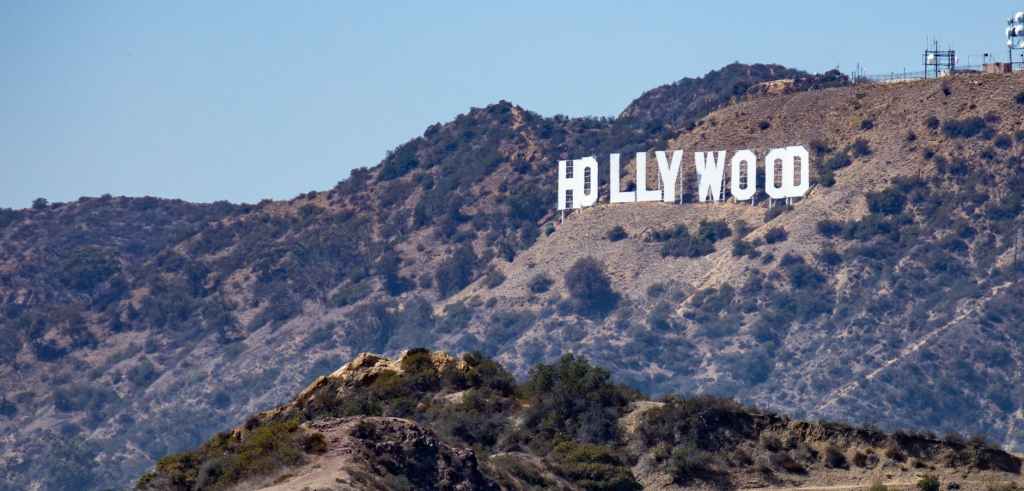
We confront the endless coverage [1] of the fires raging through Hollywood in California with nothing but profound melancholy. For we had two of our most enjoyable holidays ever in that distant State of America, and many times experienced the kindness and intelligence of enlightened people. The trouble is that they were motoring holidays. We toured around vast areas, heedlessly filling the atmosphere with carbon dioxide and other pollutants, and thereby contributed to the disaster that has befallen these unfortunate people.

And more disaster is to come. Any hopes that this trouble is exceptional and can be put down to an El Niño event, now look forlorn. Read this from Nature Briefings; and click on their link if you dare:

Is Global Warming Speeding Up? Earth shattered heat records in 2023 and 2024, with temperatures rising further than expected on the basis of previous trends and modelling. A mysterious reduction in cloud cover, combined with an El Niño weather pattern, could be responsible for temperature increases in 2023. However, scientists expected temperatures would decrease again in June 2024 when the El Niño subsided, which didn’t happen. Now they are racing to work out whether this sudden spike is just a blip in the climate data, or an early indicator that the planet is heating up at a faster pace than they thought.Nature | 6 min read
Reference: Science paper

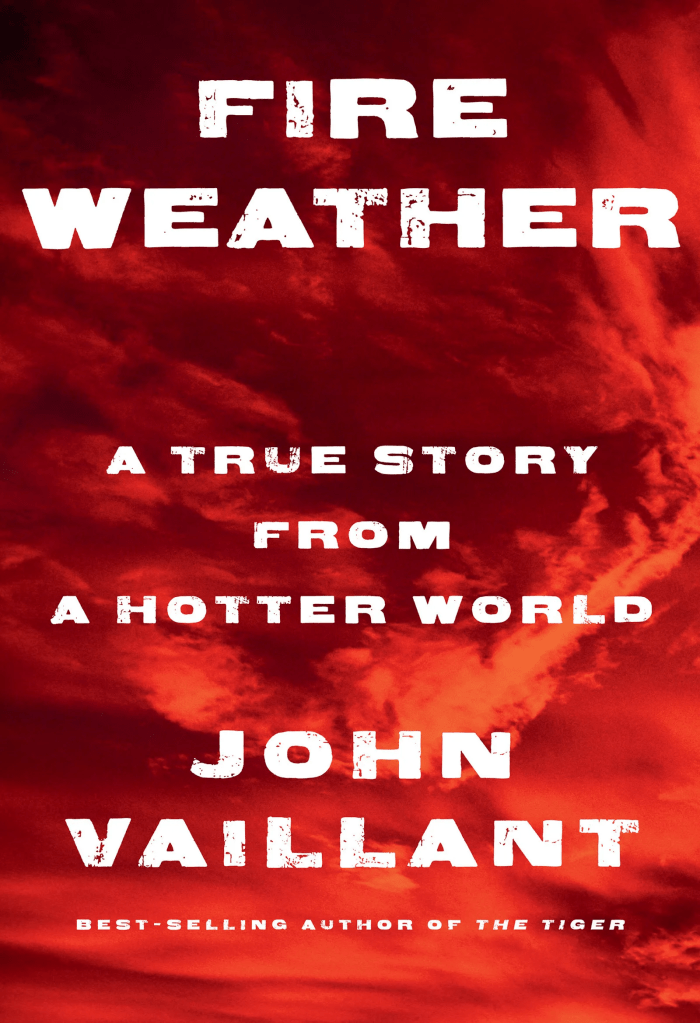
Why, and how, are we bringing this catastrophe upon ourselves? One man who seeks to understand is John Vaillant. Fire Weather is his his study of the catastrophic fires that raged for a year in certain regions of northern Canada, regions that had devoted themselves to the extraction of fossil fuels. You can read a review of his work here from Wired [3] But it’s a weary chronicle of greed, short termism, butch manliness and wilful destruction; the substrates in which climate denialism thrives.

However we cannot close without a slightly hopeful thought. Every so often one still comes across, at least in this country, members of the proletariat who ask questions like”this climate chinge fing-der yew fink iss rilly ‘appenin?” Such people, hypnotised as they are by all things American, Celebrity and Hollywood, may now have to confront a reality. Yes, it really is.

[1]https://www.bbc.co.uk/news/live/c5y81zyp1ext

[2]https://www.wired.com/story/fire-weather-book-canadian-wildfires/

[3]https://www.wired.com/story/fire-weather-book-canadian-wildfires/

#california #hollywood #global warming #fire weather #fossil fuels