
You are now living in a completely new world-but don’t let that spoil the weekend

The English Wars of the Roses (1450-1485) were savage bloody affairs. Forget all the costumes and Shakespearean poetry: the dynastic struggles of York and Lancaster really mattered at the time, and as late as Elizabeth 1 , the succeeding Tudor Dynasty lived in constant fear that a Plantagenet claimant might reignite the struggle. Now fast forward 80 years or so to the English Civil War, an even more sanguinary and passionate affair. No one cared in the slightest who was a Yorkist or a Tudor. You might as well have talked about Romans and Carthaginians for all the relevance it had at Marston Moor. Over, gone, forgotten.

Here’s another thought. Growing out of that civil war came a rivalry between Crown and Parliament that lasted for well over a hundred years, and twice exploded into violent war in the Jacobite rebellions (1715 and 1745) The leader of the second rebellion, called Bonnie Prince Charlie by some, lingered in exile until 1788. Read that last date carefully. Because the next year was the start of the French Revolution, unleashing a series of global changes so far reaching and dramatic that the world would never be the same again. Would anyone at Trafalgar, Waterloo or even in the British House of Commons, have tried to map their experiences onto a template provided by the Bonny Prince?

Our present age lasted from the Second World War until the second election of Donald Trump. It’s founding myth was 1940: gallant Britain battled alone until the mighty United States arrived to tip the scales decisively for the forces of freedom and goodness. After the war the benefits of Anglo-Saxon order were spread to places like Europe and Japan. It was good while it lasted. People kept gardens, obsessed with sport, brought hundreds of bright new shiny things and believed themselves to be clever and happy and free. Many thought it ws the natural order of things and would last forever.

We believe that the fundamental order of that world cracked after the US invaded Iraq in 2003. It was shattered by the financial crisis of 2008. Technological developments such as social media and fossil fuels produced profound and unmanageable instabilities in the environments of even very rich countries, rendering their political and economic settlements obsolete.

It is easy to mourn the passing of the old order, easy to rail against its destroyers like Trump and Putin. Such nostalgia is dangerous, for it will lead to attempts to live in the vanished past and even recreate it. Far better to first recognise this is a new age, and all old assumptions, all old patterns have been shattered irrevocably. There were good things in the old order. They must be preserved. There will be good things in the new, however remote and distant they seem. You have the weekend, ladies and gentlemen to consider what those might be. Enjoy it profitably, and we will see you on Monday.

#history #politics #economics #donald trump #vladimir putin #united states #NATO

Friday Night Feast of Fun: Curry

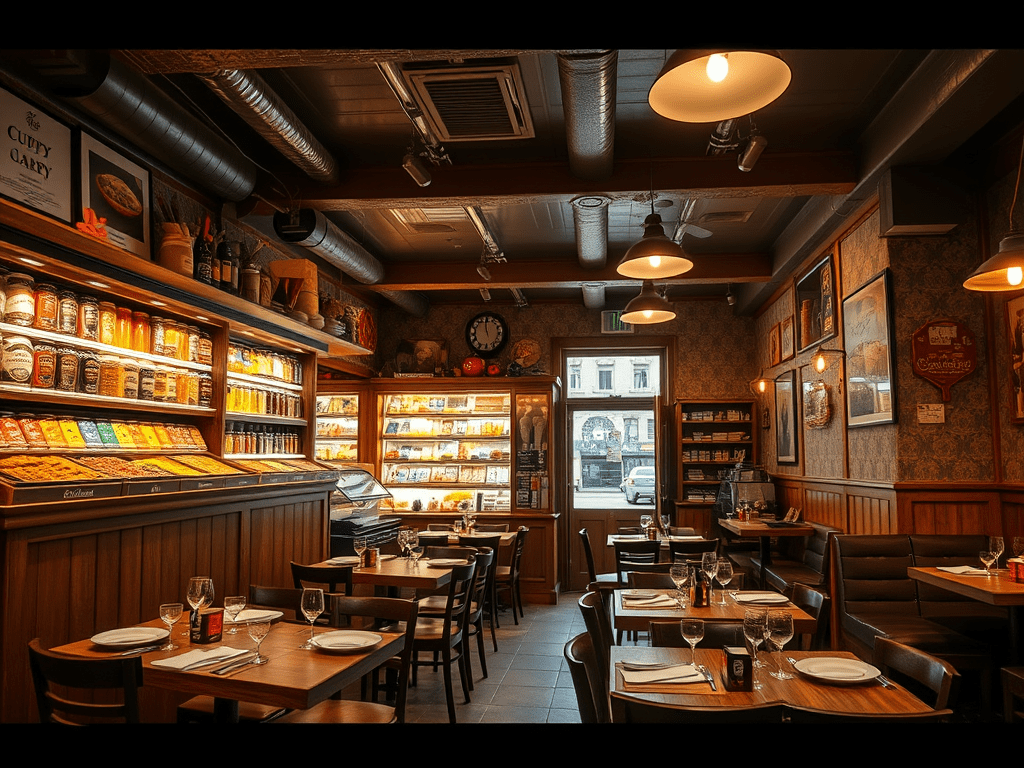
We once asked an old soldier of the British Army, who had served in India during the Second World War: “So, did you go out down the local restaurant for a curry and lager on your nights off?” To which he replied with a blank “No.” Why did we ask that question, and why did we expect a contrary answer? To answer it is to delve deep into history and the immense cultural changes which only food can describe.

By the 1980s,when we asked, going out to your local Indian Restaurant for a curry and lager (see below) was the default eating position for most younger inhabitants of these islands. How did a nation famous for fish, chips, roast beef and Yorkshire puddings so thoroughly convert its taste buds to what their grandfathers had thought alien and strange? The answers lie deep in out Imperial History. Old India hands, Company men, Army men, and their memsahibs brought back a taste bud memory from their days of service. Curries appeared in restaurants and cookbooks as early as the 18th century. Veeraswamy[1] opened in Regent Street in 1926 [1]and has survived to this day. The real boom came with South Asian immigration after world war two.(there were many Pakistanis and Bangladeshis alongside the Indians) Hungry immigrants brought their restaurants; and the natives appreciated at least this aspect of the new culture. although they were less welcoming on other matters. Generally speaking, curry is now the UKs national dish, at least for eating out.

For the benefit of overseas readers, we append a list of ten typical favourites , courtesy of the excellent Plyvine Catering website[2] Some of us still find certain dishes too hot and spicy: beginners may like to try milder forms like Korma. Others, like students indulge in macho who-can-eat-the-hottest? competitions, with sometimes hilarious results. And to drink? It has to be lager. “!It’s not a real curry without lager!” is the indignant cry from the poshest West End serveries down to the smallest family undertaking in the the most obscure provincial town. Fortunately Indian technology has come up with two very palatable varieties: Cobra and Kingfisher, which are perfectly capable of both refreshing the palate and conveying that authentic subcontinental vibe

Indian food, like Indian culture and business acumen, is spreading world wide. Perhaps a curry house will be the first restaurant to open on the Moon. It might be a very worthy choice..

[1]https://www.bing.com/alink/link?url=https%3a%2f%2fwww.veeraswamy.com%2f&source=serp-local&h=Ws1QKz5L6y3meRBbkMNxwx0DKcJGs59sEQqcvf7Yd5I%3d&p=l

[2]https://plyvinecatering.co.uk/the-uks-10-most-popular-curry-dishes/

#curry #india #UK #restaurant #lager #take away #dine out

Recycling the way to new antibiotics

If there was one thing that has always been too much for us, it is trying to understand the fiendish complexity of the immune system. At school, at our various universities, trying again during the COVID pandemic…..we have never really got past T and B. So when the BBC announced this morning that a whole new part of it had been discovered,[1][2] you might have expected us to hold our collective heads in our hands and groan.

Far from it, gentle reader. For the new discovery has opened the possibility of a whole new class of antibiotics sitting right there in every cell of the body. An astute group of scientists led by Professor Yifal Herbl at Israel’s prestigious Weiszman Institute of Science have found that proteases, a regular part of cell function, may be able to unleash significant antibacterial function. A protease normally functions like the recycle department of your local council, chopping down old proteins and getting them ready for use. But the team found that many of the little peptides produced have strong antibiotic properties. Like the good scientists that they are, they then ran two objective tests. Do the proteases work as well as conventional antibiotics? And if you disable them, does the cell become more vulnerable to infection? To which the answers, broadly speaking, are Yes and Yes.

Once again we stress that this research, and its development into useful therapies, is still at early stages. Which we always do when we cover new points of departure like this. Yet it is, indubitably, a new departure, And it has been sitting there unnoticed until now. Something which has always tickled our fancy here, as regular readers will know. Hats off to Professor Herbl and her team. And-readers! Every tome a journalist publishes on the antibiotics crisis, why not write a very short e mail of thanks to them? They’ll love you for it.

with thanks to Gaynor Lynch

A note on today’s links We have two straight news stories and a link to the Weiszman Institute, to give you staring points. However, we could not get past paywalls to the Nature articles, and we doubt you will be able to as well

[1]https://www.bbc.co.uk/news/articles/cpv4jww3r4eo

[2]https://phys.org/news/2025-03-cellular-trash-reveals-immune-defense.html

[3]https://www.weizmann.ac.il/pages/

#antibiotics #proteases #immune system #peptides #microbes #bacteria #ealth #medicine

Defeating antibiotic resistance with the old one-two

As old LSS hands will know by now: as soon as a new antibiotic is developed. those pesky bacteria start developing resistance. Particularly all those gram negative types with that tough extra membrane which they deploy. Which is why a new study reported in Nature Communications [1] and Phys.org [2]reports an intriguing new idea. Don’t hit ’em with one blow, try two.

The authors, led by the resourceful Drs Csaba Pal and Elvin Maharramov of Hungary’s prestigious HUNREN research centre[3], believe that new types of antibiotic which target multiple cellular functions instead of just one, will afford the bacteria less time and opportunity to evolve resistance. To start, they tested three candidate antibiotics on several of our old chums including Escherichia coli, Kebsiella pneumoniae and Pseudomomonas aeruginosa, all well known for their increasing levels of resistance. And their results were encouraging, particularly when compared to other antibiotic classes. Ever thorough, the researchers went further, trying to identify genes which might foment antibiotic resistance and their frequency in “wild” populations, if we dare use that term.

As grizzled veterans of the war against antibiotic resistance we welcome this study for several reasons. Its willingness to try different approaches for one. And its field studies of the occurrence of resistance genes out there for another. We hadn’t thought of that one. Full marks, every possible study helps, and where there is learning there is hope.

[1]https://www.nature.com/articles/s41467-025-56934-3

[2]https://phys.org/news/2025-03-uncovers-core-principles-resistance-antibiotics.html

[3]https://www.brc.hu/en

#antibiotic resistance #microbiology #medicine #health #hungary #membrane #gram negative #genes

No, Trump is being perfectly rational. That is is the real problem

A lot of abuse has been hurled at US President Donald Trump in recent days, particularly by those who have been inconvenienced by has actions. He has been accused of baseness of character, of capriciousness, of lacking moral fibre. But before we rush to judgement, let’s look at his action through the eyes of history. And a pattern emerges: he is taking the classic decisions made by an empire in decline, one that realises it can no longer be strong everywhere and therefore tries to husband its resources.

The first signs of decline in the British Empire were the need to concentrate its hitherto hegemonic naval forces in the North Sea and hand the security of its eastern possessions to an alliance with Japan. But the more telling historical parallel is with mighty Rome. From the fourth century onwards, Emperors like Constantine I and Julian realised they no longer had the men or the money to hold whole areas with regular Roman troops. Instead they handed over responsibility to foederati: barbarian tribes who marched under their own kings. In theory they were loyal allies of the Emperor, defending outlying provinces, But they spoke their own language, fought their own way and lived under their own rules. Where they were stationed Rome existed in name only. And that not for long.

Now Trump seeks to hand over defence of Ukraine to European allies. The American machine can no longer support the burdens it once carried with ease, and must choose its most dangerous enemy against which to concentrate. No, Donald Trump is not mad, nor disloyal. We think he and his advisers have looked into the books of the American Empire, and have found some very bad things indeed. They are trying to act accordingly, in order to slow its decline . Perhaps they will be temporarily successful, perhaps not. But decline is the result of long term historical forces, and once underway cannot be stopped. The rest of us, particularly former provincials in the Empire, once basked in the luxuriance of its protection. Now we must look to our own safety. Urgently.

#USA #China #donald trump #roman empire #history #geopolitics #NATO #europe

Clean, Green Copper?

One of the downsides of making the change to a clean, renewable economy is the enormous cost of some of the technologies. And we are talking energy and pollution here, not money. It’s an uncomfortable truth which enemies of progress gleefully point out wherever and whenever they can. Take copper for example. It’s going to be central to any green ecosystem, showing up as vital component of anything and everything from electric cars to eco power plants. But, as the superlative Robin McKie of the Guardian points out, mining it demands enormous quantities of energy. As for the waste left behind- we almost dare not think.

Yet Robin is nothing if not hopeful . In this article he reviews a whole set of hopeful new technologies which are designed to find cleaner, more sustainable ways of pulling out this vital metal. Demands of brevity force us to extract only one(no pun intended) as it fits with the vaguely biological ambience of this blog

 a company, RemePhy, has been started by Imperial PhD students Franklin Keck and Ion Ioannou……They have used GM technology to develop plant-bacterial systems that have an enhanced ability to extract metal from the soil. “Essentially, you will be able to grow these crops on land contaminated by waste left over from the mining of metals such as copper, and they will extract that metal,” (explainer-London’s Imperial College is nurturing many of these initiatives-ed)

The oldest trope on this blog is our admiration for when clever people tweak existing ideas and suddenly do something really useful in a new und unexpected way. Imagine the strategic benefits to a country that not only supplies itself with copper, but cleans itself up as it goes along. The benefits of Science and Reason, we suppose?

[1]tps://www.theguardian.com/global/2025/mar/02/copper-scientists-london-energy-electrical

#copper #metals #mining #pollution #imperial college #renewables #clean energy

Friday Night Feast of Fun: Traditional Fish and Chips

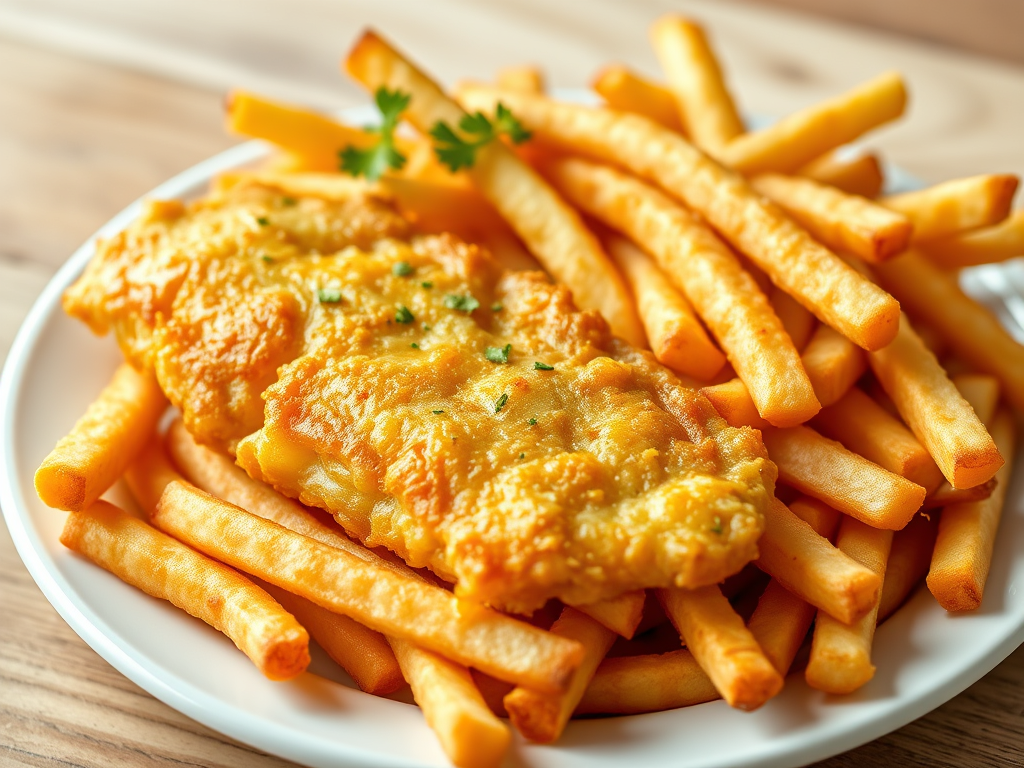
Now that Britain has suddenly become popular in certain quarters, we thought we’d kick off the Friday Night Feast of Fun with a nod to our good old national standby. Fish, fried in batter at colossal temperatures, accompanied by equally fried chunky potato chips. Best served from a local takeaway that specialises in this dish alone-and eaten very hot. The range of fishes allowed is actually rather small-cod, haddock, plaice and a type of small shark called rock salmon by us locals. Extras are little more than pickled onions and tomato ketchup, although some purists cavil even at this, asseverating that it detracts from the true gourmand experience

But how “British” is it really? Research indicates that fried fish in batter originated among London’s original Jewish immigrants, who came mainly from Spain and Portugal in the sixteenth century. Other Jewish immigrants, whose days were spent working incredibly hard in sweatshops, combined it with fried potatoes(out of Peru via Belgium) around the middle of the 19th Century. So like our Royal Family or Premier League teams, it’s actually a bit of a melange of rather non Anglo-Saxon influences.

And what best to drink with this delicacy? Like everything else, it depends on who you are eating it with, and, this being England, their social class. Here are a few suggestions:

Stout A very dark beer brewed from roasted barley, its strong creamy flavour can partner a flaky haddock like nothing else. Guinness is the perfect exemplar, but WE remember an ancient brand called Mackeson– has anyone seen it lately?

Brown Ale Often favoured by persons from the North East of England, where the fishing industry was huge until about 2016, this has a flavour all of its own. But be warned; we once laid some on a Japanese lady of some education and she hated it. An acquired taste, perhaps.

Traditional Lager Yes, the cool bright foamy yellow stuff, the Poor Man’s Champagne. The brands we favour in these islands include Kronenburg, Red Stripe, Stella Artois(often known as “Nelson Mandela” around the outskirts of London) This is what we would use to partner our cod: no wonder they placed us on a strict diet. (no pun intended)

Domain j Jacques Girard Pernand Vergelesses Burgundy Posher guests may still wish to partner their fish dish with a white wine, darling. At £30 a bottle from Waitrose they had better drink it slowly. But we thought we had better put a good one in, because: you never really know who might turn up, do you?

Have a good weekend

#fish and chips #great britain #lager #beer #takeaway #wine

Energy from Nuclear Waste: A last Hurrah for American Science?

The news that a team of scientists at America’s prestigious Ohio State University have created a remarkable new battery that captures energy from nuclear waste might once have passed almost unremarked. Our link from Andrew Cuthbertson of the Independent[1] details how the remarkable Professor Cao and his team have taken spent nuclear fuel from reactors and converted the gamma rays into light, which can then power photovoltaic cells. We’ve put in a couple more links if you want to know more[2] [3] But for us, today, our interest lies in a slightly different direction. We suspect that astute readers my guess where.

For this kind of breakthrough used to be commonplace in the American Heartland. Starting after 1865 a vast ecology of Universities, Research Institutes and hopeful start-up companies grew. It gave the USA the economic power to surpass and then destroy the British Empire and to defeat Germany and the USSR in both armed and commercial conflicts. sitting at the centre of it was a belief in Science, at least among a sufficient mass of the population to count.

The current President of the United States looks hell bent to destroy all that. [4] as this link to a Nature main article shows. And look again at Anthony’s article. Which other country gets a mention? China, of course. Slowly ,steadily and with much less noise they steal a march on poor old Uncle Sam and its hapless, impulsive leader. Americans should ask themselves this question: is all this really worth it just to appease the prejudices of 20 million or so voters? Will any of you actually be voting in 2035, anyway?

with thanks to P Seymour

[1]https://www.independent.co.uk/tech/nuclear-battery-atomic-waste-electricity-b2704893.html

[2]https://news.osu.edu/scientists-design-novel-battery-that-runs-on-atomic-waste/

[3]https://en.wikipedia.org/wiki/Atomic_battery

[4]https://www.nature.com/articles/d41586-025-00562-w?utm_source=Live+Audience&utm_campaign=bf0c0e5f06-nature-briefing-daily-20250226&utm_medium=email&utm_te

#nuclear energy #china #usa #economics #science #technology

Go Back to where you came from: if this isn’t the best TV in ten years, we don’t know what is

“But why do they all come here?” is the agonised cry of Dave Watford and his mates in every pub from Truro to Thurso. Dunno, Dave. The English language? Because of our free market, low regulation economy, where the reward is for taking risks? Because we’re still relatively prosperous? But Dave and the boys are right: Immigration and its discontents are the number one driving force in all our lives here in the third decade of what may prove to be our very last century.

Or are there deeper forces at work? People have always moved from bad conditions to try to find better ones. Such movements are always deeply resented by the native populations in the host lands. It is the achievement of Channel 4‘s Go Back to Where you Came From [1] to cast the question in terms of the way people really are, not the way they ought to be. Six ordinary, but essentially decent British people complete a typical migrant’s journey from the ravaged lands of their origin to their final landing under the White Cliffs of Dover. The producers chose Syria and Sudan as the “GO” points. Wow. We get it.

And we stress: ordinary, decent people. So the producers deliberately chose the reality show format to highlight their odyssey; for no one in 2025 would have watched a documentary. And what an odyssey for the 21st century it is! They run the gauntlet of squalid refugee camps, freezing and burning temperatures, lousy food, unmentionable lavatory facilities, major league armed criminals and deadly waters in the course of their journeys. All the while in dialogue themselves, and with the locals. All six displayed levels of courage and endurance which we could ever endure, we confess.

Like the heroes of any epic road movie, they are transformed, so that they are not the same people they were when they started it. One man in particular stood out: a haulage contractor from Yorkshire who though sheer hard work has built up a small lorry business. It lets him feed his family, of whom he is fiercely protective, with out any help from the state. And get this: if you are fined £10 000 every time an illegal immigrant jumps on your lorry, wouldn’t you be just a little resentful? But it is to the immense credit of this man, and the film makers, that they slowly uncover the causes of his plight. War; ecological collapse; deep inequality and the paid apologists who defend it at every turn. He comes, he sees, he thinks, he changes. His deep reserves of emotional intelligence finally process the better angels of his nature.

Yet we at LSS do not advocate opening England’s doors to every migrant, however desperate their plight. Emotion and pity are bad guides to policy. A Nation state is not the same thing as the Social Services department of a London Borough. But the lesson is clear: a substantial, though not crippling transfer of funds from richer to poorer countries would eliminate most human migration quite quickly.

Go Back to Where you came from at last shows the true causes of this problem, And most people learned the lesson. That is a mighty achievement indeed.

[1]https://www.channel4.com/programmes/go-back-to-where-you-came-from#:~:text=Six%20opinionated%20Brits%20experience%20refugee%20life%20up%20close

#go back to where you came from #immigration #migration #emigration #climate change #war #poverty #inequality

At last, another antibiotics story….but it’s not all good news

Yes, gentle readers, back to our Core Mission Values, our raison d’etre, our philosophical DNA (stop there-ed) We just wish it could be better news. For Andrew Gregory, that accomplished science journalist of The Guardian has just written up a magisterial survey of the UK’s efforts to contend with antimicrobial resistance by the National Audit Office(NAO). [2]”Could do better” is the verdict.

First the good news: UK Governments have recognised the problem and are” taking measures,” as the old saying goes. Good! We’ve been on this one for ten years now, and compared to then, the general awareness is indeed very high. Now for the bad: according to Andrew:

Of five domestic targets set in 2019, only one – reducing antibiotic use in food-producing animals – was met. Drug-resistant infections in humans have increased by 13% since 2018, despite a target to reduce them by 10%, the NAO said

There’s lots more good stuff in here, including some killer statistics about where we will be in 2050 if nothing is done. If you haven’t got time for the report, at least read Andrew’s piece.

The reason we take all this seriously is where it comes from. If there is one thing that still marks out a little of the old British excellence it lies in objective institutions like the Civil Service and the BBC, whose cool objectivity have long been the admiration of our overseas friends(we know this from personal experience) The reports assiduously collected facts and judicious observations are a model of intellectual clarity. Britain may not be great anymore, but it is still a pretty representative country. We suspect that much in this report may apply to where you live too, gentle reader. If so, our collective efforts still need to be stepped up. By a lot.

[1]https://www.theguardian.com/society/2025/feb/26/uk-falling-short-in-fight-against-rise-of-superbugs-resistant-to-antibiotics

[2]https://www.nao.org.uk/reports/investigation-into-how-government-is-addressing-antimicrobial-resistance/#:~:text=This%20report%20sets%20out%20information%20on

#amr #antibiotic resistance #microbiology #public health #NAO #medicine #hospitals