Is this a collapse of Civilisation?(they’ve happened before)

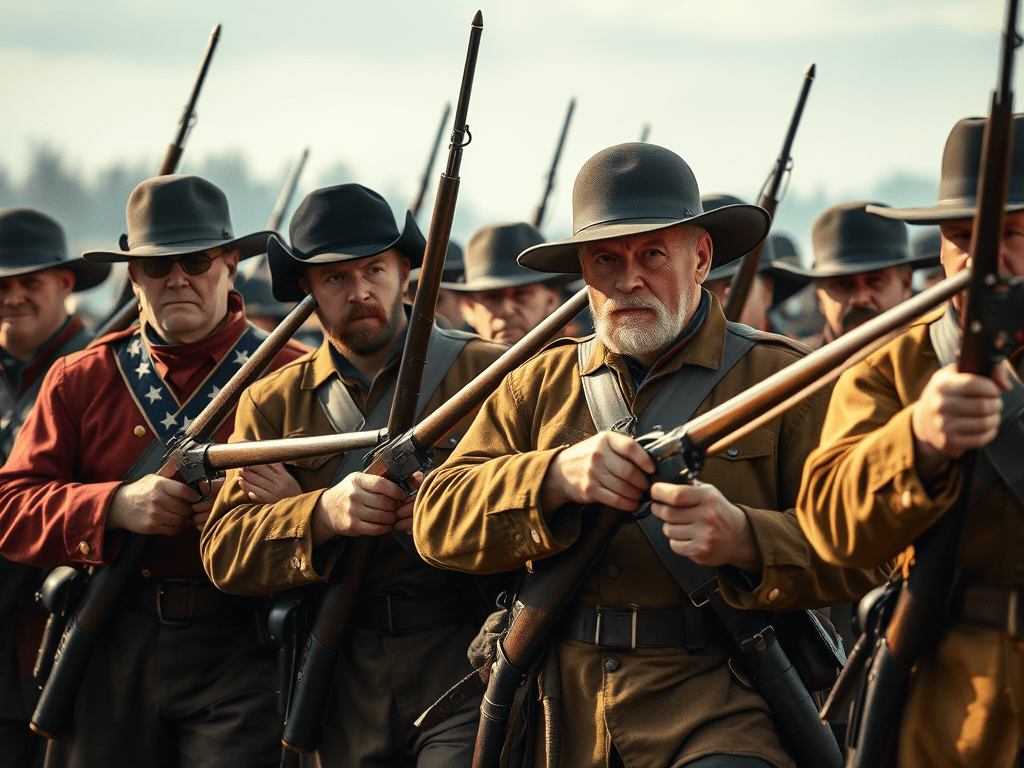
Do Civilisations collapse? Do elaborate trade networks fall apart? Giant cities turn into uninhabited ruins? Ancient systems of law, education and custom vanish entirely ? Leaving nothing but an illiterate dark age, racked by violence and disorder? Yes, they can. We’ve alluded once or twice here to the collapse of the Greco-Roman world (LSS 10 3 21; 17 12 22) Professor Harper makes a convincing case for climate change and disease pandemics as the causes of that one. We in western countries are haunted by the Fate of Rome; it was relatively close in time. But there have been others.

The Bronze Age collapse 1200 BCE is further back in time, and has left fewer records, That it occurred there is no doubt. [2] For several centuries a large network of trade had built up across regions which we now call the Near East and Europe. There were cities, elaborate systems or wring and belief, Considerable prosperity; for some, and by the standards of the time. Around 1200 BCE all this was suddenly and violently cast down, with waves of wars and invasions. It took four or five hundred years at least for order of a sort to be restored and progress to resume, Further afield , the collapse of the Shang dynasty in China (c. 1050 BCE) and the Olmec Civilisation of Central America (c, 400 BCE) are chilling reminders that civilisational collapse is not unique to the West.

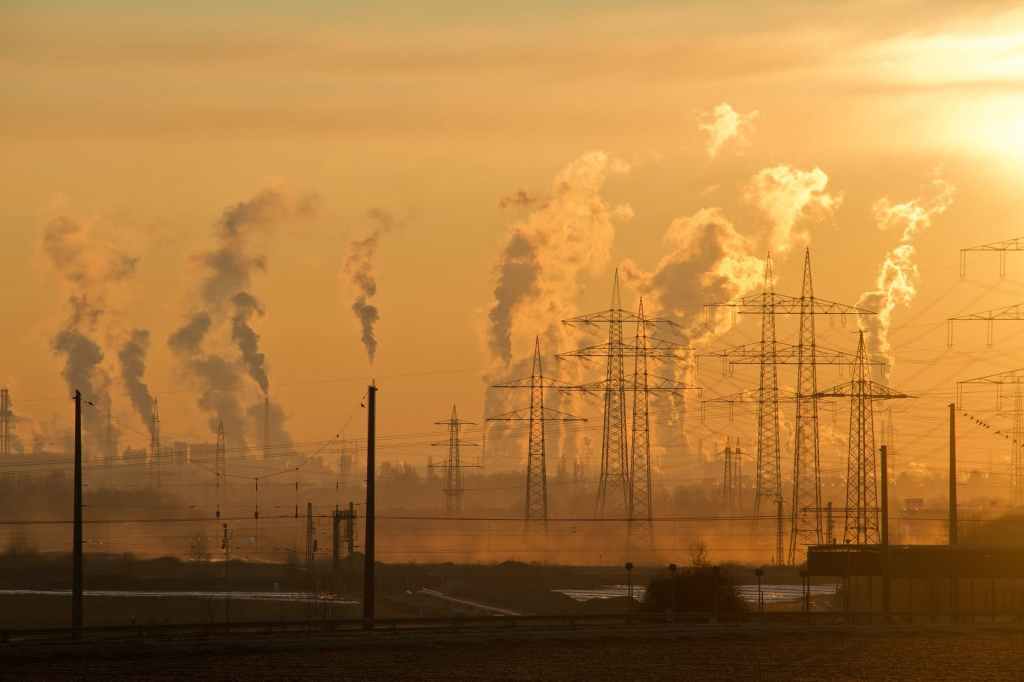
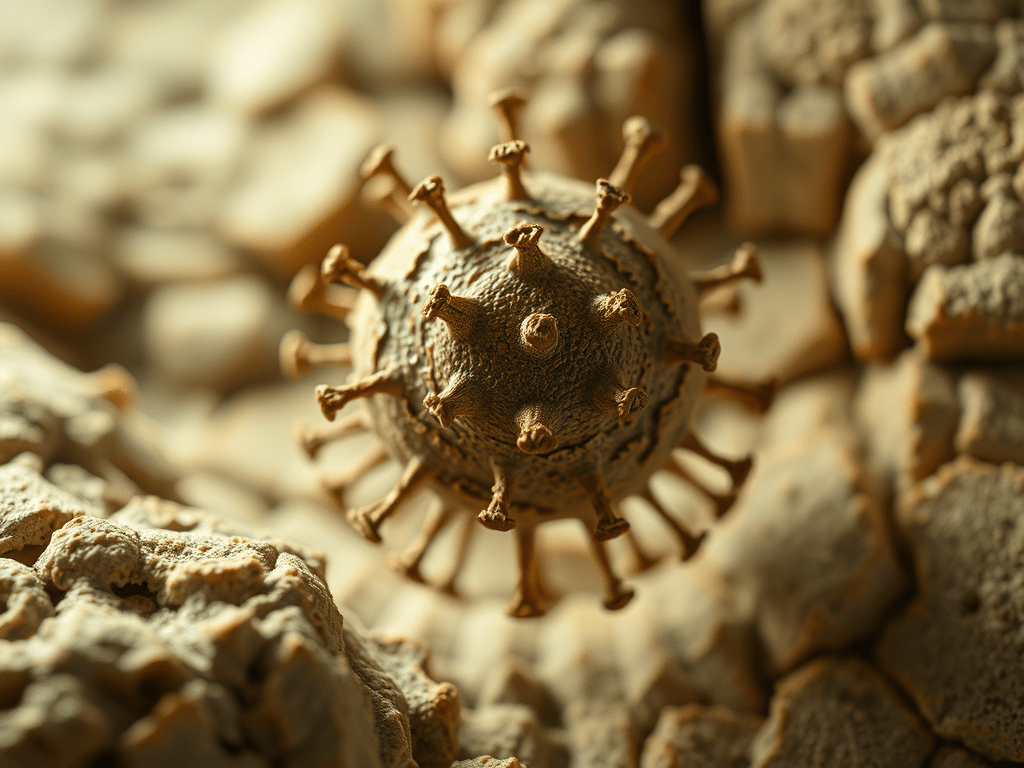
Art this distance in time it is possible to see a pattern. The natural human instinct to trade and ma make a bit of spare cash gradually leads to the growth of larger and larger cities. These require common systems of law to maintain the rising levels of prosperity. The resulting peace is very pleasant to live under for a few generations. But lurking in the trade routes are the pandemic diseases which can shake societies to their foundations. When you combine that with the ability to cause massive changes in climate(no one would dream of blaming the Myceneans for that!) the potential for sudden catastrophic failure is multiplied exponentially.

Such an event would confront the educated classes(of which the readers of this blog are such valuable members) with a number of inconveniences. We will look at possible responses in the next few blogs,

[1]Kyle Harper The Fate of Rome Princeton University Press 2017

[2] https://en.wikipedia.org/wiki/Late_Bronze_Age_collapse

#olmecs #shang dynasty ##kyle harper #pandemic #climate change #global warming #collapse

Another big Thank you-and a small musing

Another big thank you to readers, commentators, and the indefatigable ideas people including our researchers and fellow members of the Editorial Board. We are indeed getting mote readers, more followers and above all more likes and comments. All of which keep us in mid season form, as Wodehouse would have it: full of the joys of nature’s second season, with the old ginger whacked up absolutely to the top of the tank.

If you can bear it, we thought we’d throw away a couple of lines on who is reading, and about what. Unitedstatespersons make up the biggest contingent. Odd when you think this stuff is tapped out in England. Astute readers will not be much surprised to note that English speaking countries such as the United Kingdom, Canada, Australia etc joining the line up roughly in proportion to the old demographics. By the time we get down to the more far flung outposts however, the figures do not look so good. Why so few responses from St Helena or Pitcairn Island? We don’t know. But we’re working on it. As for the rest of the world: India always big- a country on the rise with a strong science base, and a large number of English speakers. We had hoped for more from the Spanish Speaking world. Sadly our command of that language is not quite good enough to write articles in it. But if any of you amigos want to comment in the language of Cervantes, we’d love to hear from you. After that, many countries. China figures above the random level; we’d love to know which latter day Kong Qiu peruses our offerings, and where they work.

And what are you reading? The one where we suggested that the President of the United States was a closet Socialist is cantering in at the top of the field everyday. It was meant to be more wry and ironic than a serious discourse on Political Economy. But some like it- a lot. After that- human evolution seems quite popular. Our own idees fixees of antibiotic resistance and climate change are high in the betting, but not always favourites. We need to do more there, we think.

Overall, since we started-progress. Like that new bloke they have at Manchester United, who is being given time. Give us some more too, The world is a big bad place, and once again to paraphrase the Immortal Wodehouse; we thinking Johnnies need to stick together.

THE BOARD

#United States #United Kingdom #China #india #antibiotics #climate change #science

Genetics: a whole new perspective on human evolution?

Every so often it pays to look at the same problem from a completely different perspective. For the past 57 years or so we have been collecting and grading reports of human fossil bones and old tools the way that cricket fans collect the records of every game their team has played. But today, with the help of one or two of our redoubtable AI chums, we present a whole new perspective on the old story. Much of it is locked in our genes and has been uncovered by the amazingly intelligent efforts of genetics researchers.

Their discoveries are so extensive that there is too much for a tiny blog: so we’ve summarised the findings below. But look at the timing of the mutation in the famous FOXP-2 gene, and the human species which were running around at the time. True humans fall naturally into two groups. One one side, big -brained essentially modern forms : Homo heidelbergensis, Denisovans, Neanderthals and Homo sapiens. On the other? Poor old Homo erectus, significantly smaller-brained and with a much more exiguous technological and cultural life. In this light, the mutation is almost eerily coincident.

Of course the time lines of the mutations are a bit open ended; but the picture from the fossils is a bit vague too. What really impresses us is the way that, give or take an Ice Age or two, the geneticists provide independent validation of the fossil finders’ picture overall. And there’s an even deeper lesson. The same truth can be seen in two completely different ways, Like those night sky apps you can get which can show the same firmament through visual light, x-rays, microwave or radio waves; whichever you choose. Next time you argue with someone ask yourself and them: are we really talking about two different things? There’s a cognitive advance for the ages.

all based on peer reviewed or reputable pre pubs sources (microsoft assistant)

Time (Million Years Ago)Key Genetic MutationHominins Present
~6 MYAARHGAP11B (linked to brain expansion)Sahelanthropus tchadensis (early bipedal ape-like species)
~4.4 MYAChanges in genes affecting bipedalismArdipithecus ramidus (early upright walker)
~3.3 MYASRGAP2C (enhanced neuron connectivity)Australopithecus afarensis (Lucy and her relatives)
~2.4 MYAMYH16 (jaw muscle reduction, allowing brain growth)Early Homo habilis (first tool users)
~2 MYASCN9A (pain sensitivity mutation)Homo erectus (first hominin to leave Africa)
~700,000 YAFOXP2 (language-related gene)Homo heidelbergensis (ancestor of Neanderthals and modern humans)
~900,000 – 4.5 MYAChromosome 2 fusion (reduced chromosome count from 48 to 46)Various early Homo species
~300,000 YAMicrocephalin & ASPM (brain development genes)Early Homo sapiens (our direct ancestors)

#genteics #paleontology #tools #fossils #anthropology #human evolution

We said Base Pair editing would outshine CRISPR. This breakthrough proves we were wrong. Or not

When is CRISPR- Cas-9 Base Pair Editing, and when is Base Pair editing CRISPR Cas-9?. Readers of this blog may be forgiven for thinking Base Pair Editing was the exciting new kid in town that was going to make CRISPR look like VHS tapes ( what they?ed) But according to reports of a recent breakthrough in medicine, they are, sort of, one and the same thing.

Perhaps we had better start with the breakthrough. Doctors in Pennsylvania in the USA have used gene editing techniques to treat a poor little boy whose liver lacked the necessary enzyme system to process ammonia. Our reports come firstly from Ian Sample of the Guardian and the New England Journal of medicine via hyperlink) , where Base Pair is very much to the fore While Nature Briefing has the following take , again with the hyperlink to the NEJM, Baby Boy Receives CRISPR for One Therapy

A baby boy with a devastating genetic disease is thriving after becoming the first known person to receive a bespoke, CRISPR therapy-for-one. KJ Muldoon, now almost 10 months old, received three doses of a gene-editing treatment designed to repair his specific disease-causing mutation, which impaired his body’s ability to process protein. While Muldoon appears healthy, it is too soon to use the word “cure”, says paediatrician Rebecca Ahrens-Nicklas. “This is still really early days.”Nature | 5 min read
Reference: New England Journal of Medicine paper

From all of which we have obtain the following Learning Points for your Edification , gentle reader:

1 It matters less what you call it, and more that it works-the kid’s OK now!

2 Maybe Base Pair Editing is a subset of CRISPR the way that Hammersmith is a region of London. OK, it’s Hammersmith. But it’s London too. What’s the big deal?

3 It would be interesting to learn if other big cities like New York or Madrid for examples, contain smaller areas with funny names. But we will leave that to another day.

4 If you educate people, teach them critical thinking skills and give them some money to buy test tubes with, things like this can happen

5 If you keep people working long hours for little money, educate them to a minimum and give them things like Fox News to watch, societal outcomes may be very different

[1]https://www.theguardian.com/science/2025/may/15/us-doctors-rewrite-dna-of-infant-with-severe-genetic-disorder-in-medical-first?CMP=Share_iOSApp_Other

also: see LSS 23 7 2022 and follow ups

#gene therapies #base pair editing #CRISPR Cas-9 #medicine #health

What is Autism, anyway?

“Everyone is a little bit autistic”. A view you hear quite often. And for us, rather comprehensively dealt with by Dr Aimee Grant of The Conversation [1] The phrase means that all of us show some behaviours(a liking for routine, for example) which are present to a much higher degree in neurodivergent people. Ergo, we don’t have to put in the hard yards of research and thinking which this fascinating condition really invites. Wrong says Dr Grant. Autism is a defined neurological condition with clinical boundaries. Herself autistic, we think she knows what she’s talking about.

The idea of not pontificating on something you know nothing about (autism; and other things) is precious to us here. A few years ago there was a rather hysterical fuss among certain journalists that Autism was caused by the MMR vaccine. Cool heads and reasoned minds showed this idea to be incorrect. What we didn’t know then was that some of the cases that the advocates of the MMR theory cited in support of their cause may not have been autism at all. One of the cases may have been something called Rett syndrome as the acute mind of Professor Nessa Carey pointed out [2] No, we hadn’t heard of it either. So to help you, gentle readers to wade through this minefield of definitions, syndromes and human suffering, we thought we’d offer this brief guide to some of the other things that are out there, and manifest some symptoms which overlap strongly with autism. If only to show the utter, mind boggling complexity of what clinicians and others have to deal with.

Rett Syndrome Cause: Mutations on MECP2 gene Normal early development followed by regression. Mostly affects girls

Fragile X syndrome Mutation on FMR 1 Gene Not all fragile X persons are autistic. Not all autistic persons are fragile X

Phelan McDermaid Syndrome Deletion on chromosome 22, often in SHANK 3 gene

Social Communication Disorder Communication problems Does not involve repetitive behaviours typical of autism

Intellectual Disability(ID) with behavioural challenges cognitive delay is global; but many autistic people have above average intellectual ability

Sensory Processing Disorder (SPD) extreme sensitivity to stimuli e.g. light, touch, etc this is the closest to autism and it’s true many experts don’t differentiate it from autism

This is a tip of the iceberg, superficial treatment, as the bounds of our blog dictate. But it’s enough to make you pause and think “There are more things in heaven and earth than you have thought of in your philosophy, Horatio” as Hamlet once remarked. The real point is not what we know, but how much there still is to discover. And how those discoveries may yet be organised. But that’s a job for another day.

thanks to P Seymour

[1]https://theconversation.com/everyone-isnt-a-little-bit-autistic-heres-why-this-notion-is-harmful-256129?utm_medium=email&utm_campaign=Latest%20from%20The%20Co

[2] Nessa Carey La Revolution Epigenetica Biblioteca Buridan 2011 amazon completion point 19%

#autism #nessa carey #diagnosis #mmr vaccine #neurology #brain #genetics #behaviour #medicine #health

APPEAL: the charity that tries to mend broken lives like Peter Sullivan’s

It is November 1987. If you turn on the radio, you might hear T’Pau‘s popular ditty China in your Hand, or maybe George Michael belting out Faith. In the UK , Mrs Thatcher‘s government is reaching peaks of popularity, although last month’s financial crash is a harbinger of that there may be troubles ahead. But you don’t mind, because you’re going to see Cher in Moonstruck, and…….that’s it. Nothing else happens for 38 years. Because you are in prison. High Security prison in fact, for a murder which you did not commit. The world moves on, but you are frozen in 1987.

That’s what happened to Peter Sullivan. [1]His conviction was for the murder of a poor innocent woman called Diane Sindall, who died in tragically brutal circumstances in 1986, and whose real assailant has never been found. And despite repeated appeals to courts and organisations like the CCRC, whose ostensible purpose is to review purported miscarriages of justice, nothing was ever done, Until his case was taken up by APPEAL. They are a tiny charity, skeleton-staffed by lawyers and other professionals. Legal Davids taking on a Goliath of wrongful convictions. You can read more about their work here [2] One recent heart warming success was the release of an unfortunate man named Andy Malkinson who was wrongfully jailed for rape in 2003. Their are many other cases like his on our system; there will be in yours too, overseas readers.

We know there have been advances in Forensic Sciences. We know that Police Officers are forced to work far too hard, with dreadful lack of funds. We know that makes them vulnerable to all -too -human faults like jumping to conclusions and confirmation bias. ( we are less sympathetic to the hysterical vitriol poured out by the media when a “successful” conviction has been achieved) But we do know that the world needs an organisation that deals in the best currency of our species-second thoughts. APPEAL is one such. Hopelessly understaffed. desperately under resourced. They are there for every little person who has felt the full obdurate weight of the criminal justice system sitting right on their chests. And to help some of these victims stumble free, unbelievingly, into 2025.

[1]https://www.theguardian.com/law/2025/may/13/peter-sullivan-jail-murder-conviction-quashed-diane-sindall?CMP=Share_AndroidApp_Other

[2]https://appeal.org.uk/who-we-are/

here is their donate page, just to save you time (hint hint)

#APPEAL #CCRC #peter sullivan #diane sinda;; #andy malkinson #miscarriage of justice #court pf appeal #forensic science #dna

Cancer testing saves lives-and shows why science works

Today we a re going to talk about cancer. In the UK alone it kills 167 000 people annually, which is about 29% of all recorded deaths . Meanwhile about 3.5 million people are trying to live with it on a daily basis. The statistics for your country will be comparable, gentle reader. Nothing would cheer us more than to report some good news. And today we think we can, courtesy oft the far sighted Professor Peter Sasieni and his team at London’s Queen Mary University via the Mail [1] [2]

Professor Sasieni and his team are not pioneering cures directly. Their skill is devising new ways of testing. To detect the terrible disease early, before it can wreak havoc, and unleash the cures when they have the optimal chances of success. The linked article is a good summary of all the wonderful work they are doing. But we have filleted out this tiny quote which will give you some flavour of what they are achieving

Yearly screening under the fast tumour growth scenario led to a higher number of diagnoses than usual care – 370 more cancer signs were detected per year per 100,000 people screened. There were also 49 per cent fewer late-stage diagnoses and 21 per cent fewer deaths within five years than patients receiving usual care. 

If that’s not hope we don’t know what is

But there’s a deeper story here. For us, the best working definition of intelligence is how you respond to reality. You may have a lot of money, talk well, and even have a genius IQ. But if you ignore facts, deny them, or distort them, then you are a fool. There’s no mystery about science. It is simply a way of collecting true facts and organising them according to the rules of logic, which is what Professor Sasieni has done. This works globally for things like changes in the climate. It works locally, for things like diseases in the human body such as a diagnosis of cancer To deny truth once is the start of denying it always. With fatal results.

[1]https://www.dailymail.co.uk/health/article-14694059/blood-tests-detect-earliest-signs-cancer-prevent-advanced-stage.html

[2]https://www.qmul.ac.uk/wiph/people/profiles/peter-sasieni.html

#cancer #testing #screening #health #medicine

Is Keir Starmer becoming a Socialist?

Because he’s certainly acting like one. Forget the labels that people apply to each other, and to themselves. They’re mostly rubbish anyway. Look at someone’s actions. Today, Sir Keir (great name, by the way) has announced that his government has announced major new controls on the flow of immigration into the United Kingdom.[1] In support of this action, he cites the social problems caused by uncontrolled immigration and the harm it does to the social fabric. In doing so he makes the classic socialist case for controlling the laws of supply and demand. The same argument that socialists of all kinds from the most milk-and-water Social Democrats way out to the crazed ravings of Maoists and Trots.

The Capitalist argument is quite different. The law of supply and demand is the best approximation we have to the way people live in groups. Any restriction of free movement of anything such as taxes, business regulation or migration controls is contrary to nature, and must therefore lead to long term harm. After all, what is more socialist than civil servants telling employers whom they may, and whom they may not, hire to do a job? The socialist riposte is clear: the State should ban your desire to hire foreign workers if by doing so you harm the well being of members of our community here.

No, we are not going to say which one we agree with. The capitalists had their time to run the world, particularly after 1991. Their dream of universal prosperity seemed to be a true busted flush after 2008. Since then, the wind has been blowing in a socialist, that is to say, regulated direction. Whether it is to be socialism of the National or International variety remains to be seen

[1]https://www.theguardian.com/politics/live/2025/may/12/immigration-keir-starmer-labour-reform-visa-foreign-workers-uk-politics-latest-live-news

#socialism #capitalism #sir Keir starmer #immigration #economics #politics

Is this plastic eating bacterium the ultimate in antibiotic resistance?

Bacteria that mutate to resist the strongest known antibiotics. At this blog, it’s in our DNA, if you will pardon the flippant quip. But-get this-what if the bacterium in question starts eating the walls you are trying to contain it in? Sounds fantastic, like the plot of one of those old 1950s B movies. Read this piece called Hospital Superbug eats Medical Plastic from the admirable Nature Briefings

Pseudomonas aeruginosa — a strain of bacterium that often causes antibiotic-resistant infections in hospitals — can produce an enzyme that can break down medical-grade plastic. Researchers found that the enzyme, dubbed Pap1, can break down a plastic called polycaprolactone that is commonly used in health care because of its biodegradable properties. The ability to break down plastic could explain why these microbes persist in hospital environments, says biomedical scientist and study co-author Ronan McCarthy.Nature | 4 min read
Reference: Cell Reports paper

We’ve put up the Cell Reports posting for you too here[1]in case the clicker above does not get you through

So is this it? The big one? A wave of highly infectious bacteria that not only eats us humans, but gleefully chomps its way through the very defensive systems we use use to contain it? Possibly, yes. But-let’s keep our Alans on, as they used to say in the old Guy Ritchie movies. For there are two good reasons to do so.

First, it’s only eating one type of plastic, so far. There are lots of others which could be deployed for special medical uses which will be less vulnerable.

Secondly, the fact that this plastic is indeed biodegradable, and that something has found a way to do it, offers great hope. Imagine a plastics ecosystem wherein every bottle, every carton, each piece of wrapping is open to attack by this Pap-1 enzyme. Potentially it opens the way to clean beaches, litter- free hedgerows and unblocked rivers and sewers. There is no reason that the genes to make the enzyme could not be spliced into a safer organism than Pseudomonas aeruginosa. It’s an ill wind that blows no one any good, we say.

[1]https://www.cell.com/cell-reports/fulltext/S2211-1247(25)00421-8

#plastics #antibiotics #microbial antibiotic resistance #science #ecology #pollution

Friday Night Feast of Fun: VE day

The 80th anniversary of VE Day has bought an immense outpouring of celebrations. Millions who were not there will tell you how they long to put on a zoot suit and jive the night away to Vera Lynn, or roam the streets of London getting up to goodness knows what with perfect strangers on bomb sites (wasn’t it a bit cold?-ed)

But-how much would you have enjoyed it? For those who advocate free markets and liberal trade as the best cures for human ills, the Second World War makes very difficult reading indeed. The Government seized control of the nation’s food supplies in 1939,introducing an utterly comprehensive system of rationing, backed by bulk buying and ruthless imposition of standards. By VE Day on 8 May 1945 the nation was thinner, heathier, fitter and better fed that it had ever been before. Or would be ever again. But Civil Servants are not chefs, and the menus available on that famous date may seem very spartan indeed to the modern palate. We thought we’d offer the kinds of things which might have been served up. With the help,naturally, of one of the most likeable books in our collection: The Ration Book Diet [1] And follow it up with what you could drink.

First Course There isn’t one Both shipping and fuel were in short supply, making this stage a superfluous luxury. Now you know why they were so healthy. Wanna try it?

Main Course In their spring section, Brown et al suggest recipes for Kidney with Mustard and Madeira Gravy(p76) Vinegar and mustard baked chicken(p78) or broad beans with minted salsa verde (p80 ) Other things served up might have been Ham and pickle pie monkfish and bacon casserole or salad of some sort. Everything grown locally, or sourced form the nations own fields and fishing grounds. Should we go that way again?

Dessert They would probably have called it “afters” or “pudding”. Apricot compote , rhubarb bread pudding or rhubarb fool might have graced many a VE Day table . For treats as the night drew in: oatmeal scones. And that really is it. There were things about like spam, corned beef and even cheese(heavily on the ration) But you’ll have to read the book iof you want to know more about them.

Happy so far? Let’s pour a drink , or go to the pub

Popular beers of the day included Bass, Guinness and Trumans At home, these would have come in bottles. There were no fridges of course. The Ministry had strained every nerve to ensure the pubs were well stocked with much the same. We also found a cocktail list from a site called Bistrot Pierre. For us, the Gin Fizz stands out as an iconic component of the war-time vocabulary. At least from the films and TV programmes we’ve seen.

And wine? Oh come on. It all came from the continent, which had been under enemy occupation for four years. You had about as much chance of finding a mobile phone as bottle of chardonnay in London in 1945.

Still want to go there?

[1] The Ration Book Diet Mike Brown Carol Harris CJ Jackson The History Press 2010 https://www.amazon.co.uk/Ration-Book-Diet-C-Jackson/dp/1803993448

[2]https://www.bistrotpierre.co.uk/propeller/uploads/2020/04/VE-Day-cocktails.pdf

#food #drink #VE day #world war two #diet #health