Faecal Pellets: Watch the good bacteria chase out the bad

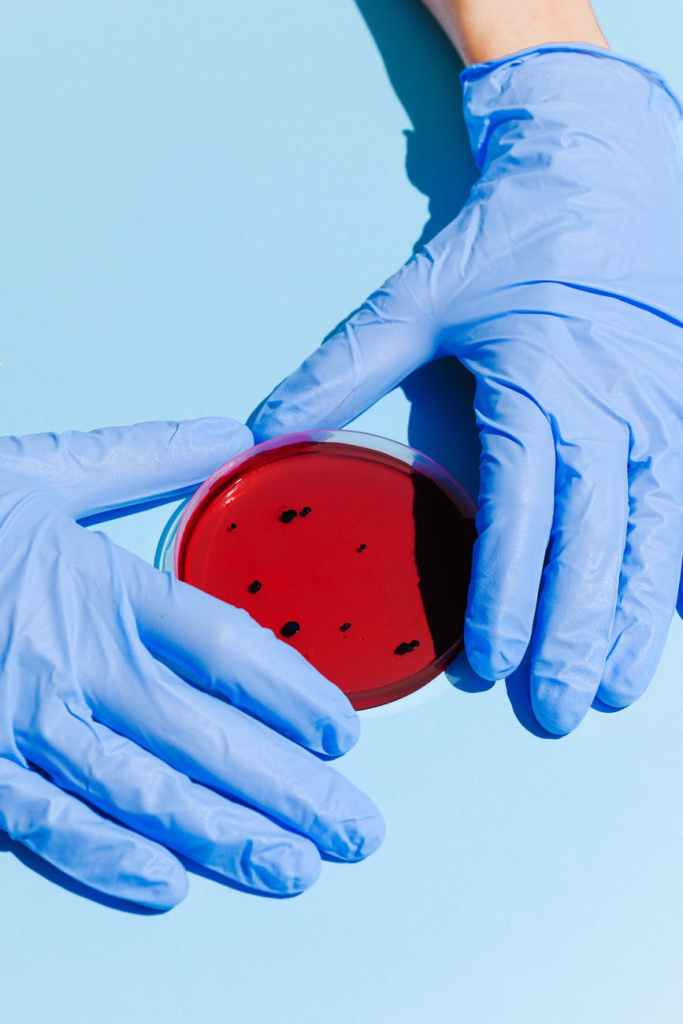
Imagine you get bad news: antibiotic resistant bacteria have set up a colony in your intestine. OK here’s some worse: they could escape and invade your blood, kidneys, whatever. In which case you have real problems. This is a very real scenario which that brilliant researcher Dr Blair Merrick of Guys and St Thomas Hospital has sought to address. [1] as reported by James Gallagher of the BBC Why not, he has reasoned, get some good non resistant bacteria to chase out all those bad ones? It is his chosen method which may raise more than one eyebrow among you, gentle readers

According to Dr Merrick, the way to get the good bacteria into his subjects is via pills made of…..well, made of faecal matter, you know,,,poo. To quote James:

Dr Merrick says there are “really promising signals” that poo pills could help tackle the rising scourge of superbugs and that donor bacteria could be going to microbial war with the superbugs as they compete over food and space on the lining of the gut and either rid the body of them completely or “reduce them down to a level that doesn’t cause problems”.

We like this for all sorts of reasons. Firstly the gut really is such a good harbour of antibiotic resistant bacteria. Secondly, as in all things ecological, making its flora more diverse can only be a good thing. Thirdly, we think it has a clever little principle behind it. Antibiotic resistant bacteria have devoted a tiny bit more of their genome to this purpose than non resistant ones. In the world of ecological competition, where tiny differences can make an enormous difference to long term survival, this could be crucial. If done correctly, the good non resistant ones should out compete the bad ones.

It’s early days yet, and the early trials have only been on 41 subjects But as seasoned veterans of the long wars of antibiotics will know, we at LSS welcome every initiative, however unusual it may at first seem. We wish every success to Dr Merrick and his team and hope that their early accomplishments continue in the bigger trials to come,

thanks to Ms G lynch

[1]https://www.bbc.co.uk/news/articles/clyge290l4xo

#gut #microbiome #antibiotic resistant bacteria #health #medicine

Forensic Science shows why privatisation doesn’t work

Being an employee of the UK Forensic Science Service used to open doors back in the year 2000. Even if you you were too lowly to personally know the top people, you worked for them,: you saw them in corridors and said good morning. People as far away as San Francisco wanted to know about their pioneering DNA techniques, excellence in evidence handling and preservation, in new intellectual approaches like Bayesian statistics. It was like playing for Manchester United (then popular and successful exponents of the game of Association Football)

But lurking in the background was a disease that would kill this particular goose and the golden eggs it laid. “Private sector good, public sector bad” It was a mantra that had taken deadly root in the Thatcher years. The private sector, it held, was full of hard working go getting, sharp- suit- wearing entrepreneurs who cut through the red tape and got things done. Civil servants(the FSS and its predecessors were Civil Service bodies) were lazy, hidebound, slow, risk averse pen pushers who needed nothing so much as a good kick up the backside The result was that anything and everything (except police and armed forces) was sold to private investors. Eventually even the Forensic Science Service went under the hammer. The results are made clear in this story by Hannah Devlin of the Guardian [1] We cannot begin to do justice to the wasteland of failed justice, loss of expertise and collapsing confidence which has resulted. All we can do is quote this extract-and beg you to read the whole thing

Forensic science in England and Wales as currently configured isn’t working for anyone – not for the police, not for the lawyers or for the courts, not for the scientists themselves, and not for the general public who get caught up in the criminal justice system,” said Prof Angela Gallop, co-chair of the Westminster Commission on Forensic Science.

“Like a plane hurtling downwards in what has become known as a ‘graveyard spiral’, with the pilot in desperation making increasingly erratic decisions, it can only be a short time now before it impacts the ground.”

Perhaps the Manchester United metaphor was not so facile. Things sort of function- but at laughable shadow of their former glory.

This is what happens when a country is seized and held by a single doctrine. When the lazy self interested opinions of journalists and the gin sodden flies who hang around golf club bars are substituted for rational policy No one would deny that Forensic Science under the Government had its inefficiencies, or the odd passenger. It contained more than a few fools who loudly praised the tax cuts and bought the gas shares that Thatcherism created. Its even arguable that some industries did benefit from the injection of private capital and techniques (water is not one of them) But like water, the whole sorry mess now needs clearing up. And none of it ,none of it , needed to have happened. That’s the biggest injustice of all.

https://www.theguardian.com/law/2025/jun/09/forensic-science-crisis-miscarriages-of-justice-england-and-wales-report

#forensic science #justice #police #courts #evidence #economics #privatisation #thames water

Friday Night Feast of Fun: Strawberries, cream and what to drink

As  May rolls into June, England hits peak summer. All those  muddy football players yield to natty cricketers and immaculately coiffured green wickets . Gardens fill with flowers. At Wimbledon and a thousand other places, the air is filled with the thwack of racket on balls. Nothing captures the ambience like a well-turned bowl of strawberries and cream, that near quintessential accompaniment to a day out at the tennis or the Derby. Ok there’s one rival, but we’ll be doing that next week

People have been eating strawberries as a summer dessert since at least the sixteenth century. However the  big  ones  we  take for granted today  didn’t really come about until the middle of the eighteenth, [1] as a result of a wheeze by an enterprising Frenchman called Amédée-François Frézier .  Frankly we found all the botany and genetics in the Wiki article a little cognitively challenging: suffice to say he crossed a North American version with one from the southern continent to produce that plump juicy berry which not only tastes good, but is admirable to look at. And our recommendation to go with them? Cream, single or maybe double. Not ice cream, not clotted, not that funny squirty stuff that comes out of tins from some of our cheaper supermarkets. And certainly no sugar. Just good, old fashioned cowsmilk cream. Gottit?

Now for the really important question: what to drink? Our Intelligent researchers came up with the following list, each perfectly tailored to a different aspect of your dish. Bowl. Whatever.

  Sauternes – A classic French dessert wine with honeyed sweetness that complements the creaminess.

Coteaux du Layon – A Loire Valley wine with citrus and honey notes, perfect for the richness of cream.

Pinot Noir Rosé – Light and fruity, with strawberry and peach notes that enhance the fresh berries.

Demi-Sec Champagne – The bubbles and brioche flavors contrast beautifully with the sweetness of strawberries.

Riesling (Spätlese) – A German Riesling with floral and orchard fruit notes that highlight the strawberries.

Prosecco – Slightly sweeter than Champagne, making it a great match for ripe strawberries and cream.And much, much cheaper!

Gewürztraminer – Aromatic and floral, with lychee and ginger notes that pair well with strawberries.

And with the end of that list, may we wish you another happy Friday night feast.

[1] Strawberry – Wikipedia

#strawberries #cream #summer #wine #garden #tennis #cricket #wimbledon

AIDS breakthrough shows what science can do

We now live in an age when science (and the rational habits  of mind it depends upon) is under attack.  Heirs to the rational tradition have always had to live with religious fundamentalists who deny inconvenient truths like evolution. But nowadays attacks come thick and fast from those who wish to deny  climate change, the dangers of  smoking, the efficacy of vaccines and much besides.   From people who nevertheless cheerfully accept other scientific findings which suit them.   So, just to redress the balance we thought we’d showcase this breathtaking new advance in AIDS research which, for the first time, holds out the hope of a permanent cure.

It comes from Kat Lay of the Guardian,[1] reporting the  work of the Peter Doherty Institute in Australia.[2] The background will be familiar: the great evolutionary survival trick of the HIV was to bury itself deep in certain white blood cells of the immune system, where it was immune to our attack. In the words of Kat:

In a paper published in Nature Communications, the researchers have shown for the first time that mRNA can be delivered into the cells where HIV is hiding, by encasing it in a tiny, specially formulated fat bubble. The mRNA then instructs the cells to reveal the virus. First AIDS was a death sentence: then it could be slowed with drugs. Now at last comes hope of a real cure for its 40 million or so sufferers

Science itself is a process, not a monolithic entity. It evolves, refines, and corrects itself over time. But when people selectively accept only the parts that align with their worldview, they undermine the very foundation of rational inquiry   This kind of cherry-picking often stems from cognitive biases, ideological commitments, or economic incentives. Climate change denial, for example, is frequently tied to political or financial interests, while opposition to vaccines or smoking regulations can be fuelled by misinformation or personal convenience.  But the deniers should remember one thing: if they do decide to overthrow the rationalists, will they put anything better in our place?

Truth is compared in Scripture to a streaming fountain; if her waters flow not in a perpetual progression, they sicken into a muddy pool of conformity and tradition.”

 Milton: Areopagitica

[1]https://www.theguardian.com/global-development/2025/jun/05/breakthrough-in-search-for-hiv-cure-leaves-researchers-overwhelmed?CMP=Share_AndroidApp_Other

[2]https://www.doherty.edu.au/

#HIV #AIDS #disease #mRNA #medicine #science #climate change #smoking

Why we agree with Liz Truss

Its not often that we agree with Liz Truss, our erstwhile Prime Minister.   The one who, you will recall, received such harsh criticism for her brief stewardship of the British Economy. And who has since spent their time since trundling the rounds of right wing meeting rooms and assembly halls reprising her old lines.. Typical of her critics is one Rafael Behr of the Guardian [1] who asseverates:

 Apparently her big lesson from government  was” to learn that British institutions have been captured by a leftist doctrine and that they “hate western civilisation”. She couldn’t possibly counter this threat …..because supposedly the real power was wielded by a well-financed “globalist network”, operating through such engines of anti-democratic subterfuge as the International Monetary Fund and the World Health Organization.

Harsh words, bro! In one sense we think Behr is right. There are no conspiracies .Human beings do not have the cognitive ability nor attention span, nor ability to keep their mouths shut,  to organise any worthwhile conspiracy. But there are people who think and act like globalists. Because it is their job to turn a profit for their shareholders. From everyday things like drinks and clothing, to cars and IT successful corporations  operate at a global scale. Almost half available investment funds are now held in shadowy entities like sovereign wealth funds, hedge funds, family trusts and shell companies. Where Truss and co are right is that they are acutely aware of this at a subconscious level. And see the dangers more clearly than most . That the nation state is rapidly ceasing to be an effective vessel to effect the dreams and aspirations of its members. Hence the inefficacy of voting and the despair in democracy.

It’s happened before. Think if you were an inhabitant of a small but substantial little state like Mercia in the Middle Ages. Around the time it was  being slowly absorbed into England. Suddenly your King has to worry about foreigners in far off places like Sussex or the City of London. Suddenly your church must accommodate the views of parishioners in Canterbury and York as well as those in Litchfield.  Suddenly power is exercised through a well financed English network through such subversive organisations as the Church and the Assize courts.  It’s easy to see how such changes may seem unfamiliar,  bewildering: frightening  even.    This is the problem of our time too. Truss and her kind should not be laughed at. Like the canary in the coal mine, their fears should be taken very seriously indeed. Or we shall all blow up,

https://www.theguardian.com/commentisfree/2025/jun/04/liz-truss-british-politics-nigel-farage-kemi-badenoch

The spirit of Liz Truss, ridiculous but relentless, still stalks British politics | Rafael Behr | The Guardian

#gloablisation #democracy #capitalism #nationalism #nation state #corporation #liz truss #finance

Renewable energy from seaweed Now there’s a thought

If we are going to get through the current climate crisis, and come out alive at the other end, we ‘ll need to consider every new idea, however outre it may sound at first sight, Which is why we want to showcase, via the Conversation,[1] the work of Mike Allen , Professor of Genomics at the University of Exeter and founder of SeaGen,[2] a company which has the courage and vision to think differently. ]For Mike thinks that by using robotics, he can harness the enormous biomass of seaweed in the sargasso sea, and other places

Now we’ve always been pro- seaweed here. Veteran readers may recall our promotion of the new Sussex kelp forest, both on this site and in articles in local newspapers and websites [3] and we certainly talked about how the stuff, especially kelp, could be a source of all kinds of useful things like food and fertiliser. But as his article and website makes clear, Mike is taking this to a whole new level. By using autonomous robotic systems, the harvesting and processing of the weeds can be done on an ergonomic and industrial scale.

We have no financial or any other connection to this man or his company. But we are massive fans of the hopeful start-up. Because we believe that progress, real progress grows form that complicated network of new companies , university departments, government agencies and anonymous little industrial estates where the real dreams of the future are born. We’ve done stories like this before, and will do more in the future. If you really need a declaration of interest it is this: they may help us to survive.

[1]https://theconversation.com/how-seaweed-is-a-powerful-yet-surprising-climate-solution-251195?utm_medium=email&utm_campaign=Latest%20from%20The%20Conversation%20for%

[2]https://www.seagen.io/

[3]https://www.sussexgreenliving.org.uk/sussex-kelp-forest-leads-the-way-by-keir-hartley-first-published-in-west-sussex-county-times/

#seagen #seaweed #sustainability #robotics #ocean #climate change

Bit of a round up: Yes Men, Fusion, Bowel Cancer, molecular shuttles and seething in the Sahel

Overwhelmed by a huge flood of suggestions , the only way we could cope was to pull them into this handy easy to access guide to some of the most significant happenings of the week. You don’ have to click on all of them

Will the Yes men Bring Down Donald Trump? As organisations get successful they attract more people who are adept at climbing the ladder rather than doing the job. The USA is somewhere near peak Trump at the moment. The Conversation warns how bad advice could end all in tears

Fusion on Trent The person who sent us this idea has had to endure our enthusiasm for nuclear fusion for more than fifty three years, despite the fact that it hasn’t worked for fifty of them. Now all that may be about to change in Nottinghamshire in the UK as The I newspaper explains https://inews.co.uk/news/politics/limitless-clean-energy-nuclear-fusion-3711971

thanks to P Seymour via Apple News

Weighing the risks of bowel cancer Inequality leads to poor diets. Poor diets lead to obesity. Obesity leads to bowel cancer. How ironic, therefore, to see a riff on this theme in the Mail, of all places. But there it is so, there you go, as they say(that’s enough cliches-ed)

https://www.dailymail.co.uk/health/article-14756279/Doctors-discover-vital-new-clue-search-cause-mystery-bowel-cancer-explosion-50s.html

Shuttle and open We’ve riffed a bit ourselves here about the blood brain barrier over the years. It’s a pretty tough problem for those who would like to treat various disorders of the central nervous system. Now new hope come sin the form of molecular shuttles as Nature Briefing explains

To reach the brain, drugs must pass through the highly-selective blood-brain barrier. Large molecules, such as antibodies, don’t cross easily, if at all. Now, small chemical tags that can ‘shuttle’ drugs across the barrier are offering a way forward. Several such shuttles, which take advantage of natural transport systems, are in the works. Some have already been trialled in rare diseases, with signs of success. The field is in its infancy, but these shuttles promise to revolutionize treatments for diseases from Alzheimer’s to cancer.Nature | 10 min read

When scientists have a bone to pick It is an invariable law in paleontology , especially of the human kind, that the rancour of the disputes between its protagonists is in inverse proportion to the numbers of remains they have to work with. There is no better example of fear and loathing than the disputes over the bones of Sahelanthropus, the famous Toumai, which was once hailed as the uber-ancestor of us all. Before you hand over the world to an Aristocracy of the Educated, as some advocate, read this.

https://www.theguardian.com/science/2025/may/27/the-curse-of-toumai-ancient-skull-disputed-femur-feud-humanity-origins?CMP=Share_iOSApp_Other

#cancer #bowel #nuclear fusion #dona;d trump #health #medecine #alzheimers #sahelanthopus

Simon Kuper on how to Make the Transition to Intelligence and Wisdom

One of Saturday morning’s great pleasures, an hour or so before Spanish class, is to settle down in Costa with a coffee and a hard copy of the Financial Times. And one of the best writers in that journal is Simon Kuper. He’s clear, he’s brief, he deals in the currency of short sentences and defined concepts. He’s also a polymath, covering subjects as diverse as politics, urban planning and football(he’s even done a very workmanlike guide to the affairs of Barcelona FC . [1] In fact, he’s exactly the sort of writer we ought to showcase here, because he believes in our core LSS values of evidence, reason, and reserved judgement.

How appropriate therefore that his last column was called Seven Intellectual Habits of the best thinkers., for there can be no better short guide. [2] The problem is that access is behind a paywall. As LSS is such an important institution, and our readers so avid for wisdom, we rang the Editor of the Financial Times a to demand that this be lifted as a Special Case., and that he/she/ they might like to buy us lunch to discuss the matter further. The young person on the switchboard thanked us very much and promised they would call us back. So far they have not done so(that was three days ago) but doubtless there were other callers. So, while we are waiting, we thought that we could offer you a distilled reproduction of Simon’s thoughts:

1 Read Books ” Their complexity is a check on pure ideology” People who simplify the world are the ones who fall for conspiracy theories or the offers of charlatans.

2 Don’t use screens much Apparently, biochemist Jennifer Doudna, who invented CRISPR technology gets her best insights when she’s out weeding her tomato plants. Obviously you have to use screens a bit, or you couldn’t read this! But we get Simon’s drift: a little screen time is a lot.

3 Do your own work, not the world’s The same Doudna got a gig at Genentech, leading their research. She lasted two months before hightailing it back to Berkeley where the true intellectual freedom led her to the Nobel Prize. We agree: people who spend all their time on office politics actually accomplish very little that is either interesting or of value.

4 Be multidisciplinary Kuper cites the examples of Hayek, Godel, Van Neumann and others who all studied one thing, trained in another and did their best work in a third. Daniel Kahneman is cited as another multi-disciplinarian polymath of formidable intellectual power. Rather worryingly, our AI system has set his book as homework for us. Where’ are John and Sarah Connor when you really need them?

5 Be an empiricist who values ideas Kuper cites the case of Isaiah Berlin and his marvellous work the Hedgehog and the Fox , a masterpiece of political philosophy. Incidentally Winston Churchill got him mixed up with Irving Berlin and invited the wrong one to dinner.”My British Buddy” as Berlin himself would later remark in song.

6 Always assume you might be wrong Yep: in this country we are still trying to repair the effects of the blissful certainties of Brexit. You will doubtless have examples from your own lands

7 Keep learning from everyone “Only mediocrities boast as adults about where they went to University at 18.They imagine that intelligence is innate and static. In fact people become more or less intelligent through life depending on how hard they think. The best thinkers are always learning from others, no matter how young or low status” We quote Kuper rather fully here as the first part seems one of the most admirable and accurate summaries of the sorts of people one met on a daily basis during long decades in the Scientific Civil Service. Now there’s intelligence indeed.

[1]https://www.worldofbooks.com/en-gb/products/barca-book-simon-kuper-9781780725543?sku=NGR9781780725543&msclkid=6c7699156a7f1cc4c9f2f1238

[2]https://www.ft.com/content/c42cb640-a03c-441b-868f-d1a92d78bcb7

#wisdom #intelligence #FC Barcelona #isaiah berlin #daniel kahneman #thinking #financial times #simon kuper

Brand New Antibiotic- a last hurrah for Harvard University?

Today we are brining you news of one of the best stories we’ve covered in many a long year of campaigning. Today Hofman-La Roche have announced late stage trials of a brand new antibiotic called Zosurabalpin. If all goes well it could be ready for clinical practice very soon. [1] We’ve been following this for a while now (LSS 1 4 24; The Conversation 5 1 24)[3] : it’s extraordinarily gratifying to see the long process so near to fruition.

There’s much to be excited about at a pure scientific level. Zosuralpin is designed to go after the particularly deadly bacterium Acinobacter baumannii, which can kill up to 50% of its victims. It’s one of those gram negative ones with a double cell wall. Zosurabalpin tackles this in a new way, specifically targeting lipopolysaccharides which the organism uses to maintain the integrity of those walls. For the first time since we entered the world of antibiotics, a gram negative bacteria, the ones which used to really concern the great Professor Garner and the other founders hasa been cornered. But that’s not our main learning point today.

Because Hofman did not develop this alone. Like all modern research it was international and collaborative. The international partner they chose was Harvard University, the oldest in the United States Of America, and one of the best in the world. Until recently. For as astute readers will know, this institution has recently been on the end of a tremendous kicking from President Donald Trump (pictured above with some of his supporters) and other members of his government. We are not certain yet if this will end terminally for Harvard. But at the very least, the time they spend defending themselves from their barbaric assailants would be time better spent developing new antibiotics. It’s worth balancing consequences like that against the savage impulses of the unreasoned, the unlearned and the unintelligent.

[1]https://www.ineosoxford.ox.ac.uk/news/new-antibiotic-class-shows-promise-against-drug-resistant-bacteria

[2]https://www.lbc.co.uk/news/health/new-antibiotic-could-defeat-resistant-superbug-human-test-zosurabalpin/

[3]https://theconversation.com/new-antibiotic-zosurabalpin-shows-promise-against-drug-resistant-bacteria-an-expert-explains-how-it-works-220564

#antibiotic resistance #hofman La roche #zosurabalpin #gram negative #medicine #healh #harvard #donald trump #harvard

Is this a collapse of Civilisation?(they’ve happened before)

Do Civilisations collapse? Do elaborate trade networks fall apart? Giant cities turn into uninhabited ruins? Ancient systems of law, education and custom vanish entirely ? Leaving nothing but an illiterate dark age, racked by violence and disorder? Yes, they can. We’ve alluded once or twice here to the collapse of the Greco-Roman world (LSS 10 3 21; 17 12 22) Professor Harper makes a convincing case for climate change and disease pandemics as the causes of that one. We in western countries are haunted by the Fate of Rome; it was relatively close in time. But there have been others.

The Bronze Age collapse 1200 BCE is further back in time, and has left fewer records, That it occurred there is no doubt. [2] For several centuries a large network of trade had built up across regions which we now call the Near East and Europe. There were cities, elaborate systems or wring and belief, Considerable prosperity; for some, and by the standards of the time. Around 1200 BCE all this was suddenly and violently cast down, with waves of wars and invasions. It took four or five hundred years at least for order of a sort to be restored and progress to resume, Further afield , the collapse of the Shang dynasty in China (c. 1050 BCE) and the Olmec Civilisation of Central America (c, 400 BCE) are chilling reminders that civilisational collapse is not unique to the West.

Art this distance in time it is possible to see a pattern. The natural human instinct to trade and ma make a bit of spare cash gradually leads to the growth of larger and larger cities. These require common systems of law to maintain the rising levels of prosperity. The resulting peace is very pleasant to live under for a few generations. But lurking in the trade routes are the pandemic diseases which can shake societies to their foundations. When you combine that with the ability to cause massive changes in climate(no one would dream of blaming the Myceneans for that!) the potential for sudden catastrophic failure is multiplied exponentially.

Such an event would confront the educated classes(of which the readers of this blog are such valuable members) with a number of inconveniences. We will look at possible responses in the next few blogs,

[1]Kyle Harper The Fate of Rome Princeton University Press 2017

[2] https://en.wikipedia.org/wiki/Late_Bronze_Age_collapse

#olmecs #shang dynasty ##kyle harper #pandemic #climate change #global warming #collapse