The Fisher King: an ancient legend for our sad modern times

I sat upon the shore/Fishing, with the arid plain behind me/Shall I at least set my lands in order?

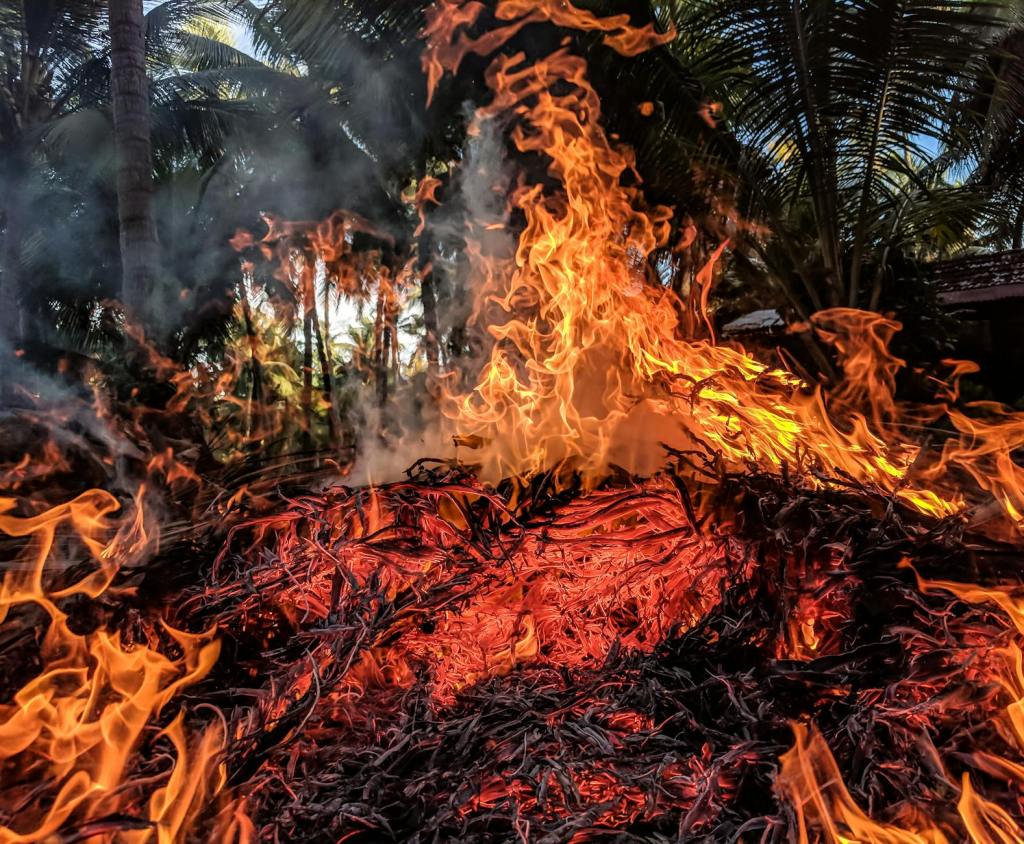
Thus TS Eliot sets out his stall: The Waste Land  (1922)is all about the legend of the Fisher King. His take on a world trying to recover from the traumatic wounds of World War. The what King? What’s a modern shiny AI powered  science-and-business blog like LSS doing with some crusty old Medieval legend, reworked not only by the saintly Eliot but by such questionable characters as Richard Wagner? The answer is very much indeed. For if we do not confront the message which the King encodes, all our technology will bring us to less than nothing indeed.

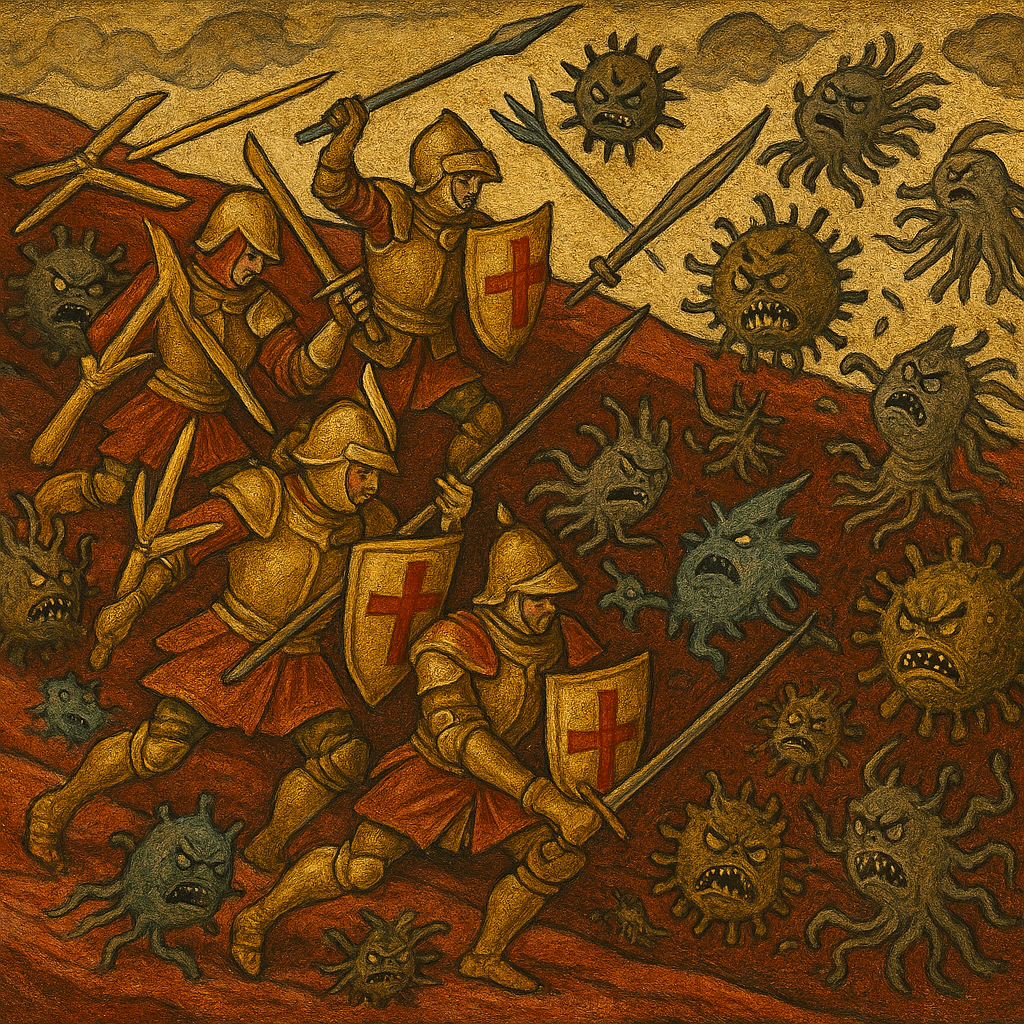
For all its tellings, the central myth of the Fisher King hasn’t changed much The King is a wounded guardian of the Holy Grail whose injury renders his kingdom a barren wasteland. He cannot heal himself, and his land suffers with him—infertile, desolate, and spiritually dry. He spends his days fishing, a symbol of passive hope and suspended vitality. According to Grail legend, only a pure-hearted seeker(Parsifal) who asks the right question can heal the king and restore the land. The myth embodies themes of spiritual  paralysis, inherited trauma, and the redemptive power of inquiry and compassion.

Festering trauma, unhealed wound. There must have been lots of those around after the First World War, as Freud knew well. And we have plenty  today. As money moves at light speed across the world, dragging goods and people after it, familiar landscapes are shattered. Shops close; factories are shuttered and streets fill with strangers. All too many suffer a psychic wound like the Fisher King’s.   Trauma that renders the  landscape barren. The soul, unable to heal itself, turns to ancient identities, mythic lineages, and cultural relics as if they were sacred springs. Or Fentanyl. And the name of that wound is Loss. Of empire, of power, of innocence, identity: of the essence that they were.    But nostalgia kills the future, and with it all hope. The healer must come, and find the right words, soon. For the next war is very close. Perhaps it will feel, briefly, like these other words from The Wasteland

What is that sound high in the air/Murmur of maternal lamentation

Who are those hooded hordes swarming/Over endless plains, stumbling in cracked earth?

Ringed by the flat horizon only/What is the city over the mountains?

Cracks and reforms and bursts in the violet air?/Falling towers

Jerusalem Athens Alexandria Vienna London

Unreal

All quotes from The Poetry Foundation a marvellous source of learning and wisdom if ever there was one

.

[1]https://en.wikipedia.org/wiki/Fisher_King#:~:text=The%20Fisher%20King%20%28French%3A%20Roi%20P%C3%AAcheur%3B%

[2] The Waste Land | The Poetry Foundation

##economics #politics #poetry #parsifal #TS Eliot #Wagner #The Fisher king #legend

Friday Night Feast: Sangria

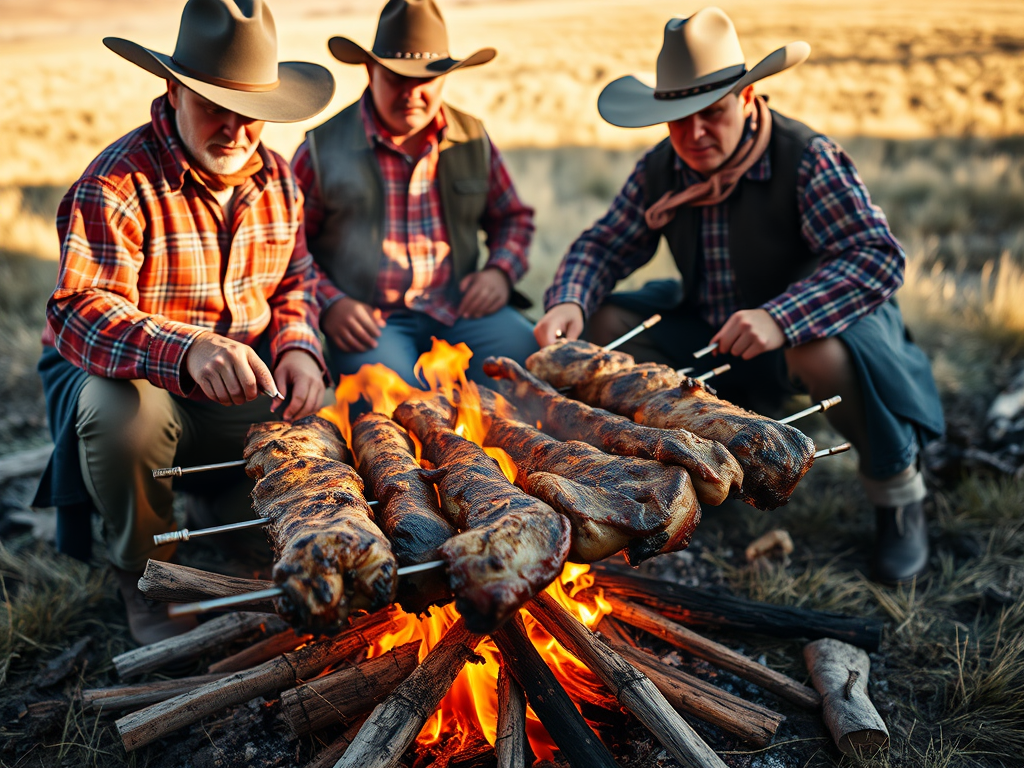
“We’ve just got back from Spain” To those growing up as a child in 1960s London, especially in poorer working class districts, those words rang with magical prestige. Few of us had even been on an aeroplane, let alone to somewhere as warm, as sunnily sandy, and as downright distant as Spain. If you were lucky enough to have a holiday at all it would be a week in a Victorian boarding house in some windswept grey town like Blackpool or Bognor Regis. But these lucky people brought back tales of modern hotels with receptions, swimming pools ,and bars, just like the ones in James Bond films. And the artefacts! Curious little black bulls in hollow plastic. Dolls in exotic flamenco costumes, arms frozen in some eternal paso doble. And funny china jars with a picture of Minorca on them, drinking cups to match. Which, they proudly informed us, were all for the drinking of Sangria. A taste for it was born; and we think it still remains one of the best parts of an Iberian holiday today (you can get it in Portugal too)

The aim is to make it with lots of ice, so that beads of dew form on the outside and trickle down in the hot Spanish night to the sounds of a flamenco guitar(these days it’s more likely to be Rosalia or Aitana; but no somos nadie as they say in that country) After all the ice, there as many variations on the theme as there are bars in Benidorm. This BBC recipe produces an out come as good as any which we have tried down the years. [1] 3 parts of a good full red wine such as one from the Duero or Rioja, one part of orange juice and two of lemonade will get you over the line. After which you can add the sorts of fruits you want, though it being Spain and all that, oranges and lemons seem almost statutory. A little twiglet of mint will give the whole things a most Pimms like ambience, and the scaling up possibilities for two to fifty drinkers are manifest.

The word sangria of course comes from the Spanish word sangre, or blood, as anyone who has holidayed in somewhere like Magaluf or Torremolinos will recognise at once: a reference to the deep red colour of the wine. There are records of something like it in eighteenth century Spain and Portugal. Though the Romans had been experimenting with similar wine punches long before. Don’t accept ones made with rose or white. they are poor imitations , avoided by locals and experienced costa hands alike And so, even though the nights are drawing in we raise a metaphorical copa of the stuff to you all gentle readers, and hope it evokes memories of happy sunny holidays. Thanks again for all your comments, ideas and other general feedback.

[1]https://www.bbc.co.uk/food/recipes/sangria_93847

#Spain #Portugal #sangria #wine #holiday #costa

Pity Rachel Reeves-but Britain’s problems are as dreadful as everyone else’s

Pity poor Rachel Reeves, Britain’s beleaguered Chancellor of the Exchequer (that’s what we call our finance minister). According to Larry Elliott of the Guardian, [1] she faces some agonising choices as she tries to prepare November’s Budget. Being a British Chancellor has never been all beer and skittles. And Larry’s dissection of the fiscal and financial constraints she faces , to say nothing of organisations like The Office for Budget Responsibility (OBR) or the Bank of England breathing down her neck is as succinct and percipient analysis as you will get of the economic landscape of Britain today.

Or any where else. All the advanced nations seem to be in dreadful trouble at the moment. The USA, France, Italy: even the once vaunted Germany and Japan seem be in the same mire of rising debt, financial constraint and  absolute inability to deliver the rising standards of living, education and health which their citizens had come to expect. Why do finance ministers suddenly seem so powerless?

They can still control some things of course: fiscal policy , debt issuance, regulatory frameworks and co-ordinating policy with Central Banks. What lie outside their control are immense things like global capital flows, stock market volatility, commodity prices and private investment decisions. At the time of writing over 80% of the world’s investment capital is in the hand of things like Hedge Funds, Sovereign Wealth Funds and Family Offices, as well as less shady entities such as pensions and mutual funds. And this has had very real consequences. For us Elliott’s key paragraph was this rather neat summary of the history of the world in the last twenty five years:

……..the big moves in inflation in recent decades have been globally rather than domestically driven. There was a long period in the 1990s and early 2000s when globalisation led to much cheaper imports, especially from China. More recently, the main reason inflation shot up above 10% was the sharp increase in gas and food prices caused by the war in Ukraine. Trying to hit a specific inflation target using the blunt instrument of bank rate is a mug’s game.

Which raises the question: is the Nation state still the best vehicle to deliver the thing its citizens really need? It’s a big question and the answer may not come down to a simple yes/no. But if it is to succeed, the nation must be immensely strengthened and reformed. Who will do it?

[1] Rachel Reeves is the face of this budget. But the really big decisions are not in Labour’s hands | Larry Elliott | The Guardian

#economics #history #inflation #rachel reeves #UK #Germany #France #finance #money #capital

How good teaching won a Nobel Prize

For our next look at this year’s Nobels, we thought we’d showcase the three brilliant researchers who share the prize for Chemistry. For those who need to come up to speed here’s Nature Briefing’s story, Chemistry Nobel for Supersponge MOFs

Chemists Susumu Kitagawa, Richard Robson and Omar Yaghi have won the Nobel Prize in Chemistry for developing the world’s most porous solid materials, known as metal-organic frameworks (MOFs). Structured like molecular scaffolding, MOFs contain vast caverns of internal space; Nobel committee chair Heiner Linke likens them to “Hermione’s handbag in Harry Potter — it can store huge amounts of gas in a tiny volume”. In the 30 years since they were first developed, they have become part of efforts to capture carbon from the air and remove ‘forever chemicals’ from water, among many other applications.Nature | 4 min read

Now, we in no way would distract from the accomplishments of Drs Kitaga or Yaghi. But what we want to do here is tell a very human story of how the third laureate, Dr Robson, got involved in the first place.

One day he was constructing large wooden models of crystal structures for undergraduate chemistry lectures at the University of Melbourne. These models—representing structures like sodium chloride and fluorite—were made from coloured wooden balls (atoms) connected by rods (bonds), carefully drilled at precise angles using trigonometric calculations. We’ve all seen them, they are stand by of every A level and undergraduate teaching room

As Robson assembled these models, he noticed something profound: the components seemed “invested with information,” naturally predisposed to form the intended structure. This observation led him to wonder: what if molecules could behave similarly—self-assembling into predictable, extended structures using chemical bonds instead of rods? That question planted the seed for MOFs, which he began exploring seriously about a decade later.

It’s funny how learning is a holistic thing. Research informs teaching. And teaching informs research. Oddly enough artists like Leonard Bernstein and Stephen Sondheim found the same thing, if you substitute “creative writing” for research. Perhaps its the idea of responding to questions, looking at the bigger picture. Or in Robson’s case, taking time out to play creatively with models. If you have found the same, oh readers, let us know. Meanwhile tell your Government to keep funding research and universities. As we saw in the last blog- they’ll get their money back.

#chemistry #nobel prizes 2025 #metal organic frameworks #carbon capture #climate change #science #research

Are stress and trauma passed down the generations?

Does trauma pass down through the generations? Can someone who has been through a war, a genocide, or a famine in some manner pass that experience on to their children? Grandchildren, even? If so, how?  Are the effects purely physiological-or could they even be psychological? It’s a fascinating question for our current dark times. And fortunately we have a  carefully written article by Rodrigo Santodomingo of El País which thoughtfully assesses the current state of play [1] (English speaking readers-you are going to need your translator app for this one)

What impressed us  was intellectual rigour  of experts whom  Rodrigo consulted, like   Professor Isabelle Mansuy of the University of Zurich and Dr Anna García  Gómez, a professional psychiatrist. Professor Mansuy is particularly sharp “it’s not the trauma that’s transmitted, it’s the effects.” she notes. Clear distinctions like this allow us all to wade through a morass of strong evidence, weak evidence, hopeful claims and provisional findings. That something is happening, and that it’s epigenetic seems reasonably certain. Studies of rats indicate that parents subjected to trauma or prolonged stress do indeed have observable  consequences in subsequent generations. But-can these changes be genetic as well as epigenetic? The pioneering work of Dr Rachel Yehuda and on the survivors of concentration camps and their descendants is considered: but she always stresses that any alterations associated  with the FKBP5 gene are in expression, not its structure. As Professor Mansuy concludes: “we know almost nothing about the epigenetic transmission of trauma. This doesn’t mean its not there, but it’s extremely difficult to prove” (LSS translation)

Why are we raising all this? We can never forget our excitement upon learning that life  experiences can be transmitted down the generations even if only by epigenetic mechanisms (If you want to know more about this The Epigenetics Revolution by Professor Nessa Carey is a great place to start) [2] But at a deeper level, and as one presiding over a Whiggish sort of blog we want to live in a safer, more prosperous world where people are on the whole better educated and better off than their parents had been. If trauma from old wars and other catastrophes poisons minds and prevents future generations from achieving this  then it’s a form of pollution just  as evil as say plastics, pesticides or radiation. The Bible waxes lyrical in several places about the iniquity of sinners being inflicted on future generations. What a pity if the sinned-against must suffer the same fate!

[1] La alargada sombra del trauma: ¿Se transmiten sus efectos de padres a hijos? | Ciencia | EL PAÍS

[2] The Epigenetics Revolution: How Modern Biology is Rewriting Our Understanding of Genetics, Disease and Inheritance: Amazon.co.uk: Carey, Nessa: 9781848313477: Books

#genetics #epigenetics #stress #trauma #psychology #biology

Nobel Prize for Economics shows this blog was right all along

Back in the dark days of January 2021, when the world economy was reeling from the savage hit of the COVID-19 pandemic, we published a short blog called How to Get some Free Money(LSS 2 1 21) Everyone at that time was worried about the colossal debts their governments had run up to pay for the catastrophe-were we all to be bankrupt for ever? Our point was that Science and Technology were the key to economic success. Encourage them. and you will grow your way out of debt. However hard a medieval peasant worked and saved he could never hope to achieve the productive levels of a man with a steam driven plough.

How comforting then, to find that better, more profound minds have demonstrated this truth at a Nobel level. By incredibly detailed studies Joel Mokyr, Phillipe Aghion and Peter Howitt [1] have looked at archives, crunched the numbers, weaved out feedback loops and carried out any number of other careful ratiocinations to prove the point. You can read more here [2] if you like graphs and words and things. But for us three things stand out.

There has to be abstract learning first. Many of the ideas and processes that drove the industrial revolution had appeared a hundred years before as the abstruse discoveries of thinkers like Newton and Hooke, which the average man in the street would have called “bonkers!”. There has to be a social ecology of skilled and trained workers, able to quickly deploy and develop the new ideas. In the eighteenth century this meant craftsmen like watchmakers and weavers. Now it means experts in AI and biotechnology. Finally a society must be open to rapid change: and welcome it where possible. For if you do not, someone will rapidly steal your markets with a new idea you could have developed but didn’t, because the old ways were tied and tested(think Kodak and digital cameras) [3]

All of which has relevance now, especially in the United States of America and the UK. In both those countries there is a growing movement to throw over renewable energy technologies and move back to coal and oil as soon as possible. We understand the fears and share some of the nostalgia for a bygone age which the proponents of this U turn so plainly demonstrate, Yet we also recognise that other countries will not. They will adapt clean green technologies rather fast. Not only will this leave the Anglo-Saxon economies hopelessly far behind. Their pollution will also make them a dangerous threat to other places in the world. Places which may seek to shut down that danger by whatever means necessary.

[1]https://www.nobelprize.org/all-nobel-prizes-2025/

[2]https://www.nobelprize.org/uploads/2025/10/advanced-economicsciencesprize2025.pdf

[3]https://www.forbes.com/sites/chunkamui/2012/01/18/how-kodak-failed/

#science #technology #growth #innovation #digital cameras #renewable energy

Hello we’re back-and we have Nobel Prizes!

First of all, apologies for our forced and utterly unwanted absence. But Domestic Renovations, and the sorts of people who carry them out, can be as tiresome and time-consuming as any other human relationship which the Gentleman Scholar must negotiate -domestic staff mistresses and lovers, cleaners, mechanics, and countless others. All require patient listening, multiple cups of tea and hefty pay offs, if only to still their incessant demands for even a moment. But here we are back again where it counts-with you, gentle readers. And we are glad to say that we return with one of our favourite sequences of the year. It’s Nobel Prize season again. [1]

For us, the Nobel prizes are the very essence of what this blog is all about. That careful learning and scholarship are not only what lifts our lives above the miserable condition of wild apes (well, some of us): they constitute the only only possible escape route from our current plights, many of which are serious and grave. And this time we think we can prove it. with the help of three of the very winners themselves-how’s that for endorsement, ladies and gentlemen? That’s the prize which will receive our first detailed attention, in the next blog: but let’s start with a roll call of the stupendously intelligent people who have stood out this year as the cream of humanity

Physics: John Clarke Michel H Devoret John M Martins Amazing work “for the discovery of macroscopic quantum mechanical tunnelling and energy quantisation in an electric circuit” Yup, we kind of lost too it after the fourth word in the citation, but we’ll try to understand it better in time for a later blog

Chemistry Susuma Kitagawa Richard Robson Omar M Yaghi Want to capture Carbon dioxide, water in the desert, store toxic gases and many other things? These discoveries will let you do all of them. If this isn’t right on the raison d’etre of this blog, we don’t know what is. Again, come back later for more

Physiology and/or Medicine Anything in these fields must be close to an LSS reader’s heart. So the work of Mary E Brunkow, Fred Ramsdell and Shimon Sakaguchi on the tricky world of the immune system requires our most emphatic hats-off

Literature and Peace Intelligence can be of the Emotional kind as well as the academic, as many of us discover with agonising slowness and pain. So although these subjects lie outside the remit of our blog we are proud to give honourable mentions to László Krasznahorkai and Maria Corina Machado respectively (is she a relative of Antonio Machado the famous Spanish poet, we wonder?-ed)

But finally our first next blog on this subject, as t’were, will be devoted to the patient Economics work of Joel Mokyr, Phillipe Aghion and Peter Howitt. Because finally they have shown at Nobel level, what we have believed for so long. It’s science and learning that drives the economy. Which is where we go next time.

[1] https://www.nobelprize.org/all-nobel-prizes-2025/

#nobel prizes #economics #physics #chemistry #medicine #physiology #economics

How climate change drives the return of deadly diseases

We never thought we’d see it. But Malaria is making a comeback in the British Isles [1] According to the latest findings from the UK Health Security Agency(UKHSA) cases rose by a whopping 32% from 2022 to 2023 making them the highest in 20 years. More than 2000 cases in fact. Now some of this is due no doubt to travel bounce backs after the COVID 19 pandemic. But once put into a broader context. the real pattern becomes both clear and alarming. Global warming is driving a massive spread of insect vector diseases. Dangerous diseases that almost seemed under control until the oil companies unleashed climate change on an innocent world

Staying with Britain just for now, William Hunter of the Mail [2] reports on the appearance of two deadly mosquitoes in the UK: the Egyptian mosquito Aedes aegypti and the appropriately named Tiger mosquito Aedes albopictus. For now these are isolated events, and under current conditions their spread may even be containable. But every year the climate gets a little warmer. Every year brings a higher chance that these vectors will spread their deadly triple load: Dengue Fever, Chikungunya and Zika. With all the consequences which wel- seasoned readers of this blog will recall from our earlier outings on this theme (see LSS 25 3 25, 25 10 21 and many others)

We confess to becoming a little angry when we we write stories like this: such disasters could have been so avoidable. Once, not so long ago these diseases were unknown in this islands except as travellers’ tales, or as the province of medical specialists. Now a wave is crossing the world. We know what the remedy is. If by any chance you are a parent reading these lines: this story is one more line of evidence among many. Your children can never be truly safe until global warming is finally controlled and reversed.

[1]https://ukhsa.blog.gov.uk/2025/05/21/how-we-protect-the-uk-from-vector-borne-diseases/

[2]https://www.dailymail.co.uk/sciencetech/article-15151429/tropical-diseases-britain-mosquitoes-dengue-fever.html

[3]https://wellcome.org/news/how-climate-change-affects-vector-borne-diseases

#disease #malaria #dengue fever #climate change #g;obal warming #health

Heroes of Learning: Leonardo Pisano(Fibonacci)

Have you ever looked at the strange spiral in a broccoli floret and wondered how it got like that? Or hundreds of other things in nature from the shapes of waves on the beach to the arrangements of artichoke leaves? The answer to all this and much more was discovered by Leonardo Pisano, better known to the modern world as Fibonnaci.(C1170 AD-c 1245) [1] [2]

A bright lad from Pisa in Italy, his big break came when his father took him on a business trip to Bugia in what is now called Tunisia. Father and son met an Arab mathematician (the Islamic world was still far ahead in science and technology) who kindly showed them the amazing new numbering system which they had learned in turn from the Hindus. The young Leo realised at once that this strange numerical system of 0, 1 2-9 was utterly superior to the cumbersome Roman system of letters( V X MCXCCVL, etc) On his return to Italy he published the Liber Abaci, whose short 27 or so chapters are one of the most significant books in the canon of western learning. Not only did it update all and sundry on the new number system. Not only was it full of useful applications for this system. Above all it promulgated an intriguing new sequence of numbers which goes 0,1, 1, 2, 3, 5, 8, 13…..to infinity. Each number in the sequence is formed by adding the two before. Dividing one by its predecessor quickly gets to the Golden ratio, which artists and architects have been using as on of the most aesthetically pleasing constructions for centuries.

We have alluded here before to odd mathematical structures such as pi and Eulers number: which show up again and again in nature: Fibonacci’s sequence is another of them. We have no idea why, but then: nor does anyone else. But the real significance of Fibonacci was his timing. For the first time, and after a long sleep, Western Europe was starting to make original contributions in natural sciences. And it did it by borrowing humbly from other more learned cultures. A lesson we should not forget today.

[1] https://en.wikipedia.org/wiki/Fibonacci

[2]https://www.bbc.co.uk/bitesize/articles/zm3rdnb

#fibonacci #mathematics #middle ages ##tunisia #india #biology #architecture

Human Evolution: More muddle in the middle?

Taking time out as ever from more serious matters, we return to our old playground of human evolution. And not just for R and R, important as that is. Also, because the methods and pronouncements of its scholars are important guides to how we should all approach any complicated and potentially controversial subject.

Until recently the origin of our own species seemed fairly clear cut. It emerged from a pack of other big-brained contenders (think Denisovans and Neanderthals among others) starting around 250 000 years ago, in Africa, and clearing the rest of the field no later than 35000 years BP. However recent work by Professor Chris Stringer of London’s prestigious Natural History Museum and colleagues have now cast this into doubt. It is even possible that the line leading to Homo sapiens may have started to go its own way before 1000 000 years BP. You can read why in these takes from Jonathan Chadwick of the Mail here [1] or a slightly extended version in the museums own PR piece here [2] It all goes back to 1990 and the discovery of a rather squashed skull called Yunxian 2 which was attributed to Homo erectus: a perfectly reasonable decision at the time. But using advanced new reconstruction techniques Stringer and his colleagues assert

……… Yunxian 2 displays a unique combination of primitive and more advanced traits. These include a large, squat braincase and a more projecting lower face, similar to Homo erectus. At the same time, derived features in the face and rear of the braincase, as well as a larger brain capacity, are closer to later species such as Homo longi (‘Dragon Man’) and Homo sapiens.

We have been following this game for for nearly six decades: so what do we think? First Chris Stringer is a fine scholar whom we have always admired. Secondly, we welcome all attempts to re evaluate data and set it in new contexts: that way real learning occurs. Our caveat is more with practice . Always and again in human evolution, new fossils found are baptised with confident new binomial Latin names in the great Linnean tradition. Then vast conclusions are drawn, which, in our experience, are substantially revised some years later. This has led not only to the muddle in the middle to which the articles allude. There are plenty more early on the story, and more than one much later on. We think the first clearing step should be to talk less about species, and more about gene frequencies populations. and ways of life. These clearly cluster at points of excavation, such as Afar, Java or Atapuerca to name but a few. But each point, however iconic, is represented by relatively few bones. There are enormous gaps in space and time between each, into which genes and populations must have been flowing all the time. Is it not possible that there has only been one human line all along, and that many of the variations are likely due to factors such as ecology, climate or isolation? The real answer is to dig, dig and dig again.

[1]https://www.dailymail.co.uk/sciencetech/article-15132633/skull-pushes-origins-400-000-years.html

[2]https://www.nhm.ac.uk/press-office/press-releases/analysis-of-reconstructed-ancient-skull-pushes-back-our-origins-.html

#paleoanthropology #human evolution #clade #species #Homo sapiens #China