Further news that Neanderthals created art should come as no surprise to the open-minded readers of LSS.
The historiography of Neanderthals has suffered appalling misconceptions. At first, they were presented as ape like brutes, incapable of speech or reason. Even in the supposedly more enlightened times of the 19990s, it was still generally held that only Homo sapiens had the true intellectual capacity to produce art, grammatical speech and really good tools.
And so this article by Ian Sample for the Guardian [1] not only continues to redress the balance, it adduces further proof to our long held maxim: Be careful of everything you read, and look very closely indeed at anyone who may be going beyond the facts. If only a few thousand Daily Mail readers had done that in 2016, we might not be in this mess today.
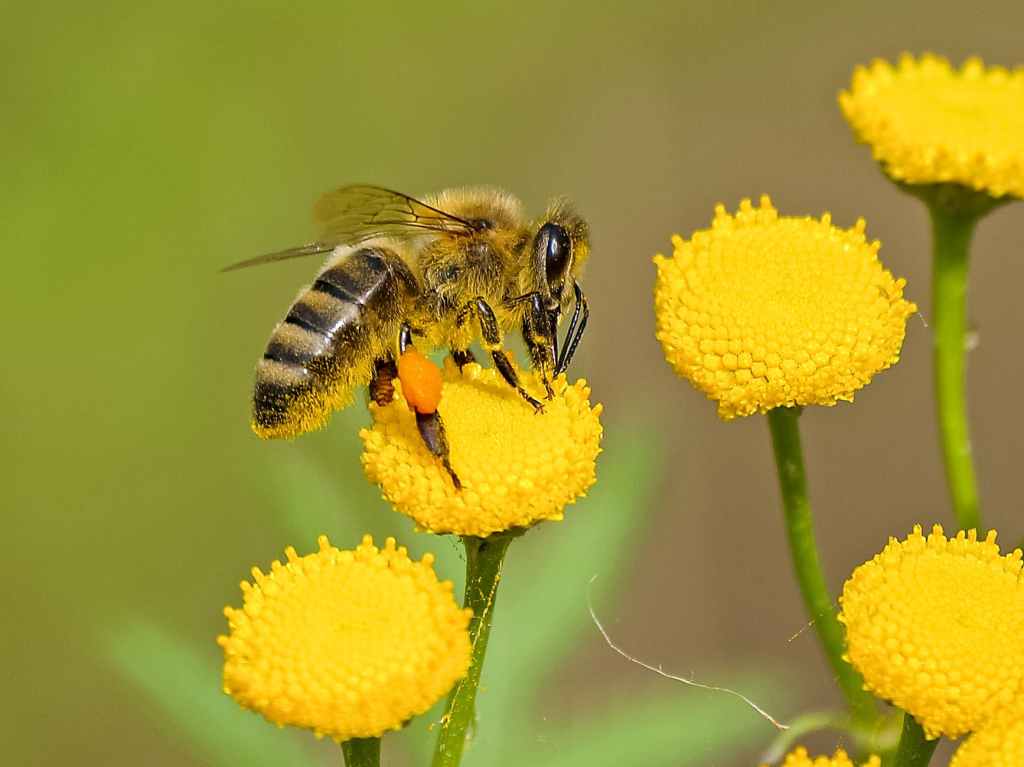
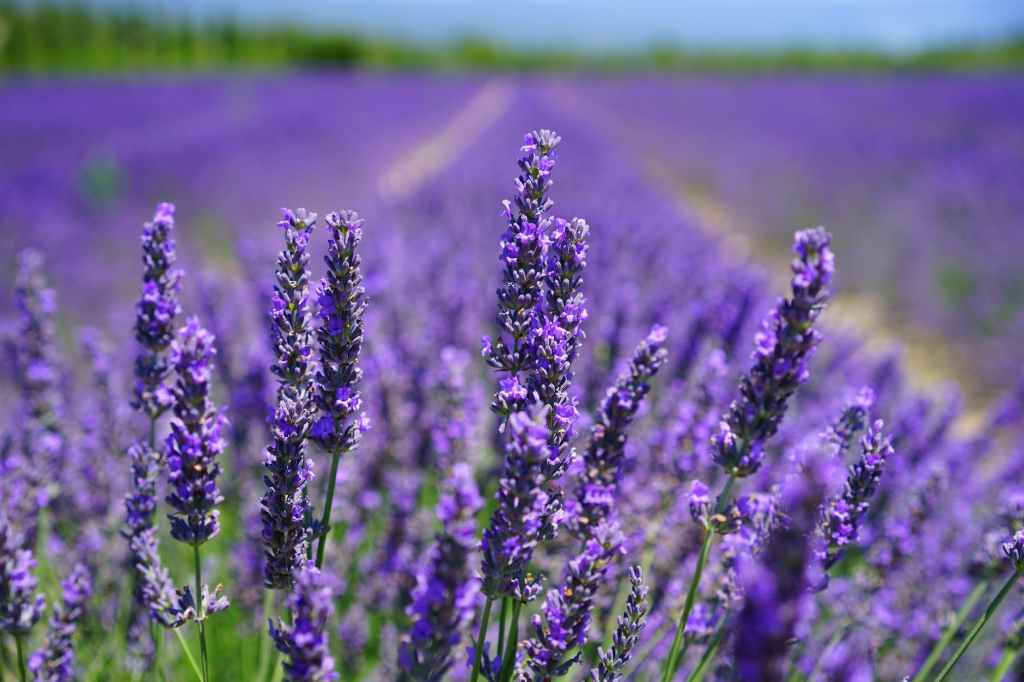
A few weeks ago (LSS 1 6 23) we published a short piece in which we bemoaned the lack of bees, who should have been busily pollinating our brand new lavender crop.
We were right to be worried, because a lack of the little buzzing creatures suggests there may be something wrong with the ecological chains which support life around here. Yet some slight alleviation is offered by this piece from Nature Briefings, which suggests that moths may be taking up some of the strain at night. We certainly hope so!
Moths are the unsung heroes of pollination in cities, accounting for one-third of pollinator visits in a study of moths and bees in Leeds, UK. “The whole reason why they’re overlooked is because bees, you see them in the day, but moths are obviously out at night,” says pollinator ecologist Emilie Ellis. Her team collected bees and moths in the city and examined the DNA of the pollen that they carried. Not only did the moths have a bigger role than expected, but the insects’ preferences differed: bees visited more wildflowers, whereas moths chose woody plants, such as trees and shrubs.Wired | 6 min read Reference: Ecology Letters paper #pollination #climate change #ecology #bees #moths
For the foreseeable future we will not be able to bring you our usual regular series of updates and general commentary. Things like cocktail night and weekly round up will have to go into deep freeze, although we know how much some of you liked them.
Instead we shall confine ourselves to simple reprints of articles which, in our opinion, provide good talking points. Today we have chosen George Monbiot who writes about the politics of climate change[1]
We thank our readers for their patience and support.
One of the ancient tragedies of our world, even the post Enlightenment world after 1750, has been the way that womens’ issues have been downplayed and undervalued. In health, social policy, education and any number of other areas, it’s still all a bit male-centred. One man however, did a tiny bit to change that in one small but vital area of health. It was cervical cancer, and that man’s name was Harald zur Hausen.
He it was who insisted that this disease was the result of human papilomavirus and not the herpes group, as orthodox opinion generally held. By dint of patient, intellectually rigorous work, this courteous and civilised man slowly changed our perception. And has made life better thereby for an almost immeasurable number of women.
And so we salute Harald, via this link to Sarah Neville of the Financial Times. [1] Lets hope that the future gives birth to more like him and less like some of our more ignorant and excitable journalists who have done so much harm by meddling in areas of which they have little understanding
For external reasons, we can’t bring you our usual round up this week. But we will offer another thank-you to all our regular readers, contributors and all those patient souls who submit to one of our famous interviews.
We will offer you this one story, brought to our attention by our indefatigable team of researchers. It’s new species of dinosaur. But it wasn’t discovered in the ground-well, not exactly, but in the draws of a museum in the little seaside town of Hastings, England. Which leads us to ponder: what other strange old things are lying around in museums, not just in Hastings, but anywhere? Here’s Savannah Nicholson of the Brighton Argus, to tell you all about it
Today’s blog is part of our series of summer blogs where readers from around the world tell us all about the cocktails they’ve experienced on their far-flung voyages. To kick us off, we are proud to welcome Mrs Margaret Foster who is going to showcase her recent journey to the beautiful Indian Ocean Island of Mauritius.
LSS: Tell us about Mauritius
Warm! There’s a lot more to it than other islands in Indian Ocean because its bigger, so there’s more sights and more coastline. From which you can see an amazing profusion of things like dolphins , tropical birds, butterflies and even chameleons. The people are lovely. It’s criss cross of cultures; English is becoming the main language, but everyone seems to speak about four!
LSS:Who did you go there with?
My husband Andrew
LSS: So, for the benefit of our Friday Night Readers, let’s start in on the drinks! What about beer?
Well, they make their own beer, which is called Phoenix. There’s also a craft brewery which makes wheat beer and raspberry beer.
LSS:That’s a nice start for a hot day. But what about wine with dinner?
They’re close to South Africa, where a lot of it’s imported from. But, it’s unbelievably silly prices! So we tended to stay away, and stick with the cocktails
LSS: Now, Mauritius is a tropical island. They must grow a lot of their own fruit for the cocktails?
Indeed! Depending on time year, you get grapefruit, passion fruit , pineapples, pomegranates………. They even grow a lot of lychees from which they make a rather disgusting sweet wine.
LSS: And what sort of cocktails come out of this mix?
All the usual ones your readers will have heard of. Mai Tai, Singapore slings, daiquiris…… Plus they make a lot up of their own. A lot are based on rum, which they spell with an H, so it comes out as R-H-U-M, Rhum. There’s one brand named after the famous Mauritius Pink Pigeon They even left us a free bottle of rhum in our room. It was a little industrial, but drinkable.
LSS:Nice Gesture! Tell us about a couple of the island specials
Well, there was one called Passion des isles– passion fruit, rhum, strawberry liqueur, lemon juice sugar cane syrup, and passion fruit puree . It was nice. Actually passion fruit is quite a theme there. There’s a passion fruit Tequila-normally lime juice is the citrus in this one. The Daquiri is a white rhum, with passion fruit.
LSS:Passion fruits all round then! And your favourite moment?
Lots! Drinking a passion fruit margharita, which you can get anywhere. At a bar, beside the pool, down on the beach . Which is nice at night, because they put out posh deckchairs with lanterns and you can hear the sea crashing on coral and the Wind in the palm trees. Not to mention the fruit bats
LSS:Fruit bats?
Yes, The locals call them flying foxes. They’re huge, with a one metre wingspan and come flying around your heads.
LSS: Thanks. That was easily the most far flung cocktail night We’ve had on this blog.
A prominent member of the Editorial Board has requested that we inscribe the following at the start of today’s blog:
Where are all the [expletive deleted] bees this year? I’ve set up the best[expletive deleted] lavender crop ever down here in my Sussex hideaway, and there’s no sign of the little [expletive deleted]! When we lived in Kingston they used to swarm over the lavender like flies on [expletive deleted] Do you know how much time and money it cost me to put those plants in? What the [expletive deleted] is going on?
Up here in the concrete canyons of Croydon we see very little wildlife. The only signs of bird life are a few bones clinging to the outsides of abandoned takeaway meal cartons. The only flowers are glimpsed as decorative ornaments on things like greetings cards and fashionable wellington boots. Yet what happens to the bees out there in the sticks is of vital interest to us all. Because with out these seemingly humble creatures, all the ecological chains that support us would collapse. Then there would be something to swear about.
Is this a local thing? A quick telephone poll of friends suggest numbers really are down in England (although with some reports of sudden swarms in parts of the country) But we get the impression that other indicator species like beetles and birds are down as well. A practising entomologist of long acquaintance reports that his surveys for things like moths and beetles are also well down. Preocupante, as the Spanish say.
LSS is not a website that jumps to conclusions. There are many possible explanations, including unseasonable cold weather, natural population fluctuation, disease and so on. Which is why we would like YOU, gentle readers to share your observations of this phenomenon with us. Because if bees die out we are all of us, well and truly [expletive deleted].
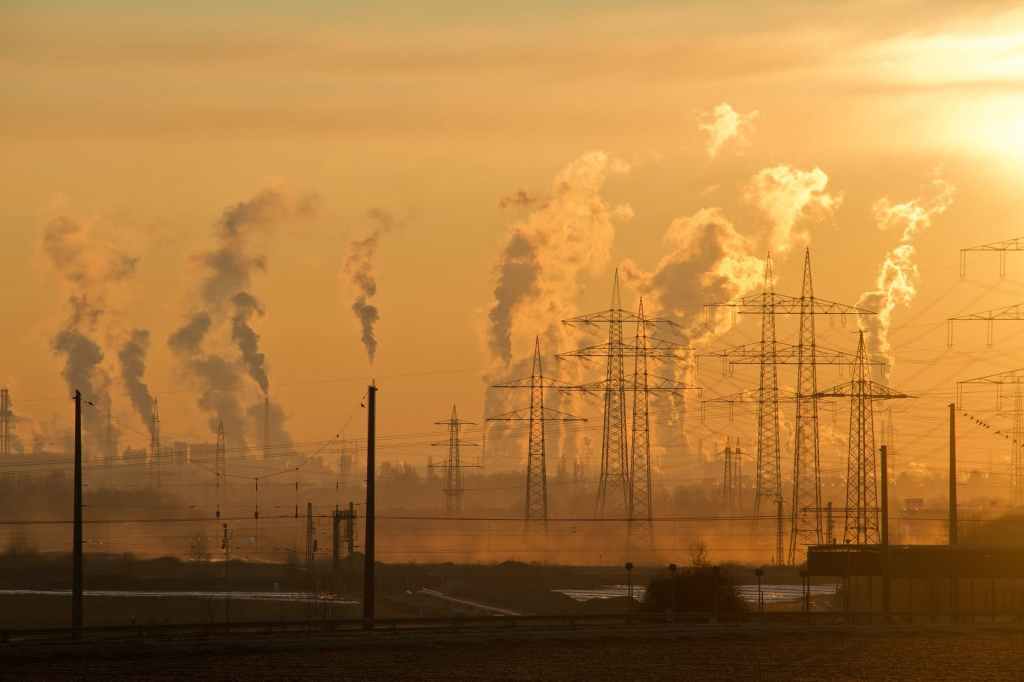
There’s a hidden unseen danger now lurking in every crumb of soil, every drop of water and every mouthful of air we breathe. It’s pollution by heavy metals-and the potential health risks are terrifying.
Heavy metals have been around since the beginning of time. But they have been locked away in the earth’s crust, and almost unknown to living organisms except in tiny quantities. But with the advent of metal working by humans, and especially since the Industrial Revolution, they have been pouring into the environment in immense, and above all sudden, quantities. The consequences are summarised in today’s link, and excellent paper by by Jessica Briffa and her team [1] from Heliyon via Science Direct. The work is a tour de force of sustained and careful scholarship. It runs the whole gamut of the hows whys and wherefores. There isn’t room here to do more than scratch its surface, but we urge-no, beg– you, intelligent readers to dip in, if you have ones you love, or even care about the planet.
Sample if you can , from the following list and what they can do to you. There’s Vanadium (Parkinson’s, Alzheimers) Chromium(cancer) Aluminium (liver, kidney, Central Nervous System-for God’s sake, don’t start eating aeroplanes) Cadmium-an old favourite killer of ours, implicated in cancer and DNA dysfunction, innocent sounding ones like Gold and Silver, as well as real sinister heavies like Mercury and Lead. Even the lads down the Dog and Duck are beginning to grasp the significance of the last two. And many, many more in meticuloius and documented detail. (yes, there’s a lot of source material here for teachers of advanced classes) All pouring irretrievably into the oceans, fields and air. All potentially poisonous, if not downright fatal.
It’s trite, it’s a platitude, but we’ll end on it anyway. What a shame on this species, what a comment, that all the money is spent on baroque arms to frighten rival groups of armed hominins, when it might have been spent on ways to clear this altogether more sinister and imminenbt threat.
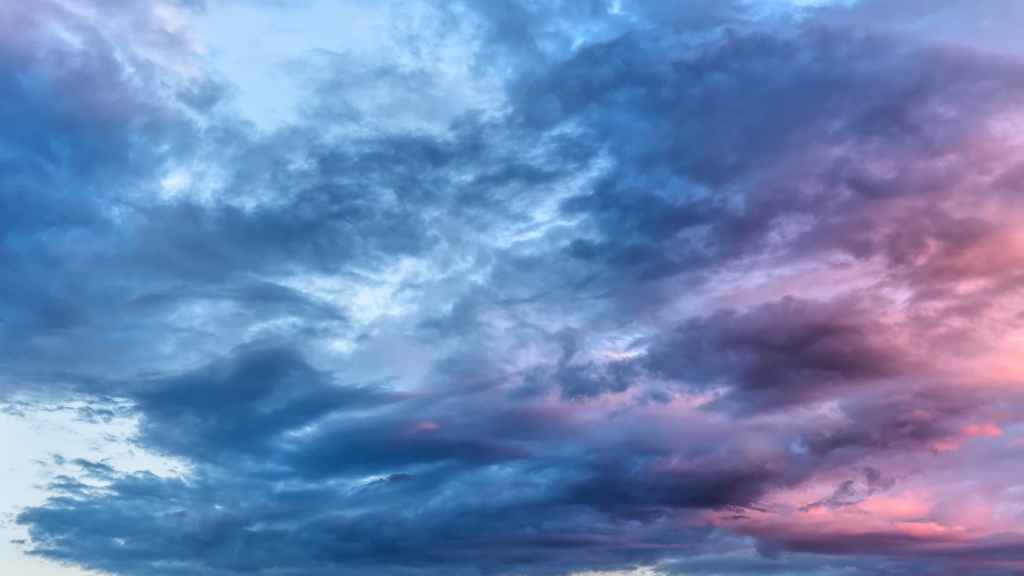
Go out on an early summer night just after sunset and stare west. Though the land is dark, the fading blue sky may reveal some beautiful tenuous white clouds still lit up by the rays of the sun. They look a bit like cirrus clouds; but they float far, far higher at 80 km. They are called noctilucent clouds. Not only are they the highest observable clouds, but they seem to have been completely unknown before 1885. Odd, isn’t it?
The most likely explanation for this is industrial pollution. We have two links for you today. One from Stuart Clark of the Guardian,[1] and a nice background filler from Wikipedia [2] for those curious enough to go for a second cup of coffee. The things seem to be largely made of water, which may be condensing around pollution particles. Methane may be playing a role as well, which is kind of scary to those of us who know its potential as a global warming gas par excellence.
Did they exist before industrial civilisation? Ancient peoples scoured the skies almost as obsessively as we do (there was no TV, bless ’em). Many of their records have come down to us. But none with reference to these clouds. The balance of probabilities suggests to us that they are indeed warnings from a sick planet, one of many now. One more idea to put to those obtuse souls who still don’t realise the damage we are doing. Or are they just too selfish to care?
One of the alleged calamaties of the re election of Turkish President Recip Tayip Erdogan, is held to be the hostile attitude his followers take towards the LGBQT+ community. Which news has made us break a rule. Sexuality. Normally we avoid discussions of this dreary subject, on the grounds that A) it is covered daily to exhaustion in popular newspapers, TV channels and all other media outlets and B) there are, in our opinion, more important and pressing issues. Yet most people, like so many bonobos, are slyly obsessed with the comportment and regulation of the human genital organs, both their own and those of others. So we are forced to ask the question: why the age-old persecution of those whose proclivity is towards same-sex coupling as opposed to intersex?
And we suspect the answer lies in the early agricultural societies in the Neolithic period, and the ancient religions which have grown out of them. Take the widespread and closely related religions of Judaism, Christianity and Islam as our example. All three base their hostility to homosexual practice on the revered texts of Leviticus (18.22: 20.13). Written, it should be noted, at a time when the overwhelming majority were engaged in the arduous and physically exhausting life of agricultural labourers. Herding, stockbreeding, ploughing and the many other such activities require enormous reserves of strength. And, as men are physically stronger , this quality in them becomes exalted. It must be so; for in such societies the margin of survival is narrow. Any threat to the herds, the lands, or the procreation of more male children to work them, threatens disaster.
In such circumstances, is it so surprising that any sexual practice that deviated from the basic one of man+woman =child was proscribed? And given our natural tendency towards furious, group-enhancing persecutions of all things that differ, that this proscription became in turn exalted? We humans are none of us perfect, however much God tells us to be. These religions are widespread, and we suspect offer much comfort to their followers. And dark things indeed have followed attempts at their removal.
We at LSS deplore the persecutions of all minority persuasions, especially when the persecutors have not properly thought through their actions. It is our lived experience that some of the most avid persecutors conceal that they have more in common with their victims than they would care to admit. And that the practice of heterosexuality is not as quite as virtuous as is sometimes claimed. It fills the world with housing estates, fashion magazines, fast cars and many other excrescences on what would otherwise be a pleasing prospect. To say nothing of the risible personal attractions and entanglements which it engenders among its afficionados. Is it really, really right to look down on those who do not share our particular proclivity?
We have said all we wish to say on matters amorous and copulatory for some time, and hope to return you, patient readers, to adult material in the next blog or blogs.
















 Learning, Science and Society