Article of the week: do birds hear their way around the planet?

For us, the Article of the Week has to hit several sweet spots at once. Firstly, something fresh, preferably a new take on an old problem. It needs to be clear, and rather well-focussed on its ostensible subject. It needs to show intellectual rigour; moreover, if there is a touch of intellectual humility in the writers’ purpose, so much the better. That will be the best learning point of all.

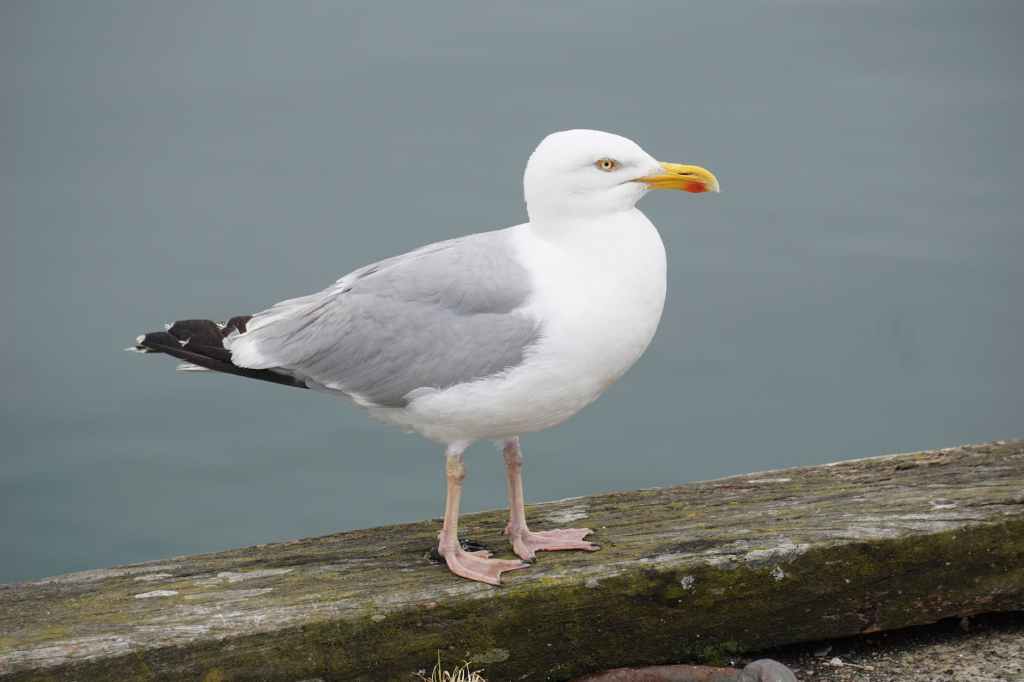
Can Seabirds hear their way across the ocean? by the admirable Samantha Patrick of the University of Liverpool [1] fulfils our relentless criteria effortlessly. For it suggests an intriguing new take on how animals find their paths across the vast anonymous wastes of the oceans, where everything seems the same for hundreds of kilometres. At least, to us humans they do. Samantha and her team think that Albatrosses use infrasound, that is to say, very low frequency noise, by which they can hear the sounds of waves crashing on distant islands. And get this-they were helped, in their research, by the Comprehensive Test Ban Treaty Organisation, who kindly released data to compare with their own data gleaned from Albatrosses.

But for us the key passage was this:

As with many studies testing a hypothesis for the first time, my team’s study raises as many questions as it answers. If seabirds respond to infrasound, they must be able to hear it and know where it is coming from. Lab studies have found evidence that some birds can hear infrasound, but there have been no tests on seabirds.

What a clear exposition of the difference between “knowledge” and “belief”! If only every business leader, politician, religious authority, GB News “journalist” and time share salesperson could be made to learn that passage by heart, and be forced to present a thousand word essay on it, how much better shape the world might be in.

[1]https://theconversation.com/can-seabirds-hear-their-way-across-the-ocean-our-research-suggests-so-215945?utm_medium=email&utm_campaign=Latest%20from%20T

[2]https://en.wikipedia.org/wiki/Animal_migration

#animal migration #infrasound #magnetism #smell #albatross #seabird

Two geniuses, but sadly only one good film

Napoleon Ridley Scott ***   Maestro Bradley Cooper*****

Watch a trainee teacher give an early lesson. The career of Napoleon, perhaps. They try to throw everything in. Tick all the boxes-because it was interesting, because the trainer’s watching, and because they are caught in that agonising cleft between showing off how much they know, and not wanting to put a foot wrong. So it is with Ridley Scott‘s Napoleon, which attempts to cover the entire life of that famous man from his early days as a junior officer to a failed genius on St Helena. Twenty six years of the most tumultuous years of human history? No problem, bring it on! Toulouse. Plots in Paris. Some bird called Josephine, who shows up intermittently to look into Boney’s eyes. The Coup of Brumaire. Imperial Coronation. Austerlitz. Where Napoleon gives orders, cannons boom and extras fall in thousands, We never find out why those particular orders he gave were better than anyone else’s. No matter, let’s get on. Tilsit. That tall blonde bloke is the Czar of Russia. Or maybe the Tsar. Later on he chats up Josephine. Briefly. On to Waterloo, where, ironically, we learn more about why Wellington was a good general than we ever do about the Boy from Ajaccio. Brilliantly filmed, crafted and acted. . Sorry, but there’s just far too much much in this film to ever let it rise above the illustrations for a history book. [1]

Leonard Bernstein was a genius too. And, by focussing very tightly on his relationship to his wife Felicia Montealegre, Bradley Cooper (writer, director, lead actor) lets the learning points (like how absolutely, mind-blowingly, breathtakingly good Bernstein was at music) just drip off the lesson plan of Maestro. Like most geniuses, Bernstein could make life excruciatingly hard for the loved ones around him. We wonder how much of his long suffering wife’s final illness was due to his many infidelities, mostly of the male kind. Leonard Bernstein was extremely good at being Leonard Bernstein; but his redemption comes conducting the Resurrection Symphony in Ely Cathedral, where his ecstatic, total immersion Mahler’s genius is manifest. But for us. the real privilege was a glimpse of true world leaders at the very top of their profession, which ordinary mortals are rarely vouchsafed. Bernstein is teaching a conducting class; and in a single comment shows a nervous ingenue exactly the right point in the bar at which to lead his orchestra to the next passage. The tiny turning point between awful failure and true success. In must be like that in the studios of Steven Spielburg and Martin Scorsese. From the look of Maestro, Bradley Cooper is getting set to join them.

[1]https://en.wikipedia.org/wiki/Napoleon_(2023_film)

[2]https://en.wikipedia.org/wiki/Maestro_(2023_film)

#ridley scott #napoleon #bradley cooper #maestro #leonard bernstein #history #film

Aurelian-the Pagan Emperor who gave us Christmas Day

If Jesus was really born on 25th December, what were all those shepherds doing out in the fields? [1] Spring has always been the traditional season for lambing, although in the ancient world, autumn was also good for pasture. In either case, dark, grassless December was a time for preserving the flocks in fold or barn. The answer seems to be that the early Church moved the date of their Founder’s Birthday to coincide with the Birthday of another god, Sol Invictus, the Unconquered Sun. And the man responsible for that was one of the bravest and most able men who has ever lived. He was the Emperor Aurelian (270-275),[2] and is almost unremembered today.

When Aurelian came to the throne, the Roman Empire seemed finished as a going concern. In the East, Queen Zenobia had snatched away Egypt and Syria. In the West, other rivals had broken off Britain, Gaul and Spain. The remining areas suffered from the ravages of inflation, plague and invasion. Yet within five short years his brilliant leadership had not only reunited the entire Empire; he had set in progress a series of economic and military reforms which laid the foundations for its survival for centuries to come. The ultimate never-say-die man, if you like.

Aurelian believed that the restored Oecumene should ultimately have a single figure, a symbol of its unconquerable spirit. He revived the cult of Sol Invictus,[3] whose practices conveniently bled into those of Mithraism,[4] so popular with the army of the time. On 25th December 274, at Rome, the Emperor initiated the first festival of Dies Natalis Solis Invicti, as proof that apparently dead Empire and risen again, to triumph over its enemies. Later Christian Emperors, such as Constantine, never abandoned the day, slowly allowing it to become incorporated into the rites and eschatology of their new Church.

So, whatever your personal faith, this Christmas Day will see you remember the ghost of a great man, and his greatest achievement, living on in ever-so-slightly disguised form.

[1] Luke Chap. 2 et seq

[2]https://en.wikipedia.org/wiki/Aurelian

[3]https://en.wikipedia.org/wiki/Sol_Invictus

[4]https://en.wikipedia.org/wiki/Mithraism

#christianity #christmas #paganism #yuletide #sol invictus #roman empire

Deep Mutational Scanning unlocks the secrets of cancer

While the rest of the world indulges in narcissistic quarrels over identity, certain scientists have been quietly progressing in areas that may one day actually improve our lives. Today, our researchers have identified Deep Mutational Scanning (DMS) as a new technique which may lead to some major advances in cancer research. [1] But before you read the excellent but somewhat heavy link from Nature, please have a look at the excellent story by Xantha Leatham of the Mail. [2]

Some readers will have heard of the so called “death star” protein KRAS, and its implication in about 10% of all cancers. Xantha explains ( far more readily than we could) how DMS has been used to identify key mutations in this protein which could in theory, render it vulnerable to molecular treatments. One in ten cancers potentially curable? Isn’t that rather good news.?

How ironic too that the Mail, of all outlets, has let slip another little truth. The team that put together this work is multinational and interdisciplinary. Horrors! What if readers began adducing this inconvenient truth in the Comments sections attached to some of their more spittle-flecked xenophobic opinion-mongers!

[1]https://www.nature.com/articles/s41467-023-35940-3

[2]https://www.dailymail.co.uk/health/article-12877417/Hope-battle-against-deadliest-types-cancer.html

#Deep Mutational Scanning #cancer #cancer research #KRAS

Antibiotic Resistance and Sexually Transmitted Infections: Why the Office party will never be the same

Fancy someone at work, do you? Hoping to try your luck at the office party, when that Special Christmas Punch kicks in, and all inhibitions start to drop. Well, before you make your move, read this.

Because many of the commonest sexually transmitted infections are now starting to show real signs of antibiotic resistance. And we’re not making this up. Have a read of this from peer reviewed, intellectually impeccable journal Medicine: [1]

Antimicrobial resistance (AMR) in bacterial sexually transmitted infections (STIs) is a global public health concern. Neisseria gonorrhoeae and Mycoplasma genitalium are emerging ‘superbugs’ that have developed AMR to all antimicrobials used in their treatment, and treatment failures have been reported. There is a very real threat that these infections could become untreatable in the future. Although syphilis and chlamydia infections are easily treated with first-line antimicrobials, macrolide resistance has emerged in Treponema pallidum, and there is a concern that AMR could potentially develop in Chlamydia trachomatis. [2]

What this means is that once you’ve got it, you won’t get rid of it. Gone are the carefree days of the Wolf of Wall Street, who could cheerfully treat a dose of clap with penicillin before he consummated his marriage. Your post party hangover won’t last a morning-it’ll be there for life. A few generations ago, people lived in constant fear of syphilis and other STI. Now those days a coming back. So before you plot a little expedition for two to the Cleaner’s cupboard up on the top floor, remember what could happen to you. And serve you right if it did.

[1]https://www.medicinejournal.co.uk/article/S1357-3039(22)00050-0/fulltext

[2] https://www.antibioticresearch.org.uk/patient-support/specific-infections/sexually-transmitted-infections-stis/

#sexually transmitted infections #Neisseria gonorrhoeae #Mycoplasma genitalium #Treponema pallidum #Chlamydia trachomatis #Antimicrobial resistance

White Lung Wave: Is this Antibiotic Resistance in Action?

Article of the week

What would the world look like if microbial resistance to antibiotics really took hold? A possible glimpse was afforded by Luke Andrews of the Mail, [1]citing the work of Frontiers in Microbiology (although we think the latter are paywalled to ordinary mortals). Luke’s article is balanced and judicious. He admits that the current wave of lung infections that’s worrying authorities in China may have several causes. But he zeroes in on one particular trope: the rise of a strain of Mycoplasma pneumoniae that is becoming almost entirely resistant to antibiotics, especially azithromycin. The cause? Over prescription and overuse. But according to an excellent graphic in Luke’s article, resistance rates in this organism are running at close to 100% in China, compared to 10-15% rates in Europe and the USA.

We hope the outbreak can be controlled, and that the children of China can lead happy, healthy lives. However, the fact that articles like this are now being written shows a world teetering on the edge of mass outbreaks. And there are many, many organisms which will prove more lethal, and faster spreading, than M. pneumoniae. To imagine that this is a Chinese problem is to indulge fatuous nationalism at its worse. Bacteria do not choose between nations. Nor between fools and the wise. They just kill.

Chineseshttps://www.dailymail.co.uk/health/article-12854847/china-white-lung-superbugs.html

#microbial resistance to antibiotics #china #Mycoplasma pneumoniae #azithromycin #white lung

Intelligence: It’s not the size, it’s what you do with it that counts

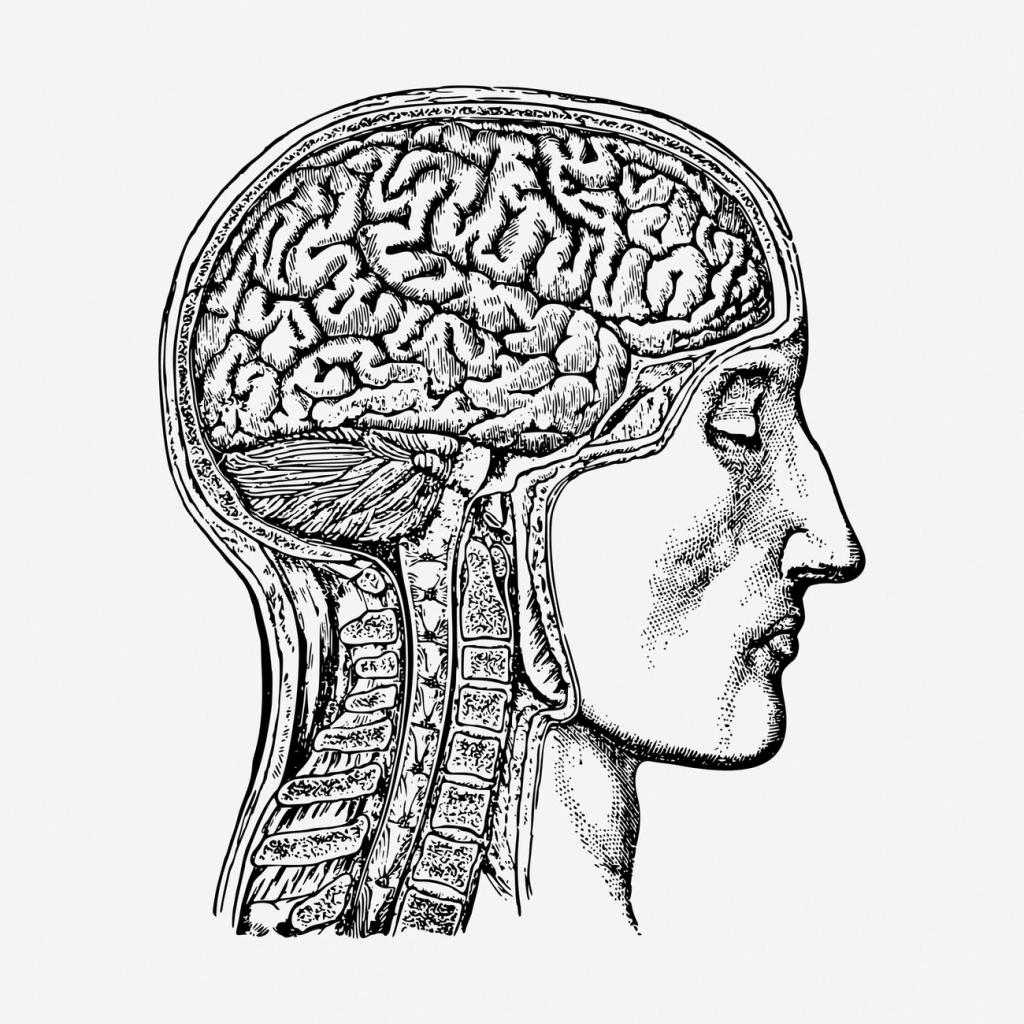
Ever since the Theory of Evolution was first mooted, the nature of human intelligence (and our self-ascribed success) have been contentious talking points. At first it seemed clear: creatures with bigger brains were more intelligent. Thus bigger-brained mammals did for those dim-witted dinosaurs, and so on. There’s something here: bigger animals like elephants and whales tend to be brighter than smaller ones. And there is discernible trend in brain size in hominin evolution. More subtle analyses suggested comparing the ratio of brain size to body mass. But if this was the answer, Capuchin monkeys would be the most intelligent beings on the planet.

One school of thought has always concentrated on quality and areas of the brain which are involved in thinking. Now a recent study gives strong support to this approach. Writing in the Conversation, Robert Foley and Marta Lahr describe how the neocortex burns up far more energy than the “ordinary” neurons in other regions of the brain. And that this area is precisely the one most developed when we compare human brains with those of our brightest mammalian relatives.

Now, we never think that one discovery, how ever well researched, is the be-all answer to a problem. But like all the best work, this one provides substantial grounds for further work, and above all guidelines for well funded investigation. 

And one more sly thought, prompted by yesterday’s blog: if our ancestors were getting bright, could they have built a nifty little raft and got to Socotra after all.?

thanks to mr p seymour

[1]https://theconversation.com/human-intelligence-how-cognitive-circuitry-rather-than-brain-size-drove-its-evolution-219669?utm_medium=email&utm_campaign=Latest%20f

#evolution #cognition #neocortex

The mystery tools of Socotra remain unfathomable

Here’s a little mystery to get you thinking. How did ancient tools-no, really ancient tools, of the second most primitive type ever made,[1] get on to the Indian Ocean island of Socotra? Before you read any further go to Google Maps and check out just how far that is from any land, even tiny neighbouring islands. Then ask yourself the following questions, to which we have supplied our own conjectures, but solely as a starting point for your own thoughts:

1 Who found them, and when? Russian scientist Valery A Zhukov (illustrious name) The write up was in Russian, but that is no reason not to doubt the veracity of the reports.

2 How old are they? The Tools are of the Oldowan type,[2] traditionally made between 2.6 and 1.2 million years ago Now , we have no formal training in Paleoanthropology, but we have followed the sport for 55 years, and the pictures (best seen via our reddit link) look pretty good to us.

3 Who made them? The fashion for linking particular cultures to particular types of hominin is now mercifully past us. Two possibles are Homo habilis and Homo erectus; but don’t hold your breath.

4 Could the makers have walked there? The sea around the island is incredibly deep. It’s true the ocean levels fell at different times during the ice ages; but that was generally after the Oldowan culture, and anyway, not by the 200 or so metres necessary.

5 So-did they have boats? There is absolutely no evidence of boat building technology at that time, nor even of the cognitive skills, including languages, that might have been necessary. Anyway it raises two paradoxes. You can’t see Socotra from land, so why build a boat to get there? And if you don’t know Socotra exists, why build a boat? Or even a raft?

6 In any case, the idea that “they must have had boats or how else did they get there?” is a logical fallacy, as intelligent readers will have already noted. (post hoc, ergo propter hoc)

7 Did they have gliders? Oh, please!

8 Did they swim it? See #7 above

9 Is there anything like this anywhere else? Well, the Homo floresiensis remains on that eponymous island are associated with a strong lithic culture. And again, the channels between Flores and neighbouring islands must have remained too deep to have dried out even in the driest glacial lows. So the short answer is-yes.

So-what is the answer? We have absolutely no idea. Normally we steer clear of all that anomalous artefact stuff you find in the more outre corners of the Interweb. We spent too much of our early years believing daft stuff. But this one certainly has us puzzled, and we would love to know more.

This posting, like all the others, would not have been possible without Wikipedia. Now they are desperate for money. Please could you at least think about donating, to keep them from the clutches of billionaires and distators, a sure candle of free enquiry and learning?

https://donate.wikimedia.org/wiki/Ways_to_Give

[1]https://www.reddit.com/r/AskAnthropology/comments/3ap4fw/when_and_how_did_hominids_reach_socotra/?rdt=42727

[2]https://humanorigins.si.edu/evidence/behavior/stone-tools/early-stone-age-tools

[3]https://www.bing.com/search?q=socotra&form=ANNTH1&refig=6c3d9e48de4a4e58bd0d9158b4dd1332&pc=HCTS

#socotra #tools #oldowan #homo erectus #paleolithic

Told You So (pick of the week)

We don’t like to use the words “Told you so” here at LSS. Well, not very often, anyway. But sometimes the temptation to do so is overwhelming. Especially when a prediction made comes true.

A few years ago we used to meet those wordly-wise types of johnnies in pubs and clubs who used to declare “climate change is all very well, but we can’t afford to do anything about it. Cost us too much money!” We tried to say that the cost of doing nothing would soon be very great indeed. That it would soon exceed all the money in the world, and more, as societies collapsed and vast numbers of refugees started trekking across the planet, while wars erupted over tiny scraps of land. But our concerns were dismissed with an airy wave of the hand, and our interlocutors moved on to more tangible subjects, such as the UK’s trading relationships after Brexit. About which they were serenely confident as well.

Well, today we had news of a tangible event which illustrates the economic damage caused by Climate Change. Because the mighty Panama Canal is now running so dry that ships cannot pass through it.[1] Instead, vessels pile up outside in long queues, like shoppers outside a car park. While the owners and the charterers run up enormous costs in delays and rotting cargoes at this vital pinch-point on the trade routes.

Okay, it’s one corner of the world economy. And it’s an El Niño year, so eventually the rains will come and the blockage will clear. For now. But there’s no doubt that this must be a sign of things to come-and they will get bigger. Told you so.

And by the way, those same types in the pub miscalculated on trade and immigration after Brexit as well. Dare we say it again?

Spoiler alert: todays link is dated November, but we assure you, gentle readers, that we have heard this twice as a live story today.

[1]https://www.bbc.co.uk/news/business-67281776

#climate change #global warming #panama canal #economics #mitigation

What the tragic case of Ruth Perry tells us about the immigration debate

Overseas readers may be forgiven for not knowing, but in these islands we have become a little exercised by the tragic death of Head Teacher Ruth Perry who took her own life after an OFSTED inspection went against her school[1] (OFSTED is the body charged with maintaining standards in our schools) Now, there are OFSTED inspections a-plenty, and not everyone inspected shares Ruth’s tragedy. But for us, the whole affair is the tip of an iceberg.

Because the lives of teachers, both State and Private sector is a frazzle of overwork. Not just inspections; but lesson preparation, form filling, marking, tutorials, staff meetings, behaviour issues, angry parents, pushy parents, sports, nativity plays, out-of- hours clubs, indifferent parents, indifferent buildings, and far below indifferent IT. As well as endless directives from Government, local Government, Health and Safety.,,,and the rest. For most, it’s a 24/ 7 job; they don’t even get Sundays, and the profession is leaching staff because they are burned out and finished. And it’s not just teachers-ask any professional. Police Officers, Social Workers, Health Care Professionals will all say the same. Because for more than forty years, English management philosophy has been: keep costs low; invest as little as possible; and whip, whip, whip until the staff have nothing left to give.

Now our rulers are complaining about a ghost army of workers in their fifties who have dropped out of the workplace altogether. Thereby occasioning the need for large numbers of immigrants to fill the vacant posts. And these same rulers grumble and look to force these supposed missing millions back to the sweatshops, whatever their state of health. Which makes us beg the question; why have they gone missing in the first place? Why was work so obnoxious that they would be so keen to avoid it? Did it really require such an awful event to bring it to light?

[1]https://www.theguardian.com/education/2023/mar/17/headteacher-killed-herself-after-news-of-low-ofsted-rating-family-says

#ruth perry #ofsted #teaching #long hours culture #overwork #investment