
The Hidden Dangers #1:tetraethyl lead

Here’s what lead can do to you:

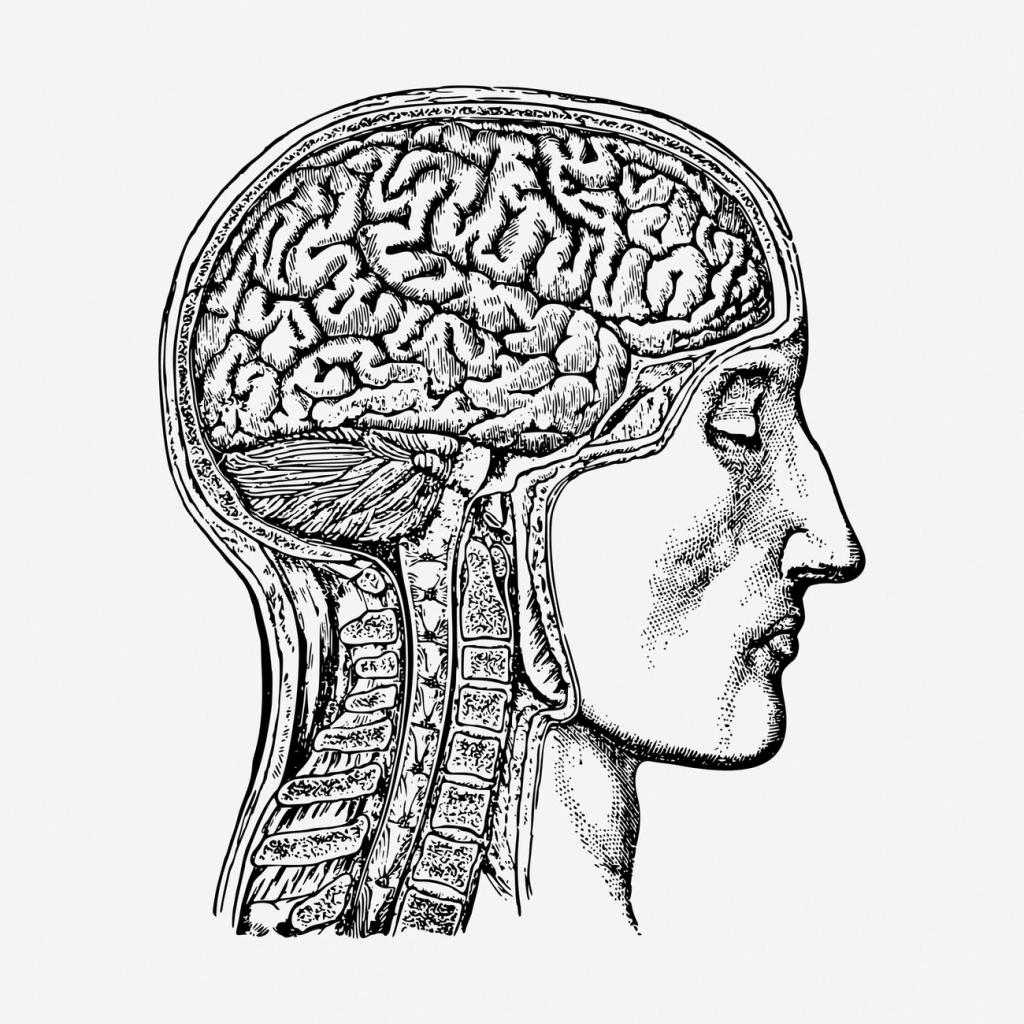
6 mL of tetraethyllead is enough to induce severe lead poisoning.[89] The hazards of TEL content are heightened due to the compound’s volatility and high lipophilicity, enabling it to easily cross the blood–brain barrier.

Early symptoms of acute exposure to tetraethyllead can manifest as irritation of the eyes and skin, sneezing, fever, vomiting, and a metallic taste in the mouth. Later symptoms of acute TEL poisoning include pulmonary edemaanemia, ataxia, convulsions, severe weight loss, delirium, irritability, hallucinations, nightmares, fever, muscle and joint pain, swelling of the brain, coma, and damage to cardiovascular and renal organs.[90] Chronic exposure to TEL can cause long-term negative effects such as memory loss, delayed reflexes, neurological problems, insomnia, tremors, psychosis, loss of attention, and an overall decrease in IQ and cognitive function.[91]

The carcinogenity of tetraethyllead is debatable. It is believed to harm the male reproductive system and cause birth defects. (Wikipedia: Tetraethyl lead [1])

Like it? That’s just tetraethyl lead, Pb (C2H5)4 The brute metal itself has been in use for millennia, and even the Romans knew that it was toxic. For a broader view, try the main Wikipedia article here [2]

Glad you clicked, because now you will know why strenuous efforts have been made to phase out lead from human technology for the last few decades. Admirable; but it leaves two big problems. It’s bad enough that all that lead is still out there in the soil, in the water, in the air, still poisoning us all. But it gets worse when you realise someone is still adding to the pile. Allow us to explain.

Some readers will recall the bright wheeze they had back in the 1920s of adding tetraethyl lead to petrol, as an anti-knocking agent for engines. It worked! The trouble was that the resulting cloud of lead covering the earth was so dangerous that eventually even a cynical world had to introduce measures which have reduced it. Except in one area: aviation. To quote Wikipedia once more

TEL remains an ingredient of 100 octane avgas for piston-engine aircraft. The current formulation of 100LL (low lead, blue) aviation gasoline contains 2.12 grams per US gallon (0.56 g/L) of TEL, half the amount of the previous 100/130 (green) octane avgas (at 4.24 grams per gallon),[84] and twice as much as the 1 gram per gallon permitted in regular automotive leaded gasoline prior to 1988 and substantially greater than the allowed 0.001 grams per gallon in automotive unleaded gasoline sold in the United States today.[85] The United States Environmental Protection Agency, FAA, and others are working on economically feasible replacements for leaded avgas, which still releases 100 tons of lead every year.[86] Children living near airports servicing small (piston-engine) aircraft have measurably higher concentrations of lead in their blood.[87][1]

Now to us, there can be few pleasures more innocent or admirable than the sport of leisure flying. Exponents of it are personally known to us. But isn’t it time that they, and everyone else, urged their Governments to look for alternatives? And is it unfair to add the phrase “as early as possible”?

[1]https://en.wikipedia.org/wiki/Tetraethyllead

[2]https://en.wikipedia.org/wiki/Lead

#lead #soil #toxin #neurological disorder #pollution

Hidden Dangers: Our new series begins today

Are there risks in things we do or use every day, which could be harming us, our children and grandchildren? We spend a lot of time here talking about things like global warming, potential medicine losses and pandemics. In the next few blogs, we want to get you talking about every day things. Things closer to home, which may be slowly and insidiously spoiling our quality of life, and destroying the chances of future generations. We’ll be talking about things like certain metals and other poisons, as well as plastics, pesticides, fertilisers and other well-intentioned but short sighted practices which could be reformed or abolished without much harm, and to great general benefit.

And “well intentioned” is the key for us . Because unlike conspiracy theorists, we don’t think the people involved are necessarily evil. Very often, they were motivated by genuinely laudable ideals such as improving food supplies, or increasing technological performance. The biggest trouble comes from limited thinking, solving a problem here and now, without scoping the wider consequences. The fall-out, that chilling phrase from the last century. Which in turn implies that these problems could be solvable, with a little more thought. Wouldn’t it be nice if LSS came up with an optimistic set of blogs, for once? Try them, and see what you think. The first will be coming up next.

#heavy metals #plastics #pollution #pesticide #herbicide

Another big thanks-keep ’em coming

March has brought a really heart-warming number of likes, links and comments to our little blog. More in fact than we can confidently enumerate. Imagine if we tried to list all of you and forgot one, just one! The shame would be too great for us, and rightly so.

So the only way to deal with this is to, once again, just note how truly honoured we feel that you like this little blog. And take the time to tell us so. Once again, we wish you all success in all your enterprises, large and small. And to enjoy the rest of this great month, and the well-deserved Easter break at the end of it.

We will have a little more to say on Easter later, and how we think it may predate Christianity by several thousand years, But that really is for another day.

THE EDITORS

What has inequality got to do with climate change?

Article of the week

Old hands on this blog will recall our admiration for the work of Richard Wilkinson and Kate Pickett. We still give copies of their seminal 2009 work The Spirit Level as Christmas and birthday presents to this day. Their key insight-that high levels of economic inequality are inimical to a healthy society- seems more valid than ever. But now they go further, averring the the societal dislocations caused by inequality may be actively impairing our response to the looming ecological collapse.

And so we present their thoughts by linking to Nature Briefings. Good scholarship is always provisional. But we think this is pretty robust. And we are fully confident that the intelligent readers of our blog will be able to ask, and answer, the right questions.

But we think you should look.

#climate change #inequality #global warming #ecology #sustainability #consumerism

Ronnie Lane: why we are into medical research

Here’s an experiment younger readers can try on their grandparents. Ask them about The Faces and they will probably start on about flamboyant front man Rod Stewart. Ask them about the Small Faces and they will say the same about Steve Marriott. Yet alongside these undoubtedly gifted individuals there played-and, more significantly, wrote-a quieter, slightly self-effacing figure called Ronnie Lane.[1] Who was no less talented, but whose life was cut dreadfully and horribly short by the dreadful disease Multiple Sclerosis at the sadly early age of 51.

Younger readers, if you want to explore the back catalogue of Lane and his various collaborators, we promise you some real treats. The Small Faces were an iconic sound for the modernising London of the 1960s. The Faces were the quintessential good time rockers, whose sense of humour and fun in being alive shines through every album. Lane could bring a wistful, slightly melancholic line as well, giving emotional depth to run alongside the more raucous productions of Stewart and Ronnie Wood. Yet after leaving, Lane never achieved the world-brand status of his erstwhile chums. And before he really found his feet, the disease struck; apparently it was hereditary in the family.

And that , ladies and gentlemen, is the point. Because we say; it shouldn’t have happened like this. We offer this man as one personal example of how chronic disease can rob the world. But MS, like other neurological diseases afflicts millions, making life hell for sufferers and their carers alike. The answer of course is research. And, here’s an article of faith: we think research in one area will spread its benefits into many others.

So now, as a tribute to Ronnie, imagine you are Parka-Clad Mod, speeding on a stylish Italian motor scooter through the streets of swinging London, on your way to your favourite coffee bar. The song paying will be All or Nothing[2] And that’s how we want you to treat the research and discoveries which will one day end this disease forever.

[1]https://en.wikipedia.org/wiki/Ronnie_Lane

[2]https://www.bing.com/videos/riverview/relatedvideo?&q=small+faces+all+or+nothing&&mid=DB77E21A8419DB96B9F9DB77E21A8419DB96B9F9&&FORM=VRDGAR

#ronnie lane #small faces #the faces #rod stewart #ronnie wood #steve marroitt #mods #multiple sclerosis

How an old History Book still has very real lessons for today

It’s funny how some books suddenly explain something you’ve puzzled all your life. One of our obsessions was always “What was the Roman Empire all about? And why did it fall?” And we ploughed our way through everything from Gibbon to Asimov’s Foundation series. Until we came across RH Davis A History of Medieval Europe”[1]. Suddenly, things began to fall into place.

Before the Industrial Revolution, it was far cheaper to transport goods by water than by land. The achievement of Rome was to be the culminating power that united the whole Mediterranean Basin into a single, prosperous trading area. Where cities could flourish, ideas spread and production be subdivided to the most efficient source. And to do it all with the minimum effort. This was partly by religious tolerance: before Christianity, all beliefs and none were accorded equal status. But it was also done by Law. As Davis explains

“…….[The Romans] knew that all the Mediterranean peoples had a common interest in the commerce of their sea…….they believed that all men had by nature an instinctive knowledge of what was right and what was wrong…and that it was possible to frame laws in accordance with the standard of nature. They distinguished between custom, which was of local significance and law, which appertained to justice and was of universal significance …...

But the barbarians who entered the Empire did not quite see things that way. Most of them-Goths, Burgundians , and so on, came to enjoy, not destroy. But:

barbarian invaders claimed that their own laws were were particular to themselves, since they were not founded ..on reason, but on the dictates of their divine ancestors….[the Roman Empire] was… cracked by the determination of barbarian invaders to prefer the law of their ancestors to the law of reason, since that preference implied the superiority of loyalty to one’s race over loyalty to the civilised world. It was shattered when traders lost the freedom of the sea. When that happened , the greater part of Europe reverted to an agricultural economy, in which there was no place for the cities that made men civilised” (all quotes pp 4-6)

Today, after a brief period of globalisation, we live in an age of retreat. In most places, people are reverting into ethnic or religious tribes. There are cries to tear down even the few international laws we have, which might have done some thing to keep the peace. Now, there is a very respectable argument to say this is in accordance with the most basic instincts of human nature. And so it might be. But Davis tells us very clearly what the price must be if we now follow this that course. The Dark Ages.

[1] RHC Davis A History of Medieval Europe from Constantine to St Louis Longman 1988

#RHC Davis #Middle ages #medieval #trade #henri #pirenne #dark ages #antiquity #economics

Worms and trains gave us two unexpected shocks for the weekend

A philosophy derailed For more than fifty years, the Mail and its collaborators in the right wing media have been pushing one simplistic mantra “Private Sector Good. Private Sector Bad.” So it came as a surprise to see this candid admission of the appalling state of Britain’s privatised railway system.[1] It’s a story that’s repeated across swathes of our economy. Public Housing, water and sewage, Forensic Science, energy regulation… the attempt to privatise and create a market at all costs has often been a costly failure. Now, anyone who has y worked in the public sector and seen its inefficiencies close up cannot remain a socialist. Or not enjoy the delight of pompous civil servants being exposed to a little competition. But the invariable prescription of a single nostrum, whatever the circumstances, that so appalled us. Good to see a little honest admission of error.

[1]https://www.dailymail.co.uk/news/article-13172415/Rail-cancellations-Avanti-Northern-CrossCountry-TransPennine-Express.html

Immunity to radiation? When we were young we thought “radiation is an ineluctable killer. It so affects the genetic material that there’s no way back.” Wrong again! As this intriguing article from the Independent shows, to our extreme chagrin. Apparently the famous nuclear disaster zone of Chernobyl in Ukraine has nurtured a whole new type of radiation resistant worms. [1] The implications for life on earth are intriguing enough. But even more so in our quest to find living creatures both in our own stellar system and in more distant ones. What a way to end the week.

thanks to p seymour

[2]https://www.independent.co.uk/news/world/europe/chernobyl-worms-nuclear-power-plant-b2509161.html

#chernobyl #worms #radiation #privatisation #public sector

Could your gut microbiome be making you anxious?

We always like intriguing new stories about health and biology here. That’s why we’ve showcased this item from Peter Hess of the Mail, Do you have Social Anxiety? Scientists Find the Condition lives in your gut. Peter reports some results from University College, Cork. Essentially, scientists there have transferred gut material from people with Social Anxiety to mice. And found that they have thereby induced significant changes in the nervous systems of those creatures: specifically, making them more prone to anxiety and fear [1]

The work is undoubtedly interesting, and it’s good journalism to write it up Especially when it’s one of our old tropes, in this case the relationship between the the digestive system and the nervous system (LSS 9 3 23 and passim). Is it the answer to all our woes? It’s too early to say.

Essentially, journalists report two types of science story. Definitive ones, which answer all the questions and close the subject down. Or intriguing ones on early research which opens a subject up and sets the questions for future researchers. It’s our gut feeling that this work belongs in the second category. For one thing, the numbers are small (12 people and 72 mice, if our maths is anywhere near correct) Good start, but we’d like to see replication across much larger numbers. And what is Social Anxiety Disorder anyhow? Psychiatric conditions are notoriously hard to define exactly. Could there be other causes of anxiety, such as war service or growing up with violent parents? They need to be controlled for.

It’s good work in an intriguing area, and we hope these researchers are given more time and money to pursue it. But we still wait and see for definitive conclusions.

[1]https://www.dailymail.co.uk/sciencetech/article-13156095/social-anxiety-gut-scientists-treatment.html

[2]https://www.bbc.co.uk/news/health-46986709

#diestive system #nervous system #health #anxiety

An apology to Dr Joseph Ladapo,and all our readers: now, will our staff please come in from the car park?

Today we published a blog which discussed the controversies around Dr Joseph Ladapo, [1]the Surgeon General of the State of Florida. We hope that the report was fair to both sides. Unfortunately, we committed one unforgiveable error. We got the name of poor Dr Ladapo slightly wrong, spelling it, for the most part, as Dr Lapado. We hope this oversight, this careless Spoonerism, will not cause unnecessary distress or anguish to Dr Ladapo, and undertake to be more careful in future. Unfortunately, it doesn’t stop there.

Upon learning of this very understandable error, nearly all the staff have walked out. They now occupy a position roughly between the car park and George Street. Moreover some reckless spirits among them have raised vulgar and garish placards, bearing simplistic slogans like: NO MORE MISTAKES AT LSS WE WANT TO WORK FOR A REPUTABLE BOSS and even PAY RISE NOW . This has excited unfavourable and ribald comments from passers by and has brought the company’s reputation even lower in Croydon. And it wasn’t very high after the Christmas Party.

Okay we’re sorry. It was the Board that got it wrong, not any of you lot. We know we’re paid a lot more than most of you, but that is the market rate for Company Directors. Obviously it’s very different to that for an average worker in ,say, IT, HR, telephone sales, or even comparable professions like nurses, teachers and delivery drivers. And the reason people like us get a lot more is because of the heavy burden of responsibilities we carry as the Directorial Classes. And this would be the same if we worked in, let’s see, a water company, the :Post Office or in a large Private bank, for example. And it’s because of all that work that mistakes creep in, like the one we made today. But look, you’ve made your point. Maybe we can look at new drinks machines and new chairs and tables. Maybe more money could be found to fix that leak in the third floor kitchen. But please come in. Please come back to work. We promise not to do it again. And be kinder and more considerate in the next pay round. Please?

THE EDITORIAL BOARD

[1]https://www.theguardian.com/us-news/2024/mar/03/florida-measles-outbreak-preventable

Florida’s Health Battle heats up

As if the US State of Florida didn’t have enough problems, what with coastline erosion and all that, it has now become the epicentre of of a mighty battle over public health, and who calls the shots over what is, and is not, scientific evidence. [1] This is how the two sides square up, according to Richard Luscombe of The Guardian

In the Red corner: Dr Joseph Lapado [2] Florida’s Surgeon General, whose principle back is State Governor Ron Di Santis, who, as older readers will recall, is a former Next President of the United States of America. In the Blue corner, most of what passes for orthodox medical and scientific opinion. And, before you take sides, gentle readers, note this. Dr Lapado is no unqualified quack, but an eminently learned and trained medical doctor. Who, as an immigrant from Nigeria had no doubt to fight more than his fair share of of prejudice before finding his way to a well-deserved place at the top. The trouble is that some of his opinions, are to say the least, controversial. As our sources report, huge storms are now swirling around his recommendations in matters concerning masks, vaccines the use of various medical and public health literature sources, and certain treatment methods [3] The outcome of many is still unresolved, we hasten to add. But, with Big Ron in your corner, does any of this matter? Everyone has a right to their opinion, as they say; maybe Dr Lapado’s is as good as anyone else’s?

The trouble with opinions is that they get get tested in fact. Now an outbreak of measles among the unvaccinated burghers of Florida is testing Dr Lapado’s practices and beliefs to destruction. And it’s not just matters of Life and Death, it’s more important than that. Florida’s economy depends more than most on tourism and real estate, and the guardians of that economy are beginning to realise this, as Richard notes:

Come for the Sunshine, Leave With the Measles, opined the Orlando Sentinel; “Measles? So On-brand for Florida’s Descent Into the 1950s”, was the take of the Tampa Bay Times.

Only time will tell who is correct, Dr Lapado or his detractors. . But we close with this thought. For a long time now- ten, twenty years-everyone has loudly, aggressively proclaimed their right to hold opinions Fair enough; but they cannot all be right. The one that really was right all along only emerges with the tests of fact and experience. Until they come along, a little humility might be in order for all of us. Otherwise that test might be very painful indeed.

[1]https://www.theguardian.com/us-news/2024/mar/03/florida-measles-outbreak-preventable

[2]https://en.wikipedia.org/wiki/Joseph_Ladapo

[3]https://www.newyorker.com/humor/borowitz-report/floridas-surgeon-general-urges-cvs-to-stock-leeches

# joseph lapado #ron di santis #vaccination #measles #florida #public health #empiricism#measles