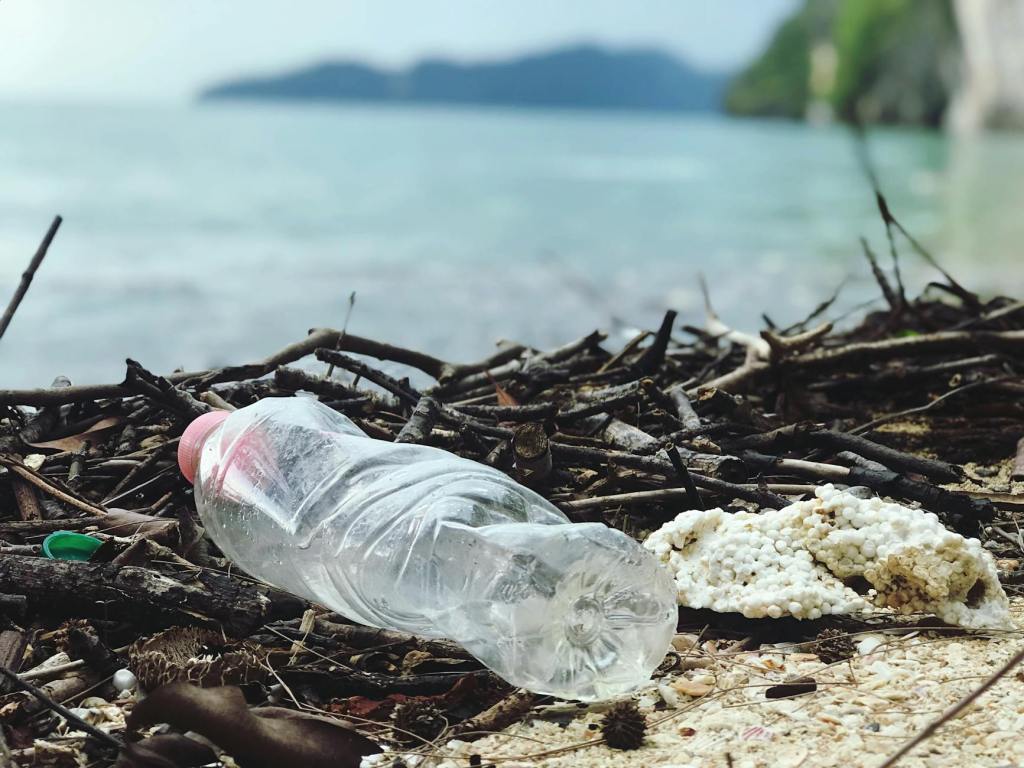
Oh for those shiny days of the far-off 1960s, when all those brightly coloured plastics were new, and somehow modern. Your model of Thunderbird 2 was made of it. So were the seats in your dad’s new Austin 1100. So were bottles of fabric conditioner, drinking mugs and clothes of nylon. No more fuddy duddy old wood and cotton for us! This was the Space Age, and we even listened to David Bowie’s Space Oddity on a plastic record.
Except there was a catch. All this new plastic which was slowly filling up the world would one day break down into tiny indigestible particles. With no where else to go except into our blood, our brains, our tissues. So far so bad, but it gets worse. LSS started out as antibiotics blog, and this is where we close the circle. Read this: It’s from the admirable Science News website, a cornucopia of knowledge on many subjects
An international research team has investigated how nanoplastic particles deposited in the body affect the effectiveness of antibiotics. The study showed that the plastic particles not only impair the effect of the drugs, but could also promote the development of antibiotic-resistant bacteria.I
So what’s going on? Firstly, can we say how much we liked the simplicity of this study. It used a common antibiotic (tetracycline) and and some common as muck plastics (polyethylene, polypropylene and polystyrene) It looks as if microparticles of these things can bind antibiotics, which leads to both the reduction of effectiveness and the generation of new resistance. But read the paper and judge for yourselves, good readers.
And our thoughts? Well they’re more emotions really. A kind of vague melancholy at how progress in one area slow creeps up and vitiates progress in another. That Rachel Carson was right all along. And that all that glistens isn’t good.
There’s no point progressives wringing our hands. We lost, forever. The best use of our time now is to try to work out some of the reasons why, so that future generations may not repeat our mistakes. It’s worth considering a range of explanations: economic, technological. psychological. For the first, economic, you won’t do much better than this one by Nesrine Malik of The Guardian, to which we just had to give a nod [1] But at the same time we couldn’t help thinking that everyone is affected by the economy(that’s how it got its name) So why the split between men and women? Have a look at this:
The president-elect represents a particular type of masculinity: he is seen as brash and straight-talking, and can appear domineering or patronising around women………………. For some women who voted for him, this might be a familiar personality that they’ve seen in their fathers and husbands. For men, Trump represents “hegemonic masculinity”, the exalted position of men at the top. In this view, aggression, control and dominance are all admirable traits and highly socially valued.
It’s from an article by Ashley Morgan in The Conversation,[2] and it made us ponder. The way that masculinities are formed, particularly in certain social classes. How smoking was advertised, and why it took so long to die out. Why speed cameras and signs near our home are often vandalised-and elsewhere [3] Why some people idolise gangsters. Why football hooligans exist. But before we begin, let’s ask a deeper question: why?
For thousands of years societies have prized strength and courage You needed it if you were a herdsman trying to push your flock over a pass in the Zagros mountains. While simultaneously fighting off the next tribe of robbers who sought to despoil you of the lot. Later industrial societies had many roles for such masculinity, in agriculture, industry or war. Never forget Dr Johnson‘s famous dictum “Sir- among the lower orders, what is often called insolence in times of peace is called courage in time of war.” For far too long, people who call themselves “progressive” have been too ready to despise and condemn men of-how to put this delicately?- certain classes and occupations.9that’ll do for now-ed) Last week they just came round to take their revenge. Serve us all jolly well right.
Oh God, oh God, why do we keep doing this? In last week’s blog Plastic Pollution, killed by neo liberalism and how we can’t keep up, we forgot to include anything that covered that last bit! Tiredness, information overkill, whatever the reason we apologise utterly un-reservedly. This is what we were going to say:
There has been yet another discovery in Biochemistry. A noble and intriguing discovery no doubt. But one which has left us reeling, longing for the simplicity of earlier times. Before we start, read this: The study of RNA’s strangest form, from the admirable Nature Briefings
Circular RNAs (circRNAs) — molecules in which an unusual version of the standard RNA-splicing process folds the strand back on itself — are implicated in diseases from cancer to Alzheimer’s, but exactly what they do is still a mystery. This is in part because circRNAs are so rare, and distinguishing their impact from that of their linear cousins isn’t easy. Fortunately, researchers are quickly assembling a toolbox of materials and methods to recognize, quantify and uncover the functions of these puzzling loops. The database circAtlas is helping to clarify the landscape by requiring listed circRNAs to be identified by two tools, and biotech company Arraystar is designing microarrays to hunt for circRNA in human samples.Nature | 11 min read.
Admirable indeed. But we couldn’t help an odd nostalgia for an age when RNA came in two forms. When there were only three TV channels(in the UK) There was only beer to drink. Do you sometimes, just sometimes, feel the same?
a quick trawl through stuff that caught our eyethis week
Plastic Pollution -not a drop of comfort Anyone who thought that plastic pollution was far away in the ocean, or only happened to other people, would do well to read this. According to this piece from Medscape, it’s going to have a direct impact on your urinary system. Soon. There’s something to think about next time you pop out to the smallest room, or dive behind a bush in a local beauty spot. Thanks to G Herbert
Killed by Neoliberalism? Four youths and a man have been convicted of yet another murder; Reasonless, bereft of intelligence-why do they do it? The world over? Because people like this this have nothing- no education, no prospects, no money. All they have is their honour: status derived from the approbation of other wretches like themselves, equally lost in the abyss. And why, in turn, is that? Because we still live with the tatty, faded promises of neoliberalism and its bogus promise of trickle down economics. Bogus? Yep, go to the next story after you have read the link from Bristol Live
So Is Neoliberalism dead too? Yes, according to this thoughtful piece from Dani Rodrik in the Guardian Before you protest that this one is seven years old, remember this. The whole cult of untrammelled free markets, low tariffs, and unrestricted flows of money and people has just been buried by the election of Donald Trump, who, rightly or wrongly, is opposed to all of those things. So if even the American Right have forgotten neoliberalism, where else has it to go?
Will Trump Sell out Ukraine? Before the election Democrats in the USA and democrats in the rest of the world asseverated that Donald Trump would quickly sell out Ukraine to Putin. But. Let’s give the devil his due, and reserve judgement until we see what he actually does. In the meantime, here are four possible scenarios from The Conversation
And finally…the Cumbernauld cat who was cornered in Coventry We couldn’t resist this winning story about Beans, a large tabby and white feline who went missing from his home in Cumbernauld, Scotland in late October. (under Joe Biden-remember him?) Well recently, he has shown up 300 miles south in Coventry, England. to the joy of his owners, with whom he was duly reunited. How he managed to travel all that way remains a mystery. But at least there’s one happy ending to close off then week. Even if Beans must now conduct the rest of his days under the supervision of Donald Trump.
Russia and its dominions are now plagued by an entirely new wave of drug crime. It’s a fascinating subculture, based on the dark Web and full of its own new argot with terms like kladmen, seagulls and dead drops, all designed to get around the old models of illegal buying and selling.[1] This superb article by Max Daly of the Guardian explains all. First, a confession. We freely confess that not only do we have the greatest intellectual difficulty in understanding how all this works, but also in grasping how it can possibly exist in a totalitarian, utterly regulated society like Russia, where absolute obedience is prized above all.
The answer is that an outward show of absolute loyalty buys many freedoms. A totalitarian state can brook no challenge to its legitimacy. Yet those who cheerfully profess unswerving fidelity can go about their daily business virtually untouched, It’s a truth that western admirers of the old Soviet Union found hard to grasp: how could there be so many gangs and so much corruption in a Socialist Society? But there was: outfits like the Tambov Mafia gave more than one aspiring dictator their start. The biggest threat to a totalitarian system is not the dissidents, who can be quickly arrested and crushed. It is the loyalists whose activities slowly creep up, deviating the purpose of the State until it is rotten from within. It is the same everywhere: who can be more loyal than a policeman, dedicating his life to maintaining social order? Well, read this {2] about the alleged misdemeanours of a certain Oscar Sanchez Gil who was until recently head of the economic crimes unit of the Spanish National Police, and who allegedly had about 20 million euros in cash stuck inside the walls of his house. (of course, we stress that at this stage these are allegations. The Courts may yet prove Snr. Gil to be a fine upstanding citizen of impeccable character and honesty) But it’s the sort of case that illustrates our point.
Corruption may indeed be a bit naughty. But what is it really except the classic operation of a free market rushing to supply an immediate need? One thwarted by acres of state regulation and red tape? Back in the 1990s, we always laughed at card carrying Conservatives who grew hysterical about immigration and illegal drugs. Surely, we reasoned, this was just their free market operating to the laws of supply and demand? Of course one may make a judgement about what are real human needs. But that is a moral issue, not an economic one. If free market theory is correct, then it must be one of the best descriptors of human nature yet found. And ultimately, it will bring down every system, however cruel.
OK, we have spent the past four years urging you to hunt down those pesky little microbes with every antibiotic you can lay your hand on. Now we’re going to tell you microbes are just wonderful. When it comes to saving us from Global Warming that is Read this piece called Microbes against climate catastrophe from Nature Briefings
In a call to action published simultaneously across 14 journals today, microbiologist Raquel Peixoto and colleagues demand that the world “harness the power of microbiology” to safeguard the planet. From the enhancement of carbon sequestration to the cultivation of biofuels, there are a multitude of microbe-based solutions to climate problems, say the authors — but these are not being rolled out effectively at scale. It’s time to cut through the red tape, they argue, and gather a global task force to help test, fund and deploy the best of these microbiome technologies.Nature Microbiology (and 13 other journals) | 5 min read
When we ran this one through the editorial board, we agreed we could not be accused of mixed messaging. Antibiotics are in the medicines file. Carbon capture is in environment. They are two completely separate disconnected entities, like the utterances of certain well-known US politicians and the observable truth. But: are they? After we finished the meeting, and before putting quill to parchment, as t’were, we went for an uneasy walk with our conscience. Up and down the bleak streets of Croydon. Past Fairfield Halls. Something was niggling at the back of our mind. In the Porter for a quick three or four pints. What was it about antibiotics? Round the shopping centre. Something extra about antibiotics. Back past fairfield Halls. People were starting to look Then it hit us! All these excess antibiotics, running off farms and so on may actually be damaging the very microbes which we need to save us. Read this extract of an abstract if you don’t believe us, from the accomplished Professors Yaozong Cui, Yanhong Li Lihao Zhang and Nan Ziao Environmental behaviour and impact of antibiotics [1]
Antibiotics are widely used to treat or prevent human and animal diseases, as well as to promote the growth of animals in livestock breeding and aquaculture. As a type of antibacterial drugs, antibiotics have been widely applied in human/animal disease prevention, disease treatment, animal husbandry and aquaculture, etc. A majority of antibiotics introduced into human/animal cannot be utilized directly, leading to the result that more than 85% antibiotics were discharged into the environment. Once antibiotics enter the ecosystems, they could influence the evolution of the community structure, which according affect the ecological function of aquatic environment. Correspondingly, antibiotic resistant bacteria (ARB) have been found, which is threatening ecological safety and human health.
Perhaps the best take on this is from the world-weary Professor Peixoto. We need-and urgently- a very deep understanding of how we live and manage the whole microbiological biome. But where do our rulers spend our money?
Today we revived a post about the Roman Scholar Cassiodorus, or part of it. We did so because we thought his life might be relevant to the folly of our own times. While we shuffled through the process of writing, posting and so on, we noticed that a reader had picked up on another four year old post about the infamous Smoot Hawley Tariff. And so, without further ado, we reproduce below The Smoot Hawley Tariff:Another fine Mess…… Because we think it’s more relevant than ever. Thank you, that reader
It is the year 1930, and Republican Herbert Hoover is in his second year as President of the United States. Outside the White House, popular tunes on the radio include Embraceable You, by George and Ira Gershwin, and Ten cents a dance by Lorenz Hart and Richard Rogers. In cinemas Laurel and Hardy have made their transition to talking pictures with shorts like Hog Wild and Another Fine Mess. These would have supported new feature films such as Hells Angels and The Dawn Patrol, both evoking strong memories of the recent World War.
In May 1930 Hoover was a very worried man. In the previous autumn, the Wall Street Crash had sent shares into meltdown, triggering an avalanche of company closures and layoffs. By March 1930, US unemployment was already at 1.5 million. Now there was even worse news. On his desk lay a Bill called the Smoot-Hawley Tariff-and he, as President, was expected to sign it.
The Bill had been introduced into both Houses by Senator Reed Smoot (Rep, Utah) and Representative Willis C Hawley (Rep, Oregon). It was a response to cry from Republican heartlands to protect American jobs for American workers-and especially American Farmers. To this end, it introduced high tariffs on a vast range of imported manufactured and agricultural goods. Now it had passed both Houses of Congress, and so only needed the President’s signature to become law.
The trouble was that the whole rest of the world depended on trade with a thriving American economy. America was the only healthy economy left of any size after the Great War. A rise in US Tariffs would mean a collapse in trade for everyone else; and even the possibility that they might retaliate. 1,028 leading economists signed a petition asking the President to use his veto. The head of JP Morgan begged the President to reject this “asinine” legislation. Henry Ford spent an evening with the President in a last- ditch attempt to persuade him to use his veto. It didn’t work: Hoover knew that he needed the support of his Republican Party to govern at all. Not to have signed would have sparked a civil war inside the party. And so on 7 June 1930, the Smoot Hawley Tariff became Law.
The economic consequences unfolded at once. Over the next three years US imports decreased by 66%, and exports by 61%. An economy estimated at $103.1 billion in 1929 had fallen to $55.6 billion by 1933. The collapse in farm and other commodity prices brought starvation to the farming communities who had so strongly pressed for the Bill. In December 1931 US unemployment reached 9 million. By December 1932 it was 13 million.
The international consequences were disturbing. Led by Canada, all the major trading countries began putting up their own protectionist tariffs. Any hope of the world trading its way out of depression vanished. Unemployment rose to vertiginous heights, especially in Germany. There were consequences. In 1928 the Nazi Party had 12 seats and 2.6% of the vote. By 1932 they commanded 230 seats and 37.3%. Most worrying of all was Japan, which in despair abandoned the world community. Instead they looked for resources and markets by seizing Manchuria from China, initiating the eastern half of a war that would last until 1945.
What can we learn from all this, ninety years on? Never underestimate the power of ignorance and stupidity in human affairs. That nations have a right to defend their interests, but need to be very, very thoughtful about how they do it. And that the Talkies were here to stay.
By 1934 the new President, Democrat Franklin Roosevelt, was already starting to lower tariffs again. But the damage had already been done. Japan was by now so committed to China that only military defeat would get them out. In Germany, Hitler was consolidating his power by becoming Fuhrer. Some years of peace lay ahead, but the lines that led to war were already laid down.
Perhaps we should leave the last words to WH Auden, who wrote these memorable lines on 1st September 1939, as Germany marched into Poland, and the most terrible conflict in history got under way
Accurate scholarship can/Unearth the whole Offence/from Luther until now/That has driven a culture mad……………………….I and the public know/What all schoolchildren learn/That those to whom evil is done/Do evil in return
we apologise for being unable to find a royalty-free image of Messrs Smoot and Hawley
Hugh Brogan The Pelican History of the United States of America penguin 1985
Yes, these are dark, dark times. Autocracy is on the rise around the globe, riding the fury of ignorant mobs to arrive at a new barbarism. Climate breakdown, entailing economic and social collapse now seems very close indeed. It would be very easy indeed to fall into the bleak despair, as the achievements of the educated, built patiently over the centuries, are squandered in a couple of insane decades. But survival is possible. Other intelligent people have witnessed a collapsing world. And realised that the most important thing was to save what they could from the ruin, then pass it on. So that one day learning and reason could rise again
Our examples are four remarkable men who lived roughly between the years 400AD and 600AD as the Roman world, its trading and legal networks, its learning and reason, collapsed around them. Astute readers will note that most of them professed the Christian Faith. We at LSS advocate no faith or all of them, believing such decisions are best reserved to the mind of each individual. What they illustrate is how to accomplish psychological survival in the face of catastrophe. If their faiths helped them, so be it; we think the methods are more enlightening than the beliefs
St Augustine of Hippo 354-430 In the late Roman Empire the daily work of a priest a bit like a social worker today; distributing alms, visiting the sick, binding the links that tied a fraying society. But he wrote books too. Like all his contemporaries, Augustine was horrified by Imperial collapse. But instead of just wailing and gnashing his teeth, he set out to ask why, using the best ideas available to him at the time. In the City of God he claimed that Rome fell because it had not been based on Justice. In a world of profound inequality and judicial corruption it is a lesson not without resonances today. His ideas that, somewhere out there, another City could be built where trade and learning might thrive again, inspired the best of people through the darkest times, Including some on this list
Cassiodorus Old LSS hands will recall our blog of 11th June 2020 on Marcus Cassiodorus c 485-585) From which we will take this single extract
He had realised that the one place where works of learning could be effectively preserved was in the shelter of monasteries. And so he set his monks to work, copying and preserving as many works as they could. It is thanks to him that so much work survived the collapse of ancient civilisation. And that one day this learning, more precious than gold, would be revived..
if you want to know more, go back to the original blog
St Benedict of Nursia 480-547 If you want monasteries to survive , people have to want to stay in them. At a time when monasticism was plagued by weird fanatics, defying the rules of nature and reason in ever more convoluted asceticism, St Benedict set up rules that were feasible, sustainable and went with the observable grain of human nature. The result was that his Benedictine Monasteries began to spread, offering sanctuaries, however imperfect, where the seeds of learning could survive. His work provided one of the foundations for the work of :
Gregory the Great (?-604AD) Gregory subsumed the work of all the above and others, by clearly recognising that the old world was gone, and there was no point regretting it. It was time for new methods and new ways of thinking. Whatever the ups and downs of the Churches ever since it was Gregory who gave that vital push which enabled them to become custodians of knowledge for centuries to come. In that sense, he achieved.
We live in times when are own barbarians seem close to perfecting their own world of lawless violence, squalor and ignorance. But we may have our revenge. The task now is to work out where we went wrong, and from that to pass a legacy to future generations of the Intelligent. You do not have to be a Christian, you can even be an Atheist, and still believe that one day there will be a City, bright and shining, where the educated and the just thrive. And the world of the Barbarians will again be remembered as as epoch of squalid folly, and their leaders are bywords for incompetence and cruelty.
#middle ages #medieval #st augustine #survival #papacy #gregory the great #cassiodorus
Just for kicks, we thought we’d change the slightly pessimistic zeitgeist of this blog, and offer you some stories of real hope. Those-and a little moral homily at the end which we hope will justify these humble inclusions. The stories come, as so often, from Guardian science writer Ian Sample, whose thoughts we often praise here.[1] We hope they might offer a glimpse of what we are about to lose if certain tendencies play out.
Stem Cell transplants could reverse diabetes. All that intricate and detailed work on stem cells may at last be finding a pay-off in the real world, with an almost infinite relief of human suffering. We respect the beliefs of the religious: but would just praying have got us this far?
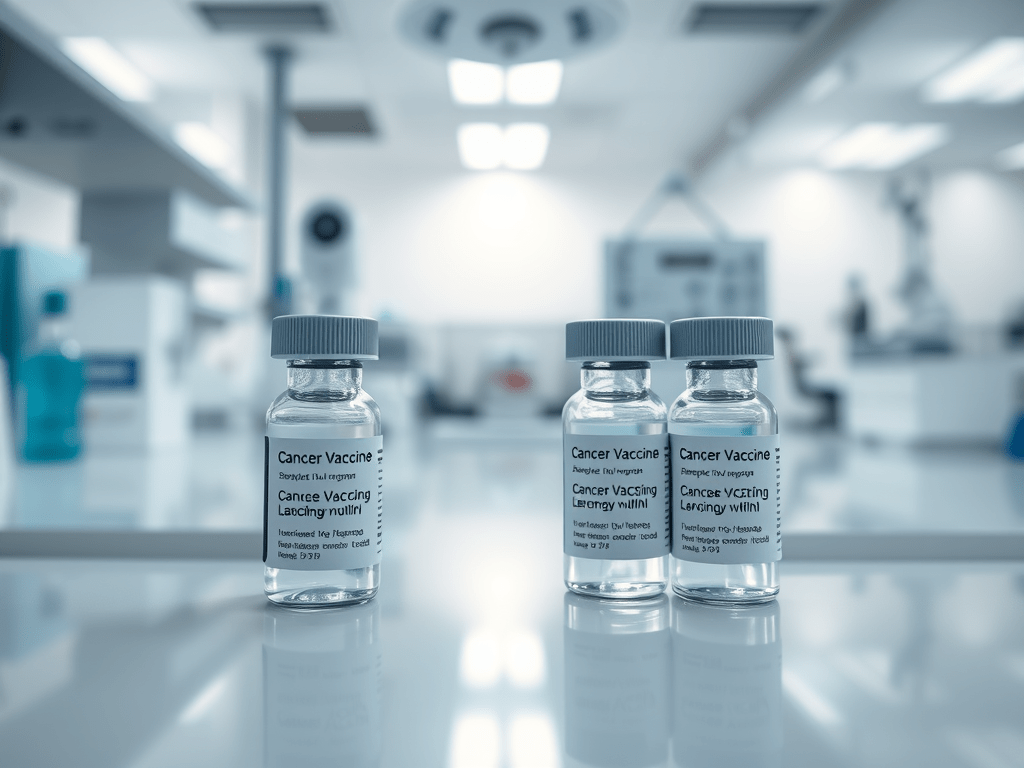
Cancer vaccines from RNA We have covered this before here. If nothing else, the COVID-19 pandemic witnessed a major leap forward in vaccine technology, especially in mRNA. Where would cancer patients be now if all those anti-vaxxers had their way?
AI detects cancers To bring in another LSS old favourite: AI can now be used to screen and detect cancers more quickly than ever before. When we think of cancer, we think of old acquaintances who used to deny smoking had anything to do with cancer. Does that remind you of climate change deniers?
Occupants of interplanetary Space For lovers of pure science, there can be little more amazing the discoveries offered by the James Webb telescope. Once upon a time, the Inquisition threatened to burn Galileo for looking up at four little satellites around Jupiter. Will someone try the same on this new telescope?
Renewable energy is on the way. Remember all those programmes and articles that tried to suggest that renewables could never, ever replace fossil fuels? But there’s real hope now that renewables will displace fossils by 2030. Both China and India seem poised to lead the way ahead. USA take note.
Yet we promised you a moral on this one, so here it is. All these discoveries, all this science, which Ian has just showed us is dependent on the free and fearless interchange of information. Which in turn depends on open societies and the rule of law. There is strong reason to believe that this era is coming to an end. In some countries, religious obscurantists and zealots are close to extinguishing freedom forever. in others, violent ethno-nationalists have seized power, or are close to doing so. These societies may well offer social stratification and the appearance of security. Yet in all of them. the sole definition of value is “does this bolster the regime?” There can be no truth in science, no beauty in art, no trust in money which does not meet this criterion. Ultimately, such societies stagnate. And then decline. You still have time to change your minds. In some countries, at least.
When did America’s Decline end, and the Fall begin? Although future historians will debate, Tuesday November 5th 2024 will be as good as any other point to start from. For it was on this date that a concatenation of forces-economic, political, social-produced the re-election of Donald Trump, and all that was to follow. These forces included an irresolvable racial rancour dating back to slavery; a deep pollution of information in the public sphere; a chronic failing in public education and the ethos to support it. But above all it was the worship of money, and the catastrophic, merciless social and economic inequalities that this engendered, that brought everything low. Writing for The Nation,Tom McCoy details these rather well in the first part of his article [1] (Don’t read the second bit until we say you can) To cut a long story short, we could call this obsession with cash NeoLiberalism.
Let’s just jump across the Atlantic for a moment to say goodbye to Larry Elliott who quits his post at the Guardian after 36 years {2] He too is eloquent on the many things he has witnessed. Among them is this observation on this same cocky, self-satisfied NeoLiberalism
…… the free-market experiment has failed, as some of us said it would all along. Wealth did not trickle down, and instead the gap between the haves and the have-nots widened. The workers laid off when the factories closed in northern England and the US midwest did not find new well-paid jobs but were either thrown on the scrapheap or found low-paid insecure work …………
Financial speculation ran rife once controls on capital were removed, but growth rates in the west were slower than in the postwar heyday of social democracy. Warnings of trouble ahead were ignored until the world’s banking system came close to collapse in the global financial crisis of 2008. [2]
Producing an alienated and impoverished group of vast voting power) which was impervious to the imploring of reason, fact and education. And who could blame them? The exalted free markets have produced such insecurity that a nationalist backlash was inevitable. It is now tearing down every shibboleth that the neoliberals held dear. Low tariffs, free movements of capital and labour, cultural and intellectual exchange are going to the wall, and we can see nowhere that this process can now stop..
Except one. Because while Larry’s article closes with a final nod to the re-emergence of the Nation State, Tom’s goes further and look to the future.(OK, click on his article again) The problem with the Nation State is Pride. It is national Pride which will cause Donald Trump and his friends to start drilling for oil again. By which means all combined attempts to prevent global warming will collapse, as each nation looks to its own interest. Runaway global warming will produce such desolation that any economy and any body politic will become unsustainable, probably as early as the next decade. The resulting chaos will make a world Government essential for human survival. And tom details how this may come about, perhaps in the sixties or seventies.
The American hegemony is now certainly over, How ironic that this was hastened by an arch nationalist such as Trump!
















 Learning, Science and Society