Materials Science Meets medicine-with a bonus for our Spanish amigos

There’s whole areas of learning and technology which we don’t cover much here. Because frankly, we are just too ignorant. So with the guidance of Dr José Manuel Torralba we present some truly startling advances in the field of Materials Science. What we found was so unexpected that you’ll have to forgive the slightly gushing Tomorrows World 1970- style vibe with which we serve it up. (One link is in English [1] but as we found the the Spanish one first, we present that, too [2])

Implants and artificial tissues Ever heard of nitinol? Neither had we. It’s a sort of alloy of titanium and nickel. already well tested by dentists and others. According to José, it should now be possible to create corneal implants which are capable of shape-memory. Yes, that was a new one on us too. But it looks as if this is going to be an exciting, but very practical area.

Batteries have memory too Our next surprise was batteries with anodes made from something called silicon nanofibres which apparently will be much better at storing energy than the current graphite ones. If nothing else, a real boost for renewable energies

and finally:

Metamaterials We thought this was like something out of a Terminator style movie. But it may be possible to to design materials which, in the words of José

We can modify a material’s surface by creating structures that cause waves to move, bend, or reflect in specific ways. This allows us to create invisible materials (manipulating light), radar-undetectable materials, or materials that completely isolate sound. By altering a material’s internal architecture, we can achieve unprecedented mechanical properties. 

It’s so refreshing to dive into a little-visited area and find out what the clever people who work in it have been up to. Especially when it informs one of the main tropes of this blog, which is medical research. We hope you found this slight diversion useful, and will leave you with this thought:
There are more things in heaven and earth, Horatio, than are dreamt of in your philosophy- Hamlet Act 1 Scene 5

[1]https://materials.imdea.org/the-supermaterials-that-will-transform-our-lives-in-2025/

[2]https://www.bbc.com/mundo/articles/ckg9v74kvr2o

#metamaterials #nanotubes #medicine #implants #materials science
Can you Catch Cancer from a Cut?

Just because something is rare doesn’t mean that it’s insignificant. At least, not if it comes surrounded by well-attested research from trained professionals. Which is why this intriguing article by Alexa Lardieri of the Mail has really got us thinking.[1]

A man in Germany was operated on for a rare type of tumour. During the process, the poor surgeon cut his hand. It was cleansed and bandaged immediately. Six months later a tumour, which was genetically identical to his patient’s cancer, was found to be growing on the surgeon’s hand. This all happened back in 1996; but the case continues to excite speculation to this day.

Much more can be found in Alexa’s cogent article. Riffing on it, it suggests the following questions

1 How does transmission occur? Is it via nuclear DNA? Is there an epigenetic mechanism? Dare we speculate that a protein might be involved?

2 Alexa reports that the poor surgeon’s immune system may not have been quite as strong as it might have been. So…are we being bombarded with unknown carcinogens all the time, and it’s only our immune systems keeping us safe?

3 What do we mean by “cause” anyway? Does buying cigarettes give you cancer? Or is it smoking them? Or is it something in the smoke, like tar? Or could we even speculate that it is not the tar per se, but the molecular changes it induces in the cells of the victim? Where does cause end, and effect begin?

Yet it is in such cracks in logic that the most fruitful discoveries are to be found. This case, and the questions it raises are one such example. Thanks, Alexa, for bringing it back from 1996. Which was a great year for music too.

[1]https://www.msn.com/en-ae/public-safety-and-emergencies/health-and-safety-alerts/surgeon-catches-cancer-from-patient-in-first-of-its-kind-case/ar-AA1wRLpW?ocid=Bin

cancer #dna #epigenetics #immune system #health #medicine

Out of Africa #2: Upsetting the Apple Cart

Fans of this blog will recall our long standing reservations about the various Out-of-Africa hypotheses which crowd the field of human paleontology. We’ve mentioned our doubts about the earlier one before (LSS 18 5 23). To be fair, the second one, involving modern Homo sapiens has stood up rather better, in view of all the archaeological, linguistic and genetic evidence which supports it.[1] [2] All of which is no reason not to be glad when someone comes along and upsets the apple cart. Today that someone is Professor Huan Shi, whose work is more than admirably reported on by Matthew Phelan for the Mail. [3]

The jumping -off point for Professor Shi is the Dali skull from Shaanxi province. Not only is it very old (260 000 BCE) for something which displays a lot of modern traits; it’s also a very long way from Africa. He goes on to suggest genetic similarities between early H sapiens in Europe and those in East Asia, distancing both from African centred populations. Finally he rests on the (slightly controversial) theory of Maximum Genetic Diversity, which suggests ancestral populations will exhibit a lower diversity, while derived ones will go higher.

Out thoughts? Since China rejoined the community of civilised nations after 1976 they have made some wonderful contributions to paleontology; so treat this with respect. However: there are even older fossils in parts of Africa, such as Jebel Irhoud at 315 000 BCE, which have modern features.. And all the all the models of linguistic complexity suggest the most complicated phoneme patterns are in African languages, and the least out in the Pacific islands, almost the last places we reached in our wanderings. What if both sides are asking the wrong question?After all, a thousand years is a long time for a powerful top predator. Such a species spreading at only ten miles a year would cover the whole landmasses of Africa and Eurasia in that time. Add a few thousand more and maybe the odd climate fluctuation and instead you would have a population endlessly marching, cross breeding and throwing up all sorts of variations. Of which a few fragments found hundreds of thousands of years later will give only the most cursory understanding. What if our species never began at all but has just carried on evolving, and always will?

[1]https://en.wikipedia.org/wiki/Recent_African_origin_of_modern_humans

[2]https://www.nature.com/articles/srep36645

[3]https://www.dailymail.co.uk/sciencetech/article-14236961/Scientist-challenges-Africa-theory-human-evolution.html

human evolution #china #homo sapiens #out of africa #lingiustics #genetics #microbiology

Are the British ceasing to be their own oppressors?

Teaching English in England was always different. You weren’t just instructing in the language; you were delivering a handy survival guide to our ancient, entrenched class system, and what all those words, pronunciations and signifiers meant in the hierarchy. In this land, small cues in voice, dress, hair, clothing and vocabulary mark harsh and zealously-policed lines of demarcation. Crossing them can mean social exclusion at best or serious physical harm at worst.

It is rooted in our aberrant education system.* Which allows anomalies like the output of the top 9 most expensive schools, representing 0.15% of pupils produce 10% of the entries in Who’s Who, our Establishment’s self- regarding house manual. [1] That people who hold our top jobs are five times as likely to have gone to private schools than state ones.[2] We must leave it to you to surf the waves of links which we have provided, gentle readers. They are but the tip of a mighty iceberg.

No nation can survive at the top for long if it continues to fish for talent in a smaller pool. And Britain’s decline since 1900 has been precipitate. Why then do British people in general and English ones in particular, continue to acquiesce in a system which so stultifies their life chances? Nostalgia for the times of lost dominion? Fantasy wish fulfilment? Money worship? An understandable suspicion of the destructive capacities of many “reforms” proposed by Left wing activists who laughably described themselves as “educationalists”?

None of us who care for the future of our island ever wanted to abolish Private education. But we always knew this quasi-apartheid must end one day. The way to achieve that was to make State schools so good that it would be economic madness for a family to choose any other. Signs that this may at last be happening are found in this intriguing article by Joanna Moorhead. She and her husband were solidly Private: but are entirely satisfied with State for their own offspring. You may read why here.[3] For anyone English, this change is seismic: practical economics has started to trump considerations of status, class and tribe. If this continues, it will be welcome.

* Handy note for foreigners Public school=Private school State School= publicly funded school Gottit?

thanks to P Seymour

[1]https://www.asanet.org/news_item/alumni-britains-top-private-schools-are-94-times-more-likely-reach-elite-positions/

[2]https://www.theguardian.com/society/2019/jun/25/britains-top-jobs-still-in-hands-of-private-school-elite-study-finds

[3]https://inews.co.uk/inews-lifestyle/parent-private-school-kids-state-school-differences-3454845

#learning #society #public schools #state schools #life chances

Antibiotic resistance: is Magnesium the answer?

Magnesium: that abundant but essentially humble metal that finds so many uses: tin cans, consumer electronics, aviation, Epsom salts, transport…..and many more. But could it be the clue to an exciting new development in the study of antibiotic resistance? Tessa Koumoundouros of Science Alert seems to think so.

A team At UC San Diego think that magnesium is the “Achilles heel” of antibiotic resistance in the bacterium Bacillus subtilis. It’s classic Darwinian Natural Selection in action. Put them in an environment with lots of antibiotic, and, hey presto, one particular strain evolves resistance. They get a competitive advantage and start to out-breed their pals without the resistant gene. But: there is no free lunch in Nature. To get an advantage in one area you have to pay a price somewhere else. Because the non resistant, more generally adapted strain are much better at coping when the magnesium levels in the environment drop. As Tessa explains:

Depriving environments of magnesium could counter the bacteria’s ability to thrive. And because unmutated strains don’t share the same flaw, reducing the key nutrient shouldn’t adversely impact bacteria needed for a healthy microbiome.

Her article contains a really clear explanation, and some good images. Great journalism.

It’s funny how research in one area suddenly gets a boost from something slightly unexpected and left-field. If we are to overcome antibiotic resistance, yes, new drugs will be needed. But, eventually, resistance will develop to them. We need other techniques too, to work alongside the new drugs. And this idea of nutrient balance seems like a really fruitful one to us.

[1]https://www.sciencealert.com/achilles-heel-of-drug-resistant-bacteria-has-been-found-scientists-say

[2]https://www.science.org/doi/10.1126/sciadv.adq5249

#magnesium #antibiotic resistance #health #medicine #microbiology #natural selection

Predicting the Great Pandemic of 2025

Our readers are an intelligent lot, by and large. They rely on us to scan the media and sift the passing tides of information for something that might tell us all about what is going to happen. Which is why today we lift everything from a brilliant article called Which Disease is Likely to be the Biggest Emerging Problem in 2025?, penned by Professor Conor Meehan of Nottingham Trent University.[1] The whole trope of future pandemics is one of our raisons d’etre on this little blog. But our frequent postings (LSS ad nauseam) lack the authority and intellectual heft which Conor’s clear-sighted article possesses in abundance. If you want a place to start, his piece is it.

Conor starts by listing the current big three killers: HIV, Tuberculosis and malaria. which already claim around two million victims a year. Next he gives us the key watchlist which experts are monitoring. Our old favourites of antimicrobial resistant diseases are on it. Of course, you guessed we’d drag them in! But Conor zeroes in on Avian influenza, Subtype A H5N1. And it’s giving experts like him considerable pause for thought. We’ll pick out two points here. Firstly it is indeed jumping the species barrier and into humans, in places as diverse as Mongolia and the USA. So far direct transmission seems precluded, you need to contact it. But(this is our worrying secondly) it’s now only one mutation away from locking onto the receptors in our cells which will make human to human transmission a doddle. Right now in the dead days between Christmas and New Year, this may seem ” a cloud no bigger than a man’s hand” But so was COVID-19 once upon a time. As were many other pandemics.

Our thoughts? If you want a baseline of knowledge to protect you family/risk manage your business/sound knowledgeable in the pub, Conor’s article is the place to start. One more: one of the signs of intelligence is that it does indeed scan the future, and does not waste time looking to recreate a vanished and imaginary past. Happy Next Year.

[1]https://theconversation.com/which-infectious-disease-is-likely-to-be-the-biggest-emerging-problem-in-2025-245491?utm_medium=email&utm_campaign=The%20Weekend%

#Professor Conor Meehan #Influenza #pandemic #Avian influenza, #Sub type A H5N1

The article we have attached contains everything you need to know(almost)

The Fall of the Roman Empire and the rise of Christianity are the two dominant events in Western Civilisation. For they form the framework of our entire intellectual approach to belief, to art. to science and to politics and society. The doings of Gregory the Great, Charlemagne, St Francis Xavier, Napoleon, the Founding Fathers of the USA, and many others were all entirely conceived and framed in that meta-narrative, The Renaissance, Enlightenment, and Christianisation of vast areas were due to those who still avidly studied Greek and Latin, or spoke daughter languages such as French, Spanish and Portuguese. How did the Roman Empire transform so quickly? And then collapse?

Dr Jonathan Kennedy[1] thinks he has the answer. Following closely the work of Professor Kyle Harper, a scholar we have often cited in these pages (LSS 13 5 24,24 6 21 10 3 21) he sees the plague of Cyprian of the mid third century as the key tipping-point. There had been a terrible plague before: the Antonine one of the late second century, but somehow, like a groggy fighter getting up off the canvas, the Empire had recovered. This time was different. This was the time that the Old Gods failed. They lost the people’s hearts forever to a new God, who, until then had not been doing notably well. And anyone with even a casual acquaintance with Roman History will tell you, the whole feel of the Empire changed in those fifty crucial years. A citizen of Alexander Severus(d 235) inhabited a world of temples, philosophers, the agora and open towns in a vast trading network, which would have been recognisable to Cicero, or even Plato. A subject of Diocletian(reigned 284-305) saw a world of Churches, walled towns, command economies: the Middle Ages in the bud. The Plague of Cyprian sits right across these years, although Professor Harper also cites climate change, as old LSS buffs know well.[3]

So- most of what you need to know? Well, yes, today more than ever. Once again a society that imagined itself to be prosperous and enlightened sees its very foundations threatened, The old open trade routes are rapidly giving way to protectionism. Massive climate change hovers in the wings. We have already had one pandemic, and it almost wrecked our economies. Others threaten. As we write these words news comes that avian flu has once again jumped the species barrier, wiping out a valuable collection of rare cats in the State of Washington in the USA.[2] If not this influenza, there will be others. Is our world about to be transformed again, forever?

[1]https://www.theguardian.com/commentisfree/2024/dec/25/birth-jesus-plague-roman-empire-christianity

[2]https://www.bbc.co.uk/news/articles/clyvx4d1n4vo

[3] Kyle Harper The Fate of Rome Princeton University Press 2018

#plague of cyprian #christianity #roman empire #pandemic #economics #society

Obelisks: remarkable new life form shows there’s always an unexpected discovery around the corner

These days new life forms are like buses. Nothing happens for a long time. Then several come along at once. Plasmids, Viroids, Phages, Rickettsiae, prions…..now another discovery has been added to this strange quasi- bestiary of entities of varying complexity that seem to straddle the border lines between what is alive and what is not. These new ones are called Obelisks, and they have only been found (so far!) in types of bacteria that live in the human digestive system.

We have two links for you today, For a quick scan you won’t beat this one [1] from Ellyn Lapointe of the Mail. If you want a bit more detail. here’s Elizabeth Pennisi for Science[2] Anyway, they agree on the details. Obelisks are tiny bits of RNA, just enough to encode one or two genes, that seem to arrange themselves into tiny rod-like forms. Where they come from and why they persist are still unknown. But for us, whom readers will recall started our digital lives as an antibiotics blog, they offer one advantage. They exist as colonists in bacterial cells. Anything like that, made of nucleic acid, can in theory be tweaked. One more potential tool then to try to vitiate the effects of antibiotic resistant microbes.

[1]https://www.dailymail.co.uk/sciencetech/article-14207419/scientists-new-lifeform-hiding-inside-human-bodies.html

[2]https://www.science.org/content/article/it-s-insane-new-viruslike-entities-found-human-gut-microbes

#antibiotic resistance #microoganisms #microbiology #obelisks #biology #medicine #health

Southern States make the same old mistake: pity them in the long run

Pity the poor people of the Southern United States! Because they are making the same mistake as their ancestors did long, long ago. For much the same reasons, we suspect. Have a look at this from Nature Briefings, Southern Scientists Face Political Problems

A survey of faculty members working in US southern states suggests that the political climate is hitting morale among academics and driving a brain drain away from the region. Nearly 3,000 self-selected participants cited diminished academic freedom, restrictions on reproductive healthcare, harassment and the erosion of support for diversity, equity and inclusion programmes. “Multiple faculty members at my institution have been doxxed and harassed, including by elected officials,” wrote one female instructor in Texas. “This makes it difficult for me to do my job or feel safe on campus or at home and honestly just live my life.”Nature | 6 min read

Teaching of certain ideas is to be restricted or banned, The Ten Commandments displayed in every University Classroom……why the fear of words, the loathing of discussion? Because the dominant group (largely white, male and fundamentally Christian) is profoundly insecure. A siege mentality is setting in. The key questions in academe: (“Is this Beautiful?” ” Is this True”) are now too dangerous to ask. There is to be one question only-“does this build up the defences of an ethno-nationalist society?”

The same attitude to learning bedevilled the Old Plantation-and-Slave south before 1861. As Hugh Brogan observes[1]

….a strange barbarous culture grew up which quickly annihilated …Jefferson’s Dream that the University of Virginia, which he founded in 1819, would be a great light of civilisation. The colleges of the South remained jokes until into the twentieth century pp294-295

And now their descendants are playing the same sad game. Why the fear of ideas, the need to snuff out questions?

America is fast becoming an ethno-nationalist society, where different groups jostle for power and status. Now there are good reasons to suspect that this is the natural state of human society. We have argued this before on this blog, citing authors such as Chua and Kaufman(LSS Passim) It may well be understandable, natural even, to defend a state of affairs where your group is the top dog. But happens when someone else has been concentrating on more profitable things, and then comes to get you? The South first learned the answer to that in 1865. Will it have to do so again?

[1] Hugh Brogan The Pelican History of the United States Penguin 1986 see especially ch 14

##ethno-nationalism #slavery #The South #Evangelical #republican

.

Cocktails for all those Christmas parties

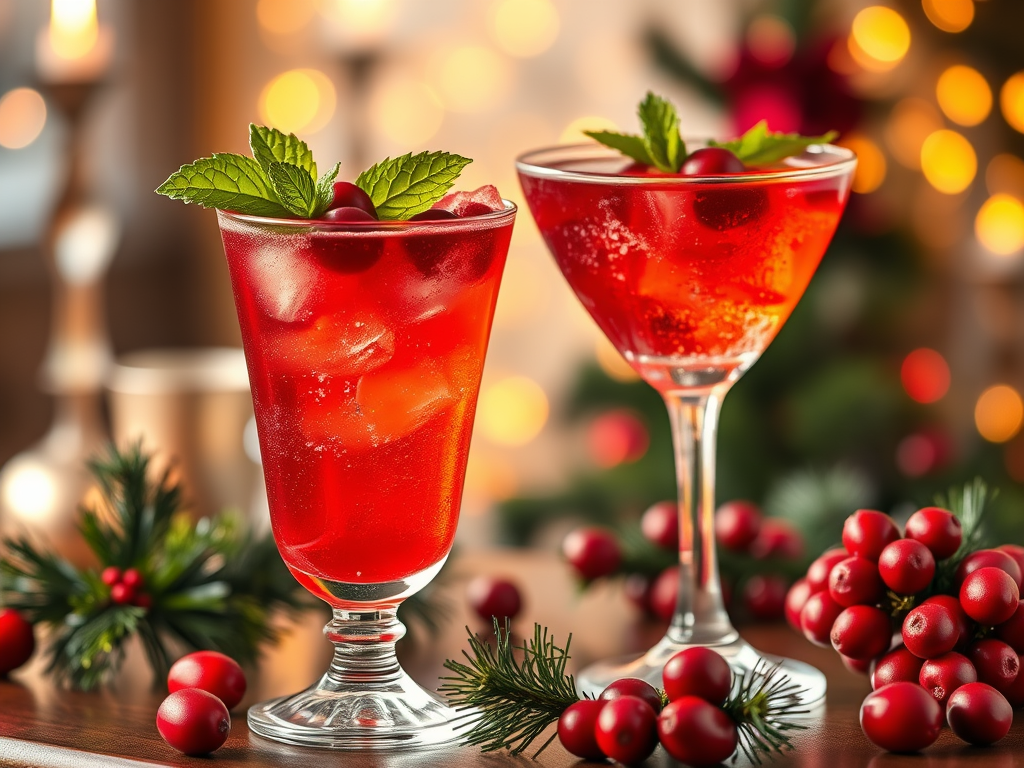
Christmas is nearly upon us, and with it, all those parties, get-togethers, at-home drinks mornings and soirées which crowd in on us like….er,…..um……. several crowding things in a narrow place. Good. Which can lead to problems for the busy host or hostess-how to keep all those thirsty punters happy, because they’ll keep coming back at you for more, as sure as Santa’s got a sleigh. So may we, humbly suggest a couple of ideas to get you through?

Themes: First and foremost, keep ’em simple. You don’t want to spend all your party hours running up complicated concoctions like a Singapore Sling or Long Island Iced Tea (LSS Passim) Pick ones with three or four ingredients at most, which you can knock out faster than it takes for the Three Wise Men to hand over the presents. There you, go mate: bish, bash, bosh and a Merry Christmas to you all! Next?

Second: Bright and bubbly, lots of colours and sparkle to bring out all your trees, baubles nad holly, so the filled glasses look like more decorations. Bubbly wines and ice (the latter will always be in there somewhere), will always help add to trompe l’oeuil. That said, ready?

French 75 gin, lemon juice and chilled fizzy over a tad of sugar in a champagne flute. Looks good and goes down with a recoil to get anyone in the festive mood.

Classic Champagne Cocktail Once more unto the flute dear friends! l Champagne, brandy and a tiny dash of angostura, over a sugar lump. Don’t worry about the cost of this one, because after the first two or three they won’t notice you’re slipping in prosecco. Nor will they care.

Harvey Wallbanger Vodka, Orange, juice and Galliano over plentiful ice This tall elegant classic makes a colour statement on any Christmas table.

Bellini Peach juice, champagne and a dash of grenadine For those who like their slurping sweet, the old Bellini’s hard to beat! Will partner mince pies tastily.

East India Curacao, pineapple juice brandy and angosturas, we threw this one in to match the blue lights on your Christmas tree.

Benedict Benedictine, whisky and dry ginger ale over ice. A classic chest warmer for the season, though we couldn’t find out which of the two eponymous saints, Nursia or Aniane, first invented this one.

All these and many more can be found in The Ultimate Cocktail Book by Hamlyn, our ever go-to stand-by for the Festive season. Happy Christmas

#cocktails #christmas #xmas #drinks