Heroes of Learning: Colin Renfrew

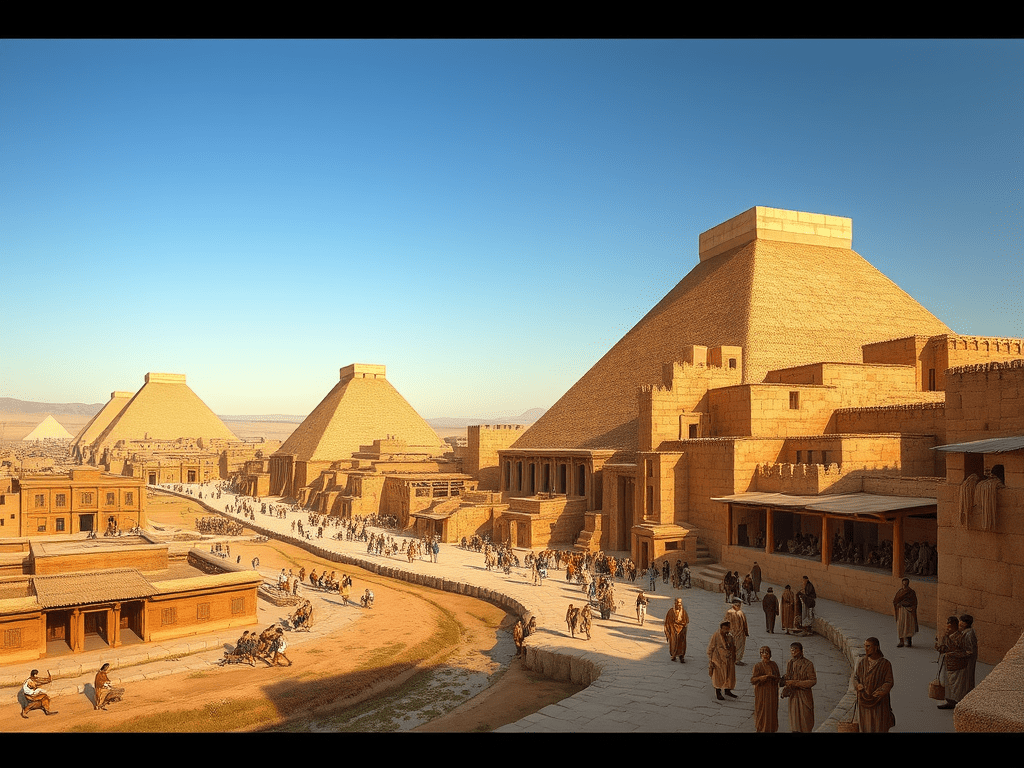
Anyone with the slightest interest in early civilisation must pay tribute to the work of Professor Colin Renfrew. That fascinating period spanning the Neolithic to the early Iron Age witnessed the transformation of humanity from hunter gatherers subsisting barely above the animal level to the first technological civilisations, deploying writing, building, pottery, roads and all the other appurtenances that set us above the beasts. This was Renfrew’s territory. And it encompassed a vast sweep from Cycladic figurines to the immense migrations of the Indo European speakers and the changes they wrought With a few Anatolians thrown in for good measure

So today we throw this blog open to the likes of Nature Briefings (see below) and Wikipedia [1] to tell you about his life and accomplishments. For Renfrew had all the marks of the true scholar. His learning was vast, his methods empirical, his conclusions provisional. He knew the real value of learning to is prompt further investigations, not to provide easy answers. If someone had provided clear and unequivocal evidence that the Indo Europeans had originated in Sutton Coldfield and not the Steppes, he would have been the first to agree. If ever you have travelled the sunny lands of the Mediterranean or Levant, gazed in wonder at the ruins still there, or tried to understand the guide book, remember :you are in Renfrew territory. Tread with respect.

Archaeology’s Closest thing to a household name Colin Renfrew, who helped to transform archaeology as a scientific discipline, died last November, aged 87. In the 1960s, researchers discovered that tree rings from bristlecone pines (Pinus longaeva) — which are among the oldest living things on Earth — could be used to redate artefacts in Europe. Prompted by these developments, Renfrew helped develop a fresh understanding of how European and Near Eastern civilizations developed, alongside new models for how societies change. “Renfrew’s ideas were decades ahead of available computational modelling power,” writes his colleague, archaeologist Cyprian Broodbank.Nature | 5 min read

[1]https://en.wikipedia.org/wiki/Colin_Renfrew

#colin renfrew #neolithic #bronze age #iron age #fertile crescent #middle east #indo europeans #archaeology #language

Go back to where you came from: Why we will be watching UK Channel 4 tonight at 9pm

Immigration. Immigration. Immigration. The central issue of our times. It’s been a neuralgic stopping point in conversations for as long as we can remember. Now, as unprecedented waves of people travel globe in search of a better life, it has become acute. Its almost mystic power to provoke the most passionate feelings, its ability to divide, to elicit fear, rage and compassion in equal measures is like nothing else, not economics, not football…certainly not our pet peeves about climate change and antibiotic resistance!

But don’t worry, you are not reading the wrong blog. Because at least we have always recognised the issue. What’s more, we have even urged that the causes of it are addressed. And what are those causes? That people will move from places from where life is unpleasant to where it is more pleasant. Obeying economic laws the way charged ions in an electric field obey the laws of physics.

Tonight Channel 4 will take six people with strong views and try to suggest the causes of the problem. That is quite something. It runs the gauntlet of two well-entrenched and aggressive mind sets. On the one hand an odd alliance of Free Market Fundamentalists and Left wing bien-pensants who try to pretend that all is well, and there can be no problem. On the other, a group of existentially frightened people who take refuge in facile nostrums like sending tiny planeloads of undesirables to Rwanda, or Rouen or Rutland, or wherever it was. We do not pretend this programme will solve everything overnight. We do not expect sudden overflows of compassion or understanding, for we always distrust strong emotions and sudden conversions. However we do expect that the problem has for the first time entered public discourse in a dispassionate and rational way. That we think is a beginning. Support them by watching, please.

#channel 4 #go back to where you came from #immigation #economics

Rookwood Operations: Clearing phosphates AND capturing carbon

Today we have a good news story, brought to us by the ineffable Robin McKie of the Guardian, which brings genuine hope, Because it solves two problems for the price of one.[1]

To begin at the beginning. In the last fifteen years or so, England’s rivers have started to fill with huge, choking blooms of algae, which seize all the oxygen from the water, thus killing everything else before, dying back themselves . To leave a poisonous foul-smelling sewer , like the ones you used to find in old towns in the Industrial revolution. The cause? High levels of phosphates on agricultural lands, which runs off into the waterways, producing sudden spurts in the aforementioned algae-and down we go to death, for the ecosystem that is. Now, it could be argued that without high phosphate levels we could not feed our population ( feed or fatten?-ed) So how to square the circle?

The answer is to trap the run-off phosphates and return them to the land. And a small company called Rookwood Operations[2] is doing just that, down in the leafy county of Somerset. Their new Phosphate Removal Material just sits in the water, soaking up the phosphates until it’s full. Whereupon it is returned to the land ready for the farmers to exploit again. And get this:

For every metric ton of PRM produced, carbon is sequestered, locking CO2 for up to 1000 years.
PRM is made from completely natural circular sourced sustainable components

How’s that for two in one? There’s so much to like here for LSS readers. There’s even a feminist angle, as one of the company founders was up for the prestigious UK Women in Innovation Award.

Thinking new. Thinking differently. Using existing technologies to squeeze progress in a new way. Surely that trumps going round smashing your friends over the head because it makes you feel better?

[1]https://www.theguardian.com/science/2025/feb/02/uk-scientist-wins-prize-for-invention-that-could-help-avert-phosphogeddon

[2]https://rookwoodoperations.co.uk

#Rookwood operations #phosphates #river pollution #capture technologies #agriculture #technology

Antibiotic Resistance: predicting it before it happens

In war, Intelligence is just about the most vital thing you can have. You know, predicting the enemy’s next move before he makes it. How useful it would be to know which bacteria will show resistance to our next antibiotic, where, how , and when! That’s why some new work from Dr Kalen Hall and team of Tulane University, reported on Phys.org is so exciting [1]

They have identified a genetic signature in the bacteria Pseudomona aeruginosa which predicts the likelihood of developing genetic changes which facilitate resistance to antibiotics. Ingeniously, they studied the DNA mismatch repair pathway, which spurs rapid mutations in the genome. As every schoolchild knows, the more mutations you throw up, the more likely it is that one will give you resistance to antibiotics.

But for LSS homies there’s a deeper learning point. The team took their cue from similar research being carried out in the field of cancer treatment. The idea was to use it to predict carcinogenic mutations-but look what these antibiotic folk have done with it! Science breeds science. Knowledge and learning breeds more knowledge and learning. To our readers in the United States we would observe that this is a lesson you used to know well. Why have you started to forget?

[1]https://phys.org/news/2025-01-genetic-fingerprint-bacteria-drug-resistance.html

#microbiology #dna #antibiotic resistance #cancer #bacteria

If not a World Government, then what?

In this series we’ve discussed the possibility that a World Government might somehow form on this tiny planet. And of the advantages it might bring to current and future generations. We also mentioned the possible dangers, which are very real.

Readers have suggested two ways this might come about. Firstly through the gradual fusion of larger and larger economic and territorial blocks until only one remains in authority, Nice if it happened, but given our view of human nature, unlikely. History suggests that a single authority imposes itself only after military victory over rivals. This was certainly the case in China when the Qin Dynasty finally triumphed over the other warring states. It was so in the Mediterranean basin as the Roman Republic achieved hegemony. It would be interesting to speculate which the current warring states could yet emerge as the single sovereign. We would suggest the USA, The Peoples Republic of China, India and Russia as the principle contenders, with Nigeria as a possible long shot candidate. But all of this supposes the current economic and political framework remains intact. Current trends in climate, pollution and epidemiology make this unlikely.

For we live in a time of rapid ecological collapse. This is not unprecedented. The Classical world was ruined by a series of major epidemics and climate change, as Professor Harper has shown [1] There is good reason to suspect similar factors were at work behind the Late Bronze Age Collapse of the second millennium. [2] In both cases, what followed was not a single superpower. But rather an anarchy of warring little kingdoms, where trade was minimal and learning extinguished. In both cases it took several centuries for populations to claw their way back up to even a minimum level of Civilisation. And remember-they had one advantage which we do not. Humanity was then the only intelligent species in existence. Now there may be others waiting in the wings. We’ll look at that next time.

[1]Kyle Harper The Fate of Rome Princeton University Press 2018

[2] https://en.wikipedia.org/wiki/Late_Bronze_Age_collapse

#world government #global warming # ecology #pollution #world war #china #usa #india #russian federation #nigeria

Dementia and Resistance: Two Antibiotics stories from the front line, plus our take on Glasgow Rangers v Manchester United

A Cure for Dementia? What hope, what unexpected hope, there may be in antibiotic drugs! We knew that when we started this blog. We did it because we were scared of resistant bacteria. But we never anticipated this benefit: antibiotic drugs may protect us from dementia. So might antiviral drugs. So might vaccines too. Andrew Gregory of the Guardian has been following the work of Dr Ben Underwood. In a nutshell

…….One unexpected finding was an association between antibiotics, antivirals and vaccines and a reduced risk of dementia. The finding supports the hypothesis that some cases of the disease may be triggered by viral or bacterial infections. [1]

Of course, there are many questions to be answered. But for us the point is how precious these drugs are, how important it is not to waste them. Which leads us to:

War starts spike in microbial resistance Armed conflicts produce vast surges in traumatic casualties, in dirt and in squalor. All of which necessitate an understandable increase in prescription of antibiotics. Which in turn leads to rising levels of resistance. As Abdujalil Abdurasulov adduces for the BBC [2]

………war appears to have accelerated the spread of multi-resistant pathogens in Ukraine.Clinics treating war injuries have registered a sharp increase of AMR cases. More than 80% of all patients admitted to Feofaniya Hospital have infections caused by microbes which are resistant to antibiotics, according to deputy chief physician Dr Andriy Strokan.

Once started, these resistant strains of bacteria will not go away. They will spread and multiply. How ironic if many of us end up as casualties of a war between third parties, with whom we have no direct connection. Which leads us to:

War For all? We are beginning to suspect that the tendency to divide into hostile camps , who quickly resort to violence, may be a major cognitive defect in the brains of Homo sapiens. Here is our exhibit A: Recently the followers of the popular Association Football Team Manchester United were involved in violent fighting with the followers of the popular Association Football Team Glasgow Rangers. Why? What economic, intellectual or spiritual gains to they hope to make from such an expenditure of time and effort.?(not to mention the legal penalties which may accrue) What on earth divides them so deeply? Yet if people can fight over such infinitesimal differences as theirs, what hope for any of us? One thing is clear to this blog: there will be a lot more antibiotic resistance. Natural Selection does not forgive species that indulge in maladaptive behaviour. What is waiting in the wings to replace us?

[1]https://www.theguardian.com/society/2025/jan/21/antibiotics-antivirals-and-vaccines-could-help-tackle-dementia-study-suggests?CMP=Share_iOSApp_Other

[2]https://www.bbc.co.uk/news/articles/c20k5wrgz13o

[3]https://www.bbc.co.uk/news/articles/cy7gnd72xe8o#:~:text=Trouble%20before%20and%20during%20Manchester%20United%27s%20Europa%

#antibiotic resistance #medicine #health #ukraine #russia #football #manchester united #rangers

China sets Fusion World record

The news that China’s new nuclear fusion record cannot come a moment too soon. The Experimental Advanced Tokamak has achieved a record “burn” of 1066 seconds. Way , way beyond anything which they or anyone else had achieved so far. Seventeen minutes of artificial sun, here on this planet. The prospect of abundant, cheap and above all clean energy just got a little closer.[1]

God knows we could all do with some good news at the moment. With America deliberately marching backwards to the twentieth century by going back to oil and coal, China has clearly set itself on the path to leadership on the transition to a safe planet. But will that be the only issue they have to resolve?

[1]https://www.livescience.com/planet-earth/nuclear-energy/chinas-artificial-sun-shatters-nuclear-fusion-record-by-generating-steady-loop-of-plasma-for-1-000-seconds

#nuclear fusion #clean energy #global warming #china #usa

World Government #4: The Downsides

The Empire of the Romans filled the world, and when that Empire fell into the hands of a single person, the world became a safe and dreary prison for his enemies Edward Gibbon The Decline and Fall of the Roman Empire

For good commercial reasons the Roman World had expanded to its possible geographical limits, beyond which were nothing but deserts, oceans, and barbarians. It was the same with Imperial China. At least dissidents in present autocracies can live with the hope that somewhere are free men, or at least national enemies, who may still thumb their noses at the tyrant. A World Empire would close down dissent forever.

Such is the case made by the eloquent Ilya Somin for the Cato Institute [1] We do not always revere the pronouncements of this Institute as much as they might like. But there has always been an honesty of purpose about them, and we take this admonition very seriously indeed. In fact we would add another danger. The existence of nation states , each with different ways of doing things, potentially allows the growth of centres of excellence*, where new ways of thinking can be tried and tested. A single government might rapidly stifle progress, or at least slow it to a crawl.

Always beware of a good idea, especially when it is your own. We have spent three blogs advocating the benefits of a World Government. We hope that this one advertises the very real dangers sufficiently.

*The most intelligent person we have ever known believes in this concept

[1]https://www.bing.com/search?q=Cato+institure+world+government&form=ANNTH1&refig=CE70A53FE2214B2DB64595022921BCC8&pc=HCTS

#world government #edward gibbon #freedom #tyranny #economics #politics #Cato institute

Cleaning Products: an unseen cause of antibiotic resistance?

“Kills 99% of all known bacteria!” “The Cleanest Clean it’s ever been! “The half-remembered advertising slogans of our youth, from companies promoting the bewildering variety of household cleaning products with which we scour and sparkle our homes. And for once, we think they have been doing a good job. No one, absolutely no one wishes to go back to the squalid homes of the pre-industrial world. A glance at a few Renaissance or Baroque masters will reveal the filthy disorder of ancient lives. And remember-the Della Francescas and Brueghels were paid to produce sanitised, rather orderly versions of what must have been an unpleasant reality indeed.

But what if we have been paying a hidden price for all this progress? What happens when all those bleaches, soaps and detergents go down the drain and out into the rivers, seas and lakes? According to Anastasia Theodosiou and Chrissie Jones, writing for the Conversation, there might be a problem. Two problems actually. The first is damage to the microbiome of the skin, that marvellous ecology of bacteria which covers us all and keeps us safe from things like asthma, obesity and cancer. The second, rather more pertinent to LSS and our raison d’etre, is that this outpouring may be unleashing antibiotic resistance among microbes in the environment. Which process will one day come back to bite us very badly indeed. And our crops. And our herds. Is that Biblical, or what?

Our thoughts? We know you like ’em. Well we don’t think we should give up things like washing and cleaning homes any time soon, as the mortality will be measured in hecatombs. But these ladies have a point, as does Baroness Natalie Bennett who is sponsoring a Bill on the whole matter through the UK House of Lords. As ever getting this right is a matter of balance, of careful navigation between the interests of all concerned parties. Another chance to show the angry partisanship of binary thinking is a very bad method indeed.

Incidentally, will Americans ever learn that last lesson?

https://theconversation.com/antibacterials-are-everywhere-for-the-sake-of-our-microbiome-we-need-to-control-their-use-247723?utm_

#microbial resistance #antibiotics #pollution #environment #progress

A Big Thank you

To all our readers, contributors, followers and those who dive in just for a quick look. Above all, those who take the trouble to send us likes and comments. Particularly new chums on the BLUE SKY site, which we have recently joined.

As you can see we have restored the picture function. It was our fault. Some of the Ape creatures of the High Himalayas have better IT skills than we do. But we got there in the end.

We look forward to providing you with continued coverage of matters scietific, educational and economic for a while

THE BOARD