Is Donald Trump a Socialist?

Is Donald Trump a socialist, or is he just governing like one? For a man who made his money in the freewheeling and dealing Manhattan property market, it seems an odd term to use. And doubtless he and his supporters would reject it vehemently. But let’s go back to first principles and look at what he does, not what he says.

The very essence of a socialist policy is that an economy should not be run by free market methods. It can and should be run on others, designed to support the welfare of all the groups living in it. If they are poor, money must be found through taxes to alleviate that. If their communities depend on certain industrial conglomerations. such as steel making for example, then money must be found to sustain those industries, to avert the social damage which would ensue/ In Britain the key exponents of this view were people like Arthur Scargill and Tony Benn, who felt public money should be found to support the mining industries, even if those industries operated at less than optimum economic efficiency. In the 1970s Benn went further, suggesting a siege economy protected by tariffs as an alternative to joining the European Community, forerunner of the EU.

The alternative view was pioneered by thinkers such as Adam Smith and David Ricardo. The unhindered operation of free markets, with the lowest possible levels of tax and tariff would facilitate the best possible social outcome. Ricardo developed this in his theory of comparative advantage. By which countries or regions specialising in different products would trade in these to their mutual benefit. His example was Britain and Portugal, which mutually traded manufactured goods and port wine. The same principle holds today.

The key political exponents of this view were Ronald Reagan and Margaret Thatcher, whose most memorable declaration was “you can’t buck the markets”. As we write, Mr Trump’s policies seem to be doing exactly that. Unlike others, we judge him to have an honesty of purpose: he is trying to protect the communities that voted for him. Communities whose social structure and very identity depend on the old smokestack industries around which they cluster. Time will tell if he will be successful. But two things worry us. Firstly even if factories are attracted back to the rustbelt, it is unlikely that modern automated plants will need many factory hands. And second: the last twenty years or so of the Communist bloc were spent trying to keep these same sort of plants going. History did not judge that enterprise kindly.

#free markets #socialism #communism #adam smith #david ricardo #margaret thatcher #donald trump #united states of america


Friday Night: A low Tariff Manhattan

This week Wall Street and its famous financial markets seem to be the centre of the world, don’t they? Just like in 1929 and 2008, for example. So where is Wall Street? We looked on the interweb and found it was in a place called Manhattan, which is in America, which is famous for having leaders of genius. So we thought we would celebrate this fact by bringing you a reprise of that famous drink, The Manhattan. Despite the connotations, how American is it really? Let’s assemble one and find out.

The real beauty of making a Manhattan is its simplicity : a child could do it, just like calculating tariffs. But as no responsible adult would ever let a child do either, we’ll accept you are making this yourself.  And if you do, you will find it is divided into two parts. A good patriotic all-American part. And a bad part, which requires Foreigners.

Ice Generally speaking, 100% Made in America. Not only does this attract no tariffs, but its production supply and distribution are all by American workers, thus creating any number of well-paid posts of employment. No nasty foreigner can ever threaten American Ice. If all  the stuff in the Rocky Mountains melts due to global warming,  they can just invade Greenland to get some more. 4 or 5 cubes for the average Manhattan, by the way,

Bourbon  As far as we know this too is made in America. Originally it was called whisky, which was made in somewhere evil and foreign called Scotland (although some of the golf courses are OK) And therefore quite rightly attracts a tariff . But if it is made in America there is no tariff at all, and the more Americans drink of it  the more colossal will be the numbers of high paying  jobs for American workers created thereby. Oh yeah, 3-4 measures will do.

Vermouth Now we come to the Bad Part. Because Vermouth (often branded with funny sounding names like Martini or Cinzano) come from Italy! Not only has nothing good, like science, art, literature, cooking  or architecture ever come from that country: behind the smiling mask of friendship, they are ready to have their way with American trade, American pizza, who knows, maybe even American ladies, the lotharios! No wonder it  now attracts huge tariffs! But since vermouth has been floating around Manhattans ever since that island became the financial capital of the world, you’ll just have to put up with it.  One measure of the red stuff should not put too much pressure on US Treasuries,

Mixing Get an American Worker to put each of the above components one by one into an American cocktail glass, made from American glass, as they will taste better. Make the American Worker stir them. He/she/they may now add a tariff-free American Cocktail cherry, on a stick made from good American Sequoia trees,  creating even more well paid secure American jobs. That done, you may drink your Manhattan. Only one, of course. And think of all the American jobs you have created thereby , which should compensate for those lost by the current slight adjustments in the Stock markets just over the road.

#donald trump #manhattan #stock market #bond market #economic crisis #Wall Street

Professor Devi Sridhar: a masterclass in the antibiotics crisis

If antibiotics stop working it will be the end of modern medicine as we know it. That is the essence of this article by the redoubtable Professor Devi Sridhar of Edinburgh University. We’ve channelled her before on this blog (LSS 24 8 24; 26 1023). UK readers will recall her many appearances on TV during the COVID 19 pandemic. Her cool, calm reason was a welcome antidote to the wild hysteria, baseless conspiracy mongering and shameful ignorance of that epoch.

Her article is a reprise of the main points we and other campaigners have been making for years. Over-prescription; lack of research; widespread public ignorance. The tireless Professor Sally Davies is name-checked. Of course: for she has done so much to proclaim this pressing danger. But the real problem for Devi is widespread abuse of antibiotics in farming industries. To produce short term higher yields in livestock such as cattle and pigs. Leading us to eat more meat, which in turn gives us obesity, go on diets that fail, high cholesterol, heart attacks., go on more failed diets…….our fingers fail on the keyboard in sheer despair.

So let’s take one key learning point from Devi’s razor sharp mind, because maybe we haven’t emphasised it enough here down the years. The real problem is that new classes of antibiotics are needed :

Developing similar versions to existing antibiotics isn’t enough because they won’t be as effective against pathogens that have developed resistance: we need totally new classes of drugs. And a recent World Health Organization report noted that since 2017, while 13 new antibiotics have obtained authorisation, only two represent a new chemical class.

Here is the nub of the problem. It wont get any easier, because the best research teams are multinational, and international co-operation is breaking down rapidly. Things like phages and AI may help. Serendipitous searching in nature, in places like gardens or the jaws of Komodo dragons {LSS passim)may could also be marginally helpful. But in the last analysis, disputes about who imports which computer circuit from whom distract attention from the real question. A woman dying from childbirth needs an antibiotic, not a smartphone to photograph it.

[1]https://www.theguardian.com/commentisfree/2025/apr/02/antibiotics-stop-working-prescription-gp-animal-farming

#antibiotic resistance #medicine #science #health #bacteriophage #komodo dragon

More good news on dementias

Dementia is our own internal pollution. Clear that pollution away, and the brain may start to function well again. If the systems which clear it slow down with age, then of course you won’t think so well. That is the startling new research reported today in the Mail by the admirable Syeeda Saad. [1] According to Syeeda and the rather clever scientists whom she channels, the brain is well equipped with these clearance systems when we are born. [2] They go by such recondite names as microglia, glymphatic and lymphatic systems. They clean up all the horrible waste we produce as we think-bits of cells, proteins, toxins, what have you. If they don’t, you accumulate all this detritus and your brain slows down, exactly like a sewage system blocked with fatbergs (yuck!-ed) [3]

Essentially the ingenious researchers target lymphatic networks outside of the brain in order to boost the clean-up systems within it. And get this-they have found new pathways called T Cell gateways which let them overcome the blood brain barrier, a wall that has bedevilled researchers for decades. [3]

All in all rather hopeful. Though as everyone admits these discoveries are at the early, tentative stage. Meanwhile there are lots of proven methods we can apply in order to reduce the risk of developing dementias. Including unpleasant ones like eating less junk food, drinking less booze and getting more exercise. There’s a thought. And here’s another to close. The team of scientists who did all this useful, public spirited, and one day profitable research are based at Washington University in the United States of America, What will become of them and their University in the financial and intellectual climate currently prevailing in that fallen country?

[1]https://www.dailymail.co.uk/femail/article-14560527/neuroscientist-remove-brain-waste-prevent-dementia-age.html

[2]https://www.vice.com/en/article/clearing-brain-waste-could-prevent-dementia-in-the-future/

[3]https://www.nature.com/articles/nature14432

#alzheimers #dementia #brain #t cells #lymphatic #medicine #health

Help! We’re trapped in a Robbers’ Cave

For all those who had believed in Natural Progress, or the essential decency of the Common People, the Robbers’ Cave experiment came as a profound shock.[1] In 1954 researchers took an essentially homogenous group of boys to a summer camp in the Robbers Cave State Park in Oklahoma in the USA. After some mixing, they were divided into two groups and set into a programme of competitive sports and activities. A profound animosity quickly developed between the two groups which spilled over into extra curricular violence, including incidents such as flag burning and raids on buildings.

Conflict theory had been born[2] It is the study of the -ability? Tendency? pathological instinct?- we can’t find the word- of humans to divide themselves into groups based upon perceived differences. And to fight lethally over these differences ever after. One of the best writers on the subject is Amy Chua, who combines formidable learning with a deft, easy-to-understand touch. She first warned us of the dangers in World on Fire (2003.) suggesting that the rise of vast unregulated flows of capital and people would lead to the evolution of intense ethnic jealousies and rivalries. Her follow up was the masterful Political Tribes (2018), which deepened and contextualised her research in the age of Brexit and Trump. Although we think more work needs to be done around tropes like masculinity and hierarchy, her essential truth is unmistakeable. The central trend, perhaps even instinct, among humankind is towards regular intergroup hostility, usually culminating in violence.

All of which is rather depressing in a species on a tiny planet, a species armed with nuclear, chemical and biological weapons of the most awful power. And all of us who believe in progress have failed to address this essential truth. Some of us have preferred to think up imaginary communities , like religions or social and economic systems wherein such behaviours cannot occur. Others to twist and distort the evidence to suggest that the natural instincts are to reason and justice, and to all get along in a matey sort of way.

Yet we do not despair. Although the mass of humankind has preferred to live in savagery and darkness, small groups of us have effected progress of a sort these last few thousand years. The facts that you will eat clean food today, and wash your hands with soap, is proof enough of that. In the mix we discovered Law, which is based on Justice, as opposed to tribal customs and codes. We admit, following the great Chua[4] that universal values like justice and science are deeply imperilled at the moment. Tribes have the luxury of being able to pick and choose their truths, whereas we are bound by evidence and reason. Yet it is from us, not them, that everything that raises us above animals has come. We must now find ways to re assert the ascendancy of our values. Or die, trapped in dark caves of violence and unreason.

[1]https://www.thoughtco.com/robbers-cave-experiment-4774987

[2]https://en.wikipedia.org/wiki/Realistic_conflict_theory

[3] Amy Chua Political Tribes Penguin 2003

[4https://en.wikipedia.org/wiki/Amy_Chua

#tribalsim #aggression #psychology #evolution #amy chua

Towards a World Government: Will Donald Trump be the First Emperor?

A few weeks ago we posted a series of blogs (LSS 8 1 25 et seq) wherein we speculated about the pros and cons of a hypothetical World Government. If you do things like that, you need to look seriously at the possible candidates. And it looks as if the first one has come along. It is Donald J Trump, erstwhile 45th President, and now 47th President of the United States of America, A man who according to his own lights is as antipathetical to the idea of international cooperation and world government as you can get. But read on gentle reader.

Because there’s a theory doing the rounds which suggests that, whatever his ostensible aims, this is what he will achieve. It goes something like this. The early weeks of the Trump administration have been marked by falling financial markets and wild swings of tariff policy that have engendered a widespread sense of chaos and unease. An angst which is entirely inimical to the interests of the United States and its wealthier classes. But really it is all part of a Cunning Plan. Eventually things get so bad that The Donald calls all interested parties to a huge meeting at his palace at Mar-a- Lago. There he makes the following offer. First all willing parties revalue their currencies upwards against the dollar. Secondly they cash in all current US Treasury bonds in return for 100 year securities, which yield no interest whatsoever. In return the willing receive military protection and no tariffs, Anyone else had better look out. The 1985 Plaza accords on steroids, you might say. Except this time, all financial power and military power accrues back to the USA which becomes, de facto, the world government. We have channelled the excellent Roge Karma of the Atlantic (via Apple News) for today’s link; [1] But many thinkers, including the learned Gillian Tett of the FT have been floating this since January (she gets namechecked in this one)

The trouble with Cunning Plans is that they don’t always work. There are several problems with this one, starting with the Plaza accords. When they were signed, it was by a small group of rich nations who held a common enemy(the Soviet Union) President Reagan had carefully nurtured good, respectful relations with his allies. The current administration, whatever its reasons, works by bullying, blustering and threats. Not ways to engender co-operation and consent. Secondly there are now large and proud players, such as India and China who are rapidly evolving their own interests. Why should they throw away these futures on a scheme designed to benefit the United States? But the final sinkers are the very nature of the United States and its 45th/47th President. Hisory shows that they are not a reliable military protector, as any South Vietnamese, Afghan or Ukrainian will tell you. And if Mr Trump is so keen to weaken the dollar, why does he come out so strongly in its defence as the world reserve currency, as Mr Karma so astutely points out? Someone in Washington clearly knows the value of this reserve status, and the mortal peril which its loss represents to US power. Such inconsistency invites no confidence whatsover.

Our verdict? America really did have the game in its hands between 1989 and 2003, when it was thrown away in the sands of Iraq. Trump is like the Byzantine Emperor Justinian,(527-565 CE) setting out re conquer lost dominions. Wishing ends without sufficiently weighing the means. If there is to be a World Government, it won’t be like this.

[1]https://www.theatlantic.com/economy/archive/2025/03/qanon-tariffs/682144/

#world government #donald trump #plaza accords #justinian #economics #politics #history

Antibiotics among the Azaleas: follow-up podcast from Nature

We haven’t yet got to the podcast stage of evolution here yet. although it’s something we’re looking at with our IT people. But Nature have. That lot seem to think of everything first!

But we do consider it our duty to bring you each and every scrap of news we can on antibiotic research, still the fons et origio of these humble pages. Yesterday we channelled Nature’s report on the serendipitous discovery of an brand new antibiotic molecule called lariocidin in someone’s back garden. So in the light of our first paragraph(see above) we now present their follow up podcast on this self-same subject. That’s it, pure and simple. Are there any new antibiotics in your back garden, gentle reader? Could you be prepared to go out an take a peek? Otherwise, the rest of your weekend.

Researchers have discovered an antibiotic molecule by seeking out organisms that wouldn’t immediately thrive in a Petri dish. “One of the postdocs in my lab thought, ‘what if we just wait a really long time…for the organisms, that otherwise would be hard to grow, to grow in the lab?’” biochemist and study co-author Gerard Wright tells the Nature Podcast. “So they went to my technician’s backyard, got a sample of the dirt back there… and then put them underneath the bench for a year.” The Paenibacillus bacteria they eventually isolated produces a lariat-shaped molecule they named lariocidin, which shows promise against a range of disease-causing bacteria.Nature Podcast | 32 min listen
Subscribe to the Nature Podcast on Apple PodcastsSpotify or YouTube Music, or use the RSS feed.

#antibiotic #medicine #health #antibiotic resistance #health

Friday Night Fun:the old cheap Bubblies (Où sont les neiges d’antan?)

Everyone likes to dress up from time to time and enjoy going large with a glass of bubbly. Trouble is, the old Champagne can be a bit pricey, and there’s a lot of euros for very little extra elation. For decades people have been trying to do things on the cheap, with varying results. So tonight we thought we’d take a look at some of the braver efforts which have been made in History, and, as an added bonus, the little nibbles they served with them

1950s  Mateus Rosé Invented in Portugal in 1942 it was the iconic bottle and rather elegant label that gripped our ten year old selves(we grew up in an Off Licence) The wine itself was pink and only slightly fizzy, but worked well chilled. It was really rather popular in the 1970s (so were Watneys Party Sevens and the Bay City Rollers) but has since faded a tad, despite attempts to redesign the bottle. Nibbles: twiglets

1960s Babycham Actually a perry aimed squarely at the ladies’ market, it enjoyed a huge vogue back in the 1960s and 1970s, when it was considered rather chic among large sections of society, with huge advertising campaign There was even a special cocktail called a snowball( neiges, right?) which combined the stuff  with advocaat. Glad we never had a job as a  cleaner on the  Central line trains! Like a starlet, its beauty had started to fade by the sassier 1980s and efforts to rebrand and relaunch have never quite got it back to top of the bill

Nibbles those funny cocktail stick things with a cube of pineapple and a cube of cheese.

1970s Asti Spumante this is the real poor man’s champagne, not lager. Cheap and cheerful this Italian sparkler  graced many a working class Christmas dinner table in the age of Top of the Pops and the Queens Broadcast Ironically the sudden popularity of its younger sister (see below) has afforded a certain bounce back for this beverage-and why not? we say.

Nibbles Cheese and onion crisps/Doritos

2000s Prosecco We had never heard of this stuff until one evening in 2010. After which it seemed to be anywhere and everywhere at all times, as much a part of national life as football or Coronation Street. A bright, dry and bubbly from Friuli it can accompany anything from exam results, weddings and even those funerals where the deceased will not be too badly missed but nevertheless left enough of a memory to fund a juicy trip or two to Benidorm.

Nibbles: Marmite  flavoured peanuts

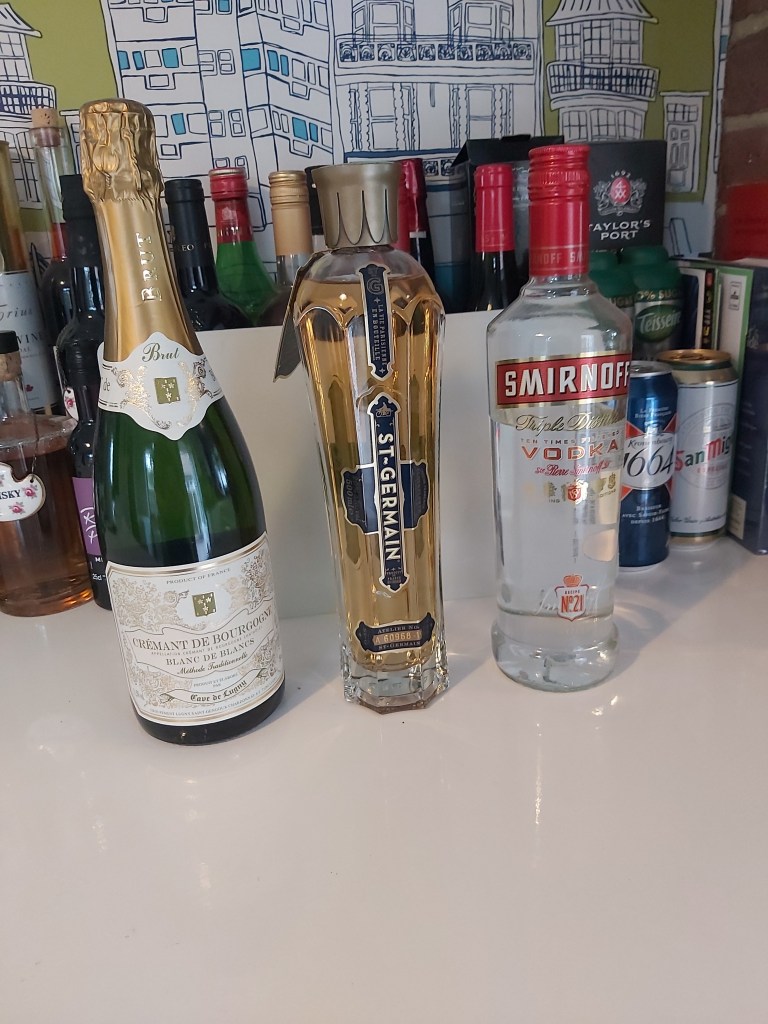
2020s Crémant—Now we’re  definitely in the right vineyard! Brewed up  in France (and Luxembourg) using the same traditional method as Champagne,  it comes from regions outside of that snooty snifter,  such as Alsace, Burgundy, and the Loire.  Sorry, we think it’s definitely a cut above Prosecco,  deliveings Champagne-like vibe at a fraction of the price.

Nibbles:Blingies with caviar

#wine #sparkling wine #party

Is that an Antibiotic in the Azaleas?

We started out as an antibiotics blogs, and we’ll always defer to it when a good story comes up. So don’t be surprised as we offer you a really good story, which we found in Nature Briefing, that inestimable source of the very best stories on science and all its ramifications. Scientists unearth new anitbiotic-literally

Researchers searching far and wide for new antibiotic molecules have discovered one in their own backyard. The new molecule — found in soil samples collected from a lab technician’s garden — targets a broad range of disease-causing bacteria and doesn’t appear to be toxic to human cells. From the soil samples, the team spotted a lasso-shaped molecule they named lariocidin, which is produced by Paenibacillus bacteria. Lariocidin attaches to structures called ribosomes in bacteria, which disrupts their protein production. The molecule slowed the growth of a range of common bacterial pathogens, including many multidrug-resistant strains.Nature | 4 min read
Reference: Nature paper

We know, gentle readers that we can occasionally overdo the bad news a tad on these pages. Today we’re glad to tip the balance back a little the other way.

If you want to receive the very latest on science and cutting edge technology, you won’t do beetr than sign up to Nature Briefing. We don’t know of anything as good as this which is still absolutely free. What’s more they have some sub briefing sites on more specialist areas if your want to keep up with a particular area why not visit these sites and see for yourself?

 briefing@nature.co

Antimicrobial resistance: its not just bacteria Plus: see if you can spot the hidden message in this blog

Stop the press! Urgent! Even though it’s Thursday afternoon and we’ve done our blog for the day, a new story is bursting to be told. Because while leafing through the Interweb to see if we had been included in any top secret message groups, we came across a story by the assiduous Clara Harter of the Los Angeles Times: Deadly Drug Resistant fungus CDC calls urgent threat is spreading in hospitals [1] We won’t steal Clara’s thunder. But basically, it’s called Candida auris, it spreads rapidly in healthcare facilities. and it tends to target the sick and the old.

Wanting to know more , we went to the site of the Centers for Disease Control and Prevention (CDC)[2] whose purpose, as every schoolchild knows is goal is to protect public health and safety through the control and prevention of disease injury and disability both in the USA and throughout the world[3](fungi don’t stop at national borders, you see) We found their web page to be concise, easy to access and extremely helpful. How lucky Americans are, to have such a body that anticipates threats to public safety, co-ordinates the efforts of medical facilities and health agencies and keeps the public informed, free of charge!

Well until recently they were, Because we have learned that the CDCs are yet another target in the cross hairs of Mr Musk and his enthusiastic band of young cost cutters. [4] According to the independent Medical Economics:

The cuts include 1,300 U.S. Centers for Disease Control and Prevention (CDC) staff — about 10% of its workforce — and all first-year officers in the Epidemic Intelligence Service (EIS) — a disease response unit.

We are ignorant of Mr Musk’s motives; he may be a man of profound compassion and acute foresight. His economic learning may be profound; we cannot say. But if the fungus spreads, and if its economic cost is as great as its human one, we will know that it could have been prevented.

[1]https://www.latimes.com/world-nation/story/2025-03-27/deadly-drug-resistant-fungus-cdc-calls-urgent-threat-is-spreading-in-hospitals

[2]https://www.cdc.gov/candidiasis/antimicrobial-resistance/index.html#:~:text=At%20a%20glance%201%20Antimicrobial%20resistance%20happens%20when,common%20type

[3]https://en.wikipedia.org/wiki/US_federal_agencies_targeted_by_DOGE

[4]https://www.medicaleconomics.com/view/elon-musk-s-doge-and-its-impact-on-federal-health-agencies-explained

#DOGE #CDC #fungus #antimicrobial resistance #public health #disease prevention #medicine