How Marlboro Man changed the face of advertising forever

Further proof of our utter unfitness to write this blog, nay, anything at all-comes in the shape of a little You Tube Video called How Marlboro Changed the Face of Advertising Forever. For it makes LSS and its belief in Reason and a Whiggish sort of progress look so hopelessly misguided that you wonder how humanity could ever have progressed from caves.

Before we throw you this gem of despair, gentle readers, a brief summary. Back in the 1950s there was growing evidence that smoking tobacco was highly dangerous, and many of the companies that sold it began to panic big time. Not so the heroes at Marlboro! Taking a 1%-of-the-market product which had been targeted mainly at women, they quickly turned it into the fourth largest brand in the world, all in the space of a year. How? By targeting men via a chap called the Marlboro Cowboy. Who apparently embodied the manly values of roughness, ruggedness and freedom. Well, with all those stallions hanging out in long shot, who wouldn’t get the message? Marlboro had realised one vital fact about human nature-most people don’t care about research. They buy a packet of cigarettes to be cool. Lifestyle, they call it.

And so it goes today with advertising, illegal drugs, fashion, fast foods, tabloid newspapers and many a political campaign. We, who live by facts and reason, are never going to break through. And so, for this New Year of 2022, we set you a task, gentle readers-what are our options?

For thoughts on where all this might end we suggest the 2006 film Idiocracy from Mike Judge and Etan Cohen. This IMDB link should suffice

https://www.imdb.com/title/tt0387808/

Save Capitalism: vote for Inheritance Tax

What is the sure sign of a decadent nation? One that is steadily losing territories and markets, while obsessing over the glories and rituals of the past. Another? The growth of a vast ecology of lawyers and propagandists devoted to shoring up the causes of that decline. What are the consequences? When the inefficiencies become unsustainable, a collapse into a murderous nihilistic revolution, whose consequences last for generations. Ask any of the inmates of Russia, Iran, or Venezuela.

As go nations, so go individuals. No heir will possess the hunger and aggression for risk of the dynasty’s founder. For an heir, the smart move, as Michael Corleone would say, is stay cautious, preserving all that is, rather than risking it in adventures. Admirable, no doubt; but not the qualities to win new markets, or prevail in negotiations. Once the energetic merchants and sailors who had built the Italian Republics like Venice and Genoa passed on to their heirs, those states quickly declined from world powers to tourist attractions. In England, the system of inherited power and wealth has produced leaders like Cameron and Johnson. If men like these reach the top, it is because they have not had far to climb. Compare them with Margaret Thatcher who, born far from the networks of privilege was forced to weigh every decision, and make it count. And ask yourself who was by far the better Prime Minister. By its very existence inheritance is inimical to the meritocracy which capitalism promises.

Opponents of Inheritance Tax argue; “why should I be taxed twice on the money I have earned.” But it is the heirs who pay the tax, not them. A sure sign of a narcissistic father is that he cannot separate himself psychologically from his children. Healthy parents have no interest in the private financial arrangements of their offspring. The best inheritance to give a child is a good education, health and the promise of a society in which there is a low chance of being murdered by a stranger. All the evidence suggests[1] that this is best achieved in high tax equal societies like Japan or the Scandinavian countries.

A real capitalist society offers the true promises of efficiency and meritocracy. The bravest and most able, ruthlessly sieved in the schools of learning and decision, rise by their efforts to the best houses and incomes and so on. A strong inheritance tax would keep it that way.[2] Patriots of all sorts ought to applaud.

[1] Kate Pickett and Richard Wilkinson The Spirit Level Allen Lane 2009

[2] Thomas Piketty Capital in the 21st Century Editions de Seuil 2014

#inheritance tax #inequality #margaret thatcher #david cameron #boris johnson #russian revolution #iranian revolution #wealth

The amazing George Magnus, and why everything we thought we knew was wrong

So, who is George Magnus when he’s at home?

He’s the former chief economist of UBS and a Research Associate at both Oxford University and SOAS London. And he thinks that China has got real problems.

Hang on- I thought they were growing so fast that they would overtake the US before Cowes week, and would go on to rule the world. Or something like that. What’s gone wrong?

According to George, they’ve fallen into the same trap as the USSR and Japan.

What trap?

Back in the 1950s everyone said the USSR would overtake the USA and go on to rule the world. Then in the 1980s it was going to be Japan. Remember them?

You mean it doesn’t happen-why?

All these places, China, USSR, whatever, start out well with masses of investment, low consumer consumption and all that. A real Puritan dream. For a few years the economy booms. Even the CIA admitted Soviet GDP figures were real horrorshow in the 50s.

But then?

The tight political stability which let them grow starts choking off the new ideas you need to move to the next stage. Old party cronies take over. The result is a real misallocation of capital and investment. Look at the Evergrande affair, says George.

But China was growing twice as fast as the US between 1900 and 2020, right?

Key word is was. There are signs that the US is pulling away again. That means real problems for Mr Xi as he tries to divide up the cake. But don’t take our word for it. Have a look at George’s piece in the Guardian here. [1] He’s got a fact-packed website of his own here [2] And, if you’ve really nothing to do over the holiday he’s even written a book which we reference here [3]

But it could happen, right? After all Manchester City overtook Manchester United, didn’t they?

Powerful metaphor. But the key point is wait and see. And never take anything for granted.

[1]ttps://www.theguardian.com/business/2021/dec/28/from-economic-miracle-to-mirage-will-chinas-gdp-ever-overtake-the-us

[2] https://georgemagnus.com/

[3] Magnus, G Red Flags: Why Xi’s China is in Jeopardy Yale University Press 2018

#Peoples Republic of China #United States of America #Geopolitics #Economics #world trade

Is the Nation State fit for purpose any longer?

As we write, the economies of advanced countries are once again prostrated by another variant of Covid-19. It could have been avoided. If they had spread every vaccine they had around poorer countries, the virus would never have mutated into the omicron form. And we would have been well on the way to saying goodbye to the pandemic forever.

But why should Britain, for example, give up all its doses if it cannot be sure that others would not? For that would leave Britain at immediate disadvantage. Even if all these competing jurisdictions had got their acts together, it would have been far too late, as the virus was already mutating. Yet, clearly, no nation has benefitted from serving only its local interest.

All of the world’s other important problems, such as antibiotic resistance, climate change, inequality and misinformation require global solutions. it is true that the nation state has, up to now, been the best available model for organising groups of people. Yet History shows that nation states are subjective, and do better when they pool resources. Would the people of Mercia have done so well if they had not joined with Wessex and Northumbria to form England? Did not the 13 colonies of revolutionary America quickly pool their sovereignty into a single nation? Perhaps the best example is China, where the Q’in Dynasty managed to finally merge the warring states into the longest lasting and most successful nation in the world?

We at LSS are always suspicious of simple solutions. We agree with Edmund Burke that change must be considered very carefully indeed before it is considered. And we are aware of the colossal practical difficulties in reconciling the jealousies of the elites in each country, and the superstitions of their followers. But computers replaced adding machines, and even washing with soap was eventually taken up by most people, most of the time. It would be a shame if we did not start to think about what a World Government might entail, and the blessings which it could bring.

#covid-19 #pandemic #antibiotic resistance #climate change #inequality #world government

Solar power shows the danger of simplistic solutions

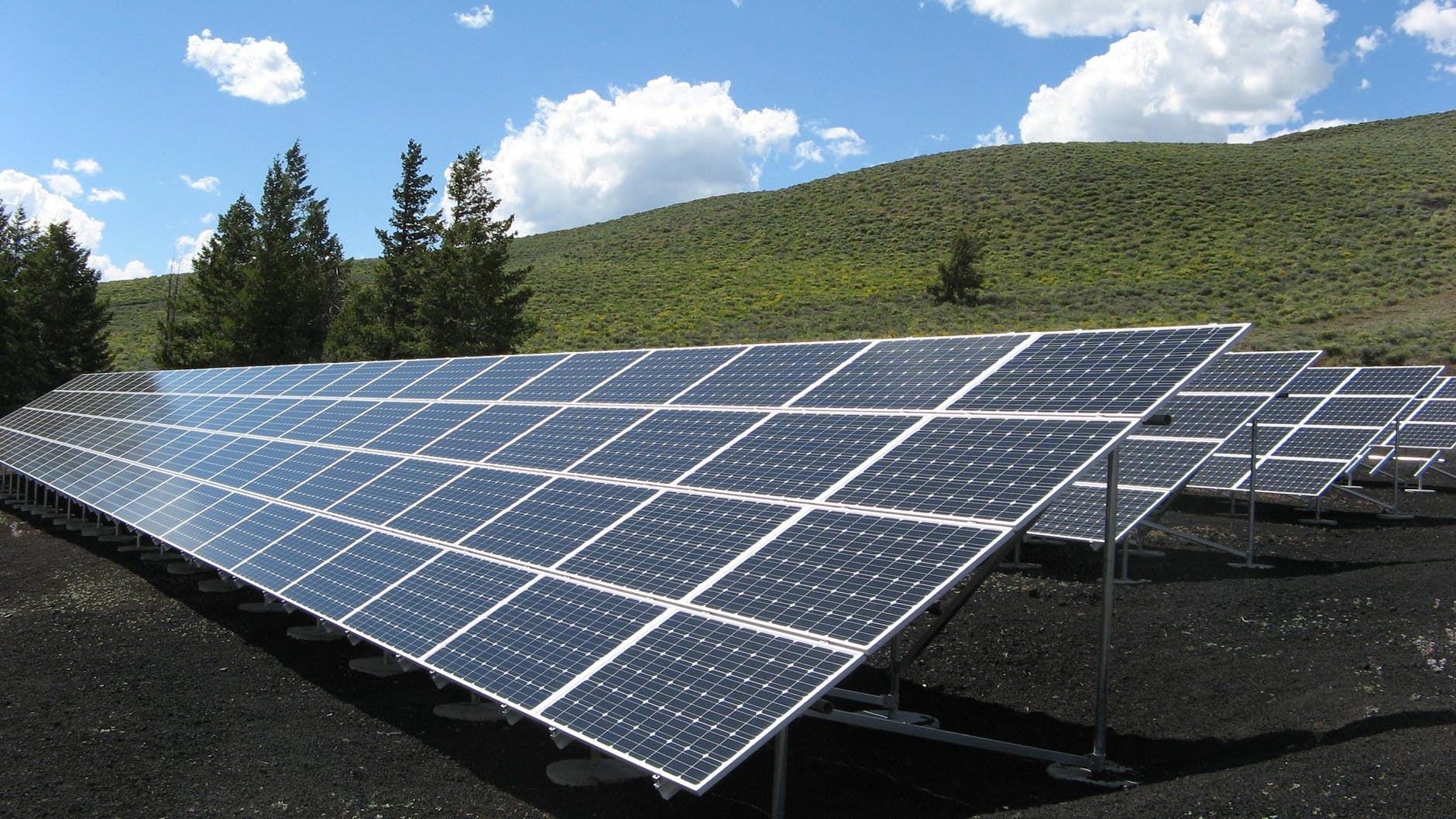
South of energy-hungry Europe is a vast hot empty desert. Stretching across the deserts of Morocco, Algeria, Tunisia and Libya is a belt of unused land whose abundant sunshine could power the whole of Europe and much of the Middle East. What better and easier idea than to cover the lot in cheap solar panels, and end our dependence on fossil fuel forever?

Except it isn’t that simple, as a remarkable piece of research by Zhengyao Lu and Benjamin Smith makes abundantly clear in their excellent write-up for The Conversation[1]. The devil, as always, is in the detail. Solar panels, at least in their current form, only absorb 15% of irradiation. The rest gets transmitted into the ground as heat. As the authors make clear, covering anything between 20% and 50% of the Sahara would release vast amounts of uncontrolled heat energy into the environment. It will massively affect wind patterns, leading to droughts in areas like the Amazon, assuming Bolsonaro and has chums have left any. It could even add to overall global warming. How’s that for the law of unintended consequences?

To write small, the solution is to integrate certain amounts of Saharan solar power into larger, diverse systems including nuclear, tidal and wind energy. But to write big: the solution is to always, always beware of simple solutions. Of slogans whose consequences have never been thought out or through. Of quick fixes to sudden surging anxieties, particularly in the elderly and those sodden in drink.

Of course the world has got itself onto a terrible path with fossil fuels. And there are many other problems too, like the lack of antibiotics. But this time-let’s think carefully and come up with solutions that work. Long term. Well, it’s something different for a new year.

We thank Mr Peter Seymour of Hertfordshire for this story

[1] https://theconversation.com/solar-panels-in-sahara-could-boost-renewable-energy-but-damage-the-global-climate-heres-why-153992

##global warming #renewable energy #bolsonaro #solar power #sahara #climate change

Something strange is stirring in the world of Palladium

In 1989 Stanley Pons and Martin Fleischman stuck a rod of palladium in some water. Weirdly, it began to get hot and give off things like tritium, or so they said. For a brief ecstatic period the world seemed to stand on the edge of a new era of cheap abundant energy called cold fusion. Until no one else seemed to be able to repeat the results, and cold fusion and all its works were relegated to obloquy. [1]

Except it has never quite gone away. Almost like an underground heresy, it still has its little groups of adherents beavering away in obscurity, although sometimes backed by some significant patrons like defense departments and Google[2]. So what?

Well, we couldn’t help noticing that Russian mining giant Nornickel [3] has been running ads in prestige outlets like New Scientist offering money for anyone who can do something clever with palladium. There are to be big prizes from$200,000 downwards, all to be given away at a super slap up in New York next September. Good luck with that Nornickel-anything to encourage learning and scholarship, and so get people out of the pubs.

Yet we can’t help wondering. Palladium is a humble, everyday sort of metal with dozens of mundane uses from catalytic converters to dentistry and jewellery. So why the sudden spurt of awards, mass advertising campaigns and a dragnet for some of the cleverest people on the planet? Has someone, somewhere got Something Else Big in mind? If so, you saw it here first, gentle readers.

[1] Brooks, Michael: 13 Things that Don’t Make Sense Doubleday 2009 ISBN 0307278816

[2] https://en.wikipedia.org/wiki/Cold_fusion

[3]https://www.nornickel.com/company/about/#about-2

#cold fusion #nuclear fusion #nornickel #palladium

Thank you for 2021

A big thank you to all our readers, contributors and ideas-people at the end of another long year. The blog is read in so many different countries, and we are deeply humbled that so many seem to like our eclectic mix of science, economics and diverse other topics which so many of you have been kind to suggest.

So a Happy Christmas and New Year to all of you, of any faith or none. Please eat and drink responsibly and we look forward to serving as a clearing-house of your ideas next year

Life expectancy: a sign of big trouble to come

Ask yourself -“why does the headline below matter so much?” Go on, think before you read below it.

State Pension Age should remain at 66 for decades due to stalling life expectancy (Daily Mail 20 December 2021) [1]

Alright, we’ll tell you why. Because life expectancy should not be falling in a society like the United Kingdom. From the industrial revolution onwards it has been rising for centuries. Men and women can expect to live for decades longer than their Georgian or Victorian ancestors [2] With the truly astonishing richness of medical and scientific knowledge available, we should expect more rises-or at at least a long steady plateau. But since about 2010 it has been declining. Something is very, very wrong.

The media bombards us daily with stories that seem important-Mr Putin, Global Warming, Covid, football, GDP,fashion……. Some are doubtless significant in the long term, others less so. Governments, companies, and individuals spin the best gloss on all of these things all of the time. That’s why it’s important to look beneath, at the deep trends revealed by the slow patient work of people like actuaries, academics and statisticians. The UK economy is no longer delivering.

Why does this disturb us? Older readers will remember something called the Soviet Union which was continually pushing out barrages of propaganda about how good life was there, and how everything they did was getting better. Yet in 1976 a man called Emmanuel Todd published a work called La Chute Finale (The Final Fall) in which he predicted the collapse of the Soviet Union. By a careful reading of the statistics which the USSR published (and those they seemed eager not to publish) he was able to show that the economy was badly failing its citizens. And that therefore Trouble would come.

You know the rest. The test of any theory is if its predictions come true, and Todd was right on. So, if the UK economy is malfunctioning, and official pronouncements are empty boasts, what next for us in these islands?

we thank Mr Peter Seymour of Hertfordshire for the idea for this story

[1]https://www.dailymail.co.uk/news/article-10328013/State-pension-age-REMAIN-66-decades-report-claims.html

[2]https://www.bbc.co.uk/news/uk-58893328

[3] Emmanuel Todd La Chute Finale Robert Lafford 1976

Is Omicron the last hurrah for Covid-19?

One of the more thoughtful followers of this blog offered us a speculation: could the omicron variant of SARS-Cov-2 be the beginning of the end of this shattering pandemic? It’s an intriguing thought. Essentially his model is : because omicron is so infectious, it rapidly spreads through enormous numbers, inducing widespread immunity. The next evolving variant will find it hard to obtain a toehold in such a protected population. Successive waves grow weaker and weaker, and life in the twenties gradually returns to some sort of pre-pandemic normal. Eminently possible, and it got us thinking- what is the medium term future of this virus?

One thing we’ve noticed-the readers of LSS are an independent-minded lot who like to make their own conclusions, But we’ve found one excellent paper by Ewen Callaway in Nature: Beyond Omicron…….[1],which we think might give you all a place to start. It’s shrewd, because it tries to compare our experiences of SARS-Cov-2 with those of our viruses like 229E and the influenza family. It’s trustworthy because it admits the limitations of our knowledge (pub bores, Conservative MPs and conspiracy theorists take note). It’s incisive because it ask questions like “will the virus evolve by increasing its replication rate, or by changing its makeup to evade existing antibodies?” There are lots more reasons to hit the link, including some excellent graphs. We think every parent, everyone with vulnerable relatives, or just concerned citizens should look at Ewen’s paper-and it’s written really clearly.

However, there are deeper issues for us at this blog. Even if Covid-19 turns out to be something dangerous but manageable, like flu, what other respiratory viruses might suddenly spike, sending the economy and our lives into another tailspin? They’re still chopping down the forests with brutal glee in places like Brazil, and there’s little doubt that practice is the ultimate origin of viruses like the SARS family and many others, whatever the immediate antecedents of the alpha variant in 2019. Then there is the growing likelihood of a strain of antibiotic-resistant bacteria killing its way through swathes of helpless people. Maybe we need a new normal, where more attention is paid to things like medical research and public health. And less to frantic races to buy bright shiny gorgeous things whose real value is shown by how quickly they pass to landfill. Oh well. We tried.

[1]https://www.nature.com/articles/d41586-021-03619-8

#Sars-Cov-2 #coronavirus #covid-19 #public health #economy

Weekly Round Up: AI jokes, Omicron, Sceptics and Global Warming

Progress comes from those prepared to think afresh

Artificial Intelligence no laughing matter- AI seems ready to do anything these days. But it can’t seem to write jokes. At least, according to a fascinating article in the Financial Times by Gillian Tett, it can’t:

https://www.ft.com/content/a71171ea-9483-4e87-8c50-fe9a3df81cd6

How bad is Omicron? Things go wrong when people jump to conclusions based on insufficient evidence. The following from Nature is a master class in how to defer judgement until all the facts are in

So far, evidence on the severity of the disease caused by the Omicron coronavirus variant is scarce and incomplete. Early results suggest a glimmer of hope: reports from South Africa have consistently noted a lower rate of hospitalization as a result of Omicron compared to the Delta variant. However, data from Denmark and England do not back this up. The jury is still out, and scientists emphasize that a rapidly spreading variant could dangerously strain health-care systems, even if the risk of severe disease or death is relatively low for any individual. “A small fraction of a very large number is still a large number,” says infectious-disease epidemiologist Mark Woolhouse. Much of the outcome will depend on external factors, such as rates of previous coronavirus infection and vaccination.Nature | 6 min read

Think of animals this Christmas We are certain many of our readers will think of animal charities in their Christmas giving (example: Britain’s RSPCA is a good place to start) But what about the apparently well-cared for furry friends in your home? According to Jacqueline Boyd of the Conversation, the festivities can be perilous for them too.

https://theconversation.com/christmas-can-be-hazardous-for-pets-heres-what-to-look-out-for-173345?

The Skeptic’s view of Climate Change If you frequent certain public houses or patronise certain newspapers who -how to put this delicately?-place a higher emphasis on emotion than reason-you will still find individuals who will try to muddy the waters on climate change. Before you are tempted to waste time on them, look at this link from The Skeptic by Donald R Prothero, How we know Global Warming is real and Human Caused which turns every denier or delayer argument into a pumpkin. Then has a pretty strong dig at the motives of deniers. Strong Stuff.

https://www.skeptic.com/eskeptic/12-02-08/

Just to add to the above…for us the key realisation of the dangers of global warming came when we saw the C12/C13 isotope ratios for the last 150 years. Here’s a little piece to explain it from Skeptical Science

https://skepticalscience.com/human-fingerprint-in-global-warming.html

We said at the start that progress comes from those who are prepared to think about things in new ways. That’s how everything from tools to the anti-slavery movement were invented. That doesn’t mean embracing every far-out cult or conspiracy we see on line-remember the word “think” in the first sentence? But we do know that those who insist on carrying on in the old way, because that’s the way they’ve always thought, are the real enemies of anything ever getting better.

Have a good festive week, and we’ll try as hard as we can to have another round up before Christmas.

#sars-cov-2 #covid-19 #climate change #global warming #artificial intelligence #animal welfare