Exciting microfossils point to key step in evolution

The biggest division in the living world is between procaryotes-those tiny, simple celled creatures that include things like bacteria-and the eucaryotes, with larger far more complicated cells. And this includes you, gentle reader, for your cells have a marvellous set of apps like an enclosed nucleus, mitochondria, endoplasmic reticulum and a host of other bright shiny things. Which make the poor old bacterial, with its free-floating DNA look like one of those early mobile phones we had back in 1998.

Except of course, the bacterial design is incredibly successful. It probably began 3.5 billion years ago has survived ever since and in terms of biomass, habitat niches and diversity, far outstrips its haughty, but relatively rare, eucaryote rivals. For every blue whale there are billions and billions and billions of bacteria. So why did eucaryotes evolve at all, and when?

Now some really exciting research among microfossils in the 1.9 billion year old Gunflint Chert formations of Canada may give some clues[1] Researchers have found a whole range of fossils that are procaryote in size but begin to exhibit the range and functions we’d normally expect from eucaryotes. It’s as if some transition was going on. And why? Researchers speculate it may have been driven by environmental stresses such as early plate tectonics. But we urge you to read the article by David Bresson of Forbes for yourself. It’s got great pictures, and a reference to the original paper if you really want to wade in deep.

And our takeaway? Up to now, paleontology has been dominated by big fossils you can see, like bits of dinosaurs. Maybe it’s time for more spend on microfossils, like bacteria, pollen grains, chemical residue traces and so on. They might tell us an awful lot more than we know now

https://www.forbes.com/sites/davidbressan/2022/09/05/discovery-of-new-types-of-microfossils-may-show-when-complex-cells-evolved/?sh=7f5805f2100c

#evolution #procaryotes #eucaryotes #precambrian
Weekly Round Up: Neanderthals live, planets pictured, eating meat, Pakistan’s revenge and Joni Mitchell

stories that caught our eye

Neanderthals Live on Life is ironic. Neanderthals went extinct 40 000 years ago. Yet there are so many Homo sapiens now who carry small amounts of Neanderthal DNA that it all adds up to more Neanderthal stuff than when they were in their Ice Age pomp. At least according to this excellent article by Peter Kjaergaard and his colleagues for The Conversation. We also liked their diagram that tries to make sense of the incredibly complicated gene flows during the last part of human evolution, when so many lines were interbreeding with each other. To the utter inconvenience of modern scientists, who must try to make sense of it all

https://theconversation.com/neanderthals-died-out-40-000-years-ago-but-there-has-never-been-more-of-their-dna-on-earth-189021?utm_medium=emai

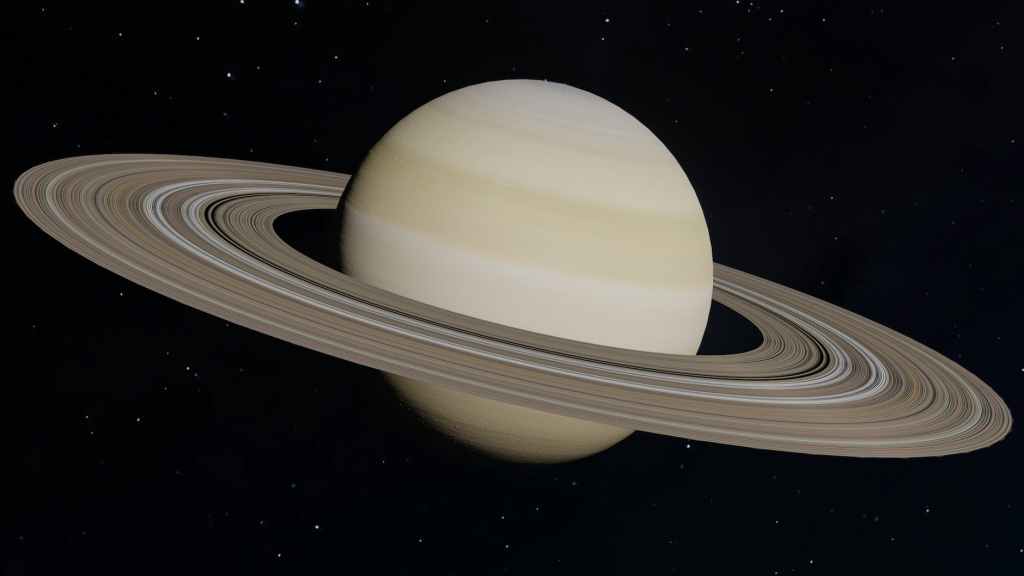
James Webb makes you proud to be educated While the mass of humanity pass their time in pub brawls, burning witches, engaging in theological controversies, watching Fox News and other activities of that sort, it’s heartening to see what the more enlightened sections of our species get up to. Now the James Webb telescope is sending us pictures of actual, real planets orbiting round other stars. And this is just the start. All we can say is “watch this space” Nature Briefings, Webb wows with first exoplanet image

At first glance, it doesn’t look like much: just a handful of bright pixels. But the James Webb Space Telescope’s first image of an exoplanet demonstrates the observatory’s infrared prowess. Exoplanets are difficult to image directly because they are often lost in the glare of the star around which they orbit. Observing in infrared wavelengths, as Webb does, helps boost the contrast between star and planet. “It gives us wavelengths we’ve never seen planets at before,” says astronomer Beth Biller.Nature | 5 min read
Reference: arXiv preprint

Meat the counter-intuitive Before it becomes accepted wisdom that we’ll have to give up meat to save the planet, at least read this counter-intuitive argument from Thomasina Miers in The Guardian. We know farmers with land that really isn’t suitable for arable, but can produce good food by way of pasture. So maybe the answer is-keep it, but in much smaller amounts?

https://www.theguardian.com/commentisfree/2022/sep/01/eating-meat-planet-george-monbiot-regenerative-grazing

World Warms, Pakistan drowns The tragic floods in Pakistan are a case study in the devastation caused by global warming. It will take immense sums to repair the damage. Could Pakistan’s Government recoup some of it by claiming damages against the energy companies who have caused it and those politicians, journalists, think tanks and so many others who worked so assiduously to deny there was ever a problem at all?

https://www.bbc.co.uk/news/science-environment-62758811

Big Yellow Taxi-another canary in the mine We have alluded more than once to how the old Creedence Clearwater Revival song Bad moon rising gave early warnings of impending ecological catastrophe. Bought on by human greed, venality and concupiscence of course! Around that time Canadian singer Joni Mitchell wrote a deliciously ironic song, as only a woman could, called Big Yellow Taxi which said it all in one line “they paved paradise, out up a parking lot” We” end hoping you can play this link

#ecocide #global warming #climate change #NASA #space #dna #neanderthals #joni michell

Friday Night: The Moon Under Water, an English Pub

George Orwell (1903-1950) was one of the most influential writers of the last century. In works such as 1984 and Animal Farm he alerted the world to the dangers of Soviet Communism in general, and Josef Stalin in particular. Given the current activities of Vladimir Putin, these works might bear a little revisiting!

Despite that, Orwell’s politics remained firmly Left wing. To the fury of certain newspapers he saw this as perfectly compatible with a strongly English patriotism, And despite a prodigious output of journalism books, broadcasts and military service, he could relax in that most English of institutions: the pub. In private life he could be stubborn, cantankerous, amusing and thoroughly decent(we know, we’ve spoken to people who knew him) And his reflective, elegiac essay The Moon Under Water tries to capture the spirit of that most quintessentially English Institutions-the pub. [1]

The work was published in 1946, and it’s 2022 now. Many pubs have been transformed in ways that Orwell might not have approved of. Yet something of his ideal can still be found, both in quiet corners of London and other towns, or out in the folds of the country hills. if you know where to look. Language students should consider Orwell as a model of simple English prose. All others should read it and muse on the benefits of a Friday night pint.

[1] https://www.orwellfoundation.com/the-orwell-foundation/orwell/essays-and-other-works/the-moon-under-water/

[2] https://en.wikipedia.org/wiki/George_Orwell

#stalin #putin #george orwell #pub #beer

Freedom has consequences-it’s just that some people can’t face them

Some people take a funny line on individual liberty. “I should be free to do whatever I want whenever I want” is a fair representation of this view as it has been expounded to us in many a session in places like the Dog and Duck, or certain junior student common rooms. Leaving aside its obvious flaws, which we’ll hit on later, does untrammelled liberty benefit its disciples as much as they claim, or actually do them harm?

Many was the smoker of our youth who insisted on his inalienable right to ingest immeasurable quantities of burning vegetable matter. We watched countless motorcyclists protesting against the insufferable illiberty of having to wear a crash helmet. While back at the Dog and Duck, every drinker expected that someone else’s money would pay for his liver when it went wrong. (most of them seemed less keen to uphold the liberties of cannabis smokers-why was that?)

Now Nature Briefings has a marvellous take on the consequences of all this blissful, unfettered liberty, with a survey of all the deaths which have been caused by things like smoking and drinking. More of them seem to happen to men, but, ho hum, what’s new there? Most of them always did know best, like so many little monarchs. Which is why they forgot that there might be bigger monarchs, with bigger advertising budgets who were able to twist their delusions into some very profitable directions indeed. We show the results below. “Half of all cancer deaths are preventable”

Nearly 50% of cancer deaths worldwide are caused by preventable risk factors. The largest study yet of the link between cancer burden and risk factors used estimates of cases and deaths from more than 200 countries. Smoking, alcohol use and a high body-mass index — which can be indicative of obesity — were the biggest contributors to cancer. The study did not include some other known risk factors, including exposure to ultraviolet radiation and certain infections — such as HPV, which can cause cervical cancer.Nature | 4 min read
Reference: 
The Lancet paper

So-are a few restrictions on certain behaviours, in the general interest of preventing global warming, really such an intolerable assault on liberty?

#smoking #alcohol #cancer #premature death #climate change

a brief note to all the kind staff of wordpress who have helped with some dreadful technical problems today – lovely people!

Artificial Intelligence: scary or just a game changer?

Looking down from the height of our seven hundredth blog (count ’em-seven hundred!”), we couldn’t help a little mellow reflection on a constant theme of these posts-Artificial Intelligence, quantum Computers, robots and all that sort of thing. It also reflects many of the comments and suggestions we receive from you, gentle readers.

The theme is nothing new-these things are amazing. Powerful indeed. And that makes them scary. it’s been the theme of science fiction films, books, TV shows and endless learned discussions in ever-so-slightly unreadable books since at least 1950. They can even beat us at chess, goddammit, so what chance have we got? Well did we sympathise with the crying boy on the Brighton train the other week, who screamed to his mother that he was “frightened of the robot.” (None was visible on that train, or any other that day)

It was that wisest of Science Fiction writers, Arthur C Clarke who gave us the re-assurance we craved-with this explanation. The earliest toolmakers, entirely apelike beings had no intention of changing themselves or the world when they started bashing flints. They just wanted to get their dinner better. But as you use tools more and more, you need teeth less and less. So gradually the shape of their faces changed. Hunting got better because tools made it more effective, leading to bigger brains, and legs adapted for running, not climbing. And so on. Feedback loops were set up whereby cleverer creatures started improving their tools. By the time you got to something humanlike ,say Homo erectus, the toolmakers dared not drop their implements , because they had lost the big teeth and strong arms which might have let them survive without those tools. The tools and the creatures had formed a single symbiotic unit with its own niche.

It is likely that humans and machines will co evolve, maybe even fuse together, as Clarke predicted. In a few generations we may not look, feel or move in quite the same ways as we do now. Especially those who will choose to live on other planets like Mars. But the same chain of progress started so long ago in Africa will be carried forward. Our legacy will be secure.

#arthus c clarke #artificial intelligence #quantum computing #robots #human evolution

Cars and water show the old order is dying

“Private sector good, public sector bad” was the endless mantra chanted by those who fomented, and then imposed, the Thatcher-Reagan revolution of the 1980s. Everything, from water companies to forensic science was to be sold off to wheeler-dealer buccaneering venture capitalists, whose grace would confer the blessings of efficiency and freedom on moribund institutions. Or so it was alleged; they never talked of privatising their armed forces, for some reason.

Forty years on the bill for these follies is starting to come in. Take water privatisation in England as an example. Since 1989 the new private owners have extracted £72 billion in profits, while the industry suffers a dreadful reputation on pollution, failure to control leaks, shortages, and inability to invest (we haven’t had a single new reservoir in thirty years) Writing in the Conversation Kate Bayliss makes a powerful case for public ownership of a common public good. [1]

Our people are in cars-if you’re on public transport after the age of twenty five, you’re a failure” Maybe Mrs Thatcher didn’t say those exact words all together in that order, but they authentically captured the spirit of the 1980’s and her philosophy, disguising a new hierarchy of wealth under a cloak of liberty. Maybe cars do bring a bit more mobility, and help with the shopping. They also bring the opportunity for excess of narcissism, rage, accidents and pollution. Is their age passing too? John Vidal makes a powerful case in the Guardian [2]

We won’t indulge here in rather hackneyed cliches about shifting tectonic plates, paradigms and new orders. But we will observe that saying of James Russell Lowell “Time makes ancient good uncouth.” The trick is to learn to let go gracefully, and look for new ways of doing old things.

[1] https://theconversation.com/why-clean-affordable-water-should-not-be-in-the-hands-of-private-companies-targeting-profit-new-research-188258?utm_m

[2] https://www.theguardian.com/uk/commentisfree

#water #privatisation #public ownership #transport #pollution

Weekly Round Up: Bones, How to spot a fake expert, orca gangs, big men, and sewage

stories that caught our eye

Stand up for your beliefs Ever since its discovery more than 20 years ago the fossils of Sahelanthropus tchadensis, have been fought over by rival teams of scientists. How close were they to the hominin line? And now-could it stand upright? Whether it’s at seven million, three million or just a few thousand years ago, every hominid fossil is the potential cause of disputes which seem to generate far more heat than light. Frankly, we would welcome a lot more digging and a lot less publishing. Nature Briefings details the latest saga. Did this ancient hominin walk upright?

An ancient human relative, Sahelanthropus tchadensis, might have walked on two legs seven million years ago. S. tchadensis could be the earliest known member of the hominin lineage, the evolutionary branch that includes the common ancestor of humans and chimpanzees and ends with modern humans. The theory is based on a battered fossil leg bone that was discovered in Chad more than 20 years ago. But some scientists are not convinced that the femur’s traits prove the creature stood tall.Nature | 5 min read
Reference: Nature paper

Is this man really an expert? News controversies have been marred by each side dragging on some important-sounding bloke who claims to be an “expert.” Economics, science, health, climate change…think of another. Some no doubt, are experts. But not all, and it’s important to try to ask if someone really knows, or is just bluffing it. Fortunately Thora Tenbrink is here from the Conversation to guide us

https://theconversation.com/five-ways-to-tell-if-someone-is-an-expert-or-just-confident-from-an-actual-expert-188244?utm_m

They’re just playing Why is a boisterous bunch of young orcas bumping boats the Atlantic? Most experts think it’s just for fun: they’re big enough to sink these yachts if they really wanted to. Even so it must be terrifying when something goes bang on your hull in the middle of the night! A conservation success, but best sustained if we can manage the seas for people and animals, we think. Here’s the Times

https://www.thetimes.co.uk/article/bb6a3bf0-2481-11ed-bb7e-0eb11fc7ccd4?shareToken=b

A fascination with with strong men The American right’s weakness for burly macho dictators is nothing new, as this intriguing piece from The Atlantic shows. Just as Leftists idolised Stalin and Mao, so Rightists have done the same with an amazing collection of fad-heroes-some of them very, very queasy indeed. What is the psychological thread linking all this hero-worship, we wonder?

https://www.msn.com/en-gb/news/editorpicks/behind-the-american-right-s-fascination-with-viktor-orb%C3%A1n/ar-AA11a7sF?ocid=ms

Local Protest, National Hope And finally… the inhabitants of England’s Sussex Coast have always been regarded as quiet, placid acceptors of the good fortune that life has bestowed on them. Until now, when appalled by the tonnes of sewage flooding into their previously limpid seas, they have formed angry protest groups to march and shout against water companies and the Government which has given those such an easy ride. And now this is national news No, this is not Anglocentric-if they can do it in Hastings, why can’t you in your country?

https://www.bbc.co.uk/news/uk-england-sussex-62688370

#killer whale #viktor orban #paleoanthropology #sewage #pollution

Friday Night: Who invented cocktails, anyway?

Mention the word “cocktail” and you somehow conjure up an image of louche bourgeoise sophistication. Of plush Manhattan hotels, tropical islands and well-paid adventurers like Messrs James Bond and Jay Gatsby. It used to irritate Lefty Lecturers at certain famous London Colleges when we refused to attend their extra classes on the grounds that “it was Friday Night Cocktails”, that’s for sure.

People have been drinking alcohol for thousands of years. So who came up with the idea of mixing spirits, fruits, strange little bottles of mixers, and lashings of ice? Ancient Sumerians? Bored pirates in the Caribbean? This week, we’ve done a little research which we hope will not only make interesting reading, it may spark you, gentle readers, to try to make some of the strange precursors which our links will mention. Good luck, and happy mixing.

Wayne Curtis, The Atlantic Traces origins to a curious drink called a Rum Shrub in Georgian London. But, as with so many British ideas, the Americans nicked it and transformed it into something far, far more adaptable to the masses. Key player: a chap called “Professor” Jerry Thomas in 1862, when more serious Americans were slaughtering each other in the Battle of Chancellorsville.

https://www.theatlantic.com/magazine/archive/2010/06/who-invented-the-cocktail/308105/

Wikipedia Another great institution. Traces first appearance of word cocktail to 1803. A Mrs Julius S Walsh of St Louis, Missouri in 1917. Cocktails were big in Prohibition, because you could disguise all that illegal hooch behind fruit juice. They have enjoyed a revival since 2000, as recipes have been swapped on the internet.

https://en.wikipedia.org/wiki/Cocktail

The Spruce Eats has a lovely section tracing the origins of our favourite drink through its etymology. Nice bright breezy website, which we have used before for recipes on this page.

https://www.thespruceeats.com/what-is-a-cocktail-760163

We don’t want to burden you down with excessive reading lists, so that’s it for one night. Have a great weekend.

#jerry thomas #rum shrub #prohibition #james bond

If you want economic growth, raise taxes

At first it sounds odd, doesn’t it? Counter intuitive. Perhaps because the message relentlessly drummed in by right wing newspapers, think tanks and well-paid academics has been “lower taxes means more growth”. Yes things like police forces and health systems are all very nice, but we have to keep them to a minimum, because the taxes to pay for them are a drag on economic activity…. blah blah blah. Ask any economics expert at the bar of the Dog and Duck and they will give you the spiel. “Common sense, innit, mate?”

But it is common sense to infer that the sun goes round the earth. It took some real thought and investigation to show otherwise. Likewise the existence of atoms, electricity……..we could go on. Now another thoughtful study has been done which shows taxes may actually be good for economic growth. For one thing they pay for roads and legal systems, always a good idea if you want a predictable economic environment. History backs this up: relentless cuts to the Royal Navy before the revolutionary war of 1776 led to defeat when they came. Tax cuts in England benefitted Americans and Frenchmen!

In this light we ask you to at least consider, with an open mind, this article by Paul Whiteley for The Conversation. It might just change the way you think.

#tax #gdp #economics