Weekly Round up: Tigers, AI Conservation, and the thorny question of Israel

International Day of the Tiger The Zoological Society of London has joined many others in promoting the conservation of this iconic cat. Here’s their link to show it isn’t all doom and gloom Incidentally, overseas visitors to the UK might enjoy a tranquil afternoon in its shady walks and interesting collections; or more so at its larger country subsidiary at Whipsnade.

Dolphin Tracking Talking of conservation, we’d like to bring in another of our LSS perennials- Artificial Intelligence. Here’s Nature Briefings on a successful new project with great potential for the future

Artificial intelligence (AI) is helping researchers to map the movements of endangered river dolphins. A neural network was trained to recognize the clicks and whistles of the boto (Inia geoffrensis), or pink river dolphin, and tucuxi (Sotalia fluviatilis) in the noisy soundscape of the Amazon River. The AI can distinguish between the two species and other common sounds such as those produced by rainfall and boat engines. Using sound is much less invasive than is tracking the animals with GPS tags, boats or aerial drones.Nature | 4 min read
Reference: Scientific Reports paper

Dirty Politics As the current Conservative Party runs out of intellectual coherence, it has resorted to culture wars as an electoral weapon. Astute readers will recognise this as a variant on the ad hominem school of intellectual fallacy. The Conversation discusses

The tragedy of Israel Israel is still the only democracy in the Middle East, founded with the highest possible hopes. For these reasons, we have tended to support them on most occasions, being right there back in 1967 and 1973. But what happens when they fall prey to a brute like Netanyahu and his deranged followers? Jonathan Freedland is on top form for the Guardian

https://www.theguardian.com/commentisfree/2023/jul/28/israelis-benjamin-netanyahu-democracy-protests-donald-trump

Have a good weekend

#tigers #israel #netanyahu #AI #conservation
Poverty is the enemy of progress: right of reply coming soon

Yesterday’s little blog (LSS 28 7 23) has produced certain reactions: some in favour, one or two markedly against. To show the world that we are a true Whig website, faithful to the spirit of Bertrand Russell, we will shortly offer a right of reply to regular reader who comes from anmother part of the political spectrum.

For personal reasons, and because of where he/she works(we have to be that circumspect, readers) the writer has requested absolute anonymity. And also a little time to prepare the piece!

But prepare it they shall, and we hope to bring it to you soon. In the spirit of fair play, balance and all that.

#bertrand russell #whig #balance

Poverty is the enemy of progress: Thatcher’s toxic legacy

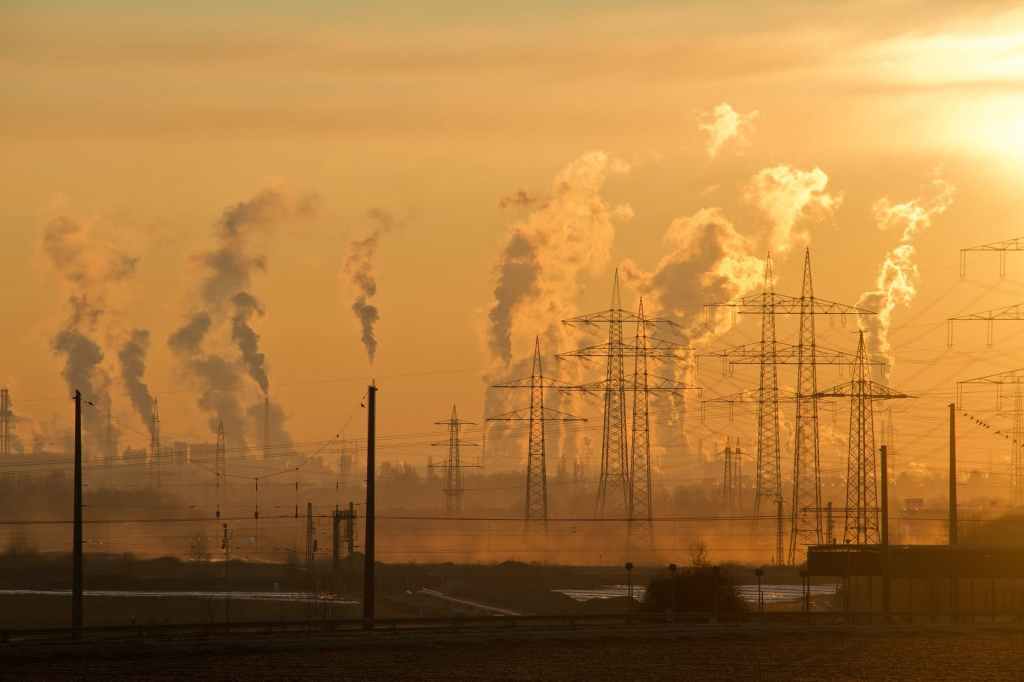
Air pollution kills. Whether by poisons like nitrogen dioxide, tiny particles or maybe even the C02 itself(see LSS 20 11 20) it causes asthma, cancer, heart disease and possibly dementia. Its effects fall mainly on poorer people. You’d think they would want to get rid of it at all costs, as soon as possible. Yet recent attempts to extend the London ULEZ zone [2] had so enraged a significant section of voters that the Labour Party was denied by election win in a key outer London marginal. What is going on? Do people really vote against their own interests? Or is there a better explanation?

Yes, a typical voter, particularly one hardscrabbling a living at the poorer edges of society will still know about air pollution and how it damages their children. But most have a closer, more pressing urgency; to see those children fed. And in an economy where margins have become so impossibly tight, the £12.50 charge to enter the ULEZ zone can make a real difference, especially to those like builders or van drivers who may have to cross it several times a day. Of course they voted against-wouldn’t you? And so, just when a really crucial, life enhancing reform needed all the support it could get, a vital set of potential supporters fell away.

“Cut wages the minimum-we’re paying ourselves to much!” was the key mantra of the Thatcher years from 1979 to 1990. Only a drastic fall in real wages would allow the economy to thrive, ran the old nostrum. In its name millions of secure, unionised and well paid jobs were abolished. To be replaced by precarious self-employment in jobs like delivery, building trades, taxi driving and the like. The effect was to drive a deep wedge between progressive opinion and large sections of the working class. The early signs were apparent at the Stanlake disruption of 2000, a geezers-in-vans uprising if ever there was one. It has grown and anastomosed ever since, aided and abetted by a well funded ecosystem of “news”outlets such as The Sun and GB News. Now, when it is even in the billionaires’ interests to achieve a cleaner planet, the critical social mass has gone missing.

We still have a little time to clean the noxious clouds of filth the shroud us. But progress is slow. And it was Margaret Thatcher who chained the fetters which slow us. That will one day be seen as her truly toxic legacy.

[1]https://www.gov.uk/government/publications/health-matters-air-pollution/health-matters-air-pollution

[2]https://www.london.gov.uk/programmes-strategies/environment-and-climate-change/pollution-and-air-quality/ultra-low-emission-zone-ulez-london

#margaret thatcher #pollution #particulates #ULEZ zone #london

Old LSS friend Homo Naledi is back-with another puzzle

Back in the long-ago days of Covid lockdown, we set you a puzzle: what to make of the enigmatic remains of Homo Naledi from the Rising Star Caves in South Africa. It was very much in the spirit of brain teasers like crosswords or computer chess, and there was no right answer. But the material found, with its curious mix of primitive and advanced features, is certainly intriguing. It’s as if Rolls Royce had tried to build a car using combining bits of a 1923 Silver Ghost with its 2023 descendent.

Which is why we are not surprised to find a bit of push back against some of the claims made for naledi. As Nature Briefings so presciently observes:

Archaeologists wowed viewers of a documentary — released last week — with stunning scenes of a cave crammed with bone fossils that, they argue, are the remains of the earliest-known burial by humans or their extinct relative Homo naledi. But days earlier, four scientists who peer-reviewed the paper making those claims called the supporting evidence “inadequate” in the open-access journal eLife. The study is a high-profile test of the journal’s innovative publishing model: it no longer formally accepts papers, but instead publishes them alongside peer reviewers’ reports.Nature | 6 min read

As so often happens in Paleontology, as in other sciences, as soon as someone makes a big claim, someone else comes along to assert the opposite. We won’t go into a pseudo-philosophical riff on Hegel and the dialectic here-we want people to enjoy this blog-but it does reflect a deeper truth which we’ve alluded to once or twice in these pages. Data is one thing and interpretation quite another. In this case, we don’t know which side is right, but in the last resort it’s only a few old fossils, and being scientists, they will all settle their differences without gunfire.

But it illustrates a deeper truth Because it’s not just about science but life in general, as the recent case of Andrew Malkinson [1] demonstrates. Where the consequences of confusing interpretation with facts can be very grave indeed. Perhaps there would be less miscarriages of justice, and fewer bad referendum results, if people thought more and believed less.

[1] https://www.bbc.co.uk/news/uk-england-manchester-66323436?at_medium=RSS&at_campaign=KARANGA

#evolution #data ##andrew malkinson #miscarriage of justice

Weekly Round Up: Listening, walking, cooling-and Tony Bennett

a look at back at stories that caught our eye this week

“God gave you two ears and one mouth” as the old Spanish proverb has it Listening is a much underrated skill; and some of the most able managers we have worked for have always been good listeners. Here’s a tip from regular correspondent Mr Peter Seymour on how you could accentuate this skill From The Stylist

https://www.stylist.co.uk/life/listening-styles-communication-connection-social-skills/805311

These genes are made for walking One of the mot exciting developments in science has been the way the genetic studies are slowly being aligned with fossil studies. It looks as if the chromosomal areas associated with walking upright are slowly being identified, with exciting possibilities for those of us who wish to know more about this fascinating phase in human evolution From Nature

A map of genomic regions that could explain the evolution of our unique skeletal architecture, which enables us to walk upright. Researchers used deep learning to analyse measurements from whole-body X-rays of more than 31,000 people, and combined them with their genetic data. One hallmark of walking upright is having longer legs relative to arms; another is narrower hips. Genomic regions linked to these features bore signs of evolutionary selection in humans. The work also points to regions of our DNA that place us at risk of the common skeletal disease osteoarthritis.Nature | 4 min read
Reference: Science paper

It’s too darn hot as Cole Porter used to have it. As we continue to smash through world record temperatures, it may not be the heat per se that gets you, but the humidity which goes with it According to The Conversation

And so farewell Tony Bennett; Definitely one of the nice guys of history, as well as being a most talented singer. However, we own to a confession: we had perhaps overlooked Mr Bennett’s oeuvre until reminded forcefully by the opening sequence of Goodfellas, where the bold brassy score Rags to Riches sets the scenes for the lurid story to come

#climate chane #global warming #listening skills #bipedalism #tony bennett

10 Questions for climate change deniers

Everyone is entitled to their opinion. Even on a proximal danger such as anthropogenic global warming. As it is our prime assumption at LSS that most people are not fools, we will assume that those who doubt the climate crisis have arrived at their opinions by careful reasoning and an exhaustive consideration of the evidence. In which case they will be happy to answer the following questions (we have put the answers below)

1 How do you explain the fall in the C13/C12 ratio in atmospheric CO2 since 1850?

2 Why has the ratio of C14 in the atmosphere also fallen since 1850?

3 In which case, where has all the extra C12 come from?

4 Taking the figures from 1850 to 2023 as a baseline, does the increase in CO2 match the increase in observable global temperatures?

5 Why is Venus so hot?

6 If the data suggesting global warming is manufactured by scientific institutions as part of a conspiracy, are the same institutions conspiring in areas such as cancer research, astronomy and cardiac medicine?

7 If you believe in conspiracies, is it equally possible that other bodies, such as certain energy companies and media outlets may also be distorting facts and manufacturing opinions to suit their agendas?

8 If the sudden increases in warmth are due to natural cycles, how long are these cycles? Has the length of them changed. What is their amplitude? Do we see the same cycles across a range of natural phenomena, and how closely do your figures coincide for each?

9 Can you suggest any natural phenomenon which accounts for the rise in global temperatures since 1850?

10 Please explain your criteria for choosing between fact and opinion

Answers

1It has fallen as the amount of atmospheric CO2 has risen

2 There is no measurable C14 in the carbon in ancient coal and oil, as its half life is only a few thousand years

3 fossil fuels

4 very closely

5 Very high levels of carbon dioxide in atmosphere

6 or do you just pick and choose which conspiracy is convenient to believe

7 yes- and the same thing happened with tobacco fifty years ago

8 E.g. are the cycles in sunspots, ocean temperature, fluctuations in earth orbit, atmospheric temperature, or what?

9 No

10 This one is up to them 

#climate change #global warming #carbon dioxide

The Baby Guinness (Courtesy of The Dog and Bell, Deptford)

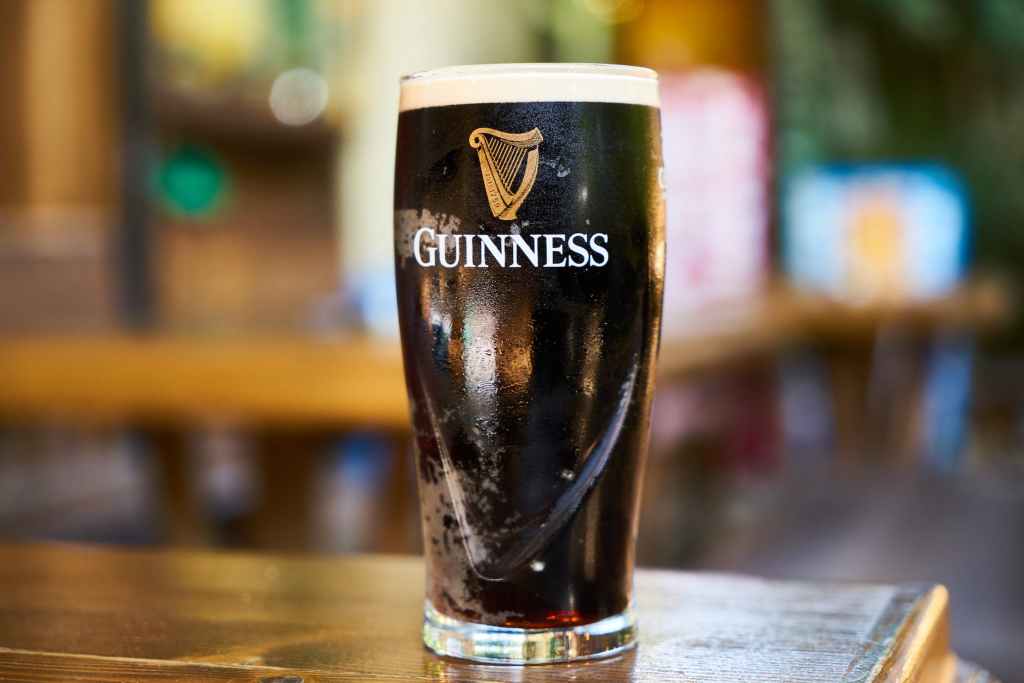
It’s not a baby, there’s no Guinness in it, and it’s just a shot. So how on earth can the Baby Guinness possibly qualify for our cocktail this week? [1]

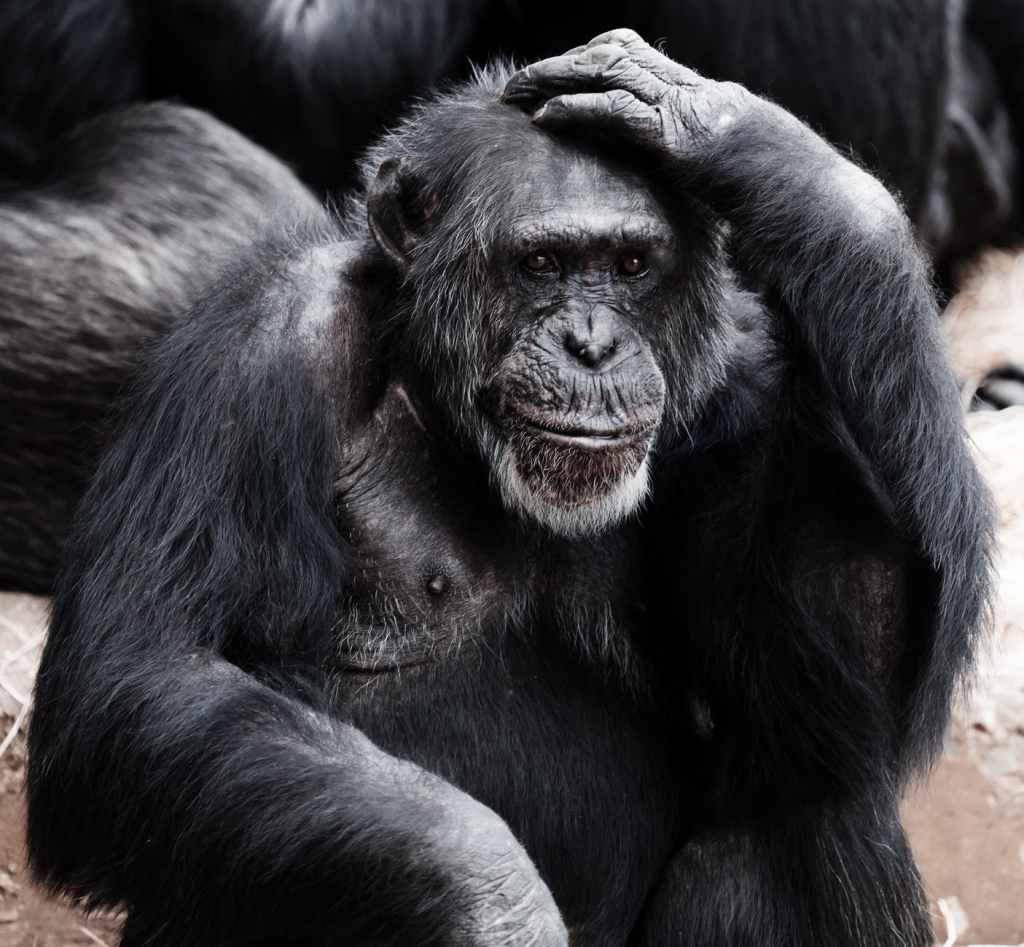
The answer lies with one of our researchers, who was having a drink with a couple of the patrons of The Dog and Bell, which seems to be a highly recommended tavern in the region of Deptford, London, SE8. [2] For the Baby Guinness is a technical ingenuity, one of those masterpieces of human thought that sets us apart from and above our nearest simian relatives, such as the pygmy chimpanzee (Pan paniscus). To quote Wikipedia

A portion of coffee liqueur (e.g. Kahlúa or Tia Maria) is topped by a layer of Irish cream (e.g., Baileys or Coole Swan) which is poured over the back of a spoon so that it sits on the coffee liqueur. The ratio of coffee liqueur to Irish cream varies but is generally around 3-to-1. The resulting drink looks like a miniature pint of Guinness stout, with the coffee liqueur as the beer and the Irish cream as the head. It is normally served in a shot glass.[1]

And some people say there’s no such thing as Progress. So, next time you are in the Dog and Bell, no doubt debating the finer points of human evolution, and a Bonobo walks in, you can shout “Oi! Monkey Face! Bet you ain’t ever had one of these!”

And watch them crumple in shame.

[1] https://en.wikipedia.org/wiki/Baby_Guinness

[2] https://www.facebook.com/TheDogandBell/about/

guinness #baby guinness #cocktails #deptford

Read The Daily Star

There! Not quite the sort of headline our regular readers might have expected. Yet its piece today by the admirable Brendan McFadden, [1] is a significant moment in the attempt to save humanity from the self destruction to which it seems to be so recklessly heading. First a little History, which we hope will allow our overseas readers to place this whole mad ramble in a little context.

The Daily Star is a British tabloid newspaper. When it started, back around 1981, we got the impression that it was a cheap copy of The Sun, anxious to steal some of that organ’s readership of-how to put this?-plain, simple folk whose interests were entirely centred on beer, birds and football. We were perhaps wrong, but we paid it little attention; it was the Sun that set the pace, easily outselling all imitators and rivals. We were shamed at the way all the tabloids coarsened and brutalised our national life from the 1980’s onwards. A process that culminated in the phone hacking scandal in the 2010s. We rejoiced as their circulation figures began their present death spiral. We expected nothing from any of them that might advance learning or the sciences.

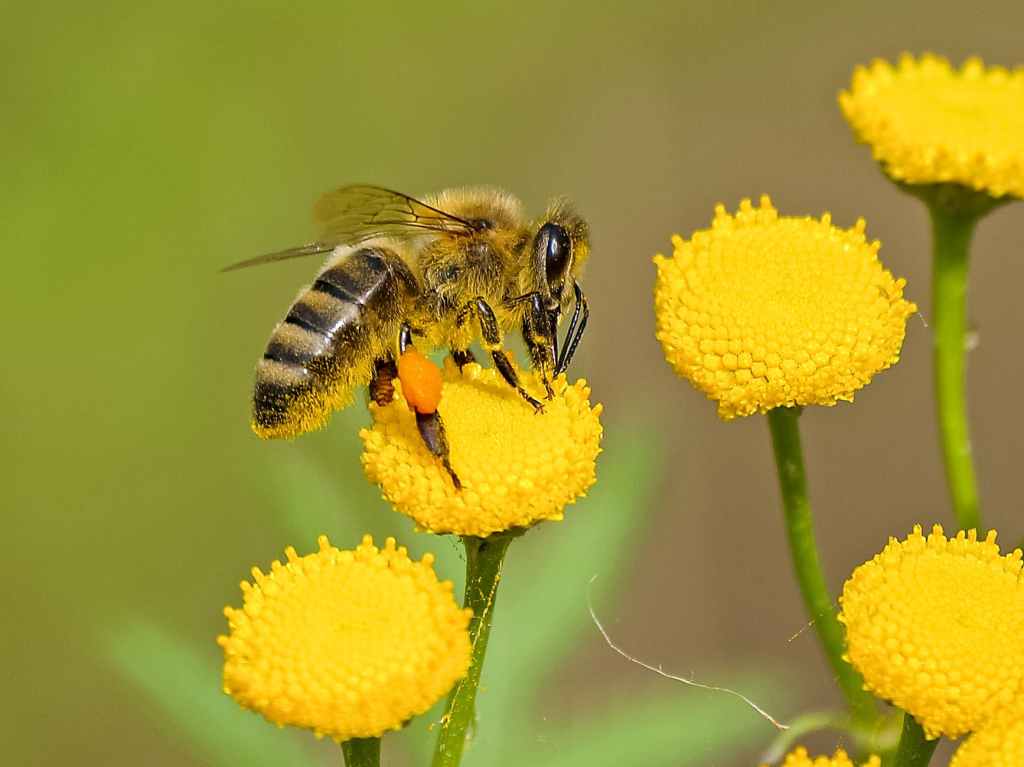
Which is why the Star took us utterly by surprise with its splash on declining bee numbers. You can, and should, read Brendan’s piece. We did something like this a few weeks ago(LSS 1 6 2023) but he does it much better. But it’s not the story itself, it’s the way Brendan has plonked a major ecological issue straight in front of a readership which up to now has been encouraged to ignore, or even actively deny, the doom now hovering over us. This morning, every builder, van driver or taxista who picks up the Star is going to have to think about this. And the reason this makes us love Brendan is simple. Up to now every ecological event you attend is just the same old faces. People with degrees who read The Guardian, well meaning, earnest and straining, but a tiny, tiny fraction of the population. Now, potentially, we may have broken out and are starting to reach the numbers of the population where real change works. Now, gentle readers we beg you. Go out tomorrow and buy a copy of the Star. if only to annoy Rupert Murdoch.

[1] https://www.dailystar.co.uk/news/latest-news/humans-pollinate-crops-paint-brushes-30462849

[2]https://www.bbc.co.uk/news/uk-24894403

#ecology #pollination #bees #food chains

The Conversation’s take on 2001: A Space Odyssey

Worried about intelligent computers who will kill us all? Sometime wonder how we evolved? Want to drink a cocktail on a space hotel? Are aliens out there, and if so are they Goodies or Baddies? Stanley Kubrick and Arthur C Clarke addressed all of these Big Questions before your grandparents were born. We like most blogs, mags and news sites still put this one in our Top Ten. But is it actually the best? Here’s Nathan Abrams for The Conversation.

The Dawn of Language-it’s all about how to write

In 1866 The French National Academy of Sciences banned all discussions on the Origin of Languages. And rightly so, many would argue. As we can never have any tangible evidence of how our ancestors spoke, grunted or gesticulated, the whole matter would remain entirely speculative, and unworthy of the attention of serious minded Natural Philosophers. So if you are going to venture a book on the subject, it had better be pretty good. But The Dawn of Language by Sverker Johannsen does more than that. It our view it is one of those rare pieces that set the ground rules on how to write. Anything. Before we explain why, we’re going to mention the translation by Frank Perry, which has clearly contributed to the rave we’re about to give)

First know your reader: The kind of person who will pick this up will be an intelligent specialist in another field: banking or social work perhaps. Never talk down, and don’t talk up with silly jokes. The author hits the right balance every time.

Second Don’t overload with jargon. Your reader will know relatively little of the arcane terminology of linguistics or paleoanthropology Introduce as few terms as possible, and explain them when you do He does, so we keep wanting more

Third Keep your sentences short: one thought one sentence We learn that this is how our earliest ancestors probably spoke anyway, so why change a good thing?

Fourth You can liven the narrative occasionally with odd anecdotes about your daughter and certain remarkable parrots; but keep them short and utterly relevant at all times

Fifth If you are going to wade into the warring tribes of savagely competing academics, be scrupulously respectful to all sides. Even Noam Chomsky.

Sixth Above all, be humble in the face of all facts; and when speculation is called for, label and mark it carefully as such

We have read few other non fiction works which kept as gripped as well as Dr Johannsen has done. Among the few that came close were the works of Robin Dunbar in the 1990s(he is namechecked here) and we can heartily recommend Johansson as a worthy successor

Marks out of five: 10

Sverker Johansson The Dawn of Language trans Frank Perry Maclehouse Press London 2021

#linguistics #human evolution #grammar #language #paleoanthropology