Why the origins of this blog go back to 1687

We have made no secret of it. This is a Whig blog, written, researched, and edited by a senior staff whose political and philosophical affiliations are all to that most progressive and enlightened segment of mankind. (what the rest of them in this building think, we have no idea) But where did the name come from-and what about that of the Tories, the very antithesis, nemesis and inveterate opponents of all that we hold most dear?

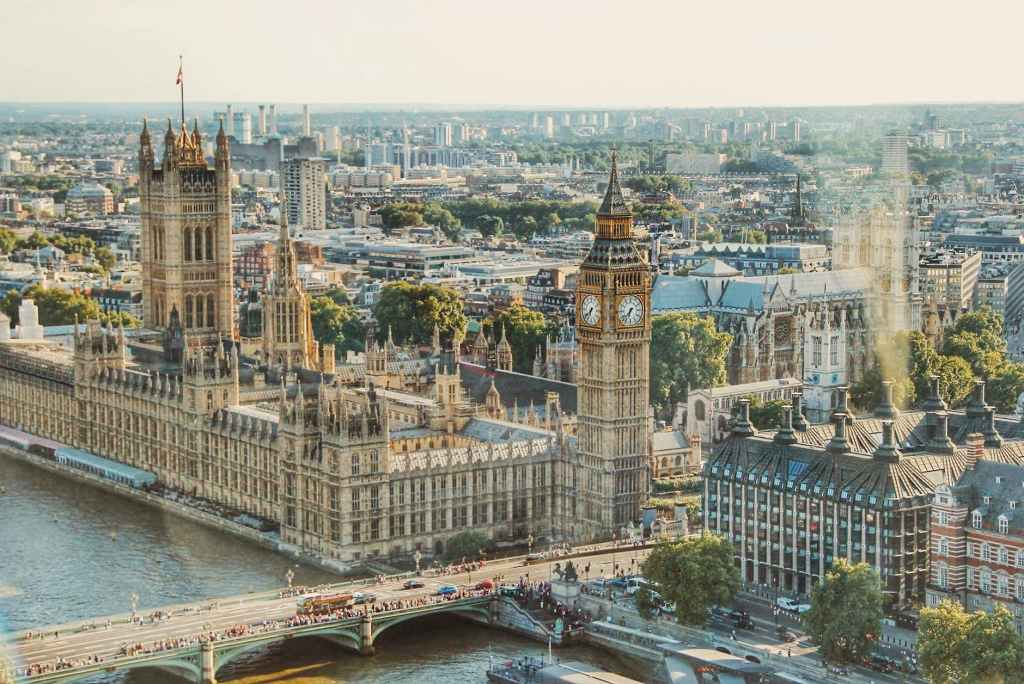
According to the admirable Lord Lexden, writing in House magazine [1], the earliest origins of the word “Whig” go back to the bitter constitutional debates which followed the English Civil War. The “Whigs” were generally in favour of some kind of Constitutional Monarchy along modern lines, and feared the autocratic tendencies of the Papacy. Their opponents (unjustly, of course) mocked them as “Whiggamaires” a kind of horse rustler from the wilder lands of Scotland. They labelled their opponents, who wished to see the succession of the devoutly Catholic James as “Tories” after lawless Irish thieves, whom they described as

popishly affected, outlaws, robbers, such as our law saith have Caput Lupinum, fit and ready to be destroyed and knocked on the head by any one that could meet with them”. 

A little strong,perhaps.

Now you might say that the programmes of both parties have changed a bit since then. But, is there just an underlying kernal of truth somewhere in the recondite reaches of History? Perhaps of psychological type and preference?. To be a Whig was to be essentially looking to the future, and to reach, gropingly, towards new ideas in governance, science and belief. To be a Tory was to cling to what was, toexalt Authority and Custom as the supreme arbiters. Has anything changed?

[1]https://www.politicshome.com/thehouse/article/tale-two-parties-origin-tory-party

#tory #whig #liberal #new labour #parliament
Attack of the Killer Zombie Virus

Sounds like one of those old 1950s B movie titles, doesn’t it? But according to Robin McKie of the Observer, the threat is all too real.[1] According to Robin:

Humanity is facing a bizarre new pandemic threat, scientists have warned. Ancient viruses frozen in the Arctic permafrost could one day be released by Earth’s warming climate and unleash a major disease outbreak, they say.

No, despite our apparent credentials gained in monitoring the medical and science newsfeeds, we didn’t see this one coming either. We were more concentrating on the day that all that methane locked up in the permafrost spills out, and propels us all back to the Great Permian Extinction.[2]

And before you go, remember this. Firstly even the best antibiotics in the world will be of no use against viruses. Secondly, these viruses are likely to be of unknown types, and it will take time to run up meaningful vaccines against them. And above all, don’t think it won’t happen-remember what they were saying about global warming only twenty years ago?

[1]https://www.theguardian.com/society/2024/jan/21/arctic-zombie-viruses-in-siberia-could-spark-terrifying-new-pandemic-scientists-warn

[2]https://en.wikipedia.org/wiki/Permian%E2%80%93Triassic_extinction_event

#permafrost #climate change #global warming #virus #pandemic #vaccine #antibiotic

An addiction to easy answers will bury us all

articles of the week

After the Renaissance, the Reformation. The sunny days of progress transformed to stormy years of relentless religious and political conflict. The link between them of course was the printing press, and the sudden explosion and dissemination of thousands of conflicting ideas and nostrums. The development of the Internet has proved to be the same dangerous catalyst for our own times. So it’s worth considering carefully what is going on. This week we showcase two articles from the Conversation which do exactly that.

The first by Rotem Perach, Deborah Husbands and Tom Buchanan, from the prestigious University of Westminster highlights this wave of misinformation. Most chillingly, how people cheerfully spread it even when they know it to be false. The second by Dorje C Brody[2] looks at why. The basic problem is confirmation bias-when people are asked to make a difficult choice between two conflicting stories, and find it hard to sift the evidence they will choose the one that confirms their existing beliefs.

Is all this dangerous? Yes, it can be. We still recall people who declared in 2015 “I think all this country’s problems are caused by membership of the EU” They weren’t of course as we have since discovered. Now one could, some did, make a reasoned case for leaving the EU. But this kind of thought-excluding confirmation bias made all attempts to impose reason and evidence impossible. Bad choices followed; and they have been coming ever since. 

Which in turn raises a deeper thought, which we hesitate to write. Only because this is a site utterly open to all reasonable ideas do we broach it. Can people really be trusted with their own decisions? Or must we now consider return to rule by a governing elite, if only for the sake of social peace and order? It is a subject we will return to in due course.

[1]https://theconversation.com/some-people-who-share-fake-news-on-social-media-actually-think-theyre-helping-the-world-215623?utm_medium=email&utm_campaign=

[2]https://theconversation.com/the-maths-of-rightwing-populism-easy-answers-confidence-reassuring-certainty-221355?utm_medium=email&utm_campaig

#populism #confirmation bias #cognitive functions #fake news #internet #memes

Mystery of the left-handed chimps

If you’re reading this, we can be confident of one thing. The chances are 90% that you’re right-handed. And of one other thing: they are 10% that you’re left-handed. when you think about it, this fact is so woven into our everyday lives that we take it for granted-in work, in sport, art-well, everything. And it seems to be very old. Our Neanderthal cousins showed exactly the same ratio.

So, if such a pesky thing as handedness exists at all, you’d expect our nearest relatives, chimpanzees, to show exactly the same pattern, right? Wrong. Chimps do indeed show hand preferences. But give and take a few donnish arguments among researchers, they seem to come out somewhere around 50% right and 50% left. They certainly don’t show this strong, settled right-hand bias that the human line has preserved. Counter-intuitive, isn’t it?

So, why? It’s a very big question. Any answer has to be hypothetical, as the trend must have started millions of years ago. Hannah Fry makes a good first stab it here[1] for the BBC. But there is one other possible reason. Humans spend a lot more time standing up than chimps do. And this frees the hands for several things. Carrying. Signalling. And making tools. Now, as Sverker Johannsen [2] points out, the parts of the brain that control language is on the left side of the brain. And by the simple fact of the way we’re wired up, that controls the right hand. Is it possible that this handedness thing is in some way connected to the use of tools, or language, or even both? We await new discoveries with anticipation.

[1]https://www.bbc.com/future/article/20160930-the-mystery-of-why-left-handers-are-so-much-rarer

[2]The Dawn of Language; How we came to talk by Sverker Johannsen , translated by Frank Perry Maclehouse Press 2021

#evolution #tools #language #left hand #right hand

The Dawn of Language: this is a recommendation, not a review

Because The Dawn of Language by Sverker Johanssen is so good that there is no room for a full review of it, nor to sufficiently praise the admirable work of translator Frank Perry, in the three paragraph slot they give us here. But we can tell you why you ought to read it, because for us it’s a masterclass in how to write a non-fiction book. Ready?

Deals with the big questions: and they don’t come much bigger, nor harder to solve than the origins of language, which has perplexed us ever since some reporter on the Jericho Times first broke the story of a building collapse somewhere near Babel

Simple accessible style: how many so called great books do you have to put down because reading them becomes a tiresome chore? Go on, admit it. But Johanssen is nice and light, without ever falling into the trap of facetious triviality; which leads us to:

Introduces all the big concepts: everything you need to know is here: Noam Chomsksy, AI models, fossil finds, ethology, anatomy, Nim Chimpsky, linguistic theory all served up with the necessary humility: there are no leaps to huge conclusions or daring Grand Theories. Which allows him to:

Take an entertaining risk: Using every element carefully taken from the well-verified studies of animals (bees, apes etc)he dares to suggest what the communication patterns of Homo erectus might have been like, for a small group on one brief cool afternoon in China, perhaps around one million years BC. We say might, because the author is careful to label his passage as speculation.

There’s something here for everyone: Every sentence is carefully constructed upon a well-signalled framework of learning from every necessary field, So even if you get fed up with language, you might want to dive down one of his well-signposted rabbit holes to neural networks, for example. There are plenty like that. We spent an hour googling videos showing different types of animals looking at themselves in mirrors. So, learning becomes a pleasure, not a burden. Every teacher’s dream. If we had five stars, we’d give this one six.

The Dawn of Language; How we came to talk by Sverker Johannsen , translated by Frank Perry Maclehouse Press 2021

#language #linguistics #human evolution #human #ape #dolphin

Antibiotic Resistance meets Global Warming: the scariest real-life movie ever

Which of the following is a true statement of the facts it purports to covey? Jesse James meets Frankenstein’s Daughter?[1] Billy the Kid meets Dracula? [2] Antibiotic Resistance meets Global Warming?[3] The answer is: the last one. As film fans will know, the first two are films, representing the final Directorial offerings of the late, great William “one-shot” Beaudine. As for the third: its truly scary. Here’s how Nature Briefings sum it up: Climate Change worsens Drug Resistance

Climate change and antibiotic resistance are both major threats to human health, and the risks multiply when they intersect. Increased average minimum temperatures have been linked to higher rates of antibiotic resistance — maybe by making it easier for them to evolve. And extreme temperatures can force people to spend more time indoors, where infection can spread. Tackling these issues together will require global action — and recognition of inequity between richer and poorer nations. Some public health researchers argue for a new UN treaty, similar to existing climate treaties, calling for a 35% reduction in drug-resistant infections by 2035.Nature | 9 min read

But we urge you-no, we will get on our knees and absolutely beg you-to read the linked piece, gentle readers, for it concerns the safety and futures of each and every one of us. Just so you have no excuse, we’ve hyperlinked it again at [3] below.

And now some advice. Much of the science we cover here comes from Nature Briefings, as our more astute readers will have observed, If you want tip-top, up to date science news, culled from the world’s most prestigious science journal, all you have to do is subscribe via this link. It’s free, by the way.

[1]https://en.wikipedia.org/wiki/Jesse_James_Meets_Frankenstein%27s_Daughter

[2]https://en.wikipedia.org/wiki/Billy_the_Kid_Versus_Dracula

[3]https://www.nature.com/articles/d41586-023-04077-0?utm_source=Live+Audience&utm_campaign=c020aa4ae2-briefing-dy-20240109&utm_medium=email&utm_term=0_b27a691814-c020aa

#global warming #climate change #antibiotic resistance #pandemic #william beaudine

Will the Millwall Molecule finally give us clean energy?

“Nobody likes us, we don’t care!” UK football fans will recognise the chant as the calling card of the fans of Millwall FC, who rejoice in their reputation as the hardest of hard nuts, feared by the followers of all other clubs. Which is a funny way to start a blog on nuclear fusion, most of whose exponents tend to be, to put it politely- in a very different place on the intellectual spectrum. But read on, gentle reader, read on.

LSS has always had a thing about nuclear fusion, that process whereby clashing hydrogen atoms should mimic the processes in the heart of the Sun, and thereby afford limitless supplies of clean, cheap energy. And recently, our early suspicions of all the money and effort thrown in over the last 70 years have been tempered by genuine reports of progress in the shape of short ignitions (LSS passim) OK, you’ve got the plasma nice and hot. But how do you hold there long enough to be any use. According to Darren Orf of Popular Mechanics, the answer is to use Tungsten. The South Korean KSTAR team have thrown away the carbon in their containment vessels and replaced it with this toughest, hardest of metals, normally used in things like light bulb filaments and the best knives. Now it will take its place at the cutting edge (another joke like that and you’re fired-ed) of what could be the most important research and development project on our planet this century.

Alright, Tungsten is an atom, not a molecule. Technically. But it’s hard, mate, as they say in South London. And thanks to it, we are ready to cast aside our earlier reservations and for the first time since about 1973, embrace hope.

thanks to P Seymour for this story

[1]https://www.popularmechanics.com/science/energy/a46278296/south-korea-artificial-sun-fusion/

#tungsten #wolfram #nuclear fusion #plasma

Article of the Week: Aditya Chakrabortty on why people vote the way they do

It’s funny how some things stick in the mind. We have never forgotten a line from the blurb on the back of our old 1975 Penguin copy of Keep the Aspidistra Flying. ”……Orwell knew how for many people, their political opinions really represented their own inner emotional preoccupations” In other words all that Enlightenment, Marxist and Chicago stuff about rational choices, class, economic determinism etc, etc, etc, is strictly for the birds.

We don’t always agree with everything from Aditya Chakrabortty. But he is readable, counterintuitive, and open to new ideas. Above all, he can be original-and that is much. Nowhere more so than in this fascinating article Heading Isolated into the Night, these are the voters our politicians created. Because he drills deep down into the lonely, overworked and desperately insecure world of the gig economy. Taxi drivers. Builders. Delivery Drivers. Call centre and warehouse workers. Fishermen. Is this demographic starting to sound familiar? Given the pressure they are under is it reasonable, or even remotely just, to expect them to argue like an LSE Professor?

The whole thing led us to do a bit more digging. And we came across the work of a man called Erich Fromm, whom, to our infinite shame, we had never heard of. [2] We think that we, and you gentle reader, need to do a lot more on this man and his field of political psychology. And remember this. Next time you meet someone with extreme political views, or even just ranting, ask yourself this. Are they really telling you about Political Economy? Or just their own unhappy. frustrated life? It’s a point we hope to revisit.

[1]https://www.theguardian.com/commentisfree/2024/jan/04/voters-politicians-angry-cynical-taxi-driver-travis-bickle

[2]https://en.wikipedia.org/wiki/Erich_Fromm

#aditya chakrabortty #gig economy #liong hours culture #politics economics #erich fromm #psychology

More welcome news on antibiotics

More news from the antibiotics front. And this time, it’s overwhelmingly good. The first of a new class-type antibiotic, Zosurabalpin, is now in early trials. Today, our lead comes from the tireless Linda Geddes of The Guardian. [1] We urge you to read her excellent story, while picking just a few of the key points

From our earliest days Facebooking, then blogging in this area the great problem has been the gram negative bacteria with tough, almost leathery cell membranes which could exclude any antibiotic we could put up against them. The carbapenem class brought us few years respite. But systematic over prescription brought soaring levels of resistance. And this is what gave long faces to the scientists and doctors we used to chat with back around ’16 and ’17

As you will learn from Linda’s article, Zosorubalpin and other new antibiotics under development hope to weaken those cell walls by targeting the flow of lipopolysaccharides, thereby precluding their formation. It’s an ingenious way of re-thinking the problem, and we offer the researchers involved [2] our most heartfelt thanks. However, don’t think humanity is out of the woods. The same problems which wrecked the last generation of antibiotics could recur. Heedless over-prescription, driven by demand from ignorant, hysterical patients. Mass misuse in agriculture, in search of of short term production targets. Failure to develop successor molecule as resistance builds to Zosurabalpin and its peers. All these mistakes are out there, waiting to happen again. The scientists have given us one last chance. Have we the brains to take it?

[1]https://www.theguardian.com/science/2024/jan/03/scientists-new-class-antibiotic-kill-drug-resistant-bacteria?CMP=Share_iOSApp_Other

[2]https://www.nature.com/articles/s41586-023-06799-7

#antibiotics #resistance #gram negative #zosurabalpin

Three good news stories: where there is reason , there is hope

Reason is the tool we use to turn facts into knowledge. Societies which use reason will have better lives, on the whole, than societies based on belief. Here are three stories which illustrate the practice of reason, by scientific research, demonstrate exactly that.

Cohort Studies of Cancer It’s nice when wet chemistry work in a lab, all white coats and benches, is combined with data analyses and number crunching- both sides get more out of their skills. Here, Cancer Research report on their programme TRACERxEVO which looks at the long term evolution of lung cancer in a group of patients, It’s already throwing up findings like molecular markers which might indicate when a tumour could return, helping treatment patterns and diagnoses in all kinds of ways. That has to be better than applying crystals, right?

Zapping the the Zombies to stay young The Science desk at the Mail never sleeps, not even over Christmas Here’s one about a new protein called HKCD1 which seems to work at the level of mitochondria and lysosomes, thereby removing tired old cells from the body’s metabolism and allowing fresher, younger ones to come on through, as t’were. Has to be more value long term than all those extravagantly priced creams you see advertised in all those glossy magazines!

https://www.dailymail.co.uk/health/article-12918377/protein-removes-zombie-cells-cancer-alzheimers-disease.html

INTERLACE-reducing the fear of Cervical Cancer We’ll let Cancer Research speak for themselves here, and just embed a link for the hyper-interested:

Over the last decade, the number of deaths from cervical cancer has decreased by around a sixth (18%) in females in the UK (2017-2019). Thanks to INTERLACE, a clinical trial we funded, that rate could decrease even further. INTERLACE showed that giving people six weeks of chemotherapy before standard cervical cancer treatment of chemoradiation (CRT) could cut the risk of death or of the disease progressing by 35% when compared to CRT alone.“This is the biggest improvement in outcomes in this disease in over 20 years,” said Dr Mary McCormack, the lead investigator of the trial.

Surely this is better than just praying?

For over twenty years now, we have made a small but steady donation to Cancer Research UK The individual monthly sums are tiny. But their steady accumulation, above all as a stream that CRUK can rely on, makes a tangible difference. If everyone did it, it would pay for no end of new scientists and techniques like the ones above. And, as have said before on these blog pages, discoveries in one area have a happy way of spilling over into others. And so our last link is to their donations page Go on, give them a go. Even £2.00 a month will slowly build, and you won’t know you’re doing it.

Overseas readers-is there something like this in your country?

https://donate.cancerresearchuk.org/donate

#ageing #protein #rationalism #cancer