Two stories that hint how we may become a new species

Things aren’t going too well for poor old Homo sapiens. Like a bacterial colony in a petri dish, we are starting to use up our resources fast, and pathological symptoms are appearing. When a species runs up against its ecological limits, it is quickly replaced by better adapted competitors. Two stories from Nature Briefings indicate how things might go. And that we have a way out of this if we are prepared to adapt.

Report Charts machines meteoric rise Better at maths. Better at pattern recognition. Better at reading. Remember that bright kid in the class? Next time you heard of him was twenty years later and he was Chief Executive Officer of a blue chip corporation. Well, that’s the way it is with AI now. .

Artificial intelligence (AI) systems can now nearly match — and sometimes exceed — human performance in tasks such as reading comprehension, image classification and mathematics. “The pace of gain has been startlingly rapid,” says social scientist Nestor Maslej, editor-in-chief of the annual AI Index. The report calls for new benchmarks to assess algorithms’ capabilities and highlights the need for a consensus on what ethical AI models would look like.Nature | 6 min read
Reference: 2024 AI Index report

Milestone Map of Brain Connectivity Yet there may be a chance of survival. First read this

Researchers have mapped the tens of thousands of cells and connections between them in one cubic millimetre of the mouse brain. The project, which took US$100 million and years of effort by more than 100 scientists, is a milestone of ‘connectomics’, which aims to chart the circuits that coordinate the organ’s many functions. Identifying the brain’s architectural principles could one day guide the development of artificial neural networks. Teams are now working on mapping larger areas, although a whole-brain reconstruction “may be a ‘Mars shot’ — it’s really much harder than going to the Moon”, says connectomics pioneer Jeff Lichtman. Nature | 12 min read

The point is that AI and mammal brains have one thing in common. Both depend on networks and the system control architecture that runs them. In theory it should be possible to create beings which fuse AI with biological neurons. This has already begun, in a small way, with things like brain implants and limb attachments which can interface with the nervous system. It is possible to imagine biocyber hybrids with advanced intellectual and physical capacities which are ready for the challenges of the future. It looks as if Homo sapiens itself may no longer be up to it. But the genus Homo will survive, albeit in modified form. Which has happened successfully before. We’ll leave you with some thoughts from the old British Rocker David Bowie, who memorably observed

The earth is a bitch, we’ve finished our news/Homo sapiens have outgrown their use

Which is the exact text of this blog. He just said it better.

#davis bowie #AI #neural networks #future #pollution #global warming # genetic engineering

Larry Elliott on what we might have achieved

Imagine if poverty were finally eliminated. Not only would that solve many of our problems such as uncontrolled migration, habitat destruction and disease. But it would unleash a new cohort of educated scientists, doctors and inventors who would contribute immeasurably to technological progress. And buy the products which they had created. Writing in the Guardian, Larry Elliott explains just how close we might have come [1]

But we didn’t. At the time of writing it looks as the Middle East will tip into another war. There are calls for the abolition of co-operative international bodies like the UN or the ECHR. The possibility of the United States succumbing to another bout of Donald Trump looks a very real possibility. Glaciers melt, sea levels rise, and weather systems fail at a faster and faster pace. One day, historians will crawl over the rubble of the 2020s and ask “how did this age come so close to getting it right-and then go so terribly wrong? And they will cite Larry’s article as exhibit number one.

[1]https://www.theguardian.com/business/2024/apr/14/at-last-g20-showing-how-finance-assault-poverty-lula

#poverty #global warming #war #middle east #UN

Five Problems in the in-Box of a World Government

It’s election time in some of the world’s biggest democracies. This year India, the USA and UK all go the polls, and the EU has just done so (we don’t count the recent sham in Russia) All of these places face immense problems. And we don’t think they can solve them, because the root causes are global, making frontiers out of date. Imagine then, if a Global President were elected this year and took office on 1st January 2025. What would be the top five problems in their in-box?

1 Intractable conflicts. People draw imaginary lines and then fight bloody wars across them. The current conflicts between Russia-and -Ukraine and Israel- and- Palestine are current examples, with no obvious resolution, if the nation state remains the highest form of political organisation. Older readers will recall how the conflicts between Mercia and Wessex dwindled once they were combined into England. It was the same after France and Germany joined the EU. A World Presidency would imply that all these ancient hatreds are in fact futile.

2 Climate Change/Global Warming What happens in the Antarctic, the Amazon Basin and the Great Barrier Reef affects us all equally. The existence of endlessly competing polities, each jockeying for its own advantage may fatally slow efforts to deal with this existential threat. A World Government would rapidly co-ordinate mitigation efforts and resource allocation, and it is likely that this one would indeed soon be a memory.

3 Migration and identity crisis People move from poor areas to richer ones according to the same irrevocable laws that govern the movement of ions in an electric field. Yet the deep crisis of identity this provokes has produced toxic political and intellectual consequences in the richer countries, which make it impossible to transfer resources to the poorer ones. By ordering this done, a World Government would have essentially removed the motivation to migrate at all, thus ending the crisis forever.

4 Pandemics Recent experience has shown that economy-shattering pandemics can spread with lightning speed. And, believe us, Covid-19 was mild compared to some viruses which are waiting in the wings. For some reason, those pesky viruses don’t respect frontiers any more than molecules of carbon dioxide do, suggesting that the whole idea of national solutions may be somewhat out of date.

5 Grasping the Opportunity If humanity is to survive, it would be judicious to give ourselves extra chances. Colonising the Moon or Mars would provide ample second homes, even if our local tribesmen blow this one up with their nuclear weapons. Such a colonisation would be faster, more efficient and more just if all were invited to participate and share in the consequences. A World Government would mean that the undertaking would not only be successful, but that existing squabbles were not exported among the planets.

We know this will be saying the unsayable, especially among certain classes of society. Yet there comes a point when a society is bulging in crises, bursting against the limits which constrain it. It’s our contention that these limits are artificial and self imposed. There can never be a return to the good times of the past. But with thought and effort, they may come again in the future.

#world government #nation state #pandemic #global warming #migration #inequality

On the differences between racism and xenophobia

We still recall our fascination one autumn evening around 2011, at developing media reports of running battles in the streets of East London between followers of the popular Association Football teams West Ham and Millwall. What on earth, we wondered, could these largely homogenous groups of young, poor males find to divide them-so brutally and so effectively? The only possible response came from a wiser acquaintance, who speculated; “the River Thames?”

The tendency of heavily armed hominins to draw lines between them, and fight over the consequences, has long been a source of fascination for this blog.(LSS 2 1 21; 13 4 23, et al).We think that the time and energy so wasted could be better deployed in co-operative pursuits. The development of new medicines or the exploration of space spring to mind. Readers may consider their own ideas at this point. Yet it’s good to see that a wiser scholar has also considered the matter. Thus we present the learning of Dr Karim Bettacche,[1] who makes a fascinating distinction between xenophobia, which is natural, and racism, which is not. In a nutshell he asseverates:

Human beings can be divided into any category imaginable, inevitably resulting in xenophobia.

We love it, gentle readers when a single thought suddenly knits together the observations of so many . Think again of Orwell‘s two minutes’ hate from 1984. Think of the baroque intellectual constructions of Nazi ideology. Or the production line of hated out-groups from so many well funded right-wing newspapers and TV stations. And the trouble with out-group hatred is: it works. The only hope is to try to drain the economic and social swamps in which it thrives. No easy task.

[1]https://www.psychologytoday.com/us/blog/cultural-psychology-discrimination/202112/xenophobia-may-be-natural-racism-is-not

#xenophobia #racism #psychology #economics #sociology #history

The Hidden Dangers #3: Microplastics

It’s hard to convey now what plastics meant to us Space-Age children of the 1960s. Bright, cheap, coloured, light, clean and multipurpose, they were the material of choice for a democratic age. They were what your new Fireball XL5 rocket was made of. The tape recorder for your Beatles songs. The beakers for your free school milk. The fittings in your Dad’s new Ford Anglia. With them we would create a new heroic age, and get to The Moon.

Sixty years on? Well, they’re just everywhere, aren’t they? Up on the top of Mount Everest. Deep at the bottom of the Marianas Trench. And everywhere, everywhere, in between. In the blossom in your garden. Blowing in the wind between the trees. In your water. In your food. In your bodies. And that last should afford pause for thought. Because the effects of all this plastic are not really understood. According to Anne Pinto-Rodrigues of Science News,[1] microplastics particles can be found in the gut biome; in the reproductive system; in breast milk; and in blood. What’s worse, some of the additives, such as BPA can act as endocrine disruptors (see LSS 26 3 24). There is even a chance that they may have a harmful effect on the immune system.

There’s lots more. Instead of summarising all the literature, which astute LSS readers will do for themselves, we’ll just point to one case study. It comes from Sue Hughes of Medscape, and though its primary focus is on cardio vascular disease, we think it’s a pretty good representative of what is to come, as more is found out in the next few years. And one other thought: how on earth do we clean this lot up?

with thanks to Gary Herbert

[1]https://www.sciencenews.org/article/microplastics-human-bodies-health-risks

[2]https://www.medscape.com/viewarticle/plastic-particles-carotid-plaques-linked-cv-events-2024a10004ge

#plastic #BPA #microplastics #health #pollution #contamination

Roman Polanski’s Chinatown: Still Fresh at Fifty

One of the attractions of the Detective genre is the way good writers use it to cast a sly glance at the deep problems of their society. Without all the dreary agitprop served up by leftist directors and their kitchen sinks. It was the achievement of the film noir genre to condense this trope into stylishly attractive packages, that have stood the test of time.

Roman Polanski’s Chinatown(1974) was made after the classic age of the gumshoe(Look! It’s in colour!) But it sports the classic trilby-wearing Private Eye negotiating his way through a 1930s world of glamorous cars, fast women and cocktail lounges.[1] Jake Gittes is a classic Jack Nicholson character-brash, wisecracking, cheerfully unaware of his own faults. Yet he has his integrity to his Craft, which redeems. Cheerfully able to manipulate his subordinates and everyday clients, he stumbles when he runs up against bigger players like Evelyn Mulwray (Faye Dunaway) and a sociopathic dwarf (played by Polanski himself) with a penchant for knife crime. Biggest and Baddest of all is multimillionaire Noah Cross, played by John Huston who comes out from behind the camera to give the performance of a lifetime. Noah is the monster to end all monsters; not only is he madly greedy and a megalomaniac, but it turns out in the final twist that he has actually…….no, we won’t spoil it for younger generation. We had no idea then that such things could occur, and still wonder why they do today.

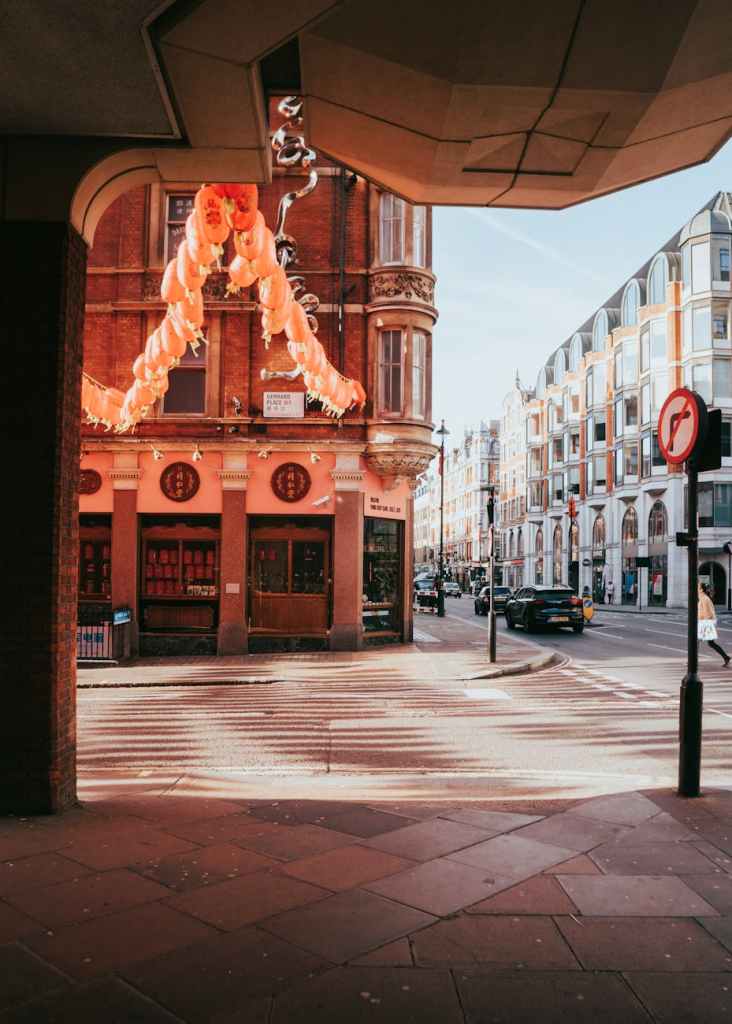
Above all Chinatown is set against the Los Angeles Water Wars of the 1930s. When a fast growing metropolis was suddenly running short of water, and certain characters thereby saw the opportunity to turn a fast buck. It is a question not without relevance today, particularly for those of us who live in England. How the sudden lurches in power, and the compromises they enforce so ruthlessly are displayed in the last scen, set in the eponymous Chinatown. Where Gittes is finally forced to weigh that last redeeming scrap of professional integrity against survival. But we won’t spoil that bit either.

Note for film buffs and musicologists-we thought the main theme displays a passing resemblance to Holst’s Planets, Jupiter Suite; does anyone have the knowledge to tell us if we’re right or wrong?

[1]https://en.wikipedia.org/wiki/Chinatown_(1974_film)

#detective #film noir #los angeles #chinatown #roman polanski #jack nicholson #faye dunaway #privatisation #public ownership

Widening the Horizon of Knowledge

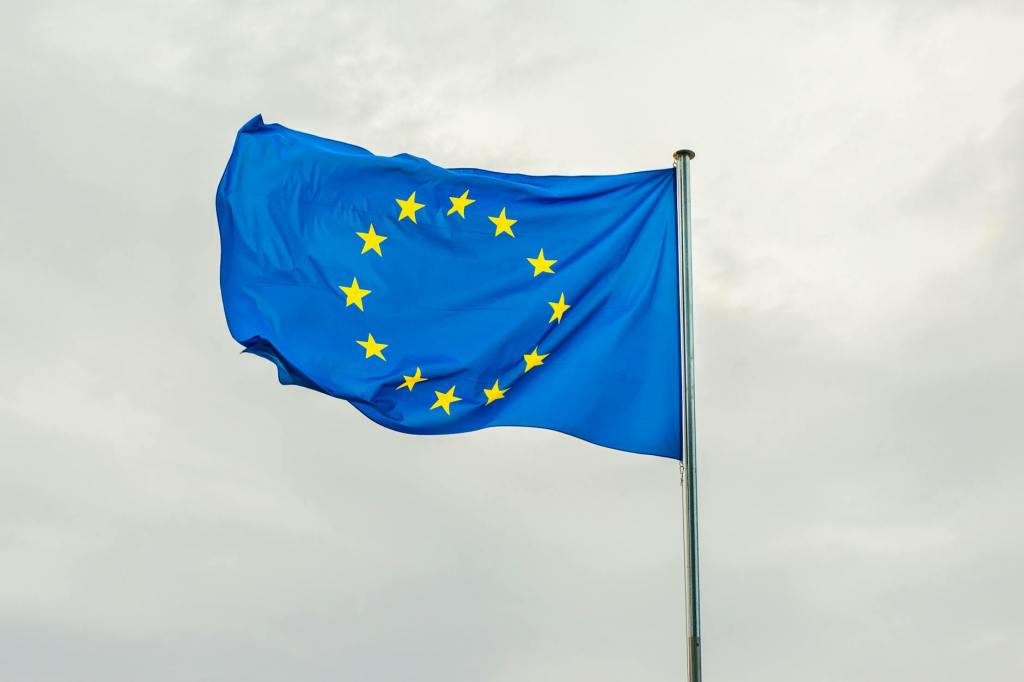
We know as well as anyone that Europe(both the EU and non-EU bits) and the North America(the United States and other bits) are far from perfect societies. And we know the historic wrongs and mistakes which have plagued our planet’s history. But the mere fact that we can sit here writing critical thoughts should, in the last analysis, be the ultimate vindication of those societies. Consider what civilisations like Iran and Russia do to dissidents, [1] [2]even in third countries. For all their faults, Europe and the US try to make an effort. And nowhere is this more clearly seen in the EU’s Horizon programme, which is now attracting adherents from all around the world. Let Nature Briefings explain

South Korea will join Horizon

South Korea will become the first East Asian country to join the European Union’s €95-billion (US$102-billion) Horizon Europe research-funding programme. The country’s researchers will be eligible to apply for grants from a €53.5 billion pot of funding for research into global challenges in health, energy, climate change and industrial competitiveness. Last year, New Zealand became the first country to ‘associate to’ Horizon Europe, Canada will be signing on later this year, and Singapore and Japan are in preliminary discussions with the European Commission.Science | 4 min read

Despite the seemingly unstoppable rise of populists and dictators, some countries still place their bets on learning and the free flow of information. Facts are facts. The rules of logic are unbreakable. The moon is made of rock, whatever the monster in the Presidential Palace says. And we think there is a chance that prizing honest knowledge above group think may in the long term win out. Because in a free society a kilogram of anything is a kilogram. In somewhere like Russia , a kilogram can be whatever one of Putin’s buddies says it is. If you question it, you will be murdered as an enemy of the state. In such circumstances, how can anyone safely order concrete, buy data or even trust the results of a football match? Such societies will stagnate, as did the USSR and China in the Cultural Revolution.

It’s true that free countries are under threat. We have to circle the wagons. Widening Horizon is one small part of that. But if we win through the world can once again return to uninterrupted technological and social progress. And the Dictators will be the Dinosaurs of the past.

[1]https://www.theguardian.com/media/2024/mar/31/tehran-denies-involvement-in-london-attack-on-tv-presenter

[2]https://www.theguardian.com/world/2023/aug/27/history-killing-how-russia-has-silenced-putins-opponents

#Horizon #EU #USA #science #free trade #markets #dictator #populism #iran

Should we try to cure the British Disease?

This Time No Mistakes by Will Hutton [1]

The literature on Britain’s Decline stretches far back into the 19th Century, when panicked Victorians first perceived the challenge to their hegemony by more efficient upstarts such as Germany and the United States. Authors as divergent as Corelli Barnett and Beatrice and Sidney Webb have all had their say. Will Hutton is something of an old hand by now, as fans of The State We’re in (1992) will recall.

But it’s worth giving Hutton another run over the gallops, if only because he’s so readable. Complex ideas are broken into easily-assimilable parts, and his new ways of looking at old things always keep the reader on their toes. This is no rehash. The gravity of our present situation of soaring poverty, bounding national debt and broken trade partnerships has seen to that. Any reforming Government will face a situation at least as difficult as Attlee’s in 1945, confronting a shattered economy ( for which, read: austerity) and a lost Empire (read: Brexit).

Will there be any chance of a turnaround? Hutton thinks it’s possible. We are less sanguine. “Britain has the misfortune to be run by the British” observed the reviewer of a similar book in 1984. By which he meant the nexus of privately-and Oxbridge-educated clans who go on to populate the leading jobs in law, finance and media. Especially the latter, who use their power ruthlessly to destroy reputations of “enemy” politicians of whatever political party, while shamelessly eliminating any space for objective debate. Since the First World War, the Conservatives have been in power, largely on their own, for 82 years. Majority opposition governments for barely 25. The decline in British power in that time has been both precipitous and undeniable. Can anything really be done?

In the Rise and Fall of Great Powers, Paul Kennedy[3] makes a convincing case that the whole process is inevitable and rather natural. Smaller states like Venice, who “once held the East in thrall” were inevitably eclipsed when larger powers like Spain and France came along. Perhaps the British people, or rather the English, know this, and have consciously turned their back on power. In which case the Conservative policy of managed decline could be the right one after all.

[1]https://www.theguardian.com/books/2024/mar/31/will-hutton-this-time-no-mistakes-extract

[2] Will Hutton: This Time no Mistakes Head of Zeus 2024 (appears 11 April)

[3] Paul Kennedy The Rise and Fall of the Great Powers Random House 1987

#conservatives #labour #liberal #great Britain #england #politics #economics

The Killer in the Lake

It’s a warm sunny day in southern England, the first after a long cold winter. And proud grandparents Brian and Karen are proud to take their only grandson, little Chesney, to a country park. It was where Brian himself played fifty years before. And it’ll give the child’s mother, a hardworking nurse, a break. The water of the lake looks so inviting that little Chesney begs to put on his arm bands and plunge in. Brian, remembering his own happy hours there, agrees. But as the adults watch their grandson splashing happily, little to they realise he has already entered the last painful hours of his short life.

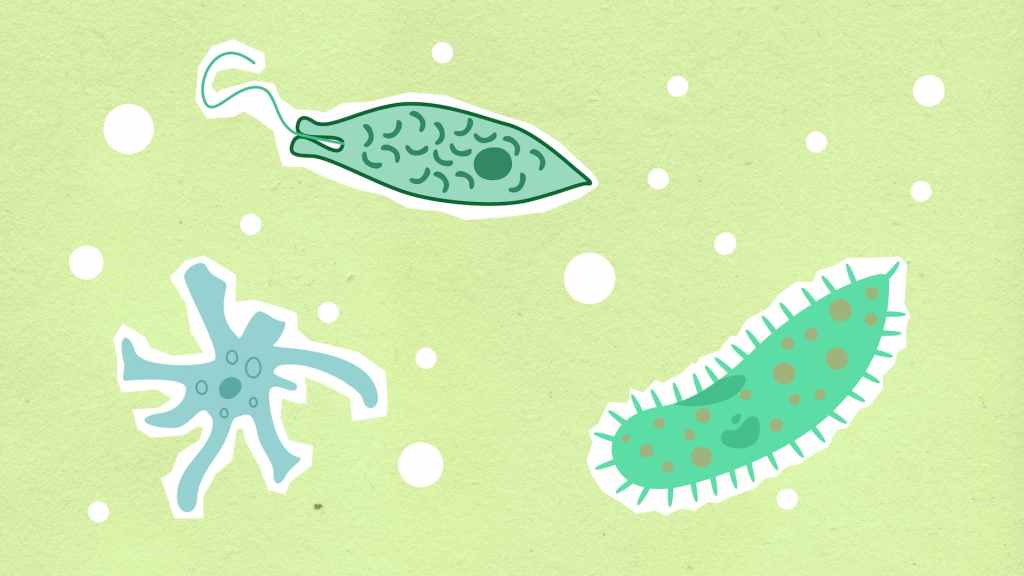
Problems start after they return home. Chesney complains of feeling sick. He becomes listless and starts showing signs of a fever, which rapidly grows worse. The grandparents rush the boy to the local Emergencies section of the nearest hospital. Doctors report that the fever has spread to the little boys brain. It is they say Primary Amoebic Meningoencephalitis, a disease caused by the amoeba Naegleria fowleri. It has entered the boy’s nasal sinuses, and travelled rapidly up to the brain, which it has begun to feed on from the inside outwards. The fatality rate is 97%. There is just time to call the boy’s mother back from her shift before he dies in her arms.

Fanciful? It could become all too common according to this story by Rebecca Whittaker of the Mail.[1] What Brian didn’t know is that the planet has been warming steadily since his younger days , allowing the deadly amoeba to multiply to unprecedented levels in the lake. Now British lakes and rivers are as warm as those of the Southern United States. A paradise for Naegleria.

And what can be done? Well, there is some hope [2] Despite the colossal fatality rate some antibiotics and some steroids seem to ameliorate the disease in some cases. Better Government inspection and testing of lakes and other swimming places could help, although in Britain that seems a unlikely at the moment. Best of all might be to slowdown the breakneck pace of global warming. Good luck with the last one.

the names and family in the first part of this piece are entirely imaginary

[1]https://www.dailymail.co.uk/health/article-13187827/Warning-brain-eating-parasite-99-death-rate-making-way-British-water.html

[2]https://www.cdc.gov/parasites/naegleria/general.html#anchor_91787

#meningitis #naegleria fowleri #water born disease #swimming #pollution #global warming

Our Choice for Easter: JS Bach, St John Passion

You don’t have to follow the Christian eschatology to realise that “easter” has a far deeper meaning which predates the birth of Jesus by millennia. Fans of The Golden Bough will recall that legends of the Reborn- God- in- Spring, are almost universal among people who live and farm across the northern hemisphere, and have been ever since the Neolithic. The sense of renewal after a hard winter, and the hope of fresh beginnings, address something extremely deep in the human psyche.

Bach‘s great Easter oratorios, the St Matthew Passion and the St John Passion speak to this sensibility as well as any work of art we know. Bach wrote the St John Passion in 1724. Like many such works, it was revised and cut many times, not least by the composer himself. The versions we hear now are are result of centuries of study, and of course the early music revival of the 1980s, when period instruments and orchestrations were rediscovered and tried out.

This year we have chosen the St John Passion as, frankly, we are a bit St Matthewed-out. So it is wonderful to try to understand a fresher set of rhythms and harmonies from a master artist, and relate them to Bach’s sense of the universal, creed-jumping essence of this work. Of course, we would not dare to tell you which bits to like, nor why. For one thing, we lack the musical knowledge. But we really liked the opening prologue, Herr, unser Herrscher, and we hope you will too. And meanwhile wish all of you a happy Easter, or whatever you call this break, and hope the world improves as the summer opens before us.

[1]https://en.wikipedia.org/wiki/St_John_Passion

[2]https://www.udiscovermusic.com/classical-features/bach-st-john-passion/

#JS Bach #St John Passion #Easter #Neolithic #belief #christianity #music