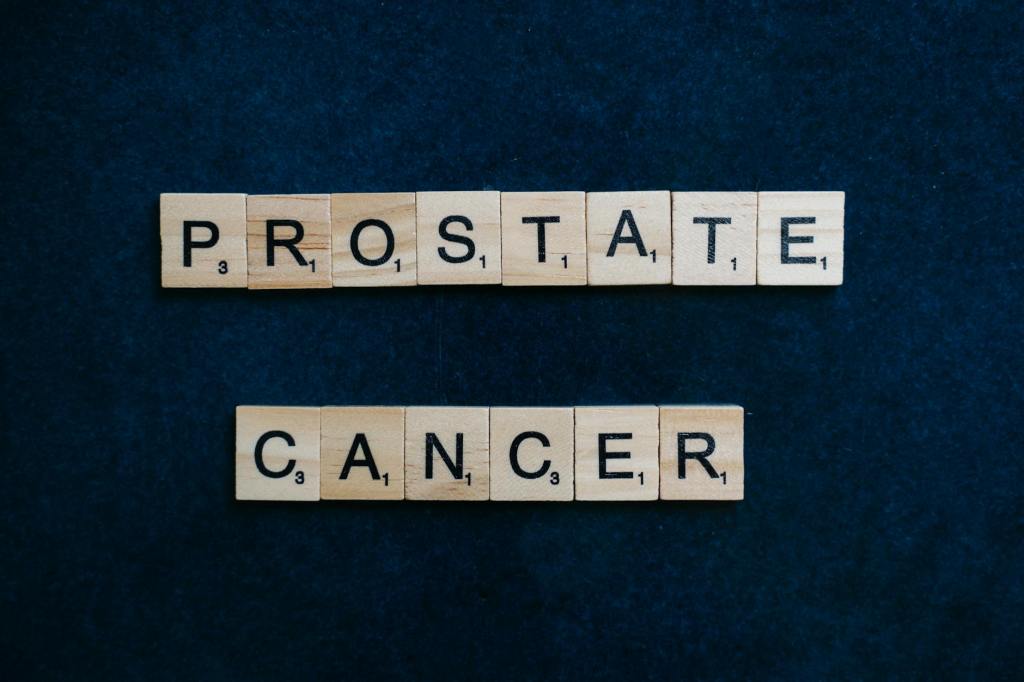
What if you could detect cancer before it was cancer?

If you want to cure a cancer, identify it as soon as possible. That’s long been a truism among medical experts. But what if your techniques were so advanced that you could identify the precursor steps to cancers before they had even started to initiate a tumour in someone’s body? According to an article by Anna Bawden and Nicola Davis of the Guardian, the first steps to do just that are now feasible, as two studies suggest.

Instead of simply rehashing their excellent prose[1] upon which we urge you to click, we’ll provide a brief summary, and raise some interesting and rather hopeful observations. The first looked at 44000 samples from the UK Biobank. 618 proteins were identified, which could then be linked to 19 different types of cancer. In a different take on the same trope, a second study using a whopping 300 000 samples came up with 40 different proteins linked to 9 different types of cancer. We dare not comment, but dare to observe:

1 It’s amazing the amount of new discoveries you can make just by crunching data. As AI comes into its own, it should be able to handle bigger and bigger numbers. Think of alpha-fold, if you don’t believe us-and that quite old hat by now!

2 Talking of hats, let’s all take ours off to Cancer Research UK, whose steady, patient work down the decades has not only provided a congenial ecosystem for researchers, but also a steady stream of reliable income for the planners and the finance people. Come on, hands in pockets, please! [2]

3 We were impressed that the results were already identifying different types and subtypes of cancers. It suggests a subtlety of technique which has probably only just got going.

and, finally:

4 The bigger the database, the better. Without belittling today’s researchers and journalists, these are still relatively small numbers. Imagine an AI supercomputer tirelessly combing the biological samples of every human on the planet. And maybe their pets. Would might it not find.

Oaks and acorns times, gentle readers. Keep donating.

[1]https://www.theguardian.com/society/article/2024/may/15/proteins-blood-cancer-warning-seven-years-study

[2]https://donate.cancerresearchuk.org/donate?gclid=cf2827b39f4311a97ff841f589e5c887&gclsrc=3p.ds&utm_source=bing&utm_medium=cpc&utm_campaign=IMP%20%

#database #cancer #medicine #AI #protein #gene #prediction

Is antibiotic resistance a bigger threat than global warming?

Dame Sally Davies thinks so. And she has been on the case since at least 2012. In fact, older readers will recall our long standing admiration for this remarkable woman, and her erstwhile colleague Professor Colin Garner, who jointly did so much in the early stages of this crisis. (for the record, we have had the honour of hearing both these great scientists speak at meetings)

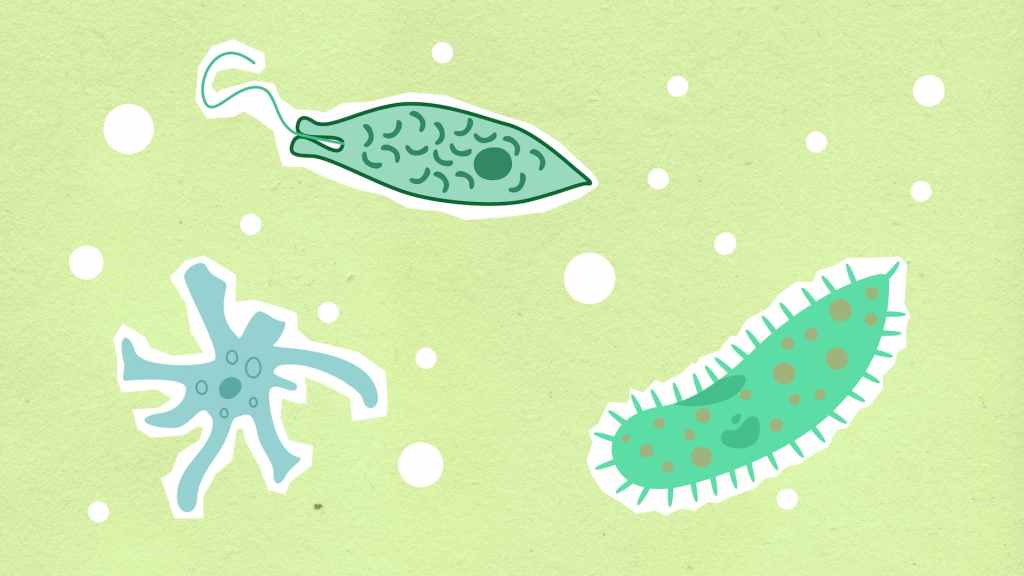
Sadly, the problem is very, very far from resolved, as Dame Sally makes clear in this Guardian story from the admirable Kat Lay. They point to the same weary old tropes that we’ve flogged here for years: lack of research; over prescription; reckless, feckless wasting in misguided agricultural practice. You can read it for yourself here[1]. We fervently hope that you do so.

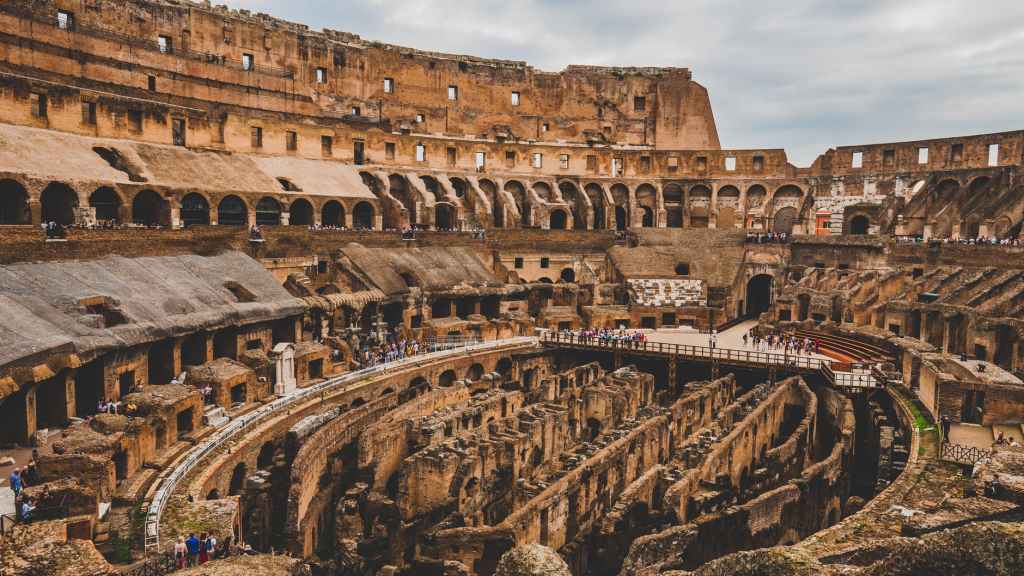
We shall end on a personal note. Afflicted by a cold, we have suspended all work, and for leisure reading have ploughed again through Professor Harper’s The Fate of Rome. It is a remarkable synthesis economics, history, biology and climatology which we have praised before on these pages. One thing struck us at once. The terrible impact of the Plague of Justininian (541, bubonic) on the Byzantine Empire was like that of a gunshot wound on a human body. It wrecked the economy, the army, caused a catastrophic fall in population and output from which there was never any meaningful recovery. And it meant that all the efforts of Justinian and his brilliant advisers like Theodora, Belisarius, Tribonian and the rest meant nothing at all when that plague struck. However hard they had tried at their jobs, the changes they effected before the plague counted for nothing. They might as well have stayed in Constantinople and gone to the horse races.

And today, in 2024? What will all the efforts of politicians, bankers, generals, footballers, marketing gurus, Estate agents, brand designers and games enthusiasts count for when a real pandemic strikes? Whose work will really be enough to still matter afterwards?

[1]https://www.theguardian.com/global-development/article/2024/may/13/superbugs-antibiotics-drugs-antimicrobial-resistance-infections-pandemics-sally-davies

#dame sally davies #antibiotic resistance #global warming #microbiology #health #medicine

Why the UK has ended up like Manchester United

Followers of football often discuss the fate of Manchester United FC. A once hugely-successful club, awash with money that is now desperately underperforming, despite an endless stream of new mangers and fresh starts. Some compare it with the fate of Rome (the Empire of that name, not the football club). But there may be an another comparison, more recent and much closer.

Why is the UK so desperately underperforming? Why is the state of its mental health so very poor, when compared to other countries? Why have peoples hopes and expectations stagnated? Why is the health service so bad? Housing so squalid and insecure for so many? Especially as all the terrible social and economic problems were tackled so ably, especially in the years between 1945 and 1975? One intriguing set of ideas has been presented by George Monbiot. [1] [2] Intriguing because they link together so many disparate observations. Refreshing, because they challenge existing orthodoxies of Right and Left. For George, the culprit is Neoliberalism, which he defines as a cultish ideology based on a relentless cutting of the state, privatisation, low taxes and the freest possible flows of taxes and people. (the latter certainly explains why we couldn’t see the pictures in the Uffizi galleries in Florence)

Of course, it’s a contribution, not a panacea. But it touches on the same sort of themes as Thomas Piketty, Wilkinson and Pickett, Hutton and others whom we have referenced on these pages from time to time. That the endless competition by individuals for wealth and status will end up by leaving all of us poorer. Except the very rich, who own all the media by which we are told what a great idea all of this is. And as for the UK and poor old Manchester United? Perhaps both of them need to take a very long, cool look at the fundamental causes of their unhappy states. Before worse happens.

[1]https://www.msn.com/en-gb/health/other/why-is-britain-s-mental-health-so-incredibly-poor-it-s-because-our-society-is-spiralling-backwards/ar-BB1m8tVR?ocid=msedg

[2]https://www.theguardian.com/commentisfree/article/2024/may/10/britain-mental-health-society-neoliberalism-politicians

#neoliberalism #finance #wealth #mental health #housing #inequality

New Potential Breakthough in Gene Editing

Quite a quick one today, gentle readers, but this is so potentially significant that we thought that you ought to know, Well, our researchers kind of insisted, to put it bluntly. So here goes.

We’ve reported before on how AI has been used to divine the structures of proteins with a speed and accuracy unimaginable only 10 years ago. We’ve also run our fair share of stories on CRISPR-Cas 9 systems and their offshoots like base pair editing.(LSS passim) Now imagine that a company in California has thrown all three of these favourite tropes into a heady mix. According to Rob Waugh of the Mail, they have not only done so, but are making it work. [1] Using AI systems Profluent Bio[2]think they can create a range of DNA editor proteins which will be at once more targeted and more efficient than the by now rather traditional CAS-9 which is, after all derived directly from living systems. As Rob says, the potential to edit and replace malfunctioning genes is now imminent. It could lead to breathtaking advances in the treatment of. Our particular hope is that abnormalities of the mind may at last be treatable. If they do indeed have a genetic component, which seems likely.

And we’ll sign off by adducing out usual regret, The staff of Profluent represent t tiny fraction of humankind. The work they do is both beneficial and significant. What is the other 99% of humanity actually up to?

[1]https://www.dailymail.co.uk/sciencetech/article-13344731/New-AI-creates-molecules-not-nature-CHANGE-human-genes-cure-rarest-diseases.html

[2]https://www.profluent.bio/
#DNA #genetic editing #CRISPR Cas 9 #AI

Has the James Webb really found life? Let’s not jump to conclusions

Has the James Webb Telescope found life at last? Solid, incontrovertible evidence of biosignatures on another planet? We write these words in the afterglow of a half-heard item on BBC News this morning, which so far (8.30 27 4 24 UK time) we can’t confirm anywhere on the web, including the BBC itself. The story is intriguing, not only because of the implications if it’s confirmed, but as as an example of how good science journalism should work. First, a little background.

Well-informed readers will the recall the media excitement last autumn, when provisional findings suggested that the James Webb Telescope had indeed detected the presence of methane (CH4), Carbon Dioxide (CO2) and Dimethyl sulphide (CH3)2S on the planet K2-18-b which lies about 120 light years from Earth in the constellation Leo.[1] That last molecule was particularly intriguing, because according to many, it can only be produced by living process. All the traditional media wrote it up. Certain news magazines, not always renowned for cool and reflective judgement, seemed to get more than a little carried away. Was this it? Was this, you know, them, ET and all that? At which point we turn to an excellent piece of journalism by Eric Berger of Ars Technica, a model of level-headed reasonableness which all of us would do well to imitate. In this racket, and many other walks of life. [2]

Instead of commenting on Press Releases and other journalists’ stories, Eric went back to NASA and got quotes. These it turned out, were much more subtle, nuanced and provisional. The signs of real knowledge in fact. The difference, in fact, between the provisional first interpretations of a crime scene examiner, and their write-up months later in a final statement, when all findings have been integrated with a much larger investigative process. And, above all, reflected upon.

Perhaps today, perhaps next week we’ll get more reports, both in the mainstreams and in the science journals which will help us confirm or deny this potentially exciting discovery. But when it comes we will still ask the following questions

1 Is there any possibility, however small, that DiMethyl Sulphide can be produced by non-biological processes?

2 How easy is it to distinguish the spectroscopic signature of DiMethyl Sulphide from other molecules?

3 Are there other molecules which indicate the presence of life, and if so, have they been detected on K2-18-b?

4 Are there other factors(the presence of noxious compounds, extremes of temperature or radiation, for example, which make life impossible, despite these hopeful findings.

We await today’s news with anticipation.

[1]https://www.msn.com/en-us/news/technology/webb-studies-planet-k2-18-b-again-to-confirm-presence-of-gas-only-produced-by-life/ar-AA1nGfUo

[2]https://arstechnica.com/space/2024/01/no-the-james-webb-space-telescope-hasnt-found-life-out-there-at-least-not-yet/

#dimethyl sulphide #ocean planet #james webb telescope #exobiology #alien #astronomy #spectroscopy

Volcanoes and Viruses-two deadly warnings of trouble to come

The slew of tv documentaries and news stories about the recent discoveries in the Roman town of Pompeii, destroyed by a cataclysmic eruption of nearby Mount Vesuvius in AD 79, certainly afford material for reflection. [1] Here was a thriving town, blotted out in a single day. Yet this was a small eruption. Far greater damage was done to the Roman Empire by the titanic eruptions in the age of the Emperor Justinian in 536 AD. [2] The resulting world-wide winter produced cataclysmic hunger, which in turn weakened the resistance to the bubonic plague epidemic which ravaged the Empire in the following decade. It is easy to think that we moderns, with all our advanced technologies are far superior to those old Romans, and thereby conclude “it won’t happen to us”. Don’t be so sure, at least until you have looked at this piece from Nature Briefings The Next Big Eruption will come. And, like the inhabitants of Ancient Rome, it looks as if we are woefully unprepared:

Tamsin Mather’s book Adventures in Volcanoland takes readers on a journey to some of the world’s most notorious and active volcanoes — and reminds us that the next volcanic catastrophe is inevitable. Yet global preparedness for volcanic eruptions is severely lacking, says fellow volcanologist and reviewer Heather Handley. There is no international treaty organization for volcanic hazards and no global coordination on issuing comprehensive warnings of risks of eruptions, she says. Mather’s book “reminds us that we should all keep careful watch on the world’s volcanoes”.Nature | 7 min read

And where will it happen? We’ve linked to this handy guide to the top five or so candidates, which, if they blew, could easily plunge us all into an economy-collapsing winter.[3] They include Popocatapetl, Mount Fuji and Mount Ranier. But don’t forget the highly active caldera of magma which sits under Naples, and includes Vesuvius itself. Are you sure it won’t happen?

As Justinian and his subjects found, deadly plagues soon follow the societal collapse produced by a giant volcanic event. Of course, these plagues can happen anyway without help from under the ground. Proof of how close this might be comes with alarming news that bird flu viruses have now jumped the species barrier into mammals. Which means they could spread rapidly among humans any time soon. The potential consequences will be far, far graver than the recent Covid-19 outbreak, which is already passing into memory. Nature Briefings takes up the story

“In my flu career, we have not seen a virus that expands its host range quite like this,” says virologist Troy Sutton about H5N1, an avian influenza virus that has rapidly infiltrated species well beyond birds. While most mammal infections were probably caused by contact with an infected bird, there’s evidence that the virus has now evolved to spread directly between some species, such as sea lions. Spreading in more species gives H5N1 opportunities to further adapt to mammals, including humans. So far, the virus doesn’t show signs of being able to cause a pandemic, Sutton says. “If we don’t give it the panic but we give it the respect and due diligence, I believe we can manage it,” adds Rick Bright, chief executive of a public health consultancy.The New York Times | 10 min read

One thing you won’t get at LSS is frivolous celebrity gossip nor trivial items about the doings of footballers, actors and minor royals. Instead, we offer timely and thoughtful warnings about the real issues which confront us. How you respond to them, gentle readers, is up to you.

[1]https://www.bbc.co.uk/news/science-environment-68777741

[2]https://en.wikipedia.org/wiki/Volcanic_winter_of_536

[3]https://www.worldatlas.com/articles/the-most-dangerous-volcanoes-in-the-world.html

[4]https://nhess.copernicus.org/preprints/nhess-2020-51/nhess-2020-51.pdf#:~:text=The%20Naples%20%28Southern%20Italy%29%20area%20has%20the%20highest,within%20twenty%20kilometres%20from%20a%20possible%20eruptive%20vent.

#volcano #caldera #volcanic winter #ad536 #pandemic #plague

Why the Wolf of Wall Street (probably) won’t get prostate cancer

Ejaculation is good for you. That’s the message in a startling article from Daniel Kelly, a senior lecturer in Biochemistry, admirably showcased in the latest edition of the Conversation. [1] According to Daniel, it may even reduce the chances of prostate cancer. Now this is a real problem in men’s health; according to the article, this form of cancer is now the second-most-commonly diagnosed. In men in the UK( a reasonably representative country, gentle readers) it is actually the most commonly diagnosed one. Anything to reduce it has to be a good thing. And how might this be achieved? Well, according to Daniel:

Although the mechanisms are not completely understood, these studies fit with the idea that ejaculation can reduce prostate cancer by decreasing the concentration of toxins and crystal-like structures that can accumulate in the prostate and potentially cause tumours…..Similarly, ejaculation may alter the immune response within the prostate reducing inflammation – a known risk factor for cancer development – or by increasing immune defence against tumour cells…..Alternatively, by reducing psychological tension ejaculation may lower the activity of the nervous system which then prevents certain prostate cells from dividing too rapidly and increasing the chance of them becoming cancerous.

Yes, it’s far from conclusive yet; but that last point reminds us of an intriguing scene from the film The Wolf of Wall Street (2013) in which senior manager Mark Hanna (played by Matthew McConnaghy) is advising rookie broker Jordan Belfort (Leonardo di Capprio) about the perils of stress, and how to deal with them. He sings the praises of conventional remedies, such as cocaine and hookers. But then the conversation turns serious. [2] Hanna enquires if Belfort “jerks off” and if so, the frequency thereof. Disappointed on learning the answer is only three or four times a week, he counsels

Gotta pump those numbers up .Those are rookie numbers in this racket.”

He goes on to provide detailed advice based on his own practice, which those of naive religious or philosophical persuasion may find hard to assimilate But we reproduce the link for you here, dear friends.[2]

Once again, we stress the provisional nature of these findings. We do not know the current state of health of Jordan Belfort, the real Wolf. But isn’t it intriguing to think that the brokers of Wall Street had stumbled onto something really useful for once, if only by accident?

[1]https://theconversation.com/does-ejaculating-often-reduce-your-risk-of-prostate-cancer-228166?utm_medium=email&utm_campaign=Latest%20from%20The%20Conversation%20for%20A

[2]https://www.bing.com/videos/riverview/relatedvideo?q=wolf+of+wall+street+matthew+mcconaughey+scene&mid=49C5DB555170FD1DC29749C5DB555170FD1

#wall street #prostate cancer #jordan belfort #mens health

Why we’re two years into a generational war

In the spring of 1789, Europe was at peace. It looked as if it would be a long one. The American-French victory in the Independence war had restored a rough equality of force between Britain and France, the two world powers, so that neither had obvious motives to attack. Further east, Austria, Russia and Prussia had achieved a rough status quo, or at least, had sufficiently fought each other out. To be frank, China, the Mughals and the Ottomans were ceasing to count. Just as in 1990, the world thought it could look forward to decades of relative peace, trade and prosperity.

Instead, events in France lead to the unfolding of a cataclysmic series of events. Each of them so large that on their own they would have been world-shattering. But in the twenty six years-a generation- from 14th July 1789 to 18th June 1815, they were so many and rapid that they left a world transformed and unrecognizable. Think Revolution, regicides, wars, terror, directory, Napoleon, Trafalgar, Austerlitz, Tilsit, Spain, Russia, Battle of the Nations, Elba, Waterloo all tripping in, one after the other in bewildering succession. *(If not, read Robert Harvey The War of Wars-it’s serious history which, amazingly, feels like a page-turning thriller {1])

We know believe that the events that began on 24th February 2024 with the Russian invasion of Ukraine have unleashed a chain of events which will take years and decades to play out. The two opposed coalitions are too big to easily fail. The issues at stake are too profound to escape the debate of war. As a blog which is read all around the world, you might not want to us to take sides. Yet we have to be honest about where we stand. On the one hand the US, EU and their allies have many grievous faults. The other side-Russia, Iran, China and others, may indeed claim- we stress claim-to represent the relatively disadvantaged. However, we know one thing. We are free to write these words in our country, as we would be equally free to criticise our Government, or our allies. All know that we would not be if we were sitting in one of those countries opposed to us. Our Georgian ancestors, who gave up their comfortable lives to confront a similar peril knew that was the single, irredeemable difference between them and their foes. That is what makes our cause just. And one day, we will prevail.

[1]https://www.amazon.co.uk/War-Wars-Struggle-1789-1815-1793-1815/dp/1845296354

#ukraine #russia #china #usa #EU #canada #uk #australia #iran #peace #war #freedom of speech

More hidden numbers – Or a glimpse of the Mind of God?

A couple of years ago, we published a little blog in which we dared to suggest that the recurrence of certain numbers, such as pi and Euler‘s might hint at deeper universal phenomena that are not yet fully understood.(LSS 14 3 22) So we were more than gratified to come across an intriguing article by Steven Pappas for Live Science which further confirms our suspicions.

A team led by Vaibhev Mohanty at MIT has been trying to answer a simple but profound question. “How many mutations do you need in a genome before it changes the phenotype( i.e. proteins, etc) of the carrying organism? Now, we will confess at this point that our grasp of mathematics is appalling. However:

Scientists have discovered that a key function from a “pure” branch of mathematics can predict how often genetic mutations lead to changes in function. These rules, laid out by the so-called sum-of-digits function, also govern some aspects of protein folding, computer coding and certain magnetic states in physics. 

The report explains, in verbal form, some more about how the team arrived at these conclusions. But for us the key is that the same mathematics applies across several fields of science, as though something much deeper is going on. Well, that’s what we speculate. But we were not the first. As educated readers will recall, Plato speculated that the universe was formed of deep underlying structures, which he termed “forms”. And in his view a single Divine mind had created the universe through these same forms. So we pose this question: have these scientists, and others, had a tiny glimpse of the Mind of God?

[1]https://www.msn.com/en-gb/health/mindandbody/scientists-uncover-hidden-math-that-governs-genetic-mutations/ar-AA1f95OM?ocid=msedgdhp&pc=HCTS&cvid=7d80

[2] https://academic.oup.com/edited-volume/41754/chapter-abstract/354205224?redirectedFrom=fulltext

#genes #proteins #mathematics #plato #theology #mutation

10 unexpected inventions-we loved this from Treehugger site

We at LSS take unashamed pleasure from watching people do clever things. When someone from IT suddenly sorts out all our computer problems. To see a Doctor give a sudden and excellent diagnosis. Or even when a potter suddenly throws and bakes a humble object of surprising beauty. That’s why we make no bones about directing you to this intriguing post from the Treehugger site called Ten Accidental Inventions That Changed The World.[1] Some of the things here are so mundane that we take them for granted. X rays, matches, microwaves, for example. Yet try to imagine life without them. Others , like penicillin(the first real antibiotic) were superb, but we will soon lose this class due to our own greed and folly.

However, there is one theme which we think may link these several discoveries. All were played into a culture, or economy if you will, that was ready to receive them. At least in part. Where the educated and innovated existed in sufficient masses to let the new ideas be taken up and applied. The difference today is that large part of the world is falling into the hands of political dictators and religious and political dogmatists whose chief aim is to oppose new ideas. To whom critical thinking is the work of elitists and guests at the London Dinner Party circuit (what’s that?-ed) Just as the Ancient World declined and sank into the Medieval Period, the rate of new developments declined sharply, while religious dogma became the chief focus of intellectual effort.

Are we starting to go the same way?

https://www.treehugger.com/accidental-inventions-that-changed-the-world-4864131#:~:text=10%20Accidental%20Inventions%20That%20Changed%20the%20World%201,

#inventions #matches #antibiotics #x rays #invention #science #technology