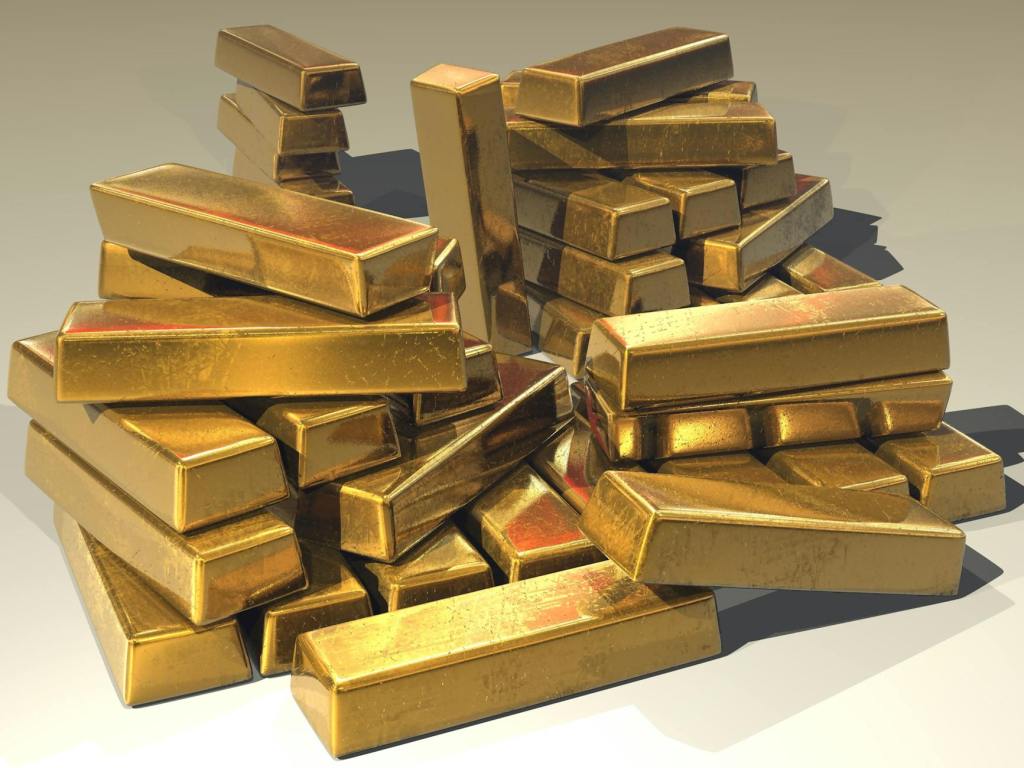
The Rubber Economy is back-and it’s gold

During the Second World War, a wag once remarked that the British Economy was like rubber, stretching itself in more and more directions to meet the efforts of arms production, food and all the other urgent requirements of the time. Economic historians record Herculean efforts at production. And equally ingenious efforts to scrimp, save and recycle to ensure that nothing useful was wasted. It was a long time ago, but could we still learn something from those days?

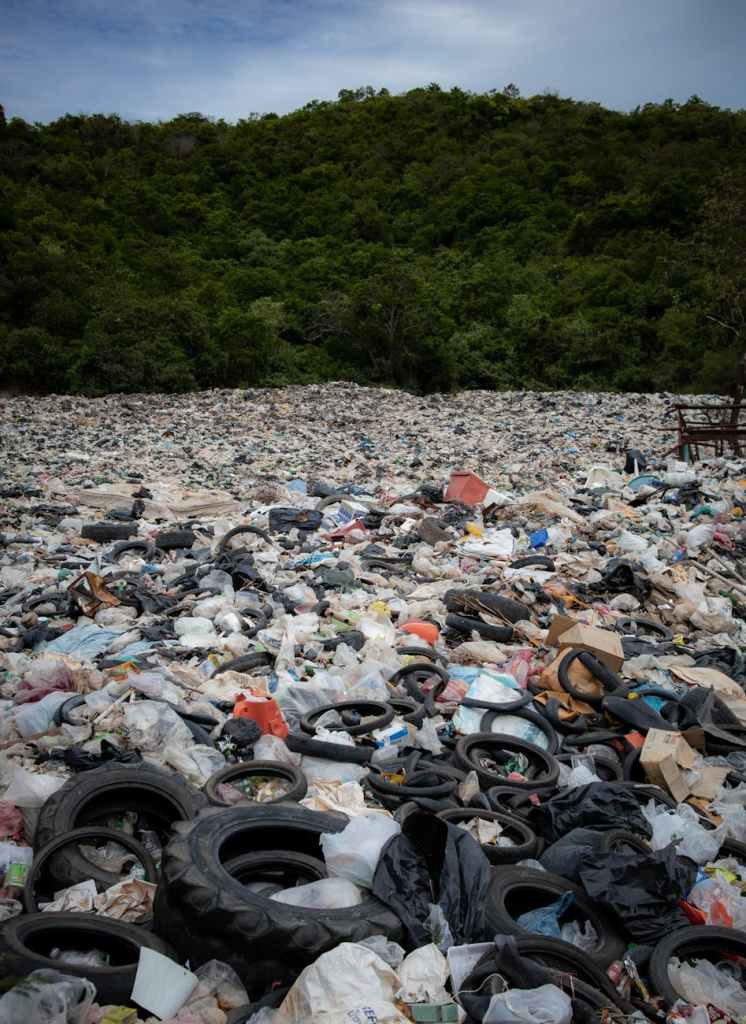
Britain’s Royal Mint thinks so. There job is to make all our coins, which they have been doing for hundreds of years. Some are made of gold ; and as they have astutely noted, the price of that metal has been soaring in recent years. Where to get more? Well something else has been soaring: the amount of high tech rubbish we all throw away so heedlessly. (not YOU, gentle reader: everyone else) Mobile phones, computers, entertainment systems of all kinds. Billions of items, thousands of tonnes. Well there may be a lot of gold in it, at concentrations higher than the ores processed by all those rugged manly chaps out in the mines and factories. And as Rebecca Morelle and Alison Francis report for the BBC the Royal Mint is now starting to mine it for gold, big time and turning the shiny stuff into lovely coins. How’s that for recycling. How’s that for a thoughtful use of resources in difficult times.

And the moral in all this? We in the LSS community (and the educated community more widely) are still members of the human family. It’s just that certain members of our family are highly unhappy, emotionally disturbed and not very nice. And this unhappiness comes out in things like drinking, violent emotional outbursts, riots, wars and things. But a family is a family. And the quieter sensible members get on because they have to. Inventing new technologies. Discovering new facts. Clearing up the mess. And we will continue to do so, until our day comes.

Question: How come Newsround had this in March and Big news didn’t get it until August? We don’t know either

[1]https://www.bbc.co.uk/news/articles/c6p2k11e41po

[2]https://www.bbc.co.uk/newsround/58971402

#gold #royal mint #recycling #waste #e waste
British Riots: We can’t do better than this article by Richard Fern

Foreign readers must be reeling in disbelief to see the home of Democracy (or at least representative government) and the bastion of law and order dissolving into ugly, uncontrollable race riots. Why? The whole business of tribalism, status anxiety, hierarchy and downright anger are themes we’ve tried to cover before on these humble pages (most recently LSS 12 7 24) But: we admit that somehow we have never quite got to then heart of the subject. Never quite captured its essence. Certainly not as well as Richard Fern of Swansea University, whose article for the Conversation is at once succinct and insightful. [1]

Richard points out how online trolls and agitators are adept at tapping into the deep pools of anger and resentment felt by many. As we have observed before in these pages, these feelings are rooted in a sense of helplessness, loss, bewilderment, powerlessness and a lack of any credible model of a better future. Attempts to counter such posts with rational facts are thereby useless. In this species, emotion will always blot out reason. At this moment, media attention is centred on irate white males. But by our logic, many ethnic and religious groups will also experience this disastrous syndrome.

And disastrous it will be. A reversion to a world of jealously polices ethnic rivalries will be neither stable nor happy. The histories of Northern Ireland, South Africa and Israel should be testament sufficient of that. Economic outcomes must be suboptimal, as each nation looks for autarky, breaking Adam Smith‘s prime rule of specialisation and free trade. Unless ways are found to prize openness and liberty over exclusivity, the future looks dark indeed.

#adam smith #autarky #race riot #anxiety #tribalism #southport

Discoveries at the root of life

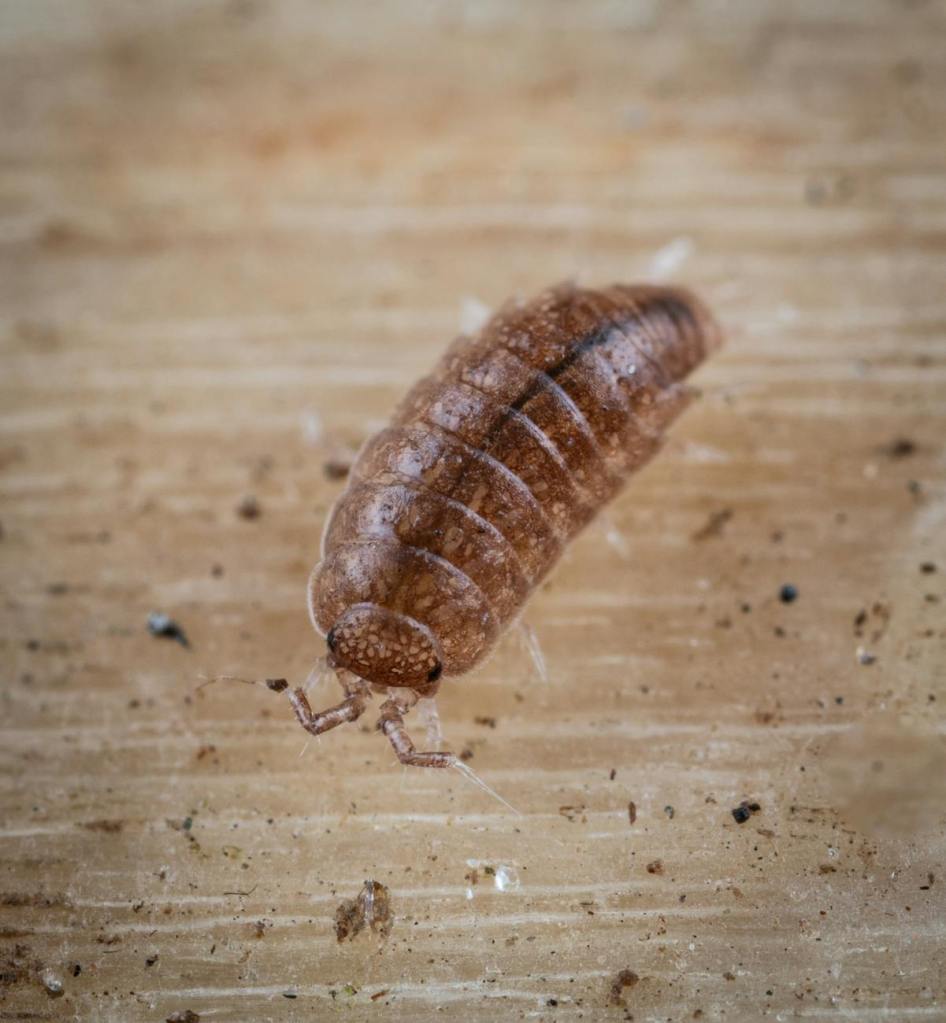
Looking at the vast range of living creatures today makes us gasp at their diversity. From giant whales to tiny insects, and every imaginable variation in between. We know, from studies like genetics, embryology and fossils that all came from a single form. And that form had sufficient potential, enough plasticity in its DNA to slowly morph into every animal that has ever lived. What that earliest animal looked like, we can only conjecture, at the current state of knowledge. But there must have been quite an early diversification into creatures that at least represented the first members of the great phylae of animals. The first arthropod, the first vertebrate, the first mollusc ,nematode, and so on.

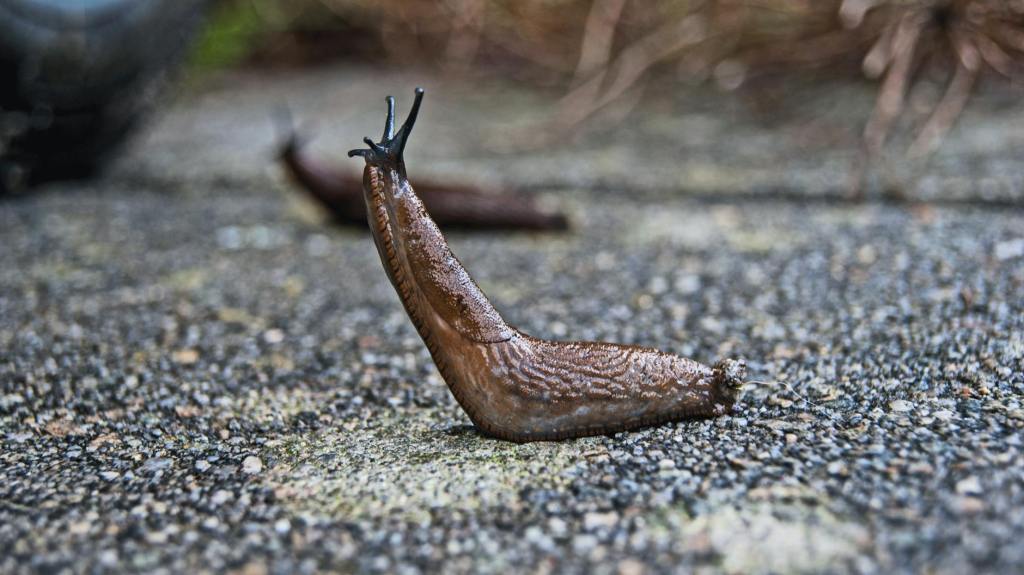
Two recent discoveries give us an exciting picture of what two of those may have been like: the first arthropod (ancestor of insects, spiders, shrimps, scorpions etc) And the first mollusc (ancestor to the amazing world of slugs, snails, clams and cephalopods). Researchers at Durham University have used advanced microscopical techniques to look at a tiny fossil [1] named Youti yuanshi which lived in what is now Yunnan about 520 million years ago. Details of its internal organs suggest it is close to the ancestors of all those jointy, segmented arthropods, probably the most successful and diverse group of animals on the planet. And not to be outdone, the molluscs have come up with their own Ur-ancestor, called Shishania aculeata, a kind of spiny slug which lived at around the same time. [2]

We will leave you to explore the details in the links which we have provided. We hope you will jump off from these to find out more. We will marvel at the skills and techniques of scientists who wring so much fresh learning from intricate new techniques. And above all at the window provided to the lives simple creatures in a warm sea half a billion years ago, who stood at the start of so much life.

[1]https://phys.org/news/2024-07-million-year-worm-fossil-mystery.html

[2]https://www.msn.com/en-gb/news/world/half-a-billion-year-old-spiny-slug-reveals-the-origins-of-molluscs/ar-BB1r2wNG?ocid=msedgntp&pc=HCTS&cvid=d0f78bd5cd7

#genetics #embryology #evolution #arthropod #mollusc #yunnan

A Round-up of Hope: Cancer,antibiotics, green energy and life on the red planet

A few science and health stories which prove there are still few intelligent people out there working for the common good

Mouth Bacteria may protect against cancer To beat cancer we need to think laterally at times, and take bits of luck when they come from unexpected discoveries. According to Xantha Leatham of the Mail, Scientists at London’s prestigious St Thomas Hospital may have done just that. It looks like the organism Fusobacterium may protect against certain types of neck cancer. We love these serendipitous discoveries by lab scientists-real shades of Alexander Fleming!

https://www.dailymail.co.uk/health/article-13676291/Common-mouth-bacteria-melts-cancer-scientists-explain-patients-better-survival-odds.html

Antibiotics for sepsis We scraped this straight from Nature Briefings, that most worthy source of scientific information Definitely a sign of progress, we think:

A method to quickly identify the bacteria involved in life-threatening sepsis — and which antibiotics will kill them— could save patient lives. Key to saving precious time are magnetic nanoparticles with bacteria-capturing molecules. They fish out the usually tiny number of microbes from a blood sample, so testers don’t need to wait for the bacteria to grow and multiply. “I think that this technology can be in one box within three years, and… within four years, it can be in the clinic,” says bioengineer and study co-author Sunghoon Kwon.Nature Podcast | 35 min listen
Subscribe to the Nature Podcast on Apple PodcastsSpotify or YouTube Music, or use the RSS feed.

EU powers ahead on renewables Like other big power blocks such as India and China, the EU is rapidly achieving crossover on renewable energy generation, as this article by Ajit Naranjan for the Guardian makes clear. Smaller countries like the UK are doing well too. That’s the way the whole world is moving. And therein lies our real problem with Mr Donald Trump. “Drill, baby drill!” is a policy based on the psychology of nostalgia, not science. One day it will have to be reversed. At what cost?

https://www.theguardian.com/environment/article/2024/jul/30/renewables-overtake-fossil-fuels-to-provide-30-of-eu-electricity

Life on Mars? Well David Bowie’s eponymous song was a long time ago. But not so long as these billions-of-year-old spots discovered by the Perseverance rover at Mars’ Neretva Vallis formation. Were they alive? Scientists are being very cautious, as Ian Sample explains for the Guardian. But when Bowie released his ditty back in 1971, it was almost heresy to suggest life anywhere in our star system. Now Mars, Europa, and Enceladus head a list of real hopefuls. Wahttps://www.theguardian.com/science/article/2024/jul/26/nasa-rover-discovery-hints-at-ancient-microbial-life-on-marstch this space, as they say.

Well, we won’t be rounding up every week. But every so often we hope to bring you these little clutches of news which show our side is still out there-and keeping busy.

#cancer #fusobacterium #sepsis #antibiotics #reneables #global warming #donald trump #mars #astrobiology #david bowie

Thanks for all the likes to that (slightly peevish) last post

Well…..we weren’t expecting that. After publishing out last little post Six Mysteries which could do us all in, or whatever, we had our doubts. Was the tone all a bit …..admonitory? A bit peevish, like someone who had risen too early and really wanted to go back to bed. Too late! And we set off on our little rounds, you know, shopping, a few scaffolders to chase up, that sort of thing.

Imagine thereby our surprise at the flood of warm and approving comments we got, not only from the usual sources, however welcome the latter are. Many of you who put out serious multimedia websites in far-away America, on any number of serious subjects, took time to notice this one.

We must have got something right. Maybe our species really does need to stop trying so hard, and to think a bit more.

Anyway, as the say in the readers letters columns in the Financial Times Saturday magazine : “Keep ’em coming” We were quite impressed by some of your sites and blogs. Keep them coming too. We few, we happy few, may yet make a difference

THE EDITORIAL BOARD

Six insoluble mysteries which may end us all

Occasionally we come across websites with lurid titles like “10 UNSOLVED MYSTERIES TO GIVE YOU THE HEEBIE JEEBIES!” And it’s all to do with odd bits of old stone or dodgy claims about flying crockery. Which made us think of a few everyday mysteries about Homo sapiens which are enough to give anyone the aforesaid Heebies, with a few jeebies thrown in for good measure. Because if we do not develop the cognitive capacity to solve them, we could well be heading for the biological equivalent of the junkyard,

(1) Where is the line between the individual and society? Countries that go too far towards prizing the State end up economically stagnant, as the society is captured by a small self-serving elite who grab all the resources. (Think USSR or Venezuela) On the other hand societies with no idea of the common good, where untaxed individuals run around doing what they like, not only end up without worthwhile armies or roads. They also get captured by an elite, this time billionaires, with almost identical outcome to the deluded Commies. No one has resolved this tension in any stable way.

(2) Emotion utterly dominates reason. All the technological and scientific advances that make life worth living (you really wanna give up soap, huh?) are formed in the reasoning part of the brain. Yet most people are driven by deep tides of emotion welling up from the subconscious. These rarely lead to anything profitable, and are the principal causes of most of the obsessions, addictions and generational hatreds which form such an immense drag on progress. Why is logic so weak and blind passion so strong?

(3) The drive to divide into hostile groups We often allude to this one; think football supporters and the Robbers Cave experiment. The American writer James Baldwin saw identity as a serious trap, denying us our own better nature. It may take all the AI in the world to solve this one

(4) The constant need for persecution of others, particularly the weak or disabled. Anyone still deluded about “the moral superiority of the oppressed” could learn from what happens to disabled neighbours in cheap housing estates, and how the noble proletarians make their lives utter hell. Why does everyone want justice, but only for themselves?

(5) The local and the trivial Why do so many people spend so much time learning about the lives of celebrities in tacky media outlets, when they would profit much more from reading magazines like The Economist or Science?

(6) An utter inability to change minds Most people are really rather deft and clever about what is around them; the hierarchies around their neighbours, families, jobs, and so on. But most of what they learned about bigger things like science or society was laid down decades ago. And the habits of mind formed in youth seem impossible to change, even when the survival need to do so becomes clear. This may ultimately be the most dangerous mystery of them all.

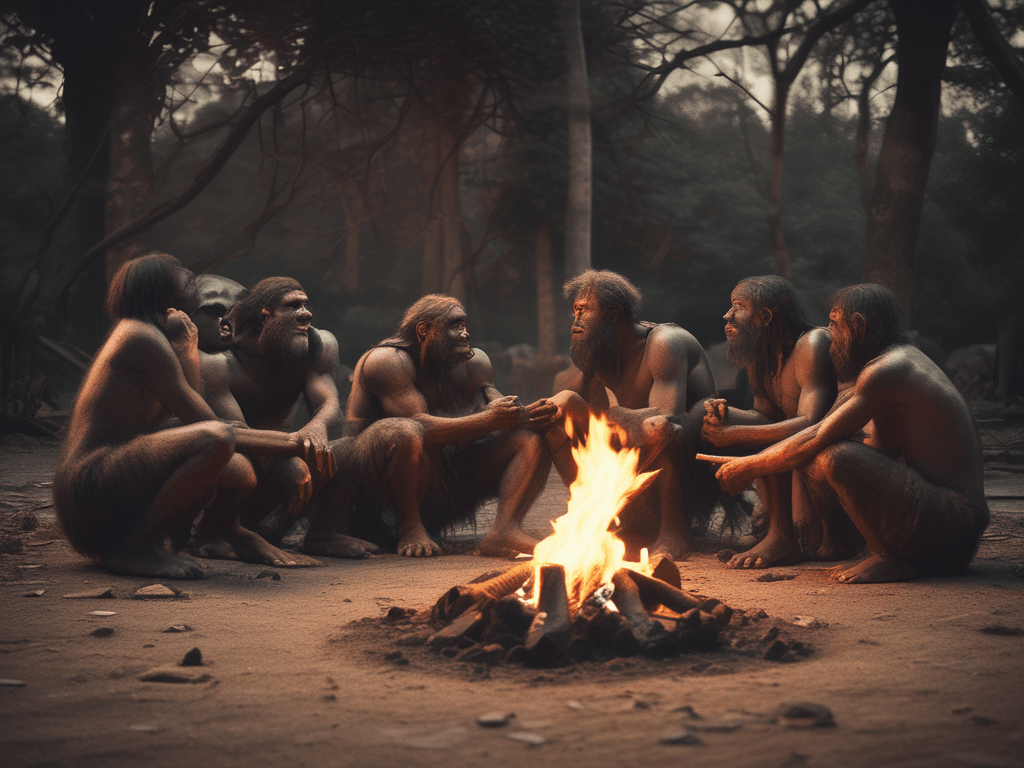
No species, however successful it seems at its peak, can long survive the competition from a better-adapted one. Our predecessor Homo erectus had evolved into top predator, and colonised three continents. Before it was utterly outclassed by the more intelligent Homo sapiens in its various subspecies. A newer, more intelligent form of human, perhaps incorporating elements from artificial intelligence and genetic engineering should be able to solve the above cognitive problems with ease. If that happens, there will be little enough space for the predecessor, and no motive to preserve us either.

#climate change #learning #cognition #human evolution #unsolved mysteries

Element 120? We stand in awe

One of the earliest memories of the school science lab was to see the Periodic Table for the first time. You know, that forbidding-looking chart of squares and funny, recondite little symbols like Mn and Cs, all arranged in a curious array of lines and columns. A long way from the everyday world of glam rock, flared trousers and playground rivalries about football teams and Ben Sherman shirts.

Those who looked slightly beyond the immediate would know that change was coming. NASA kept landing on the moon. And some very clever people were trying hard to push this same periodic table beyond its natural limit of 92 and make artificial elements with far more protons than could be found in nature. Fast forward fifty five years or so, and we suddenly realise how far they have got. Read this from Nature Briefings: Heaviest Element Yet within reach

Researchers have demonstrated a new way to make superheavy elements, opening the door to creating the heaviest element ever and adding another row to the periodic table. Scientists used a beam of titanium to make a known superheavy element, livermorium — element 116. If they’re able to make elements 119 and 120, as planned after an equipment upgrade, they will be the first documented from the eighth ‘period’. In this row, scientists expect to find atoms with so-far unseen electron configurations.Nature | 7 min read
Reference: arXiv preprint

It really is worth clicking on the link, gentle readers. If only to see a group of people performing at the best levels which our species can. Co-operating. Multinational. Thinking differently. Counter-intuitive-hell, what is a”titanium beam” anyway? That’s how progress comes. Just thinking again, in the old tired ways, the channels laid down as a child, will get us nowhere. Except, perhaps, backwards. The periodic table really can go beyond 92. Petrol really is bad for your health. Old allegiances will threaten your survival, if you’re not careful. Time to think as these scientists have done,

#nuclear physics #periodic table #research #chemistry

6 Problems which require global response,and only a global response

“You can’t stop me smoking! It’s an assault on my liberty!” It was a common cry in the early days of trying to save the world from tobacco pollution. Somehow the smokers never considered that that the toxic fumes they spread might inflict upon the liberties of others. Smoking is the world in miniature. For the same self-centred mindset may be found in those who cannot think beyond the boundaries of their own religious or ethnic group. So here are 6 problems which affect us all, and each of which will only be solved by deliberate acts of collective action, however cognitively difficult that may prove for some people.

1 Pollution As my country pumps out toxic metals, sh*t, plastics or whatever, it will get into the water, air and land of surrounding countries, poisoning their unfortunate inhabitants. If you don’t want to breathe someone else’s smoke, ways will be have to be found of asking people to stop. And to keep them stopped. Agreements, anyone?

2 Global Warming A subset of pollution really, except that we are only talking about carbon dioxide and methane. But as the water levels rise and the ocean currents collapse, you will have the comfort of blaming someone else. And they can blame you. Will you feel better?

3 Migration As we have said before, the real cause of this is imbalances in living standards between different parts of the planet. Successful transfers of wealth to the areas where migrants come from will slowly but surely eliminate the problem. How many Germans migrate to Iraq, for example?

4 Knowledge and fakery Since the invention of the Interweb and the subsidiary technologies that feast upon it, the world has been plagued by a deluge of fakes. Fake news stories, fake scientific papers, fake images and the utterly uninformed opinions thereby generated. Only a single world reference library with the veracity of its contents contents carefully agreed by all will allow a single reliable point of reference. This won’t be perfect, but will allow a fresh starting point, and mimics the way that single standards of things like currencies and weights and measures slowly ameliorated the human condition

5 The next pandemic Everyone agrees it’s coming, the question is where and when does it start. IT will probably be a virus. But could our hoary old favourite, an antibiotic-resistant superbug, be the killer?

6 Inequality As long as the super-rich can move their money and their yachts from jurisdiction to jurisdiction, the rest of us will never see a fair share of the wealth which we have created. Hence the shortages of things like hospital beds, school places, decent roads, etc.A single world taxation and financial authority would not only eliminate this problem, it would rapidly provide the resources to deal with those discussed above.

National sovereignty, tribal identity or whatever are extremely powerful forces in human affairs. And we ignore them at our peril, as we have oft-times warned on these pages. But they are also licences to pollute. Are we clever enough to reconcile the the conflict?

#pollution #global warming #climate change #antibiotics #pandemic #poverty

Tourism Tribes Trump Enlightenment

“We don’t like all these tourists!” A quick glance at the newsfeeds show mass protests against tourism and all its works breaking out across Spain, from the palmy island of Mallorca to stylish Barcelona, all the way out to the breezy Canary Islands. And it’s not just in Spain either. Venice was one of the first to start restricting access to the new breed of huge cruise liners that plough the sunnier waters of the world. And even in UK hotspots like Cornwall, some locals break out their tractors in high season and drive them slowly around country lanes with the deliberate aim of making life difficult for hated holiday visitors, whom they term “grockles” in the local dialect (we have been personally informed of this).

What on earth is going on? Students of Hispanic history and culture were long taught that the arrival of mass tourism not only brought floods of money, it also began to eat into the stifling repression of Franco‘s Spain, long before the arrival of democracy. Downsides like the ugly high rise sprawls of hotels and bars were glossed over. Also that whole areas could be taken over by hostile tribes of tattooed thugs, high on a sleazy culture of cheap beer, cocaine and promiscuous sexual encounters. And that’s just the women. We dare not name certain resorts where we have seen this this occurring on a daily basis . But we can understand why these protests are so strong in Mallorca.

Progressives need to confront a highly uncomfortable truth. Ramming people of very different cultures, languages even, together into tight spaces will ignite the oil wells of fear, mistrust and suspicion which lie latent in us all. And this will be so whatever the economic benefits the new arrivals bring. Ever since the Enlightenment, progressives of all types, from Adam Smith style ultra-marketeers to far-left Marx fans have asseverated that the spread of economic and intellectual advances will be irresistible. And that we thereby held the winning hand. Perhaps. But the natural instincts and impulses of most people seem to be very different. A truth which we have acknowledged before on these pages, in our posts on People like David Rofeldt, Amy Chua and Eric Kaufman. (LSS passim)Unless we think how to confront this tribal instinct, it will be used to Trump our project. And this time there will be no coming back.

[1]https://www.independent.co.uk/travel/news-and-advice/mallorca-menorca-spain-tourists-protests-b2551689.html

[2]https://www.msn.com/en-nz/travel/news/thousands-protest-in-spain-s-mallorca-against-mass-tourism/ar-BB1qny4g?ocid=BingNewsSerp

[3]https://www.bbc.com/mundo/articles/cw884y73j4do

#tourism #mallorca #barcelona #protest #free market

Molecular Paleontology sheds light on our universal common ancestor

Once upon a time all we had to go on was bones. Comparing them appeared to show a tree of life stretching back to a common ancestor, at least of all animals. Disciplines like embryology helped of course. However, apart from a few woolly traces of bacteria like things in old rocks like the Gunflint Cherts, most early organisms were too small and too fragile to fossilise well. It was a nice idea but the proofs were all a bit shaky.

Enter Molecular Biology. Using the comparative analyses of proteins and nucleic acids, and the rates of change and mutation over time, we have had amazing insights into how all different living organisms are related. Plants, bacteria, fungi, archaea and animals may now be all cross related, which of course means going back in time. Read this article Meet the Parents from Nature Briefings

The shared forebearer of all life — known as the last universal common ancestor (LUCA) — lived around 4.2 billion years ago, ate carbon dioxide and hydrogen, and produced acetate that might have fed other life. Researchers inferred information about our great-great-grandblob’s genetics and biology by tracing duplicated, lost and mutated genes back up the family tree. LUCA probably possessed an early immune system, too — hinting that it lived in an established ecosystem full of microbes and pathogens.Science | 6 min read
Reference: Nature Ecology & Evolution paper

We would not dare to improve on Nature Briefings, our go-to website for science news. We would however draw your attention to two talking points, as t’were, which have accorded us some pause for considerable thought.

The molecular regression analysis suggests that these things lived about 4.2 billion years ago. Which is incredibly early, as best estimates for the age of the planet come in at around 4.5 billion years[1] That seems a vey short time for so much evolution. What was happening?

The second point is a bit more philosophical. Like one of those fiendish brain teasers about barbers and shaving that Bertrand Russell used to set his brightest students. The authors suspect the LUCA lived in an ecosystem of microbes and pathogens. So was it not ancestor to them too? If not, what was?

[1]https://en.wikipedia.org/wiki/Age_of_Earth

[2]https://en.wikipedia.org/wiki/Barber_paradox

#LUCA #molecular biology #dna #rna #protein #precambian #origin of life #origin of earth