Round up: electric beaches,Indian futures, Global Warming, vaccines for cancer, and Gussie Fink-Nottle again

a quick look at some intriguing stories

Zapping Climate change: One thing we all know for certain. That old sea is marching up the beaches and into our homes and towns sooner than we know it. How to stop it? More cheaply, that is, than building colossally expensive barriers of concrete and steel. One answer might be to fuse natural sand into hard deposits via the medium of huge electric discharges, a bit like lightning, Here’s Stephen Luntz for IFL Science:

https://www.iflscience.com/zap-of-electricity-could-save-coastlines-from-climate-change-driven-erosion-75656

thanks to P Seymour

India strides in Space It’s not what they’ve found, it’s the way that this forward-looking nation is progressing which impresses us. Indian mission reveals molten moon from Nature Briefings. Compare that to the former Imperial master, which has just come out of fourteen years navel gazing at past glories!

The first-ever analysis of soil near the Moon’s south pole has found further evidence that the lunar surface melted shortly after it formed. The data come from India’s pioneering Chandrayaan-3 mission, which deployed a rover on the Moon last August that found the soil mainly comprised the mineral ferroan anorthosite. Previous landers have found similar results at other locations, suggesting the composition of the surface is uniform. This supports the theory that the Moon originated from material scattered into space when a large impactor struck the newly formed Earth.Nature | 4 min read
Reference: Nature paper

No way back? Even if by some miracle we suddenly reduce carbon burning and get to net zero, there’s still all that old CO2 up there, warming us like chickens in an oven. Scary stuff, according to James Dyke and his mates at The Conversation:

https://theconversation.com/the-overshoot-myth-you-cant-keep-burning-fossil-fuels-and-expect-scientists-of-the-future-to-get-us-back-to-1-5-c-230814?utm_medium

Lung cancer vaccine is good news Every time you meet an anti-vaxxer, ask them about their next bright idea about lung cancer. Meanwhile people who actually think have come up with what may be a working vaccine against this dread disease. We wish them luck: here’s Andrew Gregory for The Guardian

https://www.theguardian.com/society/article/2024/aug/23/world-first-lung-cancer-vaccine-trials-launched-across-seven-countries

Raising our hat to Gussie A few years ago (LSS 3 6 2021) we published a tribute to the great Gussie Fink-Nottle, long time friend of Bertie Wooster and keen student of the order Salamandridae in general, as represented by newts in particular. Well now a colony of these ancient creatures has made a base in our garden pond. And so we join Gussie as custodians of these Carboniferous chums. And hope, when finaces allow, to get some tree ferns to accompany them!

#cliamte change #global warming #cancer #vaccine #newts

India, Bradford: violence against women writ large and small

It’s not often we pull together two apparently unconnected stories. The one, a tragedy that has befallen a single family in Bradford in the north of England. The other a series of mass protests in far away India, What is the connection? Violence against women of course, a common theme on this blog.

Let’s start with Bradford.[1] Jane Dalton, Independent ; A poor mother and her three children have been murdered, by fire, in the home where they should have felt safe and secure. The suspect? (for that is all he is at this stage1 ) A man, of course. Does that surprise you, gentle reader? Even if a different culprit is apprehended, we bet it ‘ll be a man. Come on. how often do women set fire to homes with children in them?

On to India. A lady Doctor ( a Doctor, goddammit-what profession is more useful than a Doctor?) was raped and murdered while on duty in a hospital in Kolkata. And finally, after centuries of patriarchy, patronising and all round oppression, Indian women have had enough. To their credit, so have many men too. Now they have risen in a series of furious protests which threaten to change that country forever. [2] Kathryn Armstrong, BBC. Yet amid all the outrage, there is hope here, at least for us.

For what is hope? In the twentieth century it was supposed to have something to do with advanced nations like the USA or USSR building huge numbers of big bright shiny things and making everyone happy and radiant. Poorer nations, and women, were somehow also rans, extras in a Big White Male movie. But what if real hope is when the poor and the oppressed begin to pull themselves out of their pit and cast off their chains? There’s more of them. That’s a lot more hope to go round.

1 LSS is a firm believer in the principle of innocent until proven guilty

[1]https://www.bing.com/search?q=bradford+murder+mother+children&form=ANNTH1&refig=C90040A30FED4B258622200ABE86BBF4&pc=HCTS&daf1=1&ntref=1

[2]https://www.bbc.co.uk/news/articles/c89wgzkdw1vo

#feminism #femaale emancipation # violence against women #patriarchy

In praise of paleoart #2: Karen Carr

A few years ago (LSS 15 12 20) we published a short blog in praise of the work of the great Zdenek Burian. Although he died in 1981, when it comes to Paleoartists he has always been our main, main man. So who can fill such eminent shoes, especially when the competition is so fierce?

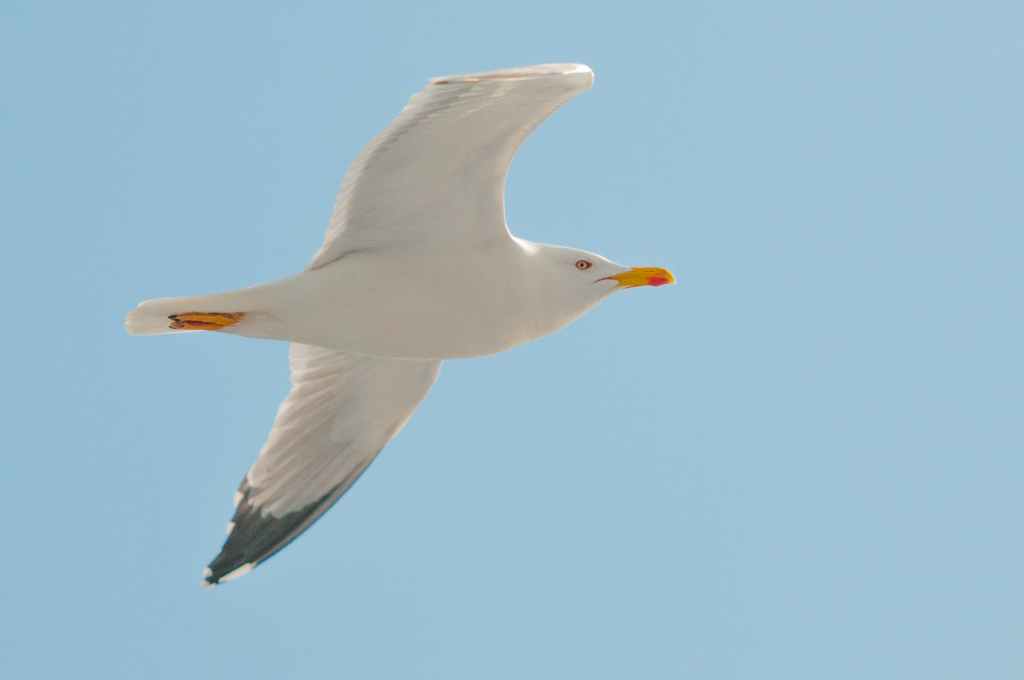
We’d like to propose the work of Karen Carr as a starter. We’d like to tell you why we think her work is so good. Why it really does it for us. There’s just one snag. We have no training in art, criticism, and struggle to draw a dry roasted peanut from a bag, let alone hang out at the Slade School of Art. But we can point you to her website, to which we link here. [1] Obviously, we cannot reproduce directly here, for copyright reasons (the images at the top are stock) But we humbly beg you to pause over your coffee or tea and take a dive into Karen’s world. See ancient sharks in furious pursuit in some forgotten Devonian ocean. Delight as dinosaurs munch their way through a sunny Cretaceous landscape (and each other). Cringe at the unappealing table manners of our earliest ancestors as they too polish off a late lunch, squatted on the haunches of some unfortunate Deinotherium. Would a nice Cabernet Sauvignon have partnered that , chaps?

There cannot be a more abstract form of art than paleoart, for it depicts things that do not exist. Yet it screams for realism, depth and action. Above all, the good ones create worlds that are enticing , that you want to climb inside. Just like the great masters of the Renaissance or Baroque did in their landscapes. And by the way, anyone for Edward Hopper?. Yet Karen can do something they couldn’t. Animations. Our last tip is to watch as the ancient amphibian Eryops swims across the screen like a newt in a garden pond-it’s distant, distant great grandchild. Isn’t that worth just a couple of minutes away from Trump v Harris?

[1]https://www.karencarr.com/by-client.php?cl=88

#paleoart #karen carr #evolution #art

Professor Devi Sridhar gives a masterclass in how to read the internet

Anyone turning on their computer first thing in the morning encounters a tidal wave of stories. As well as your regular newsfeeds (things we used to call newspapers and magazines) your service provider will unleash a torrent of clickbait, intriguing little stories designed to hook you in like a rookie haddock. And doubtless your more excitable and nervous friends will be bombarding you with snippets and scrapes from their own feeds, showing how we are going to hell in a handbasket and Enoch was right all along. How to sort the wheat from the chaff? Or to put it even more bluntly, which of the million or so articles are you really going to benefit from reading ?

Enter the cool, clear mind of Devi Sridhar, Professor of Public Health at Edinburgh University. Older readers will recall her as one of the saner media guides we knew during the long-ago Covid-19 pandemic. Today she pops up in the Guardian, advising us on a different topic Ostensibly it is about the Perils of Drink. Actually, it is an excellent guide to navigating these seas of information. And this is why we think it works;

1 Poses the question in a thoughtful and nuanced way and contrasts the issues of heavy drinking with moderate drinking

2 Thorough review of the evidence. Look carefully at the authority she cites. It’s the World Health Organisation. No they are not perfect; but are they likely, on balance to be more reliable than some cowboy internet site in Texas?

3 Back up studies she cites (NHS, Canadian Government) are more of the same Note how the hyperlinks are to equally reputable bodies

4 Uncontrolled studies and the Red wine myth The idea that this stuff might actually be good for you brought hope and comfort to millions. However, as the good professor notes

……., some of these studies didn’t control for the fact that red wine drinkers were more likely to be educated, wealthy, physically active, eat vegetables and have health insurance. In 2006, in a new analysis that controlled for health-affecting variables, the benefits of drinking red wine weren’t found. Since then, increasing evidence has shown that even one glass of wine a day increases the risk of high blood pressure and heart problems.

5 Who pays the piper? Watch carefully who funds studies any way. For, as she notes

The alcohol industry has been savvy here and funded studies that – surprise, surprise – show the benefits of moderate drinking. This is a lesson in why you should always look at who funds the study, and whether there’s a conflict of interest. The muddying of studies by commercial interests [is] a tactic that was also famously used by the tobacco industry ………

and finally. The writer declares and interest She admits she is in the public health game and, being fallible, occasionally enjoys the odd tipple herself

Read a few less items, and read the ones you choose carefully. Always ask: who benefits? Does this tell me what I want to hear? Why has this been posted?

We will come back to this trope in due course.

https://www.theguardian.com/commentisfree/article/2024/aug/20/red-wine-drinking-alcohol-health-risks

#wine #critical thinking #professor devi sridhar #alcohol

And learning begat more learning: two new discoveries prove LSS was right all along

Successful science in one area can produce unexpected benefits all round. That’s always been our doctrine at LSS. Think of how the slightly esoteric discoveries of Franklin, Watson and Crick spawned whole new areas of learning and achievement from medical science to Crime Scene Investigation. Today we’ve got two stories which nicely demonstrate our little hypothesis in action.

The first by Maiya Focht of the Mail describes the intriguing way that a class of drugs called prostanoids, normally used to help women in labour, may actually help with brain conditions such as Alzheimers and Parkinsons. [1] It seems they may act by clearing the progressive accumulation of cellular debris, proteins and so on which seem to impede brain function as the years pass. It’s early days still, but it’s fascinating how a surprise arrival from one area of investigation can suddenly game-change a different one.

So, more power to multidisciplinary teams? Could be a way forward in the dreadful condition of inflammatory bowel disease, which can make life miserable for untold numbers of sufferers. Have a look at this Hope for Inflammatory Bowel Disease from Nature Briefings( with deep link for all you intellectuals) Look at the way it combines genetics, immunology and population studies. Some kind of lesson in there, maybe, huh?

Several recent studies offer insights into the murky and complex causes of inflammatory bowel disease (IBD).
Changes in the activity of a gene called ETS2 that is important to immune activity could contribute to some cases of the disease by promoting inflammation.Some people with IBD make antibodies that disable a protein called IL-10, which has anti-inflammatory effects in the gut.An analysis of how populations of gut bacteria adapt to living in inflamed tissue could lead to ways to predict how bad a case of IBD might get, monitor its progression and identify which therapies might help.“Not every inflammatory bowel disease patient who walks in the door is the same,” says immunologist David Artis. “If we can map that difference to some extent, I think we’re going to be able to better treat those people.”Nature | 6 min read
References: Nature paperThe New England Journal of Medicine paper & Cell Host & Microbe paper

Now we don’t want to sound like the late,great Dr Jacob Bronowski (1908-1974). But we humbly observe one thing. Knowledge grows exponentially. What’s more, it’s the real driver of economic growth, not fiscal theories and econometric models. It was the refining of iron that changed the world, not the refining of gold. The right way to change the world for the better is to palce your bets on Universities, research institutes and hospital laboratories. from them alone will come the better life for us all.

[1]https://www.dailymail.co.uk/health/article-13758013/alzheimers-dirty-brain-common-drug-clean.html

#inflammatory bowel disease #alzheimers #research science #medicine #economics

The Antibiotics story: Nature Briefings gives a masterful guide to the state of progress

Despite all the other stories we link to here, the main theme of this blog has always been antibiotics and how the growing shortage of them will kill us all, our children and our children’s children. Well quite a lot of them. to say nothing of our cats, dogs and other pets. So we bring you stories in dribs and drabs, a step forward here, a step back there, and so it goes.

What we have wanted for some time is a really good summary of where we are now, and what the future may look like. Fortunately Nature, via its superb science news feed Nature Briefings, edited by the incomparable Flora Graham, has provided just that Let’s start with the summary from Briefings

Natural products made by bacteria, small molecules discovered with the help of AI and immune-boosting drugs are just some of the strategies researchers are investigating as new ways to fight bacteria that are increasingly resistant to existing antibiotics. Most conventional antibiotics approved in recent years are simply variants of a known class and can be used for just a few years before resistance emerges. Scientists are turning to new strategies to head off what some are warning could be pandemic caused by once-treatable infections. “We have to run in order to stay in place,” says microbiologist Kim Lewis.Nature | 10 min read

Are you going to click on the link? Because we are-and will read it avidly Because there, in a single, ultra high integrity piece, you will learn about:

-the innovation gap which is slowing the development of new compounds

-how natural products could be employed to widen our available options

-how AI could be used to sharpen research and design

and many other intriguing ways that we could yet overcome this crisis in our affairs. It offers hope, gentle readers. Not only that-maybe you won’t have to read this blog again for six months!

#antibiotics #microbiology #bacteria #antibiotic resistance #medicine #health

Birds and Gonorrhoea: antibiotic resistance grows

We have two intriguing stories today which suggest a worrying trend in antibiotic resistance, It’s upward, and both suggest scenarios which may be difficult to control.

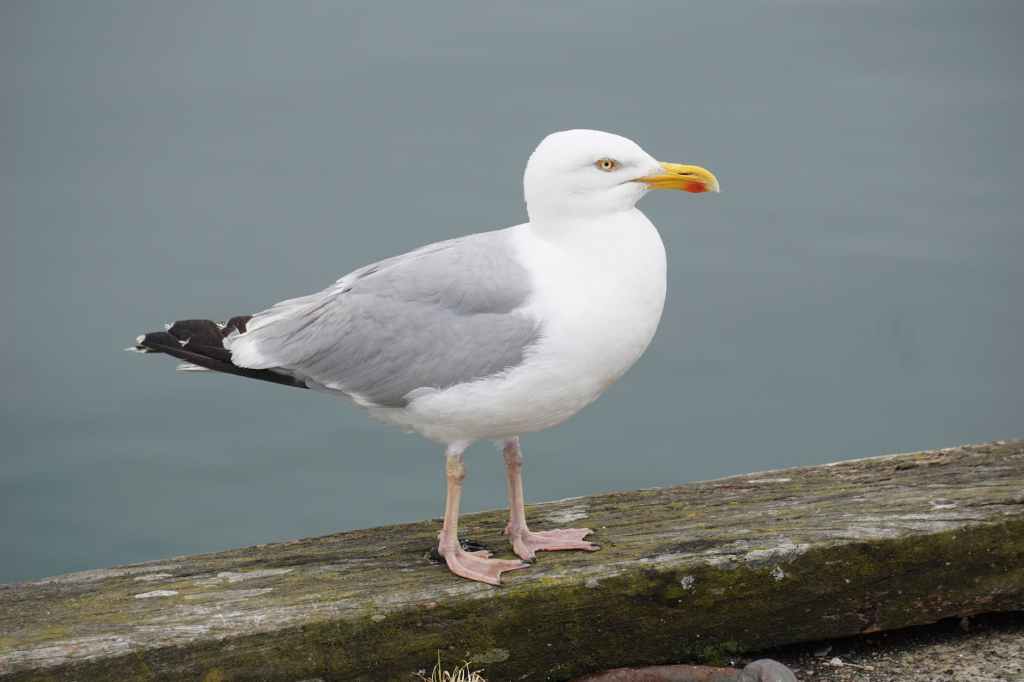
The first, by the indefatigable Nicola Davis of the Guardian,[1]suggests that urban birds, such as gulls, crows and so on may be harbouring pools of deeply resistant bacteria, particularly of the Campylobacter variety. Now, we confess that these are two of our favourite species. We love the soaring and swooping flights of our local herring gulls, and marvel at the tough resourceful intelligence of the Corvidae family. But unfortunately these creatures are forced to live in contact with our waste sites and outfalls as the only way to make a living. Which brings them into contact with things like farm waste, which as attentive readers of this blog will recall, is stuffed with antibiotics and the bacteria which have become resistant to them. Why are we worried? Well, birds fly around a lot, don’t they? Especially into things like chicken runs, goose farms and the like. The risk that the resistant strains may not only spread, but enter our food chains, becomes correspondingly high. One to watch, we think.

We’ve mentioned our fears about STDs and antibiotic resistance before on this site. Unfortunately, these qualms seem justified, according to Andrew Rogers of the BBC. [2]The UK Health Security Agency, a pretty reputable bunch, report a rise in cases of gonorrhoea which seem to be resistant to that otherwise excellent antibiotic ceftriaxone, which up to now has been the go-to drug of choice for this ailment. And why the worry? Well, people can’t seem to stop doing it, wherever, whenever, however. Such regrettable behaviour has certainly contributed to the recent upswing in Mpox.[3]And the more worldly-wise among our readers will recall how many other pandemics have spread through what might be politely termed, er, close physical contact.

We don’t wish to plunge you too far into disquiet, gentle readers. Certain lines of feedback suggest we may go a little far in that direction, sometimes. But these are stories that suggest a worrying trend, certainly. Ironic if they turned out to be more important in the long run than the problems which seem to concern our current leaders, and many of their followers.

[1]https://www.theguardian.com/environment/article/2024/aug/13/urban-birds-are-teeming-with-antibiotic-resistant-bacteria-study-finds

[2] https://www.bbc.co.uk/news/articles/ceq5j784n7go

[3]https://www.bbc.co.uk/news/articles/c0e84jw9qdjo

#antibiotic resistance #health #birds ##gonorrhoea #UKHSA #medicine

Waves of hope, waves of despair-yes, it’s another round up of top stories!

We hope you like the headline, good job WH Auden never got there first! Now, to business: our round up this week is a mix of stories, some designed to comfort the afflicted (“HOPE”) and others designed to afflict the comfortable (“DESPAIR”) So, without further ado, let’s set off on our journey of discovery!

HOPE: Smart Insulin We have always sympathised with diabetes sufferers who must depend for life itself on regular injections. Imagine if these were replaced with a smart insulin molecule that “knew” to kick in exactly when it was needed! Well, that day may dawn quite soon:

https://www.dailymail.co.uk/news/article-13733337/Scientists-uncover-holy-grail-insulin-adapts-diabetics-changing-blood-sugar-levels-real-time-inject-week.html

DESPAIR: Antagonistic antibiotics We have always hymned the praises of antibiotics. But we are also a fair and balanced lot (we would be thrown out of the Whig Party if we weren’t) and we candidly admit that there may be circumstances in which the prescription of antibiotics can produce unwelcome effects.

https://www.dailymail.co.uk/health/article-13724201/antibiotics-rash-life-threatening-Britons.html

HOPE: Solar Power everywhere. Last year a prominent member of the Editorial Board had Solar panels installed. And remarkable they have proved. But every technology is only as good as the year it’s made in. What if you could develop a new type which you could coat onto everything-the car, your anorak, the garden wall? Scientists at Oxford University may have done just that:

https://www.ox.ac.uk/news/2024-08-09-solar-energy-breakthrough-could-reduce-need-solar-farms

thanks to P Seymour

DESPAIR: Microbes Mutate in the Microwave We keep a pretty clean microwave round here-and rightly so. All those nasty little stains contain microbes-and it looks as if some of them can mutate to survive the radiation beams. If they can do it a microwave oven then, they can do it in the presence of antibiotics or bacteriophages too. Depressing.

https://www.dailymail.co.uk/sciencetech/article-13719161/germs-lurking-microwave-Radiation-resistant.html

HOPE Fusion Spin Offs before there is fusion One of our core beliefs is that learning generates learning. Discoveries in one area can have amazing spin offs in others. So, with a certain pride, we finish with this piece which suggests that all the herculean efforts to develop nuclear fusion technologies have not been in vain. We may not get the power until the late thirties-but there are already amazing benefits in everything from health to green energy. Next time some genius suggests cutting taxes, ask them if it will affect the University sector.

https://www.theguardian.com/science/article/2024/aug/11/nuclear-fusion-research-tae-power-solutions-cancer-propulsion?CMP=Share_iOSApp_Other

And finally: this thought from the late great Arthur C Clarke, who noted that there must be intelligent life elsewhere in the Universe: proof of this comes in the fact that they have never visited us on this planet.

#microorganisms #solar power #climate change #antibiotics #arthur c clarke

In praise of the Limoncello Spritz

Today we are going to praise a great Italian export. Not stylish cars, nor sharp suits. Nor even pasta or Renaissance Art. No, we are going to go with the Limoncello Spritz, a delightful cool, sparkling drink that will gladden many a warm summer evening.

And it’s so easy to make! Just a bit of ice, a little prosecco or other white sparkler, soda water (all really cold by the way) and of course the delightful, but fearsomely powerful liqueur which the Italians call Limoncello (yup, they really do make it from lemons), There are many good sites on the interweb for recipes and background info: we have chosen this one from sip and feast- we liked their bright, breezy style which perfectly captures the feel of this cocktail [1]

We could cite many reasons for this evening’s recommendation. The advice of seasoned travellers (before this year our experience on the Italian peninsula was effectively zero).The simplicity and authenticity of the drink (apparently they all love it over there) But we freely confess that our recommendation is based on our time in a certain hotel in Rome, close to the famous Baths of Diocletian and Maxentius. For there we could sit at an elegant marble bar, shelves and accessories all blended to match, while equally elegant and well-dressed waiters served up the hooch with that friendly charm for which Italians are famous. While outside the picture windows, the busy life of Rome slipped by, all Armani suits, motor scooters and noisy families. Rushes from Fellini, we wondered?: or passages from Calvino?

Italy has contributed more than almost any other country to human advancement and progress: dare we add the Limoncello Spritz to the illustrious roll-call of their achievements?

[1]https://www.sipandfeast.com/limoncello-spritz/

limoncello spritz #cocktail #italy #rome

Antibiotics: the last line of defence has just failed

Amid all the talk of riots, of Mr Trump and the Olympics, a deadly killer has evolved. Quietly, stealthily it has begun to take its toll. And like an army that suddenly realises it has run out of ammunition, Doctors may have nothing to check its advance.

Because a certain strain of Klebsiella bacterium, called hvKvs123 has now become resistant to carbapenems, the last type of antibiotic known to be effective against it. We can’t do better than to urge you to click on this story by the ingenious John Ely of the Mail whose explanations and graphics are of the first order.[1] But we can fillet out a few facts from it which convey the true gravity of the situation we now confront. Firstly, the new strain has been found in over 17 countries,many of them poor and overcrowded, which are ideal conditions in which it will spread. Figures from the UK suggest that its resistant capacity is rising very fast indeed, from 13.5% in 2018 to 17.4% now. While cases of resistance have leapt from 9 802 to a 11823 (to put that in perspective road deaths were only 1, 711) Finally, Klebsiella is responsible for up to 30% of cases of pneumonia. It could be an interesting winter, especially for those of us who are too poor or to hungry to heat our homes.

Is this the start of the next pandemic? Old LSS hands will know that we are always pushing the antibiotics trope here. But we are the first to admit that it’s not the only possible cause. However, two things worry us today. The near total breakdown of carbapenems and the fact there is now no substitute means that we will be fighting this pandemic always from one step behind. Secondly, that Klebsiella is such a common organism, thriving in places like the respiratory tract from which it can disperse easily. These two features alone put it will up on the starting grid for next-pandemic candidates. And one thing you can be sure of, gentle reader. That pandemic will come. Soon.

[1]https://www.dailymail.co.uk/health/article-13714121/superbug-16-countries-klebsiella-pneumoniae-antibiotic-resistance.html

[2] https://en.wikipedia.org/wiki/Klebsiella

#pandemic #antibiotic resistance #olympics #donald trump