Two possible origins for the next great pandemic

Ah, 2020? Are you nostalgic already for those far off days of masks, empty streets and ballooning Government Deficits? Don’t worry. Covid-19 was just a curtain raiser, an early premonition. Another pandemic is coming very soon. Recently, Nature Briefings has run two st,ories suggesting two hitherto-unexpected sources

A Far-away Fur Farm?

One of the largest studies of viruses harboured by fur animals in China finds a broad array of potential pathogens — including new ones and known ones found in new hosts. For instance, they found the Japanese encephalitis virus in guinea pigs and norovirus in mink. The study highlights the risks of fur farms becoming a bridge between people and the viruses circulating in wildlife, says virologist Eddie Holmes. “This is how pandemics happen.”Nature | 4 min read
Reference: Nature paper

Arctic Agony?

The Arctic is likely to become a hotbed for zoonotic diseases that spill over into humans from other animals,” argues Arctic ecoscientist Christian Sonne. The natural balance is being upset by pollutants, invasive pathogens and melting ice, and ancient microorganisms are also being released as the landscape thaws. He calls for a ‘One Health’ approach that integrates an understanding of the effects on wildlife, humans and ecosystems. For example, food-safety efforts and better disease surveillance could help reduce the risk of spillover events in places where meat is processed by subsistence-hunting communities.Nature | 5 min read

Once one of these organisms gets out from its natural habitat, it will start to breed very, very quickly indeed, as we saw with SARS-Cov-2. The world is a very small place now-you can get almost anywhere in 24 hours. And the overcrowded, air conditioned plane which you will use is an almost perfect breeding ground for spreading micro-organisms. Soon, the things you are thinking about now may just be distant memories.

#pandemic #medicine #health # #norovirus #pollution #global warming #covid-19

Antibiotic Resistance: Here’s an ill wind that blows no good

Just when you thought we were finally getting a handle on antibiotic resistant microbes, Damien Carrington of the Guardian[1] reveals a whole new, and rather surprising new danger. Antibiotic resistant organisms are not only thriving in agriculture, they are being blown across the planet by the winds. Ready to drop into an ecosystem near you. And start to spread their mischief once again.

That at least seems to be the conclusion of the versatile Professor Rodó and his colleagues at the Barcelona Institute for Global Health. Sampling the low air wind patterns (0.97-3.05km) between North China and Japan they found that potentially pathogenic, antibiotic-resistant organisms were blowing up to 2000 km downwind. And landed perfectly capable of reproducing at the other end. To make matters worse, the samples included organisms such as E Coli and Clostridium difficile, no strangers to these pages.

Why are we worried? Well, frankly we didn’t see this coming. Although given the massive misuse of antibiotics in intensive farming, maybe we should have done. And, if this is the situation between advanced countries like China and Japan, what must be happening in less fortunate regions of the world? One thing is clear. Antibiotic resistance joins global warming and mass migration as one of those problems which no country will ever solve on its own. Remeber that next time you hear them banging on in the bar of the Dog and Duck.

[1]https://www.theguardian.com/science/article/2024/sep/09/pathogenic-microbes-carried-vast-distances-by-winds

[2]https://www.pnas.org/doi/10.1073/pnas.2404191121

#weather #antibiotic resistance #farming #china #japan #prevailing wind #global warming

New NMR technique suggests hope for Depression Disorder

Nothing so blights the lives of all-the sufferer, their families, their friends-as a disorder of the mind. Sadly, and despite the hard work of many hard-working and intelligent people, there is no simple cause-and-effect model for these problems. Not that is, in the same way as there is for diseases of the body, many of which have been tracked to causative organisms or simple deficiencies in some vital element. Instead of looking for a single, all-encompassing theory, like so many Darwins or Pasteurs, a better way ahead through small studies in limited areas, to create smaller learnings of which we can be sure.

A recent study of depression, using techniques like Nuclear Magnetic Resonance(NMR) suggests that this way pays off. It really does look as if certain areas of the brain, called Salience Networks( which seem to have something to do with directing the brain’s attention) may be directly involved. Read this from Nature Briefings, Permanent Brain Wiring Predicts Depression The link to the heavier article is well worth it-it’s quite short and clearly written

Although depression comes and goes, people who are prone to it retain a distinct pattern of brain-wiring network throughout their lives. An analysis of more than 180 functional magnetic resonance images showed that compared with healthy controls, people with clinical depression have larger brain circuits called salience networks, which shape what the brain pays attention to. These networks become more active during a depressive episode but persist even after the depression lifts. Researchers found large salience networks in children as young as nine years old, who then went on to develop depression as teenagers. This suggests that the trait could increase the risk of depression, rather than being a result of it.Nature | 4 min read
Reference: Nature paper

We liked several things about this work. It’s humble; it doesn’t try to solve everything, but defines a small area and attempts to explore only that. The sample sizes are gratifyingly large, especially in the follow up study. Above all, it provides a tangible repeatable way ahead to slowly isolate and characterise other disorders at a neurological level. One day, perhaps, and just maybe, some Historian of the future may point back and say: “this was a real step forward.”

#mental illness #depression #nmr #health #medicine

Thanks to all who commented on the Larry Elliott post (IT Troubles at our end)

We have been having a little trouble with IT handling lately (alright, we admit it-we’re dreadful). But a number of you have made comments about the piece we riffed on by Larry Elliott of The Guardian last week. Sorry if we haven’t been able to load or reply to them, but we deeply appreciate the comments nevertheless.

However, it’s worth remembering that the real credit goes to Elliott, not us. He is always open minded, looks at evidence and tries to see things calmly and objectively. Virtues which we could all imitate. We will continue to channel his thoughts as and when we consider them to be pertinent to your interests, dearest readers.

#larry elliott #guardian #economics #germany #manufacturing #IT

Intriguing new research in the science of smell

LSS is a science post, by and large. The clue’s in the title. But it tends to be an applied science post. You know, this new antibiotic will do so and so, that new advance in power generation will save that many tonnes of carbon dioxide. And so on. Which is why, sometimes, we like to raise our eyes to some of the more abstract advances in pure science. After all, how long before they become applied?

Which is why we liked this one from Nature Briefings: Sniffing out the mysteries of how we smell. Someone once described the nose as ” a special kind of Gas Chromatograph” But how does it work? Is it the shape of the incoming molecules? Their weight? Something else? Remember some animals such as dogs, are much better at it than we are. And, by the way, what about taste? Before we leave you to the link, there’s this too. Like all the best modern studies, this one is multidisciplinary. Which implies a lot of different people collaborating, from lots of different countries. Could there just, possibly, be something in this multiculturalism after all?

We smell by detecting molecules around us — but knowing the chemical structure of a molecule tells you almost nothing about its odour. Even categorizing what we perceive is difficult: there is no palette of scent ‘primary colours’ as there is for vision. And olfactory receptor proteins are hard to work with, so what they look like and how they function has mostly been guesswork. But that isn’t stopping scientists from trying, with help from innovations in structural biology, data analytics and artificial intelligence.Nature | 12 min read

#olfaction #smell #taste #biology #life sciences #AI #data analytics

Has Germany lost its shine? Larry Elliott thinks so

There’s an old school of thought, particularly in the British Centre that had a lot of time for Germany and its post-war economic miracle. Exponents as diverse as Will Hutton and Corelli Barnett pointed to its world-class education system (particularly in technical subjects), its Mittelstand of SMEs and their associated financial arrangements, and of course its superior industrial relations. Certainly it was performing far ahead of the UK for many decades. Yet, like its football team, this former world-beater is losing its schwerpunkt. It’s not just the disastrous election results in the formerly Communist east, or the disastrous dependence on Russian energy. According to Larry Elliott of the Guardian (whom we have sometimes channelled before on these pages), the problems go much, much deeper.

Too much cultural capital has been invested in engineering, he asseverates. Names like Volkswagen, BMW and Mercedes were once synonymous with economic excellence. But now Germany is too embedded in the era when those names ruled the worlds’ highways, while other nations have moved on. It’s all a bit like Edwardian Britain, which remained emotionally committed to the world of coal mines and cotton spinning, while the real action was already moving elsewhere

Will Germany enter a nosedive and lose all? The world remembers the consequences of the last time that happened and too many sensible people, both at home and abroad have already reacted to the siren call of AfD and its chums. Once great nations can transition to a more humble prosperity (the UK, France and Japan are examples here) and there is every reason to think that in the long run, Germany can do the same. But the real message for us all comes from the popular musical singing group Fleetwood Mac, heavily deployed by the Clinton campaign in 1992; Don’t stop Thinking about tomorrow

[1]https://www.theguardian.com/business/article/2024/sep/01/germany-economy-problem-analogue-industries

#Will Hutton #Corelli Barnett #Germany #digital #AI #manufacture #mittelstand

In Praise of Rory Stewart: The Long History of Ignorance

The first time we heard former Tory MP Rory Stewart , he sounded different. A man of integrity, we divined. They had just made him Prisons Minister or something, and there he was on Today on Radio 4 setting himself a target and declaring: “If I don’ hit it in a year, I’ll resign.” It may not surprise you to learn that he didn’t last long in the Conservative Party of those days. Since when he has drifted centrewards, even sharing a podcast with Labour Panjandrum Alister Campbell. And always endlessly gnawing on the same questions. “What is Truth?” “what is integrity” “why do Democracies sometimes make such Godawful decisions(think Trump, Brexit).

Now he has pushed off alone with a new series of podcasts called The Long History of Ignorance, a look at what constitutes true learning. It’s a play on the dual meaning of the word “ignorance” as the wisest of persons are always the first to admit that they don’t know. The theme has been raised before: old hands will recall the last, immortal, episode of Bronowski’s Ascent of Man TV, series from 1973. But here it is again, in modern clothes, neatly tucked up in short, easy to digest podcasts. Much of the first one covers ground we have often gone over on this blog, gentle reader. So you’ll be well clued-up before you get there. But we earnestly, earnestly recommend you give this one a shot. For there is no fool as great as the one who thinks himself cleverer than all the others.

thanks to P Seymour

[1]https://www.bbc.co.uk/sounds/brand/m00199xy

#rory stewart #learning #knowledge

No Insects=No Chocolate. And it could happen very soon

Insects. Remember them? Those pesky little wasps buzzing around your glass of Pimms on a summer picnic? The scrapings from your windscreen after a long drive through the summer countryside? Don’t tell us you don’t know someone who didn’t used to curse them. Like most emotional reactions, this one was wrong too. Without them, the very ecological chains that support us could collapse. Permanently. Sooner than you imagine. Because all those naughty farmers with their pesticides, and all those naughty oil companies with their global warming, are going to do in our six-legged chums. Forever.

A little background for starters. writing in the Financial Times, called Where have all the Insects Gone? Manuela Saragosa provides an excellent short summary for the busy reader.[1] If you want to dig a little deeper, a leading entomologist recommends The Insect Crisis by Oliver Milman [2] as a jumping-off point. And us? We want to tease out one aspect which we think illustrates this crisis very nicely.

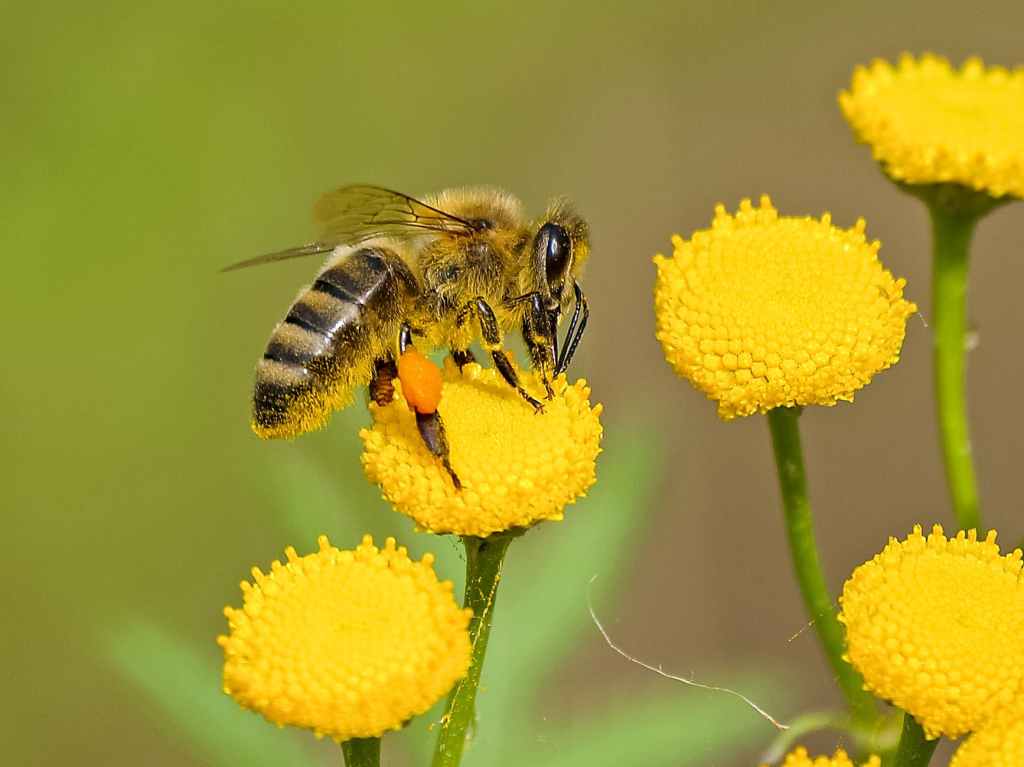
Everyone loves chocolate. Not quite so many will have names like Ceratopongidae, Forcipomyia and Euprojoannisia tripping off their tongues. But if they like chocolate, they should. For these are the tiny midges, the only living things , which can pollinate the Cacao plant, which as avid readers will recall is called Theobroma cacao, and so produce the world’s supply of chocolate. Which is not only a source of comfort and reassurance to multitudes, it is also worth $421 billion according to commercial experts MarkNtel. Is this really going to happen? Well according to the Natural History Museum[4] the crop is just about hanging on this year. But the midges are reeling from loss of habitat, mainly due to global warming, so don’t just cross your fingers. And finally, to any fool who blusters we can’t afford to do anything about climate change, let this figure be their warning. ,

[1]https://www.ft.com/content/e7403c08-b50e-4b16-861f-fe27d7b16060

[2]https://olivermilman.com/the-insect-crisis/

[3]https://www.nationalgeographic.com/animals/article/animals-food-thanksgiving-environment#:~:text=A%20gall%20midge%20pollinates%20cacao%2C%20the%20plant,t

[4]https://www.nhm.ac.uk/discover/news/2023/october/loss-tropical-pollinators-puts-chocolate-coffee-production-at-risk.html

#insects #world economy #chocolate #global warming #climate change

Round up: electric beaches,Indian futures, Global Warming, vaccines for cancer, and Gussie Fink-Nottle again

a quick look at some intriguing stories

Zapping Climate change: One thing we all know for certain. That old sea is marching up the beaches and into our homes and towns sooner than we know it. How to stop it? More cheaply, that is, than building colossally expensive barriers of concrete and steel. One answer might be to fuse natural sand into hard deposits via the medium of huge electric discharges, a bit like lightning, Here’s Stephen Luntz for IFL Science:

https://www.iflscience.com/zap-of-electricity-could-save-coastlines-from-climate-change-driven-erosion-75656

thanks to P Seymour

India strides in Space It’s not what they’ve found, it’s the way that this forward-looking nation is progressing which impresses us. Indian mission reveals molten moon from Nature Briefings. Compare that to the former Imperial master, which has just come out of fourteen years navel gazing at past glories!

The first-ever analysis of soil near the Moon’s south pole has found further evidence that the lunar surface melted shortly after it formed. The data come from India’s pioneering Chandrayaan-3 mission, which deployed a rover on the Moon last August that found the soil mainly comprised the mineral ferroan anorthosite. Previous landers have found similar results at other locations, suggesting the composition of the surface is uniform. This supports the theory that the Moon originated from material scattered into space when a large impactor struck the newly formed Earth.Nature | 4 min read
Reference: Nature paper

No way back? Even if by some miracle we suddenly reduce carbon burning and get to net zero, there’s still all that old CO2 up there, warming us like chickens in an oven. Scary stuff, according to James Dyke and his mates at The Conversation:

https://theconversation.com/the-overshoot-myth-you-cant-keep-burning-fossil-fuels-and-expect-scientists-of-the-future-to-get-us-back-to-1-5-c-230814?utm_medium

Lung cancer vaccine is good news Every time you meet an anti-vaxxer, ask them about their next bright idea about lung cancer. Meanwhile people who actually think have come up with what may be a working vaccine against this dread disease. We wish them luck: here’s Andrew Gregory for The Guardian

https://www.theguardian.com/society/article/2024/aug/23/world-first-lung-cancer-vaccine-trials-launched-across-seven-countries

Raising our hat to Gussie A few years ago (LSS 3 6 2021) we published a tribute to the great Gussie Fink-Nottle, long time friend of Bertie Wooster and keen student of the order Salamandridae in general, as represented by newts in particular. Well now a colony of these ancient creatures has made a base in our garden pond. And so we join Gussie as custodians of these Carboniferous chums. And hope, when finaces allow, to get some tree ferns to accompany them!

#cliamte change #global warming #cancer #vaccine #newts

India, Bradford: violence against women writ large and small

It’s not often we pull together two apparently unconnected stories. The one, a tragedy that has befallen a single family in Bradford in the north of England. The other a series of mass protests in far away India, What is the connection? Violence against women of course, a common theme on this blog.

Let’s start with Bradford.[1] Jane Dalton, Independent ; A poor mother and her three children have been murdered, by fire, in the home where they should have felt safe and secure. The suspect? (for that is all he is at this stage1 ) A man, of course. Does that surprise you, gentle reader? Even if a different culprit is apprehended, we bet it ‘ll be a man. Come on. how often do women set fire to homes with children in them?

On to India. A lady Doctor ( a Doctor, goddammit-what profession is more useful than a Doctor?) was raped and murdered while on duty in a hospital in Kolkata. And finally, after centuries of patriarchy, patronising and all round oppression, Indian women have had enough. To their credit, so have many men too. Now they have risen in a series of furious protests which threaten to change that country forever. [2] Kathryn Armstrong, BBC. Yet amid all the outrage, there is hope here, at least for us.

For what is hope? In the twentieth century it was supposed to have something to do with advanced nations like the USA or USSR building huge numbers of big bright shiny things and making everyone happy and radiant. Poorer nations, and women, were somehow also rans, extras in a Big White Male movie. But what if real hope is when the poor and the oppressed begin to pull themselves out of their pit and cast off their chains? There’s more of them. That’s a lot more hope to go round.

1 LSS is a firm believer in the principle of innocent until proven guilty

[1]https://www.bing.com/search?q=bradford+murder+mother+children&form=ANNTH1&refig=C90040A30FED4B258622200ABE86BBF4&pc=HCTS&daf1=1&ntref=1

[2]https://www.bbc.co.uk/news/articles/c89wgzkdw1vo

#feminism #femaale emancipation # violence against women #patriarchy