World Government #2: the end of mass migrations

The world heats, driving waves of refugees in search of survival. Nationalism, religious identitarianism, ethnic exclusion grow. The resulting conflicts throw more waves of refugees onto the shores of societies with neither the psychological nor economic means to cope. Those societies in turn experience fear and destabilisation, as people understandably try to cling to the mental assurances of the past, leading to more nationalism, identity politics………… This spiral downwards will require big thinking indeed if we are to survive at all as a species.[1]

The problems we have identified-(climate change and mass migration) are closely connected. They are rooted in deep inequality. People migrate along economic lines from poor to rich, just like ions in an electric field. They always have done. The solution is a mass transference of sufficient wealth from richer countries to poorer ones  to build up their economies. This would  not only reduce the incentive to migrate. It would also slow the endless production of status goods like luxury cars and fashionable clothes in the rich countries. The ending of such frivolous production, distribution and consumption  would enable an enormous reduction in carbon emissions.

Yet how can a world constructed on hundreds of lines of sovereign and religious identities ever achieve this transfer? There is too much incentive to cheat. To let other nations make the transfers, while guarding local advantage. To allow funds to be hidden in “sovereign” jurisdictions. To allow quick fossil fuel booms to grab short boosts of wealth. To think short term, to think parochially. Perhaps future generations will even decide it was criminally, like the Slave-owning Planters of the US South in the nineteenth century. Whereas a single world Government would cut through all these problems at once. And we haven’t begun to mention the advantages in things like health, space exploration and cleansing pollution, which would follow easily.  Once again, the situation is now so desperate, that it’s time to consider something utterly different. We begin to suspect that something to be a World Government, however bizarre that sounds.

In the next post in this series we shall look at the history of the idea of world government, and find it’s not such a new idea after all.

[1] Is the world ready for mass migration due to climate change? – BBC Future

#world government #migration #climate change #pollution #inequality
Human Genome Editing: A Frankenstein Future?

Technology always advances faster than ethics. Leaving society and individuals floundering in it wake. The printing press transformed European society in the sixteenth century. The cotton gin transformed the economy of the US South, arguably deepening Slavery, and instituting a pattern of violence and cultural wars which have lasted to this day. In the last century, the development of nuclear fission and computing have effected changes as profound as any known in History. It is with these examples in mind that we approach the subject of Human Genome Editing, which may make everything before look silly.

This has been a decade in which the effective manipulation of nucleic acids in living systems has become routine. We have covered such exciting techniques as CRISPR Cas-9 and Base Pair Editing. While all educated people stand in awe of the rapid advance of mRNA vaccine technology, which did so much to stem the COVID-19 pandemic and now offers real hope of new cancer treatments. But, without disparaging the intellectual brilliance or immense hard work of their creators, these technologies are relatively small scale in the size of the biological interventions which they entail. So now read this from Nature Briefings:

Brace for the arrival of Gene editing Modifying multiple DNA variants in human embryos at the same time, a process called polygenic genome editing, could substantially reduce the likelihood of certain diseases occurring. But it also raises concerns, say the authors of a Nature analysis — not least the renewed threat of eugenics. “This is not a hypothetical issue,” argues an accompanying Nature editorial. While such genome editing might be decades off, societies need to consider its possible benefits and risks now to avoid having to play regulatory catch-up when the technology becomes available.Nature | 4 min read
Reference: Nature paper

Imagine a society where the very richest may edit the DNA of themselves and their offspring so that they, and they alone form a race of superbeings. The future for the rest of human kind, the untermenschen if you will, looks grim, and may be very brief. Such evolutionary bottlenecks have occurred in the past; and those on the wrong side(always the majority) “fly forgotten as a dream, flies at the end of day” as the old hymn puts it. Time to consider this very seriously indeed we think. Nature thinks you may have 30 years: we suspect it to be much shorter than that.

#gene editing #dna #biology #biochemistry #CRISPR #Base pair editing #genetics

Hollywood Fires: Global warming on a screen near you

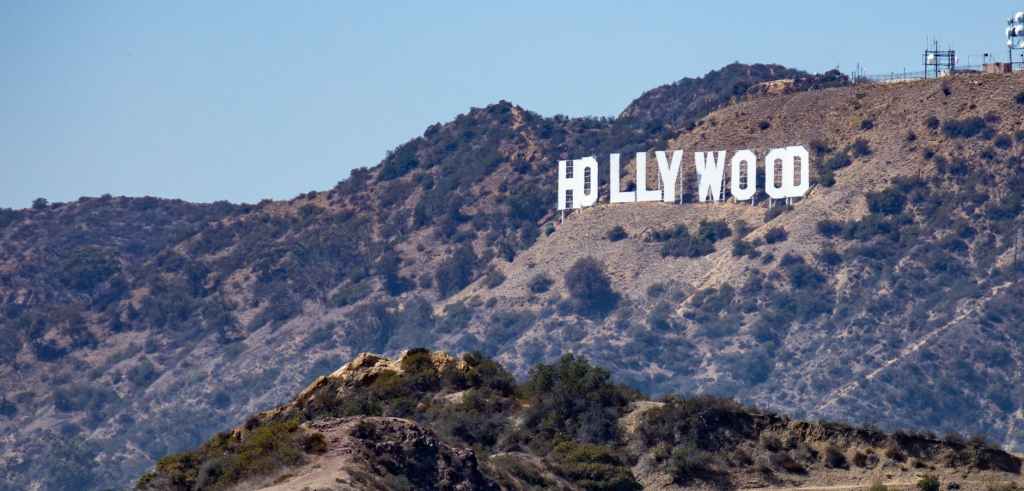
We confront the endless coverage [1] of the fires raging through Hollywood in California with nothing but profound melancholy. For we had two of our most enjoyable holidays ever in that distant State of America, and many times experienced the kindness and intelligence of enlightened people. The trouble is that they were motoring holidays. We toured around vast areas, heedlessly filling the atmosphere with carbon dioxide and other pollutants, and thereby contributed to the disaster that has befallen these unfortunate people.

And more disaster is to come. Any hopes that this trouble is exceptional and can be put down to an El Niño event, now look forlorn. Read this from Nature Briefings; and click on their link if you dare:

Is Global Warming Speeding Up? Earth shattered heat records in 2023 and 2024, with temperatures rising further than expected on the basis of previous trends and modelling. A mysterious reduction in cloud cover, combined with an El Niño weather pattern, could be responsible for temperature increases in 2023. However, scientists expected temperatures would decrease again in June 2024 when the El Niño subsided, which didn’t happen. Now they are racing to work out whether this sudden spike is just a blip in the climate data, or an early indicator that the planet is heating up at a faster pace than they thought.Nature | 6 min read
Reference: Science paper

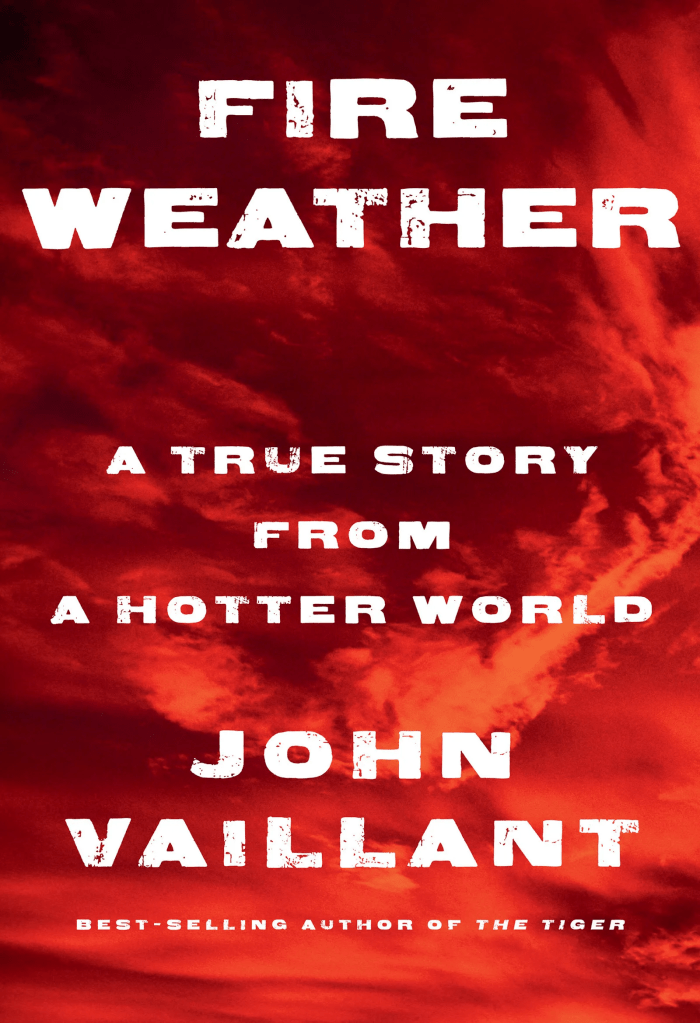
Why, and how, are we bringing this catastrophe upon ourselves? One man who seeks to understand is John Vaillant. Fire Weather is his his study of the catastrophic fires that raged for a year in certain regions of northern Canada, regions that had devoted themselves to the extraction of fossil fuels. You can read a review of his work here from Wired [3] But it’s a weary chronicle of greed, short termism, butch manliness and wilful destruction; the substrates in which climate denialism thrives.

However we cannot close without a slightly hopeful thought. Every so often one still comes across, at least in this country, members of the proletariat who ask questions like”this climate chinge fing-der yew fink iss rilly ‘appenin?” Such people, hypnotised as they are by all things American, Celebrity and Hollywood, may now have to confront a reality. Yes, it really is.

[1]https://www.bbc.co.uk/news/live/c5y81zyp1ext

[2]https://www.wired.com/story/fire-weather-book-canadian-wildfires/

[3]https://www.wired.com/story/fire-weather-book-canadian-wildfires/

#california #hollywood #global warming #fire weather #fossil fuels

Is a World Government the answer? 1:Introduction

The United States of America or at least its President elect, now  calls for sovereignty over Greenland and Panama. As ever in History, larger sovereignties trump smaller ones. So, is the concept of the Nation-State redundant? Is it time for a different way to arrange human populations?

If we take the Nation State  to be the best way to organise society, the flaws in the model are glaring. The great problems of the world, climate change, pandemics, and mass migration, are transnational and occur without reference to national frontiers.. Breaking us down into competing Nation States, each seeking its own advantage, will not only impede the solutions to these problems, it may actively prevent them.  Certainly, the Nation States we now know command great emotional loyalty from their subjects. They provide these subjects with identity, structure and purpose. But the nation state we now call England was once divided into seven or more competing polities, each equally demanding their subjects’ love. Who would now give his life for Wessex or Mercia, when England calls? And that is the same for all the nations of western Europe. When corporations  and billionaires  operate on a global scale, what use are tiny sovereignties anyway?

In this series we shall be looking at whether a world government would be the answer to our problems. Certainly it could address all those above, and many more. However: “always be wary of good ideas”. The true  mark of the intelligent is  that they always see both sides to every question. Would a world government quickly become a dreary prison, with no escape for the dissident and the persecuted? Or are we already in a prison, held their by the competing xenophobias of angry, ignorant tribes? Let’s look at the positives and the negatives, and finally come to a conclusion  Once again we welcome your thoughts.

#Nation State #world government #economics #politics #history #climate change #pandemic

Torsten Bell’s prescription: but will the British take his medicine?

Here’s a telling statistic about the United Kingdom.  Between 1850 and 1992 more than 200 reservoirs were regularly opened across the country, even during World War Two: seven were dug in 1955 alone. Since 1992, not one has been constructed. What goes for reservoirs goes for every other conceivable aspect of infrastructure.  Britain is a country living off its past like fallen aristocrats, in deadly hock to nostalgia and expecting a comfort of life way beyond its means.

Such is the thesis of Torsten Bell  (Judd School, PPE Oxford, Resolution Foundation and now Labour MP)  He presents his thesis in a work of immense detail and careful scholarship called Great Britain? How We Get Our Future Back. He details the consequences of our doleful mismanagement in terms of education, poverty wages, health, and a tax-and-benefits system of Byzantine complexity and contradiction.  Yet it is chapter five on investment which diagnoses the root causes of British woes. Compared to other OECD countries, the British are terrible at it, both public and private. This in turn leads to appalling weaknesses in productivity, entailing less investment, and so on etc, etc. Downwards. The consequences of this economic stagnation will be a rise in political extremism as different ethnic and cultural groups fight over the shares of a declining national cake.

His analysis and prescriptions read like the DNA of the present Labour Government. It fits into a long tradition of well-meaning analyses of what’s wrong with Britain. Yet he  cautions against the pat solutions of Centre Left bien-pensants (our problems are much deeper than membership or not of the EU) He calls for a new patriotism, based on our undoubted strengths in things like service industries. In this and many other recommendations, he has much good to say.  But will the British want his, and his party’s, medicine? Consider this:

Anyone serious about governing Britain should plan on taxes remaining at higher levels than we are used to (p189)

Paying taxes is the litmus test of patriotism: if you won’t put your hand in your pocket, how serious are your protestations of national love?  Our fellow countrymen grumble about health and roads: but they hate, viscerally hate, paying taxes, as we know from our lived experience of them.  So any new ethos based on shared experience will die stillborn; there are still too many comfortable with the mental furniture of our decline, at least among the English.

Great Britain PLC is a failing company: underinvested , indebted, overdrawn and still overpaid in many grades. A merger was tried between 1973 and 2016, but it failed. Now the only option is a foreign takeover. How hostile shall it be?

We have one criticism of the hardback The graphs are printed in weak grey ink, thereby making comprehension difficult at times, and spoiling the hard work of the author and his researchers

Torsten Bell Great Britain? How We Get Our Future Back The Bodley Head 2024

#great britain #uk #economics #politics #social democracy

hMPV: Shock Horror, or small pandemic, few hurt?

As all journalists know, there are two types of story. One is “HUGE SOMETHING SHOCK HORROR” the other is “small thing happens, Few hurt or injured” Which do you think catches more clicks/sells more papers/hooks more viewers? So it is with a certain caution that we approach the current media froth around the new hMPV virus that is clearly occupying the thoughts of so many members of the Daily Mail newsroom.

hMPV (human metapneumovirus) is a pretty standard seeming single strand RNA virus of the respiratory syncytial group.[1] It is one of many that surge in late winter in the northern hemisphere after people have been living close together for long weeks in the warm, but with regular trips out into the cold. It can be dangerous, there’s no doubt about it, especially to vulnerable groups such as young children the elderly and those with respiratory conditions. As it is not in our interests for any of our readers to die or lose family members, we urge you to take the sensible precautions enjoined by medical authorities.

What is interesting is the way it’s being reported, especially in western media. The two stories our researchers have put up, both from the Mail are actually pretty representative of all western media, regardless of political, social, racial, sartorial and gender affiliation. [2][3] The westerners are anxious for China to share more information and data on the current outbreak. The Chinese, with long memories of western interference, have their own concerns. Everyone recalls the bitter trading of accusations, suspicions and mistrusts during the COVID-19 pandemic, and are all about as calm and rational as a pair of nestling blackbirds in May.

And our thoughts ?Call us naive, but we long for a world where scientific and medical questions are treated as such, and the maximum co-operation is effected. Let the boys with their toys worry about things like who has most battleships later. Unfortunately it seems to be a human cognitive weakness to elide any possible phenomenon into a weapon to bash the enemy. We are not experts, but we suspect their may be bigger existential threats than this virus. Perhaps a more advanced species will one day make better distinctions.

[1]https://en.wikipedia.org/wiki/Human_metapneumovirus

[2]https://www.dailymail.co.uk/health/article-14254567/symptoms-HMPV-mystery-illness-surging-China-UK.html

[3]https://www.dailymail.co.uk/health/article-14258029/china-details-hpmv-outbreak-UK-experts.html

#hmpv #virus #pandemic #china #west

Materials Science Meets medicine-with a bonus for our Spanish amigos

There’s whole areas of learning and technology which we don’t cover much here. Because frankly, we are just too ignorant. So with the guidance of Dr José Manuel Torralba we present some truly startling advances in the field of Materials Science. What we found was so unexpected that you’ll have to forgive the slightly gushing Tomorrows World 1970- style vibe with which we serve it up. (One link is in English [1] but as we found the the Spanish one first, we present that, too [2])

Implants and artificial tissues Ever heard of nitinol? Neither had we. It’s a sort of alloy of titanium and nickel. already well tested by dentists and others. According to José, it should now be possible to create corneal implants which are capable of shape-memory. Yes, that was a new one on us too. But it looks as if this is going to be an exciting, but very practical area.

Batteries have memory too Our next surprise was batteries with anodes made from something called silicon nanofibres which apparently will be much better at storing energy than the current graphite ones. If nothing else, a real boost for renewable energies

and finally:

Metamaterials We thought this was like something out of a Terminator style movie. But it may be possible to to design materials which, in the words of José

We can modify a material’s surface by creating structures that cause waves to move, bend, or reflect in specific ways. This allows us to create invisible materials (manipulating light), radar-undetectable materials, or materials that completely isolate sound. By altering a material’s internal architecture, we can achieve unprecedented mechanical properties. 

It’s so refreshing to dive into a little-visited area and find out what the clever people who work in it have been up to. Especially when it informs one of the main tropes of this blog, which is medical research. We hope you found this slight diversion useful, and will leave you with this thought:
There are more things in heaven and earth, Horatio, than are dreamt of in your philosophy- Hamlet Act 1 Scene 5

[1]https://materials.imdea.org/the-supermaterials-that-will-transform-our-lives-in-2025/

[2]https://www.bbc.com/mundo/articles/ckg9v74kvr2o

#metamaterials #nanotubes #medicine #implants #materials science

Can you Catch Cancer from a Cut?

Just because something is rare doesn’t mean that it’s insignificant. At least, not if it comes surrounded by well-attested research from trained professionals. Which is why this intriguing article by Alexa Lardieri of the Mail has really got us thinking.[1]

A man in Germany was operated on for a rare type of tumour. During the process, the poor surgeon cut his hand. It was cleansed and bandaged immediately. Six months later a tumour, which was genetically identical to his patient’s cancer, was found to be growing on the surgeon’s hand. This all happened back in 1996; but the case continues to excite speculation to this day.

Much more can be found in Alexa’s cogent article. Riffing on it, it suggests the following questions

1 How does transmission occur? Is it via nuclear DNA? Is there an epigenetic mechanism? Dare we speculate that a protein might be involved?

2 Alexa reports that the poor surgeon’s immune system may not have been quite as strong as it might have been. So…are we being bombarded with unknown carcinogens all the time, and it’s only our immune systems keeping us safe?

3 What do we mean by “cause” anyway? Does buying cigarettes give you cancer? Or is it smoking them? Or is it something in the smoke, like tar? Or could we even speculate that it is not the tar per se, but the molecular changes it induces in the cells of the victim? Where does cause end, and effect begin?

Yet it is in such cracks in logic that the most fruitful discoveries are to be found. This case, and the questions it raises are one such example. Thanks, Alexa, for bringing it back from 1996. Which was a great year for music too.

[1]https://www.msn.com/en-ae/public-safety-and-emergencies/health-and-safety-alerts/surgeon-catches-cancer-from-patient-in-first-of-its-kind-case/ar-AA1wRLpW?ocid=Bin

cancer #dna #epigenetics #immune system #health #medicine

Out of Africa #2: Upsetting the Apple Cart

Fans of this blog will recall our long standing reservations about the various Out-of-Africa hypotheses which crowd the field of human paleontology. We’ve mentioned our doubts about the earlier one before (LSS 18 5 23). To be fair, the second one, involving modern Homo sapiens has stood up rather better, in view of all the archaeological, linguistic and genetic evidence which supports it.[1] [2] All of which is no reason not to be glad when someone comes along and upsets the apple cart. Today that someone is Professor Huan Shi, whose work is more than admirably reported on by Matthew Phelan for the Mail. [3]

The jumping -off point for Professor Shi is the Dali skull from Shaanxi province. Not only is it very old (260 000 BCE) for something which displays a lot of modern traits; it’s also a very long way from Africa. He goes on to suggest genetic similarities between early H sapiens in Europe and those in East Asia, distancing both from African centred populations. Finally he rests on the (slightly controversial) theory of Maximum Genetic Diversity, which suggests ancestral populations will exhibit a lower diversity, while derived ones will go higher.

Out thoughts? Since China rejoined the community of civilised nations after 1976 they have made some wonderful contributions to paleontology; so treat this with respect. However: there are even older fossils in parts of Africa, such as Jebel Irhoud at 315 000 BCE, which have modern features.. And all the all the models of linguistic complexity suggest the most complicated phoneme patterns are in African languages, and the least out in the Pacific islands, almost the last places we reached in our wanderings. What if both sides are asking the wrong question?After all, a thousand years is a long time for a powerful top predator. Such a species spreading at only ten miles a year would cover the whole landmasses of Africa and Eurasia in that time. Add a few thousand more and maybe the odd climate fluctuation and instead you would have a population endlessly marching, cross breeding and throwing up all sorts of variations. Of which a few fragments found hundreds of thousands of years later will give only the most cursory understanding. What if our species never began at all but has just carried on evolving, and always will?

[1]https://en.wikipedia.org/wiki/Recent_African_origin_of_modern_humans

[2]https://www.nature.com/articles/srep36645

[3]https://www.dailymail.co.uk/sciencetech/article-14236961/Scientist-challenges-Africa-theory-human-evolution.html

human evolution #china #homo sapiens #out of africa #lingiustics #genetics #microbiology

Are the British ceasing to be their own oppressors?

Teaching English in England was always different. You weren’t just instructing in the language; you were delivering a handy survival guide to our ancient, entrenched class system, and what all those words, pronunciations and signifiers meant in the hierarchy. In this land, small cues in voice, dress, hair, clothing and vocabulary mark harsh and zealously-policed lines of demarcation. Crossing them can mean social exclusion at best or serious physical harm at worst.

It is rooted in our aberrant education system.* Which allows anomalies like the output of the top 9 most expensive schools, representing 0.15% of pupils produce 10% of the entries in Who’s Who, our Establishment’s self- regarding house manual. [1] That people who hold our top jobs are five times as likely to have gone to private schools than state ones.[2] We must leave it to you to surf the waves of links which we have provided, gentle readers. They are but the tip of a mighty iceberg.

No nation can survive at the top for long if it continues to fish for talent in a smaller pool. And Britain’s decline since 1900 has been precipitate. Why then do British people in general and English ones in particular, continue to acquiesce in a system which so stultifies their life chances? Nostalgia for the times of lost dominion? Fantasy wish fulfilment? Money worship? An understandable suspicion of the destructive capacities of many “reforms” proposed by Left wing activists who laughably described themselves as “educationalists”?

None of us who care for the future of our island ever wanted to abolish Private education. But we always knew this quasi-apartheid must end one day. The way to achieve that was to make State schools so good that it would be economic madness for a family to choose any other. Signs that this may at last be happening are found in this intriguing article by Joanna Moorhead. She and her husband were solidly Private: but are entirely satisfied with State for their own offspring. You may read why here.[3] For anyone English, this change is seismic: practical economics has started to trump considerations of status, class and tribe. If this continues, it will be welcome.

* Handy note for foreigners Public school=Private school State School= publicly funded school Gottit?

thanks to P Seymour

[1]https://www.asanet.org/news_item/alumni-britains-top-private-schools-are-94-times-more-likely-reach-elite-positions/

[2]https://www.theguardian.com/society/2019/jun/25/britains-top-jobs-still-in-hands-of-private-school-elite-study-finds

[3]https://inews.co.uk/inews-lifestyle/parent-private-school-kids-state-school-differences-3454845

#learning #society #public schools #state schools #life chances