

American Scientists: Your new home in Europe awaits

Will the brain drain of the last hundred years reverse? Will the best and brightest minds start fleeing America and pitch up on Europe’s shores? We sort of raised this question last week(LSS 20 3 25) but now the admirable Alexander Hurst does it much better in the Guardian [1] Truly, it’s a real tour de force of why they’re thinking about it. It’s not just the cuts to Doctorate programmes or even the targeting of certain Universities like Columbia and Johns Hopkins for spiteful treatment. it’s the Administration’s underlying presumption that free enquiry and science are its enemies. And that the persecution has only just begun. As Alexander notes, astute minds at the University of Aix-Marseille have scented an opportunity with its Safe Place for Science initiative.[2] If the EU and associates like the UK really get their act together, Europe could look like a very good place to study nature indeed. So-where to settle,to work, and have a good life at the same time?

Our list below is little more than a list of hints and suggestions; we like to keep the blog as short as possible. But if only one or two aspiring post docs or lecturers glance over our list,and at least consider then our work for this day is done.

France The University of Aix Marseilles was first out of the starting blocks; but France also boasts such luminaries as the Sorbonne. When you throw in the food, wine and a culture that actually admires learning (you don’t get a reputation as tricky intellectuals for nothing) this is a calling card to keep near the top of your wallet.

Germany Beer’s great, food’s good and this was the home of such awesome polymaths as Goethe and the ground breakers at the centre of quantum physics. Instead of picking one or two Universities-we can’t, there’s too many good ones-we are going to tip the truly awesome Max Planck Institutes as your next home. Old LSS hands will recall our utter reverence for their Professor Paabo and his discoveries in human evolution. A glance at their website will reveal the other edges they are cutting daily. Has to be on your list [3]

United Kingdom The trio of Cambridge-Oxford-Imperial make a truly heavyweight bunch, but they sit at the top of a tree of fine institutions: if we picked out the Manchesters, Bristol and Sussex we would be doing a grave disservice to many other places of supreme excellence. Property can be pricey in these small islands, but don’t believe the stories about the food It has become immensely better in the last 45 years or so, and above all: these people speak American, godammit! [4]

Spain One of the joys of Hispanic studies was to discover that behind all the beaches, bullfighters and paellas lay a truly formidable network of research institutes and the like, which were particularly strong in Life Sciences. Again. the list is long. But The University of Barcelona and The Complutense University of Madrid are usually vying for the top places, just like Barcelona FC and Real Madrid in La Liga. With the economy growing well this really could be una casa nueva, amigos [5]

Italy Home not just of the Renaissance but a whole world of scholarship before and after (remember that Dante bloke?) this has to be a look -at. Currently Bologna and Padua are near the top, but their is a strong following pack. Once again, the food and the culture are strong selling points. Plus we visited recently, and those villages tumbling down the hillsides atill look exactly like the ones in Renaissance paintings. Were we charmed, or what?

To which we could add Switzerland, Ireland, Scandinavia, and a host of other places. but must sorrowfully admit there is no space in a short blog. Brains are like money; they tend to gravitate to where they’re appreciated. Time to leave l the Confederacy of bullies, evangelicals. good ol’ boys and conspiracists behind; once again they are on the wrong side of history. Time to look for a Union where you can once again feel at home.

There are plenty of websites which will give you the lists of top Universities by country. If you want to follow up, we urge you to visit them

[1]https://www.theguardian.com/commentisfree/2025/mar/24/french-university-scientific-asylum-american-talent-brain-drain

[2]https://www.univ-amu.fr/fr/public/actualites/safe-place-science-aix-marseille-universite-prete-accueillir-les-scientifiques

[3]https://www.mpg.de/institutes

[4]imperial college london

[5]https://ucm.es/english

#donald trump #science #learning #europe #united states #economics

Friday Night Feast of Fun: The Joy of Charcuterie

We can’t think of a better suggestion for you tonight, dear friends, than Charcuterie. It’s a French word, but the cuisines of many countries now feed in, as we shall see. Its such a simple way to up a range of flavours for guests. There’s usually always something in the mix that anyone and everyone can eat. Above all, sharing and comparing are such good conversation starters that the busy hostess or host will find that half of their task has already been completed. How’s that for ergonomics?

Without further ado, lets start with the food. We’ve put up Laura Wingrove‘s post for BBC Food [1] Ostensibly designed for Christmas, Laura’s run-through will give you all you need to serve up a mouth-watering board at any time of year. There’s no law against using this for Easter, you know. The hams include piquant Parma, and mouth watering Mortadella, all the usual suspects in fact. We confess that our favourite is the famous Spanish Jamon Serrano. As for spiced meats, French Saucisson moved to the top of our culinary Hit Parade some years ago, and has stayed there ever since. She also waxes lyrical on the best accompaniments like cheeses, olives and so on, as well as handy ways you can serve it all up to transport your guests to a rough stone Provencal kitchen diner, where we understand such meals are served all the time. Well, according to certain lifestyle magazines they are,

And to drink? The Wine O Mark website puts up its 7 best parings. [2] What we like about this is the selection of old Mr Reliables, like Reislings, Merlots and Sauvignon Blanc. Remember the trick is to serve to the lowest common denominator, but to do it well , which is exactly what they achieve. Our researchers suggest a good range of cold beers might not hurt as well- Eurolagers like San Miguel or Kronenbourg might add to the ambience here.

All of this can be picked up at good supermarkets: we might suggest Marks or Waitrose as the few extra pounds spent will more or less underwrite you against disaster.

Good luck and Happy Eating!

[1]https://www.bbc.co.uk/food/articles/charcuterie_board

[2]https://www.wineomark.com/best-wine-for-charcuterie/

#charcuterie #food #wine #beer #cheese #jamon #saucisson

When a culture turns away from science, its decline begins

Fans of the old Jacob Bronowski TV series The Ascent of Man will recall a key episode. In the early seventeenth century the Catholic Church decided to persecute aspiring scientist Galileo Galilei. In 1633 the Inquisition even put him on trial for having discovered that the Earth goes round the Sun. Using the threat of torture, they forced him to deny this simple reality. Bronowski’s take on all this was to assert that this was the key step which sent the Catholic part of Europe (hitherto the dominant bit) into decline. Scientists and scholars fled to the more tolerant environment of Protestant Europe, whose economies benefitted accordingly. The few Catholic thinkers of note remaining (Descartes and Pascal spring to mind) But they were like the last rays of a setting sun, before darkness and superstition suffocated all.

A one off? Special pleading? History suggests otherwise. From about the 8th Century to the 13th of the Christian Calendar (apologies to Islamic readers, but let it do for now) the Islamic world was dominant not only in trade and war, it was supreme in all the skills of learning and science. Thinkers such as Al Khwarizmi, Ibn Sina (known as Avicenna in western lands) and Al Birani made contributions to human learning which will last forever. Yet, starting about the middle of the twelfth century CE there was a slow but steady trend away from reason and science towards deeper religious orthodoxy as Hilel Ofek explains in his essay Why the Arab World rejected Science [1] Slowly the northern nations began to close the gap and eventually move ahead. Nearer our own time Corelli Barnett showed how Britains decline began as abstract studies of things like Latin and Greek came to dominate the Universities, while subjects like science and engineering were accorded second rate status. [2] [3] The values of a well entrenched landed aristocracy won out over the more plebian instincts of the middle class . With long term disastrous consequences for Britain’s place in the world

And the relevance of all this? Across the western world, there is now a strong, growing and incredibly well-funded movement against science and objective evidence. [4]It’s felt in policy debates on economic questions, university funding, on vaccines, and above all in the swirling brawls around climate science and global warming. The temptation is to put all this down to the ebbs and flows of political debate. But that is to miss the point. Questions of science are not political. They are not open to understanding by the mental tools developed for political and religious debate. A nation, a whole culture is being continually weighed in the balance, and can fall at any time. Is this now happening in the so called “advanced ” western nations.

[1]https://www.thenewatlantis.com/publications/why-the-arabic-world-turned-away-from-science

[2]Corelli Barnett The Collapse of British Power 1972

[3[ Corelli Barnett The Audit of War 1986

[4]https://www.theguardian.com/commentisfree/2025/mar/20/kemi-badenoch-net-zero-brexit-right-clima

#science #global warming #climate change #reason #history #christianity #islaam #british empire

Is human evolution a mess? Depends how you look at it

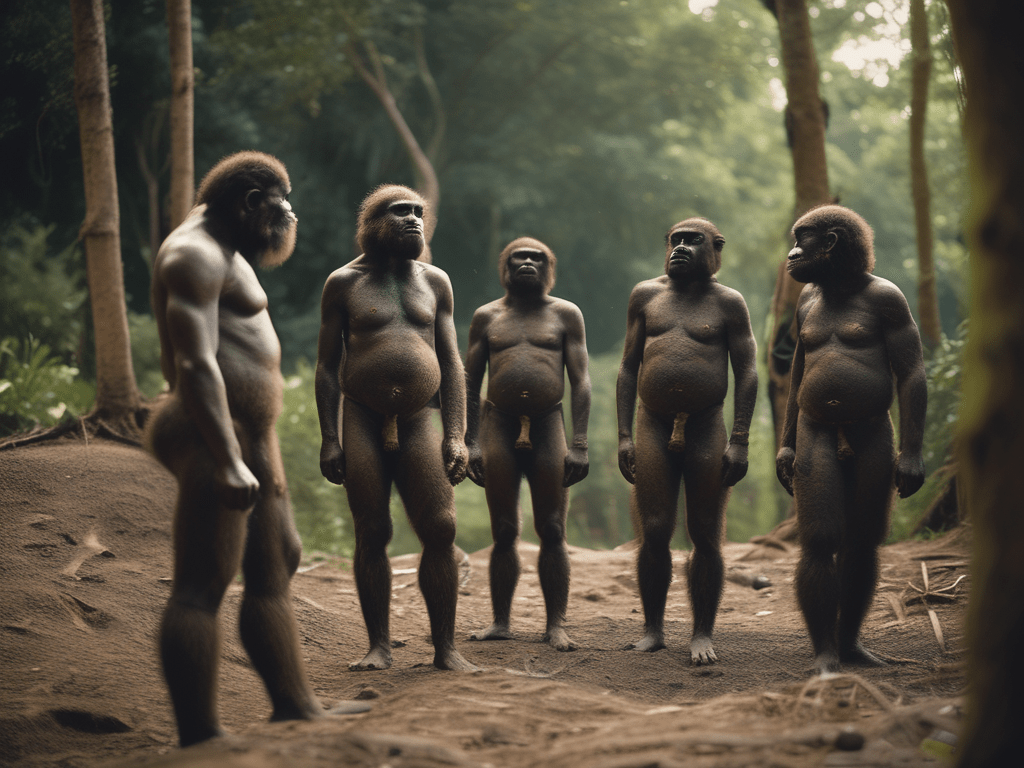
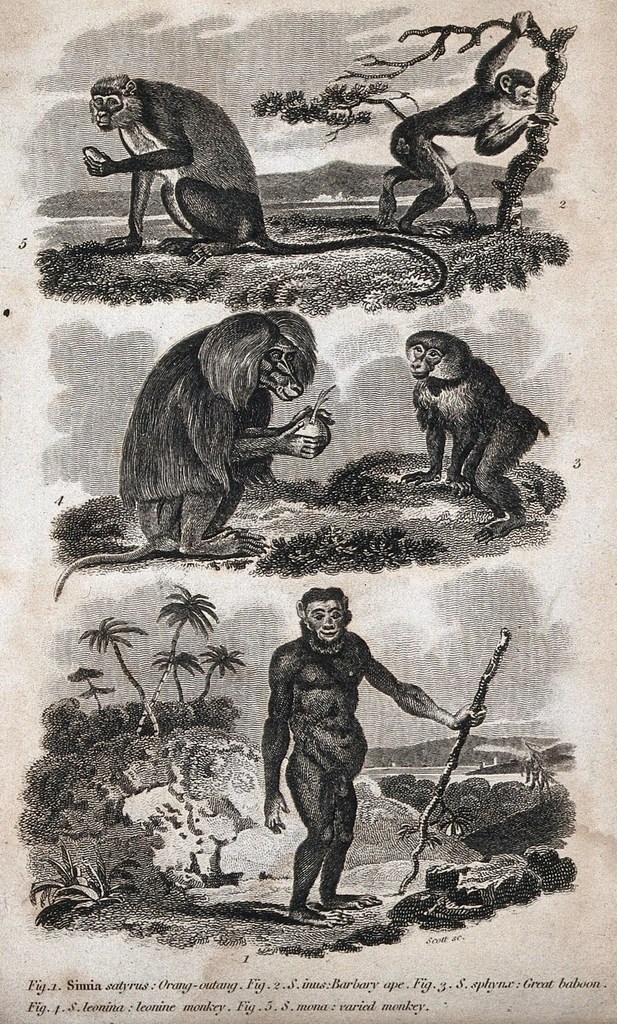
When we were young, we believed in a Story. First there was Australopithecus, a toolless, speechless, walking chimp. He begat a brave pioneer called Homo erectus, a handy sort of chap who at least had decent looking tools and invented fire. He begat two sons: a hairy, primitive savage one called Neanderthal Man, who deservedly came to a sticky end. And a tall, cool handsome one which called itself Homo sapiens (“the wise man”), in one of the most outrageous acts of vanity and self-delusion in history.

The truth turned out to be far more complicated. Even looking at the story of the last 500 000 years , when everyone was about as modern as you can get. First Neanderthals have been getting steadily cleverer for the last forty years or so. They probably had language, clothes and y even art, goddammit. Along came another relative, the Denisovans who were similarly equipped. And then came the geneticists lead by the inimitable Professor Paabo, whose discoveries have upended everything , blurred every category and wiped every line. Latest instalment in this trope comes from the discoveries of the learned Professor Cousins of Cambridge University which we channel both from Jonathan Chadwick of the Mail[1] and for those with a little more time, the original paper itself [2] The story of the last million years or so is not of some heroic hero on a quest for self-improvement. But bunches of largely helpless bipeds pushed hither and thither by the vagaries of climate and geology, splitting, meeting and breeding; spawning a mishmash of different types which their distant descendants come along and label with important- sounding names. And we think we see a pattern in all this.

Firstly :you know a lot less than you think you do. We have been tracking human evolution for nearly sixty years now, so we can be fairly confident about that statement. Secondly: there is always something buried out there which is going to upend everything you know; so stay cautious. Thirdly: someone in another field is going to park their intellectual tanks on your lawn sooner or later, reducing your omniscient learning to at most part of things, not the whole of it. And finally:-human evolution makes a pretty good paradigm for all other learning. Not just hard sciences, not just social sciences but also things like history and economics. Beware of anyone who knows the answers, because they are not telling the truth.

[1]https://www.dailymail.co.uk/sciencetech/article-14508089/Scientists-hidden-chapter-human-evolution.html

[2]https://www.nature.com/articles/s41588-025-02117-1

#homo sapiens #dna #genetics #neanderthal #anthropology #science #knowledge #evolution

Could we really use bacteria to beat cancer?

According to the redoubtable Professor Justin Stebbing of Anglia Ruskin University, yes we can. In fact he and his teams of researchers have already made a start, as his article in The Conversation makes clear[1] Like you gentle readers we had no idea this sort of thing was possible. But it certainly reinforces our old belief that research in one area has a funny way of becoming useful somewhere else.

Anyway, Professor Justin’s article is a bit of a tour de force. It starts with a historical survey. Apparently there was an American doctor called Colley who was trying this out, not unsuccessfully, as far back as 1861. The tumour itself might actually provide a relatively benign area for some of our bacterial allies, if we can get them in there successfully. There’s a nice little case example of strains of E coli which have been designed to deliver tumour-unfriendly proteins into immune cells, thereby training them up to recognise “hostiles”, when they see them.

As with all these discoveries that we report on early, there’s a lot of proving and testing and trialling, and all that sort of thing yet to be done. But Justin is nothing if not hardworking: have a quick glance at his website reveals the many scientific pies he has his professorial finger in. [2] It was particularly intriguing to see such scourges as colon, breast and the dreaded ovarian cancers on the list, as this suggests a serious purpose to address real needs. This is a truly encouraging development and one to watch in the years that lie ahead.

[1]https://theconversation.com/bug-drugs-bacteria-based-cancer-therapies-are-finally-overcoming-barriers-251278?utm_medium=email&utm_campaign=Latest%20from%20The

[2]https://www.aru.ac.uk/people/justin-stebbing

#cancer #bacteria #genetic engineering #immune system #medicine #health

Sustainable building materials? UK Hempcrete shows the way ahead

For those of us who spend our working lives worrying if the next generations will even survive, the global building and construction industry is a source of some angst. Yes, all those people have got to have places to live, and work, and to get cured of diseases caused by lack of antibiotics (LSS ad nauseam) The trouble with Construction is that it’s so eye-wateringly carbon expensive. Here’s one long fact for one short blog: if you add all their carbon costs together (resource extraction, transport, construction, demolition, recycling, plus cooking all those enormous English Breakfasts they all eat), it all adds up to a whopping 37% of global emissions. Any ideas?

One way ahead is to make the materials they use for things like floors, ceilings, walls and so on, a lot more planet- friendly. Which is why we want to showcase the work of a British firm called UK Hempcrete. [1]Hempcrete is an exciting new type of biocomposite made from the stalks of hemp plants, as well as more traditional materials such as lime and sands. [2] But the new mix carries two key advantages. Firstly , and unlike traditional building materials it actually acts as a sink for CO2 over the course of its use. Secondly, it’s hygroscopic, allowing for much better moisture balance in buildings made from it. Every year we burn billions of tonnes of fuels trying to keep our buildings warm and damp- free. This new material gets around that problem almost entirely. But you can read a lot more about this company and its subsidiaries from their website and our other links; they’re much better at it than we are.

And, as you’re asking, do we have an interest in this company? Financially, no-we’d never even heard of them, or hempcrete, until our researchers flagged them up this morning. But we do have an interest in survival. And long ago we decided that it would not come from making people more virtuous, but by setting up ways to let people make money from progress. Which is why we plug, shamelessly, the work of all sorts of companies here, from net zero aviation folk to Biotechnology enthusiasts in the heart of the Cambridge Science Park. (LSS passim) Of course we keep the usual media/PR links to these outfits when we’ve finished. But that’s more on your behalf, gentle readers, not ours. Any attempt to get our construction industry onto a more sustainable, cleaner and rational footing will always earn the support of this blog. Good luck, UK Hempcrete-and keep it coming.

[1]https://www.ukhempcrete.com/

[2]https://en.wikipedia.org/wiki/Hempcrete

[3]https://www.ukhempcrete.com/services/material-supply/

#global warming #carbon emissions #ukhempcrete #sustainability #consrtuction industry #building

Is Carbon Dioxide already killing us? An old blog revisited

About five years ago we published this blog called is Carbon Dioxide the new Passive Smoking?

We already know that rising levels of carbon dioxide from global warming are bad for the planet. They are ruining the climate, causing floods raising sea levels, and making fertile areas uninhabitable. But are they already starting to kill us individually?

Before global warming, the average level of CO2 in the atmosphere fluctuated around 280 ppm (parts per million). Now it hovers around 410 ppm; by the end of the century it could be around 670 ppm or even higher.

The human body can sustain low levels of CO2 in the atmosphere-we’ve adapted to it. High levels are normally only a problem for people like building workers, astronauts and captains of nuclear submarines. Research shows that there is no question that the sorts of levels these people can meet will do you serious harm, but most of the work is concentrated around very high CO2 concentrations at thousands of ppm, with very short exposure times , both for obvious reasons.

But as CO2 levels rise, what happens to all of us as we breathe in steadily rising levels day in day out, without a break? Especially in places like offices, where it tends to become more concentrated.

Now a paper from Nature Sustainability by Tyler Jacobsen, Jasdeep Kler* and their co-workers looks at this question.   Some of their findings are disquieting, to say the least. Firstly chronic CO2 exposure does seem to have health risks. There’s a long list, but the main stand outs are on cognitive ability, kidney calcification and endothelial dysfunction. Secondly, this is a preliminary paper, as the authors admit. A very great deal of work remains to be done. And that will mean setting up research programmes, signing up scientists and re-budgeting whole departments.

There is a worrying historical parallel. When the first early papers on the effects of cigarette smoking were published, they were largely ignored. Which only gave the danger time to grow. And at least individual smokers were able to mitigate the risk by giving up. But for passive smokers the risk was everywhere. If you lived or worked or socialised with a smoker, you couldn’t help breathing the stuff in. It’s the same with carbon dioxide-there’s no getting away from it

We are aware of the dangers of crying wolf, and of course it’s perfectly possible that this may not be as serious as some of the other problems currently besetting the world. But isn’t it time we researched a little, just to make sure? (LSS 11 2 2020)

Since when very little has changed, Except perhaps that atmospheric levels of CO2 have almost certainly risen a little. Again, we stress that we don’t know the answer, and are calling for research, not immediate action. But this this blog has a lot more readers now. We include the reference below. Do you know anyone who thinks this ought to be investigated further, by practising scientists or doctors?

Direct Health Risks of Increased Atmospheric CO2

Tyler A Jacobson, Jasdeep Kler, Michael T Herneke Rudolf K Brown, Keith C Meyer and William E Funk

Nature Sustainability Review Article Vol 2 August 2019 pp 691-701

#globalwarming #climatechange #co2levels #health risks #environmental health #passive smoking #health #medicine

Why Capitalism held the moral advantage(until very recently)

At least the Left had moral purpose. For all the mass murders. inefficiencies and lies perpetrated under Socialist systems, we cared about the poor! Whereas you lot (the Capitalists, comrades) are nothing but selfish greedy amoral money grabbers, hooked on cocaine and fast sports cars. But Capitalism has one moral advantage wired into its very DNA. It foments truth and honest dealing.

Before you reel in disbelief, citing hoards of dodgy builders, corrupt bond traders and megalomaniac media moguls, consider this. If I buy a load of concrete from you to make a reliable bridge, I need to know it works. If I know I can sue you because the concrete is unreliable, and get good judgement in a court, you are much more likely to supply me with good concrete. The bridge stays up, and I am confident I may build another. If on the other hand you are a friend of the President, or a member of his party, you can buy the judgement of that court. You keep your money, I get no redress. The Party and The President get a kickback. But the long term consequences are dire. Bridges fall down. Less people undertake the risk of building them, as the chances of a total loss soar. Foreigners especially will suspend their investment. For if a native cannot get justice, what chance for evildoers like them in such a system? It was this truth we overlooked: and no educated progressive we know has been a socialist since about 1985. This idea of open, independent, and above all transparent justice was the real American Exceptionalism. And why they began to pull ahead even of relatively open societies like Britain, where the justice system was mired in class prejudice.

However it seems to us that President Trump and his administration may have started to reverse this process. As Giselle Ewing explains in Politico[1] the Trump government has embarked upon a highly partisan series of attacks on both individual lawyers lawyers and the firms that employ them. This barrage of measures include investigations, denials of security clearances, terminations of contracts, and even blacklists. All in effect dividing the legal system and its future promotions into two camps. One of the Government. The other: its opponents. Once again, we stress that in our view Mr Trump is acting rationally by his own lights, and above all those of his supporters. Who are for the most part poor labourers and struggling small businessmen. Whose everyday lives are harsh and insecure. To whom long term concepts like Justice and Equity will seem abstract and far away. But if this trend continues, then the USA may end like Russia or one of those African countries where justice is no more than the whim of the President. And economic forces like investment, property rights and and trust behave accordingly.

[1]tps://onlinescientias.wordpress.com/wp-admin/post.php?post=11346&action=edit

#justice #equity #legal system #donald trump #law #economics #investment

Friday Night Feast of Fun: The Toby Carvery for us

For us, one of the most delicious moments in television ever came in Simon Schama‘s 2000 series The History of Britain. It recreated a moment in the working day of out first Prime Minister, Sir Robert Walpole as he attempted to bend the will of his latest Whig MP to the correct ends for Party and Country.1] And how did he do it? With a tasty dinner of English food at its best.of course! Roast meat. Roast potatoes. Yorkshire puddings. Vegetables like peas, carrots, parsnips- the best products of our deep and fertile soils, then beginning a new Agricultural Revolution. All washed down with the finest claret, glasses uncounted. It was until quite recently our main food, our only food really, topped off with various puddings made from quintessentially English things like apples, plums and creams. It’s still served today , from very expensive restaurants and snooty Fulham pubs all the way down to humble local ale houses. And deep, deep, down, in the very heart of our English souls. it’s still our very favourite best.

But where to get it? Any day of the week, served impeccably and with the best of good cheer? Well, at the risk of ostracism from some members of our social circle, we are going to recommend a Toby Carvery. [2] It’s cheap. It’s unpretentious. Some of your fellow diners may be a tad rough around the edges. You have to go up to the carvery counter to get your dinner But there are advantages. One: there is always a bar in a Toby, to get that authentic Whig-Tory Parliamentarian style experience going. Two You still have a server at your table, who in our experience are always among the most cheerful down to earth type you will encounter Three: going up to get your grub conveys several advantages: you can grab as much as you want, you can choose from the joints (there will always be beef, pork, gammon and a turkey). If you know the chef, you can always wheedle and creep your way to toothsome extra bits. and if you are on a health gig you can always cut out the potatoes and yorkshires, and cleave to lean meats and all the vegetables you need, Four, back at the table the server will still attend with all the wine refills that you, your companion or Sir Robert himself could wish for. Five we find some of the dessert items such as the ice creams and crumbles almost dangerously addictive. And at the end of the day you will pay a price, including tip which would buy you barely a starter and a glass of water in certain establishments which those who claim to have more refined tastes have forced us to attend from time to time.

And to all of those who clutch their pearls at our brazenly proletarian choice-:”you find somewhere better, mate!”

Editorial note: the writer of this piece was some time ago placed on a strict diet, and his penned this largely from memories. Happy memories.

[1]https://watchdocumentaries.com/a-history-of-britain/?video_index=9 see especailly 20-25

[2]https://www.tobycarvery.co.uk/menus/carverymenu#/

#roast dinner #sir robert walpole #english cooking

Black Universities: a source of untapped potential

“The trouble with racism is that it means second-rate people in first rate jobs.” These words, once spoken casually to us, are the real basis of our opposition to discrimination of all kinds: It’s inefficient; it’s not in the long term interests of the oppressor. All societies suffer from hierarchy and ethnic hatreds, But was saddest of all to see the United States of America, born in such enlightenment, to be so disfigured by this most ancient weakness of the human mind. One attempt to counter this was the establishment of Historically Black Universities and Colleges, which aimed to provide some higher education for students who were excluded from white institutions. They have been around for a long time, and you would have thought by now that the penny would have dropped: “this is a fantastic source of underused potential which could benefit us all, especially now that China is treading on our cowboy heels”. Well, read this and think again: Unshackle Historically Black Universities in Nature Briefing

Historically Black colleges and universities (HBCUs) in the United States “are producing world-class research and record numbers of Black scientists with one hand tied behind our backs and shackles on our ankles” because of “consistent, drastic underfunding” compared to institutions established to educate white students, writes evolutionary biologist Joseph Graves Jr. “For example, my research group alone has produced more Black women with PhDs in microbial evolution in the past five years than the rest of the country has in the past five decades.” Graves calls on industry, philanthropists and individuals to shore up weakening government support for HBCUs, minority-serving institutions and tribal colleges and universities.Nature | 10 min read

It’s not that we especially like black people ,or white people, or any ethnic, religious or social group . Quite the opposite, most of the time, for most of them. Nor are we especially compassionate or just, as far as we know. But we do regard all forms of generalised prejudice as a debility of the human mind, like the propensities to gamble, drink to excess, or indulge in concupiscent and promiscuous sexual practices. (that’s a polite way to put it!-ed) All of these errors waste time and money which in the long run would make us wiser, happier and safer. Let’s see if anyone does anything about these colleges.

#HBUCs #education #prejudice #racism #supercilious #economics #USA