
Help! We’re trapped in a Robbers’ Cave

For all those who had believed in Natural Progress, or the essential decency of the Common People, the Robbers’ Cave experiment came as a profound shock.[1] In 1954 researchers took an essentially homogenous group of boys to a summer camp in the Robbers Cave State Park in Oklahoma in the USA. After some mixing, they were divided into two groups and set into a programme of competitive sports and activities. A profound animosity quickly developed between the two groups which spilled over into extra curricular violence, including incidents such as flag burning and raids on buildings.

Conflict theory had been born[2] It is the study of the -ability? Tendency? pathological instinct?- we can’t find the word- of humans to divide themselves into groups based upon perceived differences. And to fight lethally over these differences ever after. One of the best writers on the subject is Amy Chua, who combines formidable learning with a deft, easy-to-understand touch. She first warned us of the dangers in World on Fire (2003.) suggesting that the rise of vast unregulated flows of capital and people would lead to the evolution of intense ethnic jealousies and rivalries. Her follow up was the masterful Political Tribes (2018), which deepened and contextualised her research in the age of Brexit and Trump. Although we think more work needs to be done around tropes like masculinity and hierarchy, her essential truth is unmistakeable. The central trend, perhaps even instinct, among humankind is towards regular intergroup hostility, usually culminating in violence.

All of which is rather depressing in a species on a tiny planet, a species armed with nuclear, chemical and biological weapons of the most awful power. And all of us who believe in progress have failed to address this essential truth. Some of us have preferred to think up imaginary communities , like religions or social and economic systems wherein such behaviours cannot occur. Others to twist and distort the evidence to suggest that the natural instincts are to reason and justice, and to all get along in a matey sort of way.

Yet we do not despair. Although the mass of humankind has preferred to live in savagery and darkness, small groups of us have effected progress of a sort these last few thousand years. The facts that you will eat clean food today, and wash your hands with soap, is proof enough of that. In the mix we discovered Law, which is based on Justice, as opposed to tribal customs and codes. We admit, following the great Chua[4] that universal values like justice and science are deeply imperilled at the moment. Tribes have the luxury of being able to pick and choose their truths, whereas we are bound by evidence and reason. Yet it is from us, not them, that everything that raises us above animals has come. We must now find ways to re assert the ascendancy of our values. Or die, trapped in dark caves of violence and unreason.

[1]https://www.thoughtco.com/robbers-cave-experiment-4774987

[2]https://en.wikipedia.org/wiki/Realistic_conflict_theory

[3] Amy Chua Political Tribes Penguin 2003

[4https://en.wikipedia.org/wiki/Amy_Chua

#tribalsim #aggression #psychology #evolution #amy chua

Towards a World Government: Will Donald Trump be the First Emperor?

A few weeks ago we posted a series of blogs (LSS 8 1 25 et seq) wherein we speculated about the pros and cons of a hypothetical World Government. If you do things like that, you need to look seriously at the possible candidates. And it looks as if the first one has come along. It is Donald J Trump, erstwhile 45th President, and now 47th President of the United States of America, A man who according to his own lights is as antipathetical to the idea of international cooperation and world government as you can get. But read on gentle reader.

Because there’s a theory doing the rounds which suggests that, whatever his ostensible aims, this is what he will achieve. It goes something like this. The early weeks of the Trump administration have been marked by falling financial markets and wild swings of tariff policy that have engendered a widespread sense of chaos and unease. An angst which is entirely inimical to the interests of the United States and its wealthier classes. But really it is all part of a Cunning Plan. Eventually things get so bad that The Donald calls all interested parties to a huge meeting at his palace at Mar-a- Lago. There he makes the following offer. First all willing parties revalue their currencies upwards against the dollar. Secondly they cash in all current US Treasury bonds in return for 100 year securities, which yield no interest whatsoever. In return the willing receive military protection and no tariffs, Anyone else had better look out. The 1985 Plaza accords on steroids, you might say. Except this time, all financial power and military power accrues back to the USA which becomes, de facto, the world government. We have channelled the excellent Roge Karma of the Atlantic (via Apple News) for today’s link; [1] But many thinkers, including the learned Gillian Tett of the FT have been floating this since January (she gets namechecked in this one)

The trouble with Cunning Plans is that they don’t always work. There are several problems with this one, starting with the Plaza accords. When they were signed, it was by a small group of rich nations who held a common enemy(the Soviet Union) President Reagan had carefully nurtured good, respectful relations with his allies. The current administration, whatever its reasons, works by bullying, blustering and threats. Not ways to engender co-operation and consent. Secondly there are now large and proud players, such as India and China who are rapidly evolving their own interests. Why should they throw away these futures on a scheme designed to benefit the United States? But the final sinkers are the very nature of the United States and its 45th/47th President. Hisory shows that they are not a reliable military protector, as any South Vietnamese, Afghan or Ukrainian will tell you. And if Mr Trump is so keen to weaken the dollar, why does he come out so strongly in its defence as the world reserve currency, as Mr Karma so astutely points out? Someone in Washington clearly knows the value of this reserve status, and the mortal peril which its loss represents to US power. Such inconsistency invites no confidence whatsover.

Our verdict? America really did have the game in its hands between 1989 and 2003, when it was thrown away in the sands of Iraq. Trump is like the Byzantine Emperor Justinian,(527-565 CE) setting out re conquer lost dominions. Wishing ends without sufficiently weighing the means. If there is to be a World Government, it won’t be like this.

[1]https://www.theatlantic.com/economy/archive/2025/03/qanon-tariffs/682144/

#world government #donald trump #plaza accords #justinian #economics #politics #history

Antibiotics among the Azaleas: follow-up podcast from Nature

We haven’t yet got to the podcast stage of evolution here yet. although it’s something we’re looking at with our IT people. But Nature have. That lot seem to think of everything first!

But we do consider it our duty to bring you each and every scrap of news we can on antibiotic research, still the fons et origio of these humble pages. Yesterday we channelled Nature’s report on the serendipitous discovery of an brand new antibiotic molecule called lariocidin in someone’s back garden. So in the light of our first paragraph(see above) we now present their follow up podcast on this self-same subject. That’s it, pure and simple. Are there any new antibiotics in your back garden, gentle reader? Could you be prepared to go out an take a peek? Otherwise, the rest of your weekend.

Researchers have discovered an antibiotic molecule by seeking out organisms that wouldn’t immediately thrive in a Petri dish. “One of the postdocs in my lab thought, ‘what if we just wait a really long time…for the organisms, that otherwise would be hard to grow, to grow in the lab?’” biochemist and study co-author Gerard Wright tells the Nature Podcast. “So they went to my technician’s backyard, got a sample of the dirt back there… and then put them underneath the bench for a year.” The Paenibacillus bacteria they eventually isolated produces a lariat-shaped molecule they named lariocidin, which shows promise against a range of disease-causing bacteria.Nature Podcast | 32 min listen
Subscribe to the Nature Podcast on Apple PodcastsSpotify or YouTube Music, or use the RSS feed.

#antibiotic #medicine #health #antibiotic resistance #health

Friday Night Fun:the old cheap Bubblies (Où sont les neiges d’antan?)

Everyone likes to dress up from time to time and enjoy going large with a glass of bubbly. Trouble is, the old Champagne can be a bit pricey, and there’s a lot of euros for very little extra elation. For decades people have been trying to do things on the cheap, with varying results. So tonight we thought we’d take a look at some of the braver efforts which have been made in History, and, as an added bonus, the little nibbles they served with them

1950s  Mateus Rosé Invented in Portugal in 1942 it was the iconic bottle and rather elegant label that gripped our ten year old selves(we grew up in an Off Licence) The wine itself was pink and only slightly fizzy, but worked well chilled. It was really rather popular in the 1970s (so were Watneys Party Sevens and the Bay City Rollers) but has since faded a tad, despite attempts to redesign the bottle. Nibbles: twiglets

1960s Babycham Actually a perry aimed squarely at the ladies’ market, it enjoyed a huge vogue back in the 1960s and 1970s, when it was considered rather chic among large sections of society, with huge advertising campaign There was even a special cocktail called a snowball( neiges, right?) which combined the stuff  with advocaat. Glad we never had a job as a  cleaner on the  Central line trains! Like a starlet, its beauty had started to fade by the sassier 1980s and efforts to rebrand and relaunch have never quite got it back to top of the bill

Nibbles those funny cocktail stick things with a cube of pineapple and a cube of cheese.

1970s Asti Spumante this is the real poor man’s champagne, not lager. Cheap and cheerful this Italian sparkler  graced many a working class Christmas dinner table in the age of Top of the Pops and the Queens Broadcast Ironically the sudden popularity of its younger sister (see below) has afforded a certain bounce back for this beverage-and why not? we say.

Nibbles Cheese and onion crisps/Doritos

2000s Prosecco We had never heard of this stuff until one evening in 2010. After which it seemed to be anywhere and everywhere at all times, as much a part of national life as football or Coronation Street. A bright, dry and bubbly from Friuli it can accompany anything from exam results, weddings and even those funerals where the deceased will not be too badly missed but nevertheless left enough of a memory to fund a juicy trip or two to Benidorm.

Nibbles: Marmite  flavoured peanuts

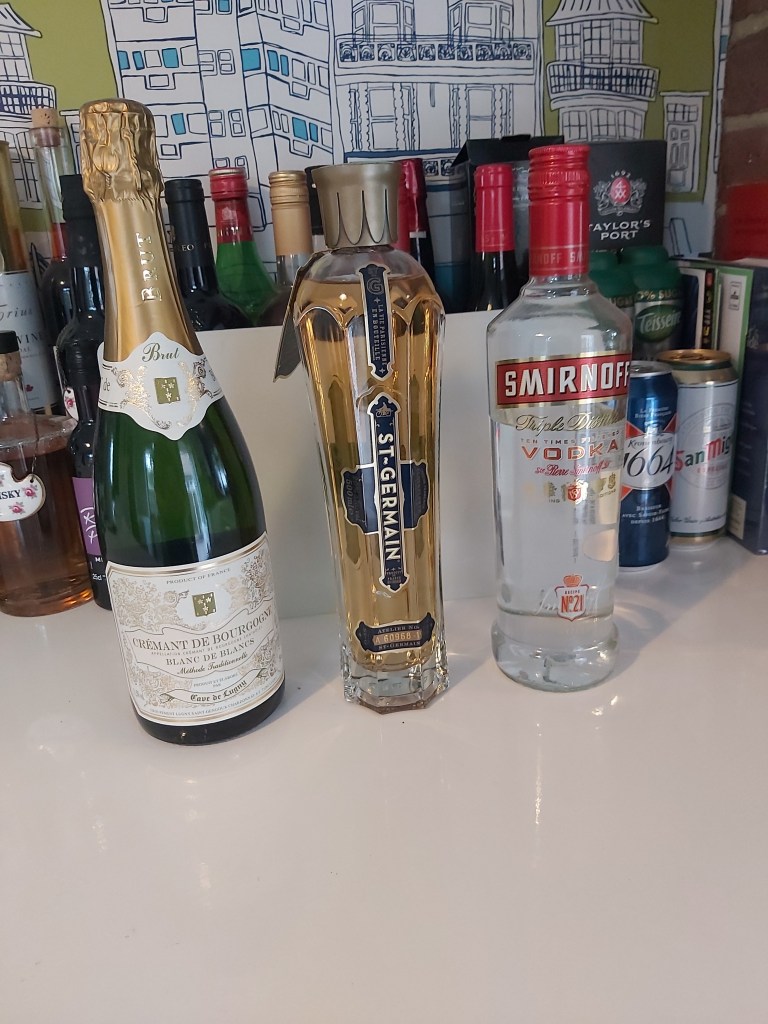
2020s Crémant—Now we’re  definitely in the right vineyard! Brewed up  in France (and Luxembourg) using the same traditional method as Champagne,  it comes from regions outside of that snooty snifter,  such as Alsace, Burgundy, and the Loire.  Sorry, we think it’s definitely a cut above Prosecco,  deliveings Champagne-like vibe at a fraction of the price.

Nibbles:Blingies with caviar

#wine #sparkling wine #party

Is that an Antibiotic in the Azaleas?

We started out as an antibiotics blogs, and we’ll always defer to it when a good story comes up. So don’t be surprised as we offer you a really good story, which we found in Nature Briefing, that inestimable source of the very best stories on science and all its ramifications. Scientists unearth new anitbiotic-literally

Researchers searching far and wide for new antibiotic molecules have discovered one in their own backyard. The new molecule — found in soil samples collected from a lab technician’s garden — targets a broad range of disease-causing bacteria and doesn’t appear to be toxic to human cells. From the soil samples, the team spotted a lasso-shaped molecule they named lariocidin, which is produced by Paenibacillus bacteria. Lariocidin attaches to structures called ribosomes in bacteria, which disrupts their protein production. The molecule slowed the growth of a range of common bacterial pathogens, including many multidrug-resistant strains.Nature | 4 min read
Reference: Nature paper

We know, gentle readers that we can occasionally overdo the bad news a tad on these pages. Today we’re glad to tip the balance back a little the other way.

If you want to receive the very latest on science and cutting edge technology, you won’t do beetr than sign up to Nature Briefing. We don’t know of anything as good as this which is still absolutely free. What’s more they have some sub briefing sites on more specialist areas if your want to keep up with a particular area why not visit these sites and see for yourself?

 briefing@nature.co

Antimicrobial resistance: its not just bacteria Plus: see if you can spot the hidden message in this blog

Stop the press! Urgent! Even though it’s Thursday afternoon and we’ve done our blog for the day, a new story is bursting to be told. Because while leafing through the Interweb to see if we had been included in any top secret message groups, we came across a story by the assiduous Clara Harter of the Los Angeles Times: Deadly Drug Resistant fungus CDC calls urgent threat is spreading in hospitals [1] We won’t steal Clara’s thunder. But basically, it’s called Candida auris, it spreads rapidly in healthcare facilities. and it tends to target the sick and the old.

Wanting to know more , we went to the site of the Centers for Disease Control and Prevention (CDC)[2] whose purpose, as every schoolchild knows is goal is to protect public health and safety through the control and prevention of disease injury and disability both in the USA and throughout the world[3](fungi don’t stop at national borders, you see) We found their web page to be concise, easy to access and extremely helpful. How lucky Americans are, to have such a body that anticipates threats to public safety, co-ordinates the efforts of medical facilities and health agencies and keeps the public informed, free of charge!

Well until recently they were, Because we have learned that the CDCs are yet another target in the cross hairs of Mr Musk and his enthusiastic band of young cost cutters. [4] According to the independent Medical Economics:

The cuts include 1,300 U.S. Centers for Disease Control and Prevention (CDC) staff — about 10% of its workforce — and all first-year officers in the Epidemic Intelligence Service (EIS) — a disease response unit.

We are ignorant of Mr Musk’s motives; he may be a man of profound compassion and acute foresight. His economic learning may be profound; we cannot say. But if the fungus spreads, and if its economic cost is as great as its human one, we will know that it could have been prevented.

[1]https://www.latimes.com/world-nation/story/2025-03-27/deadly-drug-resistant-fungus-cdc-calls-urgent-threat-is-spreading-in-hospitals

[2]https://www.cdc.gov/candidiasis/antimicrobial-resistance/index.html#:~:text=At%20a%20glance%201%20Antimicrobial%20resistance%20happens%20when,common%20type

[3]https://en.wikipedia.org/wiki/US_federal_agencies_targeted_by_DOGE

[4]https://www.medicaleconomics.com/view/elon-musk-s-doge-and-its-impact-on-federal-health-agencies-explained

#DOGE #CDC #fungus #antimicrobial resistance #public health #disease prevention #medicine

Alphafold for RNA?

Back in 2023 we praised the achievements of Google Deep Mind and its Alphafold system for predicting protein structures (LSS 23 2 23) The step change in productivity , (no disrespect to human biochemists) was so remarkable that we compared it to the invention of stone tools. Since when it has pretty much become a standard tool in medical research.

So much for proteins. What about RNA? Advances in understanding its structure, maybe even making a little of our own, might convey enormous medical benefits. Read this from Nature Briefings Seeking an alphafold moment for RNA

Protein-structure-prediction tools such as AlphaFold have transformed biology. But RNA is a tougher nut to crack: it poses unique molecular challenges, and relatively few data are available to train computational models. So researchers have been getting creative, building a toolkit to aid the prediction of RNA structure that incorporates the latest developments in artificial intelligence.Nature | 10 min read

“A tough nut to crack” Indeed. For one thing RNA has always suffered from that “middle child” syndrome, lost between its more glamorous siblings, DNA and proteins. So there is a lot less data to feed into the AIs. And even the main forms, t-RNA and m-RNA are fiendishly complicated, like any biological macromolecule. Fortunately, there is a superb article from the main part of Nature by Diana Kwon[1] which lays out the problems and challenges with great clarity; well worth a glance, However the advantage of getting on top of RNA and bringing it, so to speak, into the twenty first century could be colossal, Never forget that it was an m-RNA vaccine that finally got the SARS-Cov-2 virus on the run. That is a glimpse of what might one day be acheived.

[1]https://www.nature.com/articles/d41586-025-00920-8?utm_source=Live+Audience&utm_campaign=bc74eaec70-nature-briefing-daily-20250326&utm_medium=em

#rna #AI #alphafold #medical research #biotechnology #nucleic acids #proteins #vaccines

How Perovskite panels could save the planet

One of the joys of growing up in 1980s London was to witness how the grim concrete monoliths of the 1970s were slowly displaced by towers of glittering glass. Particularly in the City and Docklands, where money was no object. But there was one hidden problem: althoughthese buildings looked modern, they still consumed immense quantities of old fashioned coal and oil to heat, with fateful consequences for us all. Certainly, you can tack on solar panels here and there. But the aesthetics and very shape of the buildings mean that the power they throw out will not come within shouting distances of keeping these buildings’ inmates, healthy, wealthy and warm.

But what if you could turn all that glass itself into solar panels? What if every one of those magnificent windows was a brimming source of electricity, producing almost as many watts and amps and volts and electrons as a the real panel on your garage roof. Fortunately the City Solar Project has made just such a breakthrough We have lifted this tiny quote from a really upbeat article by Anthony Cuthbertson of the Independent, to give you an idea of the currents of excitement flowing around this project (oh, please!-ed)

By combining organic solar cells with the so-called “miracle material” perovskite, the scientists were able to achieve an efficiency of 12.3 per cent – close to that of commercial solar cells.[2]

Now, we’ve covered Perovskite a couple of times before on this blog (LSS 12 1 21;13 11 23) so many of you will know all there is to know about it: but we’ve put in a link for those who came to us late. The real point is not just that scientists and engineers are bringing us closer and closer to a cleaner, more sustainable world. It’s that those who say sustainable energy is not possible are starting to look very archaic indeed.

thanks to P Seymour

[1]https://www.independent.co.uk/tech/solar-panel-transparent-window-efficiency-record-b2721698.html

[2]https://en.wikipedia.org/wiki/Perovskite

#perovskite #solar panels #sustainable energy #global warming #work #architecture

Online Gangs-a new threat of violence against women: but do we have the resources to cope?

As male chimpanzees mature(so primatologists tell us) they leave the troop to form restless violent gangs who roam the forest meting out violence to all other chimps they find, especially female ones. Does that sound familiar from a street near you? But recently there has been a troubling new development. The young gangs have formed on line instead of the streets. Still meting out the same old coercion, misogyny and sadism. Rachel Hall of the Guardian has a chilling story [1] which you really ought to read in full. And it’s not just gangs: individuals are at it too. Our second story comes from the North East of England where a tragic young mother called Ashleigh Inskip ” took her own life after her abusive ex-partner bombarded her with messages urging her to kill herself – including while she was sectioned in a psychiatric hospital,” according to Channel 4 News. [2] in an excellent report by either Amelia Jenne or Jamie Roberton, we’re not sure which)

A mighty headache for Jess Phillips, Britain’s still new-to-the job Minister responsible for trying to deal with this avalanche of woman-hating violence. Jess has been a redoubtable campaigner on the issue for decades, making her one of the finest parliamentarians we know. This report details her interview by Jackie Long, She’s still the same old feisty, fighting Jess. But now burdened by the crushing responsibilities of Government. Added to by the fact that the Ministry of Defence is looking to strip every penny it can from other departments. And rightly so too- a Russian Government will not display the same tender sensibilities as a democratic one. And there’s the rub. Every one of us has our pet projects: reducing violence against women, saving the countryside, better science education, more wifi on buses….all of them no doubt worthy and necessary causes. But as the United States retreats and Putin advances, we may have to choose priorities very precisely indeed.

(Foreign readers: of you click on the interview, you might think Ms Phillips sounds a bit funny. Don’t worry, this is because she comes from the Midlands. It’s the same way the Peaky Blinders and William Shakespeare would have sounded).

[1]https://www.theguardian.com/uk-news/2025/mar/25/online-gangs-teenage-boys-sharing-extreme-material-emerging-threat-uk

[2]https://www.channel4.com/news/exclusive-domestic-abuse-victim-received-messages-in-psychiatric-hospital-telling-her-to-kill-herself

[3]https://www.channel4.com/news/safeguarding-minister-aghast-at-domestic-abuse-report

#male violence #misogyny #jess phillips #com gangs #youth #chimpanzee behaviour #shakespeare #peaky blinders

24 Deadly Diseases that could land on our shores

Of all the ways to go, Ebola Fever is one we’d prefer to avoid. First, your temperature shoots up to an unhealthy 39 C. This is followed by agonising bowel cramps and uncontrolled bloody diarrhoea. Finally the patient starts vomiting blood. Death, which usually follows in 80-90% of such cases, may begin to seem a mercy. Readers with long memories may recall an epidemic of this disease in Africa between 2013 and 2016. Fortunately it was contained, due the efforts of public health officials and brave, skilful medical professionals. Who managed-just- to confine the death rate to 11 323 unfortunate souls. It doesn’t bear thinking about what might have happened had they failed. But according to Professor Harper, a pandemic caused by a similar disease broke the back of the Roman Empire and effectively ended the civilised world[1]

Now a report by the UK Health Security Agency[2] [3] lists Ebola as one of a group of 24 deadly diseases which could land on the shores of this sceptr’d isle at almost any time. As most readers will recall, Ebola is part of the Filoviridae family(an honour shared by the mortiferous Marburg virus) But travelling companions include the Flavoviridae (dengue, zika) Coronaviridae and all sorts of bacteria including the ones for bubonic plague and anthrax. Kat Lay of the Guardian has a nice quick take on the story. And its proximal causes, most of which come down to climate change and habitat destruction.

And our take? It’s good to have some sort of professional public health body that can at least take note of, and warn about, these sorts of things. But the poor old UKHSA has been starved of funds, largely to finance tax cuts to pay for the purchase of Bright Shiny New Things. The production of which leads to climate change, habitat destruction, and…………….you get the picture. If today’s seems a bit of a UK-centric blog, so be it. We are a pretty representative average sort of country, and you face the same threats that we do. If these diseases are appearing on our threat list. they’ll be coming up on yours soon. They have the same ultimate causes.

[1] Kyle Harper The Fate of Rome Princeton UP 2017

[2]https://www.theguardian.com/science/2025/mar/25/uk-experts-urge-prioritising-research-into-24-types-of-deadly-pathogen-families

[3] https://www.gov.uk/government/news/ukhsa-highlights-pathogens-of-greatest-risk-to-public-health

#pandemic #virus #bacteria #epidemic #climate change #global warming