Ah, Easter! The schools are already closed. All the offices and factories and other workplaces will start gong the same way tomorrow as people head off to river, field and beach. We love they way that Easter seems such a bridge between winter and summer. We well remember once (1994) driving down to the West Country in Good Friday sleet. While taking our leave the following Monday under the high bright skies which seemed to promise the summer to come. Which is why Easter, or something like it has been celebrated in the northern hemisphere for thousands of years before Christianity or Judaism, those traditional sources of Easter custom and lore.
However, Easter also brings duties. Among them are visiting people, cooking and above all, gardening. Gardening is about much much more than just keeping everything tidy, or even making nice things grow, Treated right, your garden can be like your gymnasium, especially for those of us who are perhaps not quite so vigorous as we were say twenty or forty years ago. You bend, you stretch, you move around to find things, all in the fresh air. A long day of this, combined with sparse rations, can burn a surprising amount of calories. And all with a visible result at the end!
It is to these ends that we must now devote ourselves, gentle readers. May you and all your friends and families enjoy a pleasant break, and we will see you, back at our mutual intellectual task, shortly thereafter.
Instead if a Friday Feast of Fun, the opportunity to cover an Easter Sunday Lunch was just too mouth-wateringly good to pass up. Frankly, we prefer it to Christmas. It’s less boozy, the food’s lighter with less compulsory extras like puddings and unwanted family members, to name but two, and of course the weather’s better. There’ll be more about why we like Easter in the next blog. In the meantime here are our tips for a very special easter lunch, absolutely in the English style.
Pre dinner drinks: Easter is the time at which it is at last legal and permitted to break out the Pimms, that quintessential English cocktail mixer. Here is our recipe (for one person)from an old blog in 2021, but it works just as well today
Take one measure of Pimm’s No.1 Cup and and add to a highball glass. (Ours have real Pimms logos!) Add 3-4 ice cubes, then 2 slices of lemon, two slices of orange and one chopped strawberry and one slice of cucumber. Top up with lemonade and decorate with a sprig of mint or borage, if you can find the latter.
Entreé We always recommend going light and simple. Salmon or trout, cold with a few olives are good options. For the fish allergic, a nice cold cured meat, perhaps an Iberian Ham or French Saucisson go down well and can sit alongside the Pimms, if you don’t want to sozzle your guests with an early white wine.
Main Course We have been known to serve chicken, and to have served it well. But in these islands Lamb is the traditional centre piece for Easter Sunday. Roast that is, and served up with potatoes and the best spring vegetables. For years we swore by leg. It’s a great joint, and can be made to work more if you have a large number of guests. But once, a little financially embarrassed in Waitrose in Kingston Upon Thames we took the advice of their Meat Man, and tried shoulder, which in theory is the cheaper cut. Frankly, we have never looked back-there are extra levels of flavour and texture which even the best shoulders struggle to match. So to be fair, here are two recipes, both from the BBC which will give you more than a fighting chance of turning out a really memorable experience for your guests
Dessert We could write three blogs here, and that’s only on what’s available from the supermarket. If you’ve treated them well with the first courses, your guests may not want too much. Something to do with strawberries, raspberries and cream might suffice, backed with a range of strong, simple cheeses. Dare we put in a word for some of our rarer British specials like Lancashire, Caerphilly, Wensleydale and Double Gloucester?
Wine At least, on to the serious part of the blog. So-Red, or White? Fortunately we have found a great site called Unravelling Wine, where you can weigh a range of possibilities-Rioja, Chianti, Bordeaux, they seem to have thought of every possible pairing, with all the tasting notes you’ll need. https://unravelingwine.com/lamb-wine-pairing/
Post Prandial Liqueurs The usual. Brandy. Port. Madeira. Strong Coffee. You know the sort of thing. If you have done your work well, your guests should not be too fussy by this stage.
Well, gentle readers we hope that is enough, and more than enough, to ensure that you, your family, your guests and your servants enjoy a real easter blow-out. It was fun writing it, because being on the most savage diet, we are unable to sample any of the delicacies above, even cursorily. But we used to; and that was fun too, while it lasted.
As we write these words, President Donald Trump seems to have run into some largely self-inflicted economic troubles. It is hard to say how serious or long lasting these are, and whether they will permanently affect his ability to govern. But one thing is clear: even if he fell from office tomorrow, his significance, his very presence would last for all time. He and his movement are a symptom not a cause. As two articles in the Guardian, one by Richard Partington, and the other by George Monbiot, make clear what has been going on. [1] ]2]
Globalisation, Neo-liberalism, free movement of capital and people, call it what you will, has brought us unprecedented advances in knowledge, and prosperity for billions of people who would otherwise have been excluded from both these things Yet in the countries where the creed began, especially those free market Anglo-Saxon economies of the USA and UK, it has left millions behind. Whose lives rot in the shadow of decaying factories, crumbling roads and decrepit health systems. While lurid images of good times and progress still flit across their screens, their only link to the bright hopeful world beyond. Some, like the educated and the rich are still doing well. Why not them? In such desperate circumstances it is all too easy to start blaming foreigners, global elites, or the tiny fraction who follow divergent sexual practices. And if the educated become an enemy, how will they adopt our values of reason and evidence?
Trump speaks for millions of these people, and that is why his support not only holds up, it may even grow as the crisis gets worse, as George opines. We don’t agree entirely with his analysis: many people we know who hold populist opinions are securely embedded in well funded pensions or established businesses. For us, the roots of xenophobia and self congratulation are far deeper. But the vast spread of uncertainty, insecurity and above all a pervasive sense of dread, the downsides of economic “efficiency” and ergonomic supply chains are the sea in which these emotions thrive. “Socialists do fine until they run out of other peoples’ money” runs the old saloon bar cliche. To which Donald Trump and others would retort “Capitalists do fine until they run out of other people’s security. And jobs. And eventually their nations.
Why did no one ever make a better case for a mixed economy, surely the answer to our problems?
Photo by u041bu044eu0441u0438 u0414u0440u0435u043cu0430u043bu043eu0432 on Pexels.comPhoto by Ali Cuhadaroglu on Pexels.com
We have three stories for you this morning. Not only because the stories themselves are intriguing. But because they illustrate the scientific method at its best. Persistence. Careful collection of the data, Thoughtful analysis. And above all this” Extraordinary claims require extraordinary evidence.” It’s from the first of today’s features. But it runs like a thread through all of them, and much else that is done by scientists, and all true scholars everywhere. It is of course the antithesis of the claims of conspiracy theorists, hucksters and plain incompetents everywhere.
Floods in the Mediterranean We’ve known the idea that the Mediterranean Sea was once a hot dry basin, a sort of desert land. Until one fine day about five million years ago when a truly humungous great flood burst through the Straits of Gibraltar, turning the whole, thing into that vast lake suitable for swimming, sailing and other watersports which it remains to this day. The proponents of the theory, Daniel Garcia Castellanos and Paul Carling were careful to say this Zanclean Flood was just that, a theory, Until recently they found that the alignment of hills in Sicily. plus the way that rocks of the right age were lying around there, confirmed it nicely. Detective work worthy of Comissario Montalbano, that island’s most famous son!
Awesome Jaw About 20 years ago, a large ugly looking jaw was dredged up off the coast of Taiwan. No one knew exactly how old it was or how it fitted into the jigsaw of human evolution. Now some incredibly skilful work extracting and analysing proteins from it have revealed it to belong to a Denisovan, that intriguing third branch of modern humanity Here’s Nature Briefing: Mysterious Taiwan Fossil is Denisovan
A fossilized jawbone discovered more than 20 years ago belonged to an ancient group of humans called Denisovans. Named Penghu 1, the jawbone was dredged up by fishing crews 25 kilometres off the west coast of Taiwan. The confirmation that the bone belonged to a Denisovan — the result of more than two years of work to extract ancient proteins from the fossil — expands the known geographical range of the group, from colder, high-altitude regions to warmer climates.Nature | 5 min read Reference: Science paper
Standoffish Saharans Moving forward from the dawn of humanity to the dawn of agriculture, Chris Melore of the Mail has an intriguing story about the ancient proto-Neolithic populations of North Africa. Careful molecular detective work has revealed that they tended to keep themselves isolated from the population flows across the rest of the world which were happening about 7000 years BP. And this has quite profound implications for how agriculture and herding must have spread. One school has always held that Neolithic techniques were carried as cultural tropes by tribes who migrated out of the fertile crescent (a bit like the way particular European customs and technologies were carried to North America) The other school always held that local people came up with these ideas for themselves, perhaps with a bit of help from conversations with early travellers and traders. This evidence of isolated North Africans invented stock breeding and grazing economies independently is a definite plus for the second school and its ways.
Careful thoughts, provisional conclusions. This is what we are all about here, and we hope you are too. Perhaps more people could be like this, if they had been given a fairer life. It is a thought we will pursue in the next blog
Photo by Sawyer Sutton on Pexels.comPhoto by Duu0161an Cvetanoviu0107 on Pexels.com
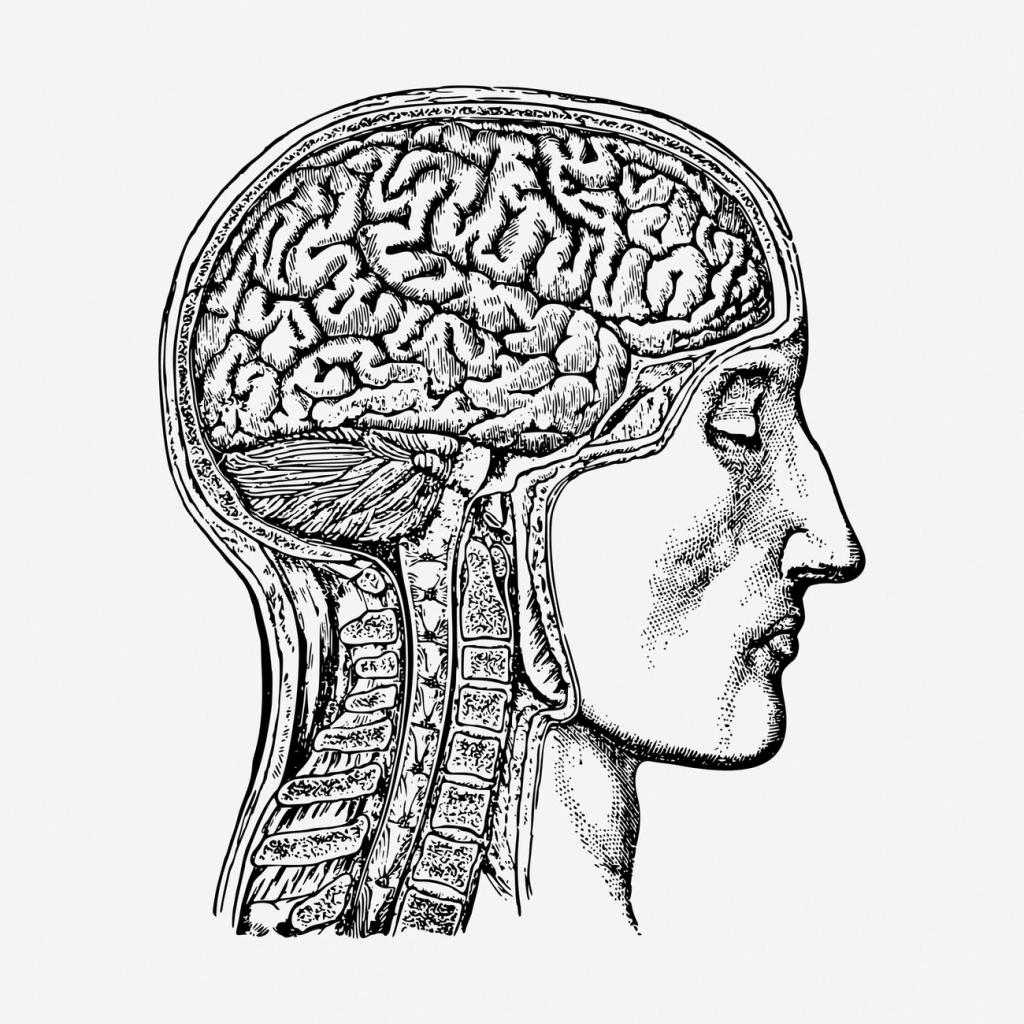
If you want to explore the potential of a vast unknown region, first make a map of it. This why many of the finest minds from the sixteenth to the nineteenth century were cartographers. The human brain, with its astronomical numbers of circuits and connections, is our century’s equivalent of an unknown continent. Where the prizes( in medical research, pharmaceuticals and lucrative spin off disciplines) will go to those who have the best idea of the layout of the territory they are exploring. Which is why it came as no surprise to find that a multi-university team of American researchers have emerged as some of the foremost neurological cartographers of the year
Hannah Devlin of the Guardian reports the work of the teams from Baylor College, The Allen Institute and Princeton who have combined different techniques to create a 3-D circuit diagram of the neurons in a mouse brain. Now, there are some riders to note: this is only a tiny portion of the brain, comprising 84 000 neurons, half a billion synapses and about 5.4 km of the neuronal equivalent of wiring. Tiny numbers compared to the colossal sizes of a human brain, or that of an elephant or a dolphin. But it’s a start. Hannah quotes experts who honestly compare this work to the human genome project around the turn of the century. We need not remind readers as intelligent as ours of all the potential which that unlocked.
So: American researchers at the cutting edge. Princeton. Big research teams. “Yawn,” they said in the newsroom, “Where’s the story?” Well the story lies in the context of the consistent cuts in science funding by a certain Donald J Trump and his Administration. [2] It’s not just the money, it’s the attacks on the confidence and independence of the institutions themselves which stunt the development of a healthy research sector. And ultimately kill the goose which has laid so many eggs.(please-no more cliches!-ed) From the 1930s onwards America thrived by taking in the best researchers, and letting them work at what they excelled. Every science magazine you picked up, every episode of the old Horizon series on BBC, had an American somewhere in it. They even got to the Moon. Now there is a real danger that all that talent, all that potential will flow elsewhere. So far the EU and UK have not really go their act together. But they are waking up to the opportunity. Perhaps the first whole-brain maps will be made in Cambridge. The English one, that is.
Today we turn our blog over lock, stock and barrel to that admirable website Nature Briefing, whose links we have posted before and will do so again. This main piece from them explains we have done so:
Vaccines have given many families in wealthy nations the luxury of forgetting about the toll of some infectious diseases. But for some, that is changing: a second unvaccinated child in Texas died this week from measles. Anti-vaccine misinformation is rampant, not least from members of the administration of US president Donald Trump. Globally, many children still die because they can’t get the immunizations that they should, and cuts to international aid put progress at risk.
At the same time, vaccines are reaching new heights of success: the human papillomavirus (HPV) vaccine appears to prevent almost all cervical cancers. Vaccines against COVID-19 were developed with unprecedented speed and saved millions of lives. And from a scientific standpoint, the future looks bright, with mRNA technology, unlocked by pandemic-era research, offering hope for new jabs against viruses such as monkeypox, and therapeutic vaccines against cancer.Nature | 6 min read
Please add briefing@nature.com to your address book.!!!! Please !!!!
The piece follows with some excellent, easy to understand graphics, which you will have to click on their website to look at, and which obviously we can’t reproduce here. To extract some killer facts: by eliminating smallpox, vaccines have saved 5 million lives a year. By eliminating other scourges including measles, tetanus and TB they have probably saved about 154m lives overall since 1975. That anti-vaxxers must now march their legions against HPV vaccines raises deep questions about misogyny as well as the public understanding of science.
But it’s that quote at the beginning of the nature article which as got the hook in us. “Vaccines have given many families in wealthy nations the luxury of forgetting about the toll of some infectious diseases.” Yep, it’s that word luxury. It’s often associated with the word Vanity. And we need a bonfire of many of those very soon.
Once again, if you want to see the graphics, do this!
Please add briefing@nature.com to your address book.
Is Donald Trump a socialist, or is he just governing like one? For a man who made his money in the freewheeling and dealing Manhattan property market, it seems an odd term to use. And doubtless he and his supporters would reject it vehemently. But let’s go back to first principles and look at what he does, not what he says.
The very essence of a socialist policy is that an economy should not be run by free market methods. It can and should be run on others, designed to support the welfare of all the groups living in it. If they are poor, money must be found through taxes to alleviate that. If their communities depend on certain industrial conglomerations. such as steel making for example, then money must be found to sustain those industries, to avert the social damage which would ensue/ In Britain the key exponents of this view were people like Arthur Scargill and Tony Benn, who felt public money should be found to support the mining industries, even if those industries operated at less than optimum economic efficiency. In the 1970s Benn went further, suggesting a siege economy protected by tariffs as an alternative to joining the European Community, forerunner of the EU.
The alternative view was pioneered by thinkers such as Adam Smith and David Ricardo. The unhindered operation of free markets, with the lowest possible levels of tax and tariff would facilitate the best possible social outcome. Ricardo developed this in his theory of comparative advantage. By which countries or regions specialising in different products would trade in these to their mutual benefit. His example was Britain and Portugal, which mutually traded manufactured goods and port wine. The same principle holds today.
The key political exponents of this view were Ronald Reagan and Margaret Thatcher, whose most memorable declaration was “you can’t buck the markets”. As we write, Mr Trump’s policies seem to be doing exactly that. Unlike others, we judge him to have an honesty of purpose: he is trying to protect the communities that voted for him. Communities whose social structure and very identity depend on the old smokestack industries around which they cluster. Time will tell if he will be successful. But two things worry us. Firstly even if factories are attracted back to the rustbelt, it is unlikely that modern automated plants will need many factory hands. And second: the last twenty years or so of the Communist bloc were spent trying to keep these same sort of plants going. History did not judge that enterprise kindly.
#free markets #socialism #communism #adam smith #david ricardo #margaret thatcher #donald trump #united states of america
This week Wall Street and its famous financial markets seem to be the centre of the world, don’t they? Just like in 1929 and 2008, for example. So where is Wall Street? We looked on the interweb and found it was in a place called Manhattan, which is in America, which is famous for having leaders of genius. So we thought we would celebrate this fact by bringing you a reprise of that famous drink, The Manhattan. Despite the connotations, how American is it really? Let’s assemble one and find out.
The real beauty of making a Manhattan is its simplicity : a child could do it, just like calculating tariffs. But as no responsible adult would ever let a child do either, we’ll accept you are making this yourself. And if you do, you will find it is divided into two parts. A good patriotic all-American part. And a bad part, which requires Foreigners.
Ice Generally speaking, 100% Made in America. Not only does this attract no tariffs, but its production supply and distribution are all by American workers, thus creating any number of well-paid posts of employment. No nasty foreigner can ever threaten American Ice. If all the stuff in the Rocky Mountains melts due to global warming, they can just invade Greenland to get some more. 4 or 5 cubes for the average Manhattan, by the way,
Bourbon As far as we know this too is made in America. Originally it was called whisky, which was made in somewhere evil and foreign called Scotland (although some of the golf courses are OK) And therefore quite rightly attracts a tariff . But if it is made in America there is no tariff at all, and the more Americans drink of it the more colossal will be the numbers of high paying jobs for American workers created thereby. Oh yeah, 3-4 measures will do.
Vermouth Now we come to the Bad Part. Because Vermouth (often branded with funny sounding names like Martini or Cinzano) come from Italy! Not only has nothing good, like science, art, literature, cooking or architecture ever come from that country: behind the smiling mask of friendship, they are ready to have their way with American trade, American pizza, who knows, maybe even American ladies, the lotharios! No wonder it now attracts huge tariffs! But since vermouth has been floating around Manhattans ever since that island became the financial capital of the world, you’ll just have to put up with it. One measure of the red stuff should not put too much pressure on US Treasuries,
Mixing Get an American Worker to put each of the above components one by one into an American cocktail glass, made from American glass, as they will taste better. Make the American Worker stir them. He/she/they may now add a tariff-free American Cocktail cherry, on a stick made from good American Sequoia trees, creating even more well paid secure American jobs. That done, you may drink your Manhattan. Only one, of course. And think of all the American jobs you have created thereby , which should compensate for those lost by the current slight adjustments in the Stock markets just over the road.
If antibiotics stop working it will be the end of modern medicine as we know it. That is the essence of this article by the redoubtable Professor Devi Sridhar of Edinburgh University. We’ve channelled her before on this blog (LSS 24 8 24; 26 1023). UK readers will recall her many appearances on TV during the COVID 19 pandemic. Her cool, calm reason was a welcome antidote to the wild hysteria, baseless conspiracy mongering and shameful ignorance of that epoch.
Her article is a reprise of the main points we and other campaigners have been making for years. Over-prescription; lack of research; widespread public ignorance. The tireless Professor Sally Davies is name-checked. Of course: for she has done so much to proclaim this pressing danger. But the real problem for Devi is widespread abuse of antibiotics in farming industries. To produce short term higher yields in livestock such as cattle and pigs. Leading us to eat more meat, which in turn gives us obesity, go on diets that fail, high cholesterol, heart attacks., go on more failed diets…….our fingers fail on the keyboard in sheer despair.
So let’s take one key learning point from Devi’s razor sharp mind, because maybe we haven’t emphasised it enough here down the years. The real problem is that new classes of antibiotics are needed :
Developing similar versions to existing antibiotics isn’t enough because they won’t be as effective against pathogens that have developed resistance: we need totally new classes of drugs. And a recent World Health Organization report noted that since 2017, while 13 new antibiotics have obtained authorisation, only two represent a new chemical class.
Here is the nub of the problem. It wont get any easier, because the best research teams are multinational, and international co-operation is breaking down rapidly. Things like phages and AI may help. Serendipitous searching in nature, in places like gardens or the jaws of Komodo dragons {LSS passim)may could also be marginally helpful. But in the last analysis, disputes about who imports which computer circuit from whom distract attention from the real question. A woman dying from childbirth needs an antibiotic, not a smartphone to photograph it.
Dementia is our own internal pollution. Clear that pollution away, and the brain may start to function well again. If the systems which clear it slow down with age, then of course you won’t think so well. That is the startling new research reported today in the Mail by the admirable Syeeda Saad. [1] According to Syeeda and the rather clever scientists whom she channels, the brain is well equipped with these clearance systems when we are born. [2] They go by such recondite names as microglia, glymphatic and lymphatic systems. They clean up all the horrible waste we produce as we think-bits of cells, proteins, toxins, what have you. If they don’t, you accumulate all this detritus and your brain slows down, exactly like a sewage system blocked with fatbergs (yuck!-ed) [3]
Essentially the ingenious researchers target lymphatic networks outside of the brain in order to boost the clean-up systems within it. And get this-they have found new pathways called T Cell gateways which let them overcome the blood brain barrier, a wall that has bedevilled researchers for decades. [3]
All in all rather hopeful. Though as everyone admits these discoveries are at the early, tentative stage. Meanwhile there are lots of proven methods we can apply in order to reduce the risk of developing dementias. Including unpleasant ones like eating less junk food, drinking less booze and getting more exercise. There’s a thought. And here’s another to close. The team of scientists who did all this useful, public spirited, and one day profitable research are based at Washington University in the United States of America, What will become of them and their University in the financial and intellectual climate currently prevailing in that fallen country?



















 Learning, Science and Society