
Antibiotics saved her sight

Ellie Irwin seemed to have it all. She was beautiful, she was highly intelligent, she had graduated from medical school to what should have been a productive and fulfilling life. Instead, she was going blind in one eye, with terrifying possibility of losing sight in the other. Her life was an endless round of appointments, treatments and interventions. None seemed to come near to resolving the problem. At one point she had to have a cataract operation, and in despair, actually considered the possibility of having the problem eye removed.

But there turned out to be one last chance, as Fergus Walsh reports for the BBC. [1]Because thanks to a new science called metagenomics[2], doctors were able to identify the cause of her problem. To quote Fergus:

Metagenomics technology uses cutting-edge genomic sequencing, which can identify all bacteria, fungi or parasites present in a sample by comparing them against a database of millions of pathogens.

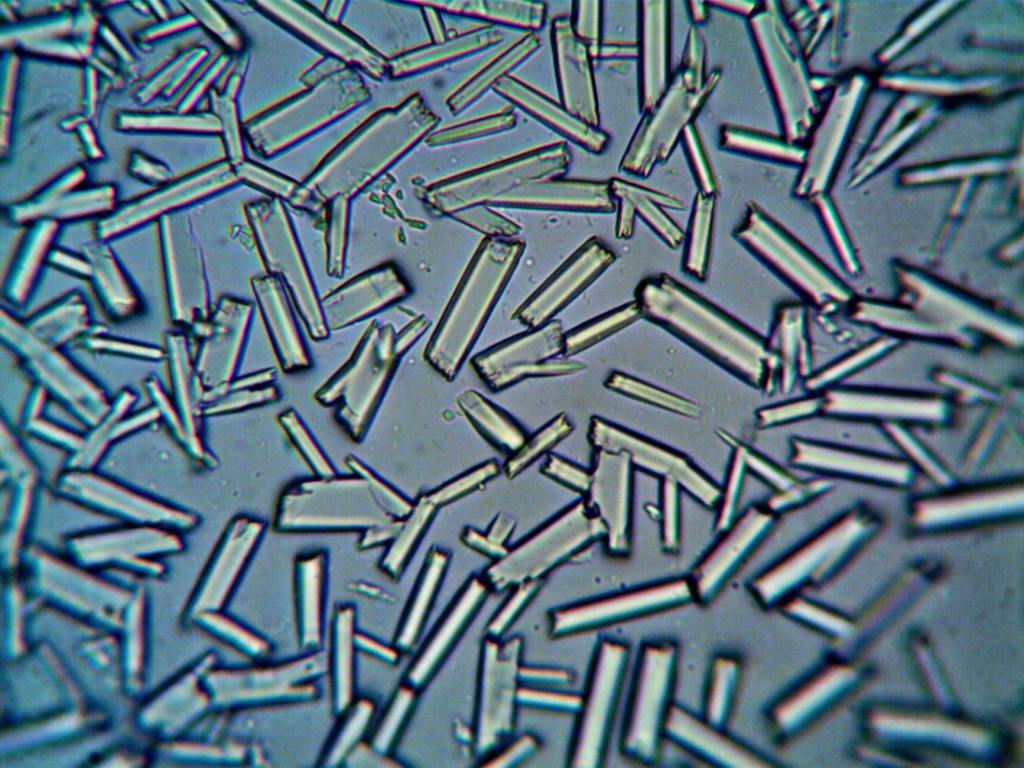
The cause turned out to be a rare bacteria of the leptospirosis family which Ellie had picked up while swimming in the Amazon river on a student holiday. The cure was simple: a good dose of antibiotics, as regular readers of this blog will have guessed. Today Ellie is a fully cured, happily functioning doctor. Recently, she even got married. Fergus knows how to end a story on a happy note!

For us there are a number of learning points here, faithful readers. One-what a good job antibiotics can do, Two-look what happens when you combine them with cutting edge techniques like metagenomics. Three-if you want new cutting edge techniques, it might help to employ a few well educated scientists to think them up, and universities to put them in. And four? No point going on with four. Everybody’s getting the drift.

[1]https://www.bbc.co.uk/news/articles/czx45vze0vyo

[2]https://en.wikipedia.org/wiki/Metagenomics

#antibiotics #metagenomics #science #research #health #medicine

Fish farms in Space? They might be closer than you think

One thing about Science Fiction: the food in future worlds always seems a bit dodgy. From Soylent Green through 2001: A Space Odyssey all the way to Red Dwarf, it’s all a bit artificial. Despite the ingenious efforts of valiant biochemists and microbiologists,[1] it’s not really the same. But wait, gentle readers! Almost unbelievably a brilliant French Scientist called Dr Cyrille Przybyla really believes he has a way of serving up a tasty plate of fresh real Sea Bass in the dining room of a lunar colony, assuming we all survive to construct one.

According to Kim Willsher of the Guardian, it’s not so outlandish as it sounds.[2] Apparently our finny friends have been making trips into space since the 1970s. All Dr Przybyla and his his Lunar Hatch Project are doing at this stage is sending a few up to the ISS to see how they get on. But, if it’s a success-who knows. Bass are exceptionally rich in omega 3 and B group vitamins, all of which are good for fighting muscle loss which comes with low gravity or zero gravity environments. Being fish, they’re already weightless in effect, so they won’t care anyway. The idea of putting them into enclosed, self sustaining eco systems might be very feasible on the moon. We now know there’s plenty of water up there, so that potentially exorbitant problem is largely solved.

There’s so much to like about this idea. Firstly it’s new different thinking: but not so new that bits of it haven’t been tried already. Secondly, a cautious, step-by-step approach is being applied-always a good sign of a successful project. Thirdly, it addresses a real need. No wonder the Chinese are getting interested, as Kim points out. that’s because they look to the future, instead of wasting all their time and energy trying to restore a lot of rusty old factories whose time has long since passed. We think there’s a lesson in there somewhere.

[1]https://www.bbc.co.uk/news/articles/cp34wzql2xvo

[2]https://www.theguardian.com/environment/2025/apr/28/sea-bass-in-space-lunar-hatch-fish-farms-moon-aquaculture

#space exploration #fish farms #nutrition #sea bass #ifremer

Academia has its Robbers Caves too, you know

Here at LSS we’re always praising the learned. Exalting the scientists, doctors and philosophers who would unleash a trouble-free prosperous world, if only we were given the chance. Instead all those nasty hypermacho builders, farmers, football supporters and military types have imprisoned us in a hopeless nihilistic trap of warring tribes which we called The Robbers; Cave(LSS 1 4 2025)

There may be some truth in it. But before we hand over the world to a bunch of Professors and nerdy Civil Servants, let’s flag down a large black cab and ask it for a journey to the Reality Hilton Hotel. Because, we ask-are all these brainy types so immune from Robberscavism, to coin a phrase? Anyone like us who has followed Arts, Sciences and Letters for fifty years or so will notice at once how its practitioners have a tendency to divide themselves into warring camps, like so many followers of certain East London Football teams. Back in the Middle Ages there were the Nominalists versus the Realists. In economics you get Behaviouralists going toe to toe with the Rational Choice Theory crowd, while Linguistics seems to have more warring schools than practitioners. It’s the same for us fans of the Neolithic revolution, where opinion is hopelessly divided too. One lot asseverate that the Neolithic way of life was carried out from the fertile crescent by a single contiguous culture, who replaced(exterminated?) those unfortunate hunter-gatherers who got in the way. Their opponents counter that farming, sheep herding and all those Neolithicky -type things were learned, picked up by enthusiastic locals from traders and traders and adopted with the enthusiasm reserved for certain types of computers and mobile devices in our own age. And the truth? According to studies by the learned Drs Javier Rivas and Alfredo Cortell, writing in the Conversation, [1] it was a bit of both. At one place, at one time the incomers seem to have bludgeoned in and extirpated the natives, as the English did in Tasmania. Elsewhere the locals seem to have picked up the new hoes, made better ones and then jolly well got on with life down on the farm.

And the moral in all this? For practical people, especially those who hand out grants and bursaries, always take one step back. Sometimes you have to make decisions(think of Courts and Forensic Scientists here) But the real joy of learning isn’t in constructing theories and and then fighting to impose them on everyone else. It’s in the journey of discovery itself: gathering the facts, weighing the evidence and above all talking with the people you meet on the way. The ancient virtues of humility and suspended judgement are the most settled and non controversial of all.

[1]https://theconversation.com/how-human-connections-shaped-the-spread-of-farming-among-ancient-communities-254852?utm_medium=email&utm_campaign=Late

#learning #science #neolithic #academic controversy #tribalism #robbers cave experiment #whig

Do glaciers have political opinions? and some other mystery questions do get you thinking

Instead of all those discourses on things like microbiology or economic history, we thought we’d offer you something a little different today, gentle readers. We’ve decided to come up with one of those puzzle exercises, you know, brain teasers they call them. So here are 11 questions designed to get you thinking, to stretch the old grey matter as t’were. And the good news is: Most of the answers will be available somewhere on the Interweb, or via the websites we have so helpfully posted below.

1 How do you explain the change in the ratio of C13 to C12 in the atmosphere since 1850? Why did this ratio seem have fallen especially quickly after 1950?

2 Since 1750 about 2400 gigatonnes of carbon dioxide have been added to the atmosphere. If this call came from volcanoes, why is the isotopic signature of atmospheric CO2 so different from that from volcanic sources?

3 Do glaciers retreat because they share the political opinions of the Green Party, or is all this melting caused by something else?

4 Why have global surface temperatures increased by 1.2% since the late nineteenth century, but stratospheric temperatures actually fallen?

5 Why is the ocean warming faster than the land? Why would the land warm fastest first if all this were caused by the Sun?

6 Why does spring arrive earlier and earlier in the Northern hemisphere?

7 Do fish conspire with extremists,or have their migrating patterns changed for other reasons?

8 What is causing all these temperature rises anyway?

9 Why is the atmosphere of Venus so hot? And why is the atmosphere of Mars so cold?

10 Do you think rises in sea levels will drive increases in human migration?

11 If scientists are right about cures for cancer, physics, astronomy computers and many other things, why are they suddenly wrong about climate science?

[1]https://royalsociety.org/news-resources/projects/climate-change-evidence-causes/

[2]https://science.nasa.gov/climate-change/evidence/

[3]https://www.climate.gov/news-features/climate-qa/what-evidence-exists-earth-warming-and-humans-are-main-cause

#climate change #global warming #climate science #carbon dioxide #ecology #pollution

Gold is King!: Did we actually get something right?

Last October (LSS 26 10 24) we published a fanciful piece which purported to come from June 2025. In it, we suggested that US President Donald Trump had raised tariffs to 60% on China and 20% on the rest of the world. (nah, impossible-ed)The resulting disquiet in the bond markets general loss of confidence in US assets and a fall in the dollar, seriously affected its status as the world’s reserve currency. In such circumstances we couldn’t in all honesty see any alternative to gold as the de facto reserve, with all the obvious disadvantages that brings. You will forgive us a modest cough, gentle readers, if we suggest that our little blog, for all it got wrong, seems oddly prescient if you fast forward( or back) to April 2025, a full month ahead of our crystal ball gazing!

Because the recent IMF report [1] suggests the very dangers to which we so modestly adverted you. are now real. Of course, the IMF is not perfect; it too will have its biases and unconscious assumptions like everyone else. But it is compiled by some of the sharpest and most knowledgeable financial minds on the planet, which is why their arguments should be at least engaged with respect. Which is why one aspect highlighted by the Guardian among others [2] has caused us particular disquiet. The writer points out that in the panic after COVID 19 got going back in March 2020, and the famous “dash for cash” it was only the Fed rescuing the US Treasury that prevented a total rout. However:

The real concern here is not technical dysfunction in treasury markets or the mechanics of the Fed, which are the bedrock of the global financial system. It’s about the politicisation of the monetary-fiscal nexus under a Trumpian regime that is fundamentally hostile to the norms of liberal-democratic governance. When even the dollar is no longer a safe haven, what – or who – can be?

There are signs already that gloom can be overdone. As we write these words, Mr Trump and his acolytes appear to be signalling a weakening of their stand on China. While his latest stance on Ukraine suggests bets on his resolve on any issue may be misplaced. In which case the world may breathe a little more easily. Stocks rose yesterday: and gold has fallen back, a little. We are not economic experts nor financial advisors. But as humble citizens with an eye for History we have to at least ask: how long can the dollar, and US Treasuries stay on top of this sort of thing goes on?

[1]https://www.imf.org/en/Publications/WEO/Issues/2025/04/22/world-economic-outlook-april-2025

[2] https://www.theguardian.com/commentisfree/2025/apr/22/the-guardian-view-on-the-imfs-warning-donald-trump-could-cost-the-world-a-trillion-dollars

#donald trump #USA #china #IMF #world trade #gold #bonds #equities #economics

Capturing Carbon from the sea-a new idea to contain global warming

One thing we know for certain: the amount of carbon dioxide in the atmosphere isn’t going down any time soon. Last time we looked, it was about 420ppm, which is 50% higher than it was before the industrial revolution. [1] People are not cutting back fast enough. Natural “sinks” like oceans and forests are being destroyed. And despite all the valiant efforts to replace these natural systems with technologies that capture CO2 from the burning atmosphere, they are not happening fast enough. We are going to crash through the 1.5O safe limit. Is there any hope of a short cut which might give us a lifeline?

According to Professor Tom Bell of Exeter University there is indeed. Seawater holds 150 times as much carbon dioxide as air does. And so he and his teams have devised a Cunning Plan to start pulling all the extra deadly gas form the water, and putting it to safe storage. We’ve two versions of the story today. One from Jonah Fisher of the BBC[2] if you’ve only got time for a quick espresso. For the double latte and piece of cake crowd, there’s a really clear set of pages from Exeter University itself.[3] We found the graphics to be rather good on this one.. so give it a go.

All of which brings a wry smile to those of us with long memories. Notice, good reader, how the project is being funded by the UK Government. Back in the 1970’s it used to run hundreds of initiatives like this. Many of which later spun off into successful products which in turn founded the fortunes of many a successful export company. (An elderly member of our Editorial Board can bear personal testimony of this from the world of Forensic Science) Then along came the free marketeers, bleating their mantra “Private sector good; public sector bad” like so many sheep from Animal Farm. You can see the results of that “thinking” in the UK Trade Gap, which has been widening steadily ever since. Professor Bell thinks his project can be scaled to capture 14 billion tonnes of carbon dioxide a year. It could be a major industrial and export success for Britain. Surely this one should be left to the pragmatists?

[1]https://www.ibtimes.com/atmospheric-co2-more-50-percent-higher-pre-industrial-era-3529972#:~:text=Concentrations%20of%20carbon%20dioxide%20in%20the%20atmosphere%20in,

[2]https://www.bbc.co.uk/news/articles/cr788kljlklo

[3]https://sites.exeter.ac.uk/seacure/

#global warming #carbon capture #atmosphere #oceans

Gepotidacin marches on

Gentle readers we’re more than happy to present the next chapter in the story of Gepotidacin. Against all the gloom and doom we serve up here, it really is a wonderful new class of antibiotic We have covered it before (LSS 30 1 23 ; 17 4 23) but today Manuel Ansede of El País [1] serves up a handy little resumé, not only of where we are now,  where we have come form, and all kinds of hyperlinks to bring you up to speed.  We can add little but to such erudition as Manuel’s. But for the sake of long term readers will riff  on these few -humbly derived- observations

Firstly, this really is a new class of antibiotic., going by the snappy name of triazaacenaphthylene bacterial topoisomerase inhibitors.  Unlike traditional antibiotics that target bacterial cell walls or protein synthesis, gepotidacin disrupts bacterial DNA replication by inhibiting two essential enzymes: DNA gyrase and topoisomerase IV. Which as most readers will instantly recall, are crucial for bacterial DNA replication and cell division. Thought so.

Secondly its already showing real world efficacy against all kinds of  bacteria, including antibiotic-resistant strains like methicillin-resistant Staphylococcus aureus (MRSA) and multidrug-resistant Neisseria gonorrhoeae. Get that: real science works.

Thirdly, to make  our old LSS point: effective action in medicine takes time. It requires teams of intelligent people. Who do not act alone, but exist in an ecosystem of universities . research institutes and government agencies. Which in turn requires careful nurturing , funds and right to feel safe enough to make long term plans without bullying and interference from the proudly ignorant and impulsive. American readers take note.

[1]https://elpais.com/ciencia/2025-04-14/el-primer-antibiotico-descubierto-en-30-anos-llega-justo-a-tiempo-de-evitar-que-la-supergonorrea-sea-imposible-de-tratar.

#gepotidacin #antibiotics #antibiotic resistance #health #medicine

Last Post before Easter

Ah, Easter! The schools are already closed. All the offices and factories and other workplaces will start gong the same way tomorrow as people head off to river, field and beach. We love they way that Easter seems such a bridge between winter and summer. We well remember once (1994) driving down to the West Country in Good Friday sleet. While taking our leave the following Monday under the high bright skies which seemed to promise the summer to come. Which is why Easter, or something like it has been celebrated in the northern hemisphere for thousands of years before Christianity or Judaism, those traditional sources of Easter custom and lore.

However, Easter also brings duties. Among them are visiting people, cooking and above all, gardening. Gardening is about much much more than just keeping everything tidy, or even making nice things grow, Treated right, your garden can be like your gymnasium, especially for those of us who are perhaps not quite so vigorous as we were say twenty or forty years ago. You bend, you stretch, you move around to find things, all in the fresh air. A long day of this, combined with sparse rations, can burn a surprising amount of calories. And all with a visible result at the end!

It is to these ends that we must now devote ourselves, gentle readers. May you and all your friends and families enjoy a pleasant break, and we will see you, back at our mutual intellectual task, shortly thereafter.

THE EDITORS

Feast of Fun: The classic Easter Sunday Roast

Instead if a Friday Feast of Fun, the opportunity to cover an Easter Sunday Lunch was just too mouth-wateringly good to pass up. Frankly, we prefer it to Christmas. It’s less boozy, the food’s lighter with less compulsory extras like puddings and unwanted family members, to name but two, and of course the weather’s better. There’ll be more about why we like Easter in the next blog. In the meantime here are our tips for a very special easter lunch, absolutely in the English style.

Pre dinner drinks: Easter is the time at which it is at last legal and permitted to break out the Pimms, that quintessential English cocktail mixer. Here is our recipe (for one person)from an old blog in 2021, but it works just as well today

Take one measure of Pimm’s No.1 Cup and and add to a highball glass. (Ours have real Pimms logos!) Add 3-4 ice cubes, then 2 slices of lemon, two slices of orange and one chopped strawberry and one slice of cucumber. Top up with lemonade and decorate with a sprig of mint or borage, if you can find the latter.

Entreé We always recommend going light and simple. Salmon or trout, cold with a few olives are good options. For the fish allergic, a nice cold cured meat, perhaps an Iberian Ham or French Saucisson go down well and can sit alongside the Pimms, if you don’t want to sozzle your guests with an early white wine.

Main Course We have been known to serve chicken, and to have served it well. But in these islands Lamb is the traditional centre piece for Easter Sunday. Roast that is, and served up with potatoes and the best spring vegetables. For years we swore by leg. It’s a great joint, and can be made to work more if you have a large number of guests. But once, a little financially embarrassed in Waitrose in Kingston Upon Thames we took the advice of their Meat Man, and tried shoulder, which in theory is the cheaper cut. Frankly, we have never looked back-there are extra levels of flavour and texture which even the best shoulders struggle to match. So to be fair, here are two recipes, both from the BBC which will give you more than a fighting chance of turning out a really memorable experience for your guests

Leg: Mike Robinson https://www.bbc.co.uk/food/recipes/roastlegoflambwithga_90252

Shoulder: Mary Berry https://www.bbc.co.uk/food/recipes/slow_roast_shoulder_lamb_92930

Dessert We could write three blogs here, and that’s only on what’s available from the supermarket. If you’ve treated them well with the first courses, your guests may not want too much. Something to do with strawberries, raspberries and cream might suffice, backed with a range of strong, simple cheeses. Dare we put in a word for some of our rarer British specials like Lancashire, Caerphilly, Wensleydale and Double Gloucester?

Wine At least, on to the serious part of the blog. So-Red, or White? Fortunately we have found a great site called Unravelling Wine, where you can weigh a range of possibilities-Rioja, Chianti, Bordeaux, they seem to have thought of every possible pairing, with all the tasting notes you’ll need. https://unravelingwine.com/lamb-wine-pairing/

Post Prandial Liqueurs The usual. Brandy. Port. Madeira. Strong Coffee. You know the sort of thing. If you have done your work well, your guests should not be too fussy by this stage.

Well, gentle readers we hope that is enough, and more than enough, to ensure that you, your family, your guests and your servants enjoy a real easter blow-out. It was fun writing it, because being on the most savage diet, we are unable to sample any of the delicacies above, even cursorily. But we used to; and that was fun too, while it lasted.

#roast dinner #easter #food #wine

Whatever happens, Donald Trump still matters

As we write these words, President Donald Trump seems to have run into some largely self-inflicted economic troubles. It is hard to say how serious or long lasting these are, and whether they will permanently affect his ability to govern. But one thing is clear: even if he fell from office tomorrow, his significance, his very presence would last for all time. He and his movement are a symptom not a cause. As two articles in the Guardian, one by Richard Partington, and the other by George Monbiot, make clear what has been going on. [1] ]2]

Globalisation, Neo-liberalism, free movement of capital and people, call it what you will, has brought us unprecedented advances in knowledge, and prosperity for billions of people who would otherwise have been excluded from both these things Yet in the countries where the creed began, especially those free market Anglo-Saxon economies of the USA and UK, it has left millions behind. Whose lives rot in the shadow of decaying factories, crumbling roads and decrepit health systems. While lurid images of good times and progress still flit across their screens, their only link to the bright hopeful world beyond. Some, like the educated and the rich are still doing well. Why not them? In such desperate circumstances it is all too easy to start blaming foreigners, global elites, or the tiny fraction who follow divergent sexual practices. And if the educated become an enemy, how will they adopt our values of reason and evidence?

Trump speaks for millions of these people, and that is why his support not only holds up, it may even grow as the crisis gets worse, as George opines. We don’t agree entirely with his analysis: many people we know who hold populist opinions are securely embedded in well funded pensions or established businesses. For us, the roots of xenophobia and self congratulation are far deeper. But the vast spread of uncertainty, insecurity and above all a pervasive sense of dread, the downsides of economic “efficiency” and ergonomic supply chains are the sea in which these emotions thrive. “Socialists do fine until they run out of other peoples’ money” runs the old saloon bar cliche. To which Donald Trump and others would retort “Capitalists do fine until they run out of other people’s security. And jobs. And eventually their nations.

Why did no one ever make a better case for a mixed economy, surely the answer to our problems?

[1]https://www.theguardian.com/business/2025/apr/13/trump-bullying-must-stop-but-true-costs-globalisation-remain

[2]https://www.theguardian.com/commentisfree/2025/apr/13/trump-populists-human-nature-economic-growth?CMP=Share_iOSApp_Other

#USA #donald trump #neo liberalism #globalisation #populism #economics #inequality