What if you could actually do something to solve the problem of antibiotic resistance. Instead of just reading about it, and keeping your fingers crossed? It’s possible that a project at the UK’s University of Southampton will give you the chance. [1]
The Phage Collection Project aims to make a vast collection of bacteriophages, those handy bacteria-killing viruses whose praises we have sung many a time and oft on these pages. But, and here’s the killer app-they’re trying to involve ordinary citizens like you, gentle reader, to go out and collect them! You can read much much more about how to help on their website, which we have so handily posted. But for a really good take on what it’s like to participate, James Gallagher of the BBC takes part and makes his contribution. It’s a great little read [2]
So why not at least think of taking part? We spent the early years of this project tramping round pharmacies and pubs handing out leaflets. Or spoiling by election hustings by changing the subject to antibiotic resistance. (If Zac Goldsmith is reading this-sorry, but thanks for listening) We did our bit. Go on- read the website at least!
Looking back to the events of last autumn they were so very huge and happened so very fast it is still hard to believe they occurred at all, let alone been seen coming. But no market crash happens out of the blue . The causes of had been building up for years And just like 1929 and 2008 they were centred on the property market. With one new deadly ingredient: climate change.
By 2024, 2025 at the latest, it was clear that accelerating climate change was posing a systemic risk to the balance sheets of insurance companies.[1] [2] Vast areas of housing and other real estate close to coasts and along river valleys were becoming too vulnerable to justify the potential payouts, however astronomical the premiums .But spurred by President Trump’s tax cuts, house prices soared: and people extracted money to binge on one last great consumer boom. Yet after the series of giant hurricanes in the Gulf in the summer of 2028 , it was not surprising that several insurers went effectively bankrupt: and others required government help of such size as to seriously weaken the dollar and cast doubts on the value of US Treasuries. Suddenly everyone paused spending. And as potentially uninsurable houses represent no value at all the property market turned down. Just as in 1929 and 2008,a collapse in spending followed, turning the situation from downturn into recession and recession into depression in a few short months. Stock market crashes and massive bank failures followed by the same inexorable logic as in those earlier years. And this time there was no way back
For unlike 2008 there’s no benign community of co-operating nations to pool resources to the rescue. As much due to the efforts Trump administration as anyone else , the world is now divided in to hostile trading blocks. It is in the interest of each to see others fail, as they accrue power and status thereby. So China laughed as its American rival staggers to final ruin , opening a sure and bloodless way to Taiwan. But worse still, unlike previous recessions there can be no return via the normal business cycle. Climate breakdown is the norm: and the conditions it has produced cannot go away, at least in our lifetimes. We ignored the warnings because it was said to do anything about climate change would be bad for business and spoil our prosperity. How ironic that sounds in view of the poverty we must all now endure. Forever,
an ever-so-slightly flippant look at stories from near and far:
Gulf Stream Collapse If the Atlantic currents fail, life as we know it in western Europe will be pretty much unsustainable. The very fact that this comes from the impeccably right-wing Mail shows it is not climate change zealotry https://mail.yahoo.com/d/folders/86/messages/AA5iTI1EuaNWaFvEagvLiAbCFXc?.intl=uk&.lang=en-GB&.partner=none&.src=fp
The new political landscape Believe it or not, we feel a bit sorry for all those avid class warriors of the last century (both sides) as all their efforts now seem a waste of time. The world runs on identity, not economics as the immensely learned Professor Curtice shows in the Conversation
Stem Cells #1 An eye to the future Over twenty years ago, The Most Intelligent Man Whom We Have Ever Met was predicting a rosy future for stem cells. Today’s first proof he was right comes from this marvellous new treatment for blindness in the Mail
Stem Cells #2 The sweet smell of success More proof of the prescience of the this same Most Intelligent Man Whom We have Ever Met is again from the Mail(our researchers seem to read little else) with this rather nifty advance in diabetes therapies
Genes back in fashion Full twenty five years ago, and more (that’s enough declamation-ed) we used to delight in boring Police Officers and other uninterested visitors how important the human genome project was going to be. Proof we were on to something comes in this intriguing article in the Guardian where scientists are trying to recreate the whole thing from scratch in a test tube
And the music? Although never giant fans of the work of Mr David Dundas-we tend to prefer JS Bach and the Baroque lot) we cannot, in the light of the foregoing, avoid putting up his famous ditty about “waking up in the morning putting his old blue jeans on”, or something like that Jeans/genes-geddit?
We apologise to overseas readers for the parochial references in this blog: but are our problems so different from yours?
As we write BBC Radio 4 is running a series about the 1945 General Election and the marvellously successful Labour Government that followed it.[1] For six years the United Kingdom had the most serendipitously achieving administration it had experienced since Elizabeth I. As he listens (assuming he has time) our current Prime Minister must ask himself “Why can’t I do what Clement Attlee did? Why is the concatenation of problems-defence, economy, social policy- so absolutely, stupendously overwhelming that even my own backbenchers are in such overwhelming revolt? [2]
No one doubts Starmer’s intelligence. Or courage. Or good intentions. However,the problems run too deep, and in our opinion are insoluble if the nation state is the means chosen to solve them. Clement Attlee inherited a world where companies, and the financial structures that supported them essentially existed at a national level (or within the imperial frameworks those nations had created) So the writ of Westminster really did run, and no one could afford to ignore it. Legislation passed by a British Government really did have the power to shape lives. Improve them sometimes,even, as the creation of the NHS and NATO so admirably demonstrated.
If Starmer’s government fails it will fall to Reform UK to make the necessary budgetary adjustments which Labour could not. A hint of the difficulties they may face comes from Warwickshire where a brave 18 year old has bravely taken the reigns of their new Council.[3] He states his belief as “Brexit, sovereignty and a strong and united family unit”.
Perfectly admirable and defensible beliefs, even if one disagrees with one or more of them intellectually. Unfortunately his manifesto raises many questions. Like : what is sovereignty? How far can it be sustained in a world where almost half of all available investment capital is in private hands? Can a country the size of the UK create and sustain its own industries against production runs in the power of giant corporations, or countries the size of China and India? How long did City States like Milan and Florence sustain their sovereignties against giant antagonists like Spain and France? Your Renaissance history will help here, but don’t worry: you won’t have to read it for long.
Antagonists they may seem, but both Starmer and Reform are two of a kind. A national government may have some power to alleviate, sometimes, if enough of its supporters let it. Its days of initiative and creation are long gone. Keir Starmer will never be Clement Attlee. And no one will be Winston Churchill either.
We have a of a confession here. We’ve always neglected fungi, that third mighty kingdom of life in favour of their more photogenic relatives, the animals and the plants. It’s a stupid oversight, as anyone who has enjoyed a glass of beer along with a bite of cheese can tell you. Not to mention Penicillium which was, after al the raison d’etre, the very fons et origio of these blogs which we so selflessly pen every day for your common benefit, gentle readers. Well now that’s all going to change. Fungi are on their way in from the cold starting with this intriguing piece from Emily Stern of the Daily Mail. Intriguing because it turns a bit of a baddie into a very Good Thing indeed.[1]
For many years researchers into old things like dead Pharaohs and dead Kings of Poland had a problem. A number of them kept dropping dead, due to the activities of a fungus called Aspergillus flavus[2] that lived in the shrouds and wrappings on the bodies of the extinguished rulers. Normally it performs a useful role in places like gardens and allotments by breaking down plant matter of all kinds. But get too close, breathe it in-and you could be a goner. So it has always been treated with a a wary circumspection. However, the ingenious Dr Sherry Gao and her co workers have discovered something else. Hidden inside the tissues of the meek mould are chemicals called asperigimycins. They seem to have anti leukaemia potentialities on their own: but, if combined with certain classes of lipid, they can get very good at it indeed. Read this from Emily’s matchless prose
They then added a lipid that’s also found in royal honey to another variant of asperigimycins and found the method killed just as many cancer cells as the drugs cytarabine and daunorubicin.
There’s a few lessons here for those who like a good moral tale. Firstly that Nature is full of hidden goodies about which we have no clue. Secondly even dangerous things can be turned to our advantage if you handle them with due care and caution(remember our old blog on Komodo dragons and antibiotics?) And thirdly, as in nature as in people: you never know which one is the one who saves your life. Treat them all with respect.And stop chopping down all the forests.
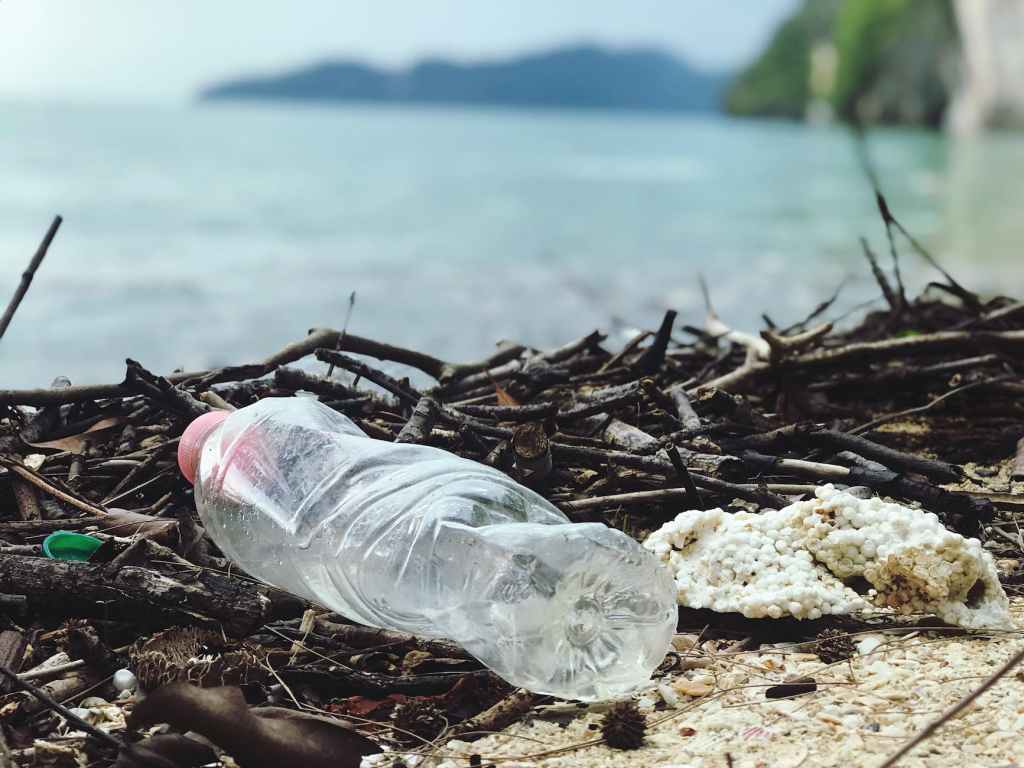
Remember how your mum always made you swallow water to wash down your headache pills? What if those pills had been made from the remains of a long discarded plastic bottle that some other child had been forced to undergo? According to the resourceful Nicola Davis of the Guardian, it’s about to happen.[1] And the implications are enormous.
A team lead by Professor Stephen Wallace of the University of Edinburgh has actually gone and turned old plastic bottles into medicine. Combining the very best in organic chemistry and genetic engineering, they have modified a strain of E. coli to make good old paracetamol, that standby of every household drugs stash the world over. [2] The details of how they do it may be read in the links supplied. But our interest today is somewhat different.
At last someone has found a use for all those mountains of ghastly plastic waste which so disfigure this once beautiful planet. It can be made into something which millions, no billions, of people can deploy every day: and to some beneficent purpose. And if paracetamol, why not other things? Meanwhile. fans of economics will note the creation of a demand., Soon people may be fighting each other in the streets to get the best plastic bottles to sell to wholesalers. Nations will go to war to gain access to those vast disgusting rafts of waste which currently drift around the oceans. There’s one sure way to modify the behaviour of the ignorant mass of humankind- Turn virtue into economics and let them make some money from it. The Professor and his team may have done just that.
Every so often one of our blogs engenders some intriguing feedback . Alongside the usual welcome comments with all their nods and frowns, we occasionally get one that is a little-uh- longer, yet expresses its views with passionate clarity, to push euphemism to its limits. Such was the case today, when a reader alleged that our criticism of fossil fuel and tobacco companies was a sure sign that we were under the influence of Communists, who aim to tear down the free market system and replace it with a “nightmare of bureaucratic state socialism” of the sort found in places like Venezuela and North Korea. In particular the reader observed:
“What you’ve got to remember is that markets not governments are best at allocating resources. Intervening in fossil fuel markets is crypto socialism- it will only distort price signals, stifle innovation and lead to unintended consequences”
When we asked if this was true for immigration control as well, they replied
“Absolutely! Free markets mean the free movement of labour. Anything else is protectionism in disguise.
So, where does that leave us at LSS? Having worked for many years in the Government Employ and thereby known the ways of Civil Servants, we can more and more share the view that Free Markets really do work better. No, it’s the “unintended consequences” that pulls us up. Free markets can have those too. Totally unregulated sales of tobacco produced an epidemic of cancer. We suspect that over enthusiastic marketing of certain foods and drinks will one day produce an epidemic of obesity. As for gushing out vast quantities of poisonous mineral oil and burning it with heedless abandon-well we wish people had been better informed before this was started. To call for better product information, and to ask that consequences of free markets are cleaned up, or at least controlled, does not make one a Communist. Or anything like it.
Thanks for the feedback, and we appreciate that in view of this respondent’s employment, they must remain anonymous
First deny there’s a problem. Then do all you can to delay a solution. Buy up politicians, scientists, bloggers, and bots. The tactics of the fossil fuel industry and outriding nations as they seek above all to protect their comfy lifestyles and exorbitant profits. It’s not just made abundantly clear in this report by Damien Carrington in the Guardian: it nails down every last nail to be had into the coffin lid. [1]
But we’ve seen it all before gentle readers. We recall walking down an alley in London in 1971 with a close relative who assured us there was no definite, provable link between smoking and cancer, OK!? (he died of the latter) Why was he able to state this? Because for decades the tobacco industry had managed a huge campaign of deception, obfuscation and general misinformation designed to give him and his peers every excuse they needed to continue their tragic addiction. Using exactly the same techniques now employed by climate change deniers, funnily enough.. The only difference was that they didn’t have the Interweb to turbocharge their propaganda and illusioning. This rather depressing link to the WHO explains the ghastly details to anyone who may want to know more about the fundamentals of human nature [2]
And what are these fundamentals, by the way? We don’t know them all But we can hazard a guess at some, provisional though we may well be
1 Some people will do anything to make some quick cash, Anything at all.
2 Many people will do anything to avoid facing the consequences of the vile little habits which they have acquired in the course of a lifetime of self indulgence and self deception.
3 Just because you are educated and slightly more far seeing than others around you does not give you tactical superiority in the current wars between the intelligent and our enemies They are incredibly cunning and well funded
4 This ain’t over yet. Keep a close eye on rising sea levels, if you want to live
We will be ready with further insights. inspirations and bons motifs in future blogs. Keep reading. And thanks for all the recent sigh ups and likes. Keep ’em coming.
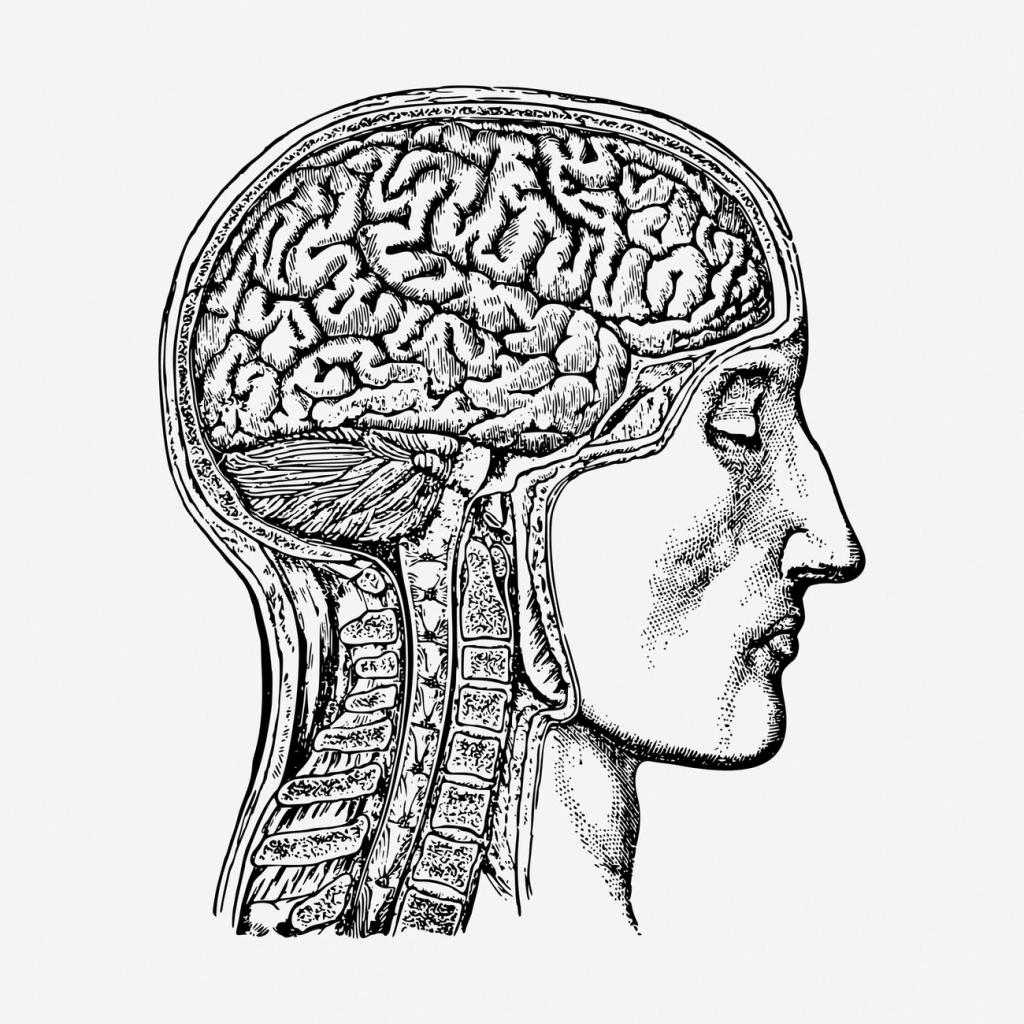
No we’re not writing about ourselves as some hardened readers may have already guessed. Because we couldn’t achieve what the researchers in these two stories, both from Nature Briefing, have indeed achieved. Sorry guv- we don’t have their intellectual bandwidth . Cognitive intricacy. Brains, in good old fashioned English But we know intelligence when we see it, and we know you do too.
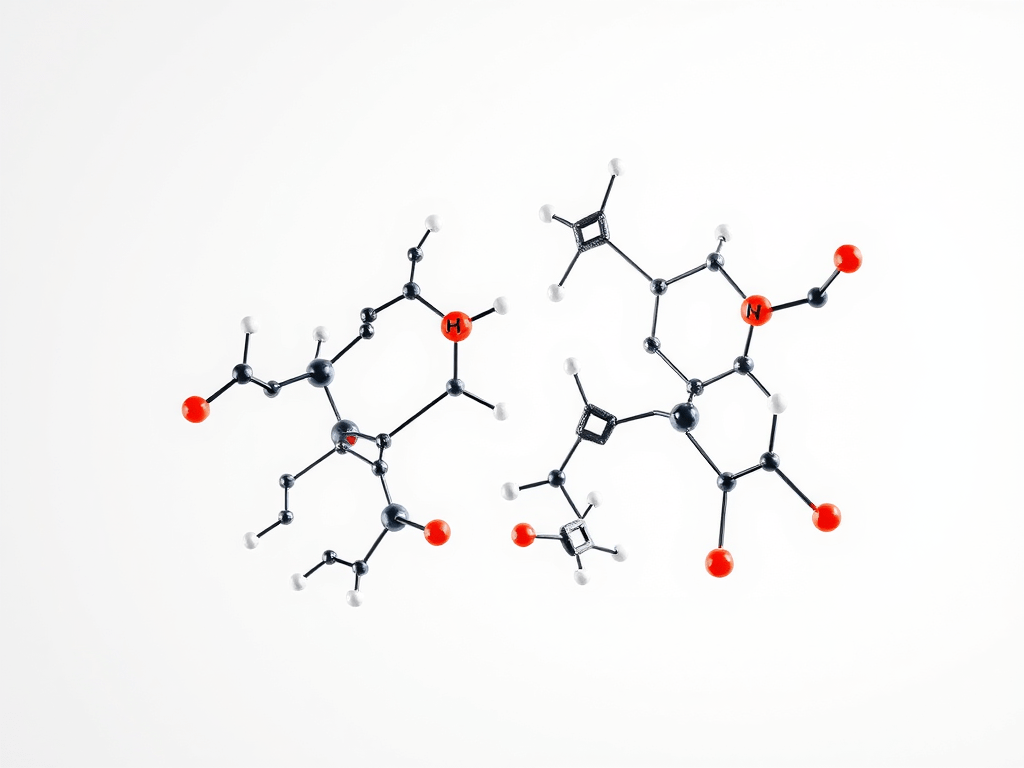
Algorithms design remarkable enzymesResearchers have used computer algorithms to design highly efficient synthetic enzymes from scratch, reducing the number of tedious hands-on experiments needed to perfect them. The products facilitate a chemical reaction that no known natural protein can, with an efficiency similar to that typically achieved by naturally occurring enzymes. One design was also 100 times more efficient than similar enzymes previously crafted using artificial intelligence. In comparison to enzymes that occur in nature, the algorithm’s creations are less complex and can’t grapple with multi-step chemical reactions, but they’re proof that the approach has promise.Nature | 4 min read Reference: Nature paper
The medical potential of designer enzymes will not be lost on readers as intelligent as our own. Yet some discoveries are to be relished not for their use, but for what they tell us about the world and our real place in it Try this for size
Dragon Man was a DenisovanAncient proteins and mitochondrial DNA extracted from the ‘Dragon Man’ fossil — a cranium found in northeastern China that is at least 146,000 years old — have confirmed that it belonged to a Denisovan, an archaic human group. The fossil is the first skull to be definitively linked to the group, which sheds light on what the ancient people looked like, putting an end to decade-long speculation.Nature | 5 min read Reference: Cell paper & Science paper
Learning. Reason. Curiosity. Handy, aren’t they? Their absence can lead to different outcomes indeed. As the inhabitants of certain regions of the globe know only too well.
a few stories to get you doing the work for a change
Hope for Alzheimers It’s an understated truth, but the general ageing of the population is one of the most significant trends in human history. That’s why doing everything we can to understand it is so important. We took heart from this new Alzheimer’s test which shows real promise The I paper via Apple News https://inews.co.uk/news/health/blood-test-scientists-alzheimers-nhs-3733762thanks to P seymour
Nigel Farage is becoming the true tribune of the working class in Britain reports the acute mind of Andy Haldane. Because Farage realises that immigration and inter ethnic jealousies it engenders are the prime motivating force for most humans, way ahead of housing, health and certainly education.. And we have noticed a tendency among the educated classes(not Haldane) to sneer at ordinary people like builders and taxi drivers for nurturing these hatreds. Remember one thing: the high-consumption high-energy life styles of these so called educated classes are causing the ecological collapse which causes immigrants to flee to richer countries in the first place. Don’t be surprised if the lower orders , who are the first to encounter all the new neighbours, begin to act in emotional and inconvenient way. The Guardian
Monkey Pandemic -echoes of Gibbon? Pandemics start small, but eventually cause the Decline and Fall of vast empires. That’s the clear lesson from History. Which is why we take this warning Sierra Leone mPox raises fear of spread from the redoubtable Nature Briefing very seriously indeed
A surge of mpox infections in Sierra Leone has stretched the country’s health-care system, sparking fears that the virus will spread to neighbouring countries in West Africa. Sierra Leone has confirmed more than 3,000 infections in the last month, and an analysis of viral genomes suggests there have been at least four times more infections than officially reported, says genomic epidemiologist Edyth Parker. The recent withdrawal of US funds for foreign aid will make curbing the outbreak even more difficult, experts say.Nature | 5 min read Reference: Virological.org analysis
If I could talk to the animals Ever since the early days of iconic simians like Washoe, Kanzi and Flipper the Dolphin, researchers have been hoping to crack the code of animal language. But would be Dr Doolittles should beware: such languages may not exist, warns this prescient article from the Conversation. Making the hunt for them a wild goose chase. Or should that be a mare’s nest? (that’s enough flippancy–ed)
Prudence always The Beatles White album was for us the least of their works. It seemed to be full of rather self indulgent essays in mediocrity and could have done with being cut down from two of those funny black shiny things to one. However, one song does stand out. Dear Prudence, covered by many, was always best in the original





















 Learning, Science and Society