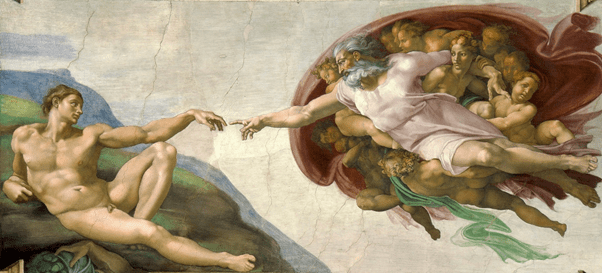
When was the best time to have been alive? Start of a new series

When was the best time in History that you could have lived in? With all the problems facing us now, like climate change, rising xenophobia, faltering economies-it’s natural for the mind to wander to other times and other places , where they had it good, in ways that we just can’t seem to manage.

It’s easy to idealise bits of the past when you didn’t have to live there and use the toilets. It’s also easy to make mistakes. “Bliss was it in that dawn to be alive!” declared Wordsworth, while on a tour of Revolutionary France. He just got out with his life, as did many other deluded middle class intellectuals. And even the Nazis tried to drum up a cultural vibe, what with Leni Reifenstahl and all that modernist architecture. That duly said, it is possible to pick out certain periods when the humans really did seem to be doing better for a while. Like a football team putting together a run of successful results. We will try to identify those times using the following criteria, if you will forgive us, gentle readers.

There has to be peace, or general political stability, over a wide area. We”ll illustrate this with a counter example: Beethoven and Schubert wrote some pretty good music during the Napoleonic wars, but you wouldn’t have wanted to have lived through those wars would you?

Learning is advancing, preferably big time : despite all the wars and coruuption, Big Stuff was happening in Renaissance Italy- arts, sciences, architecture, you name it. By that criterion. all those Cardinals and Condottieri have to be in with a shout

Trade must boom According to the great Professor Davis, this is the great sine qua non of civilisation

The staging must be right The backdrop of islands and temples etc gives the Classical Greeks an enormous leg-up before they even take the pitch. Whereas Lancashire in the Industrial revolution? You mainly died at thirty, after a lifetime of bracing hard work. Although it probably felt like much longer.

There must be a long running cultural movement No one sat down one day and declared “OK chaps, it’s the Bronze Age and humanity stands on the edge of a bright new frontier. Put away all those stone tools and mammoth skins, and let’s start living in cities!” The periods we refer to must be embedded in a long movement of progress and general moving forward.

And all too often they come at the end of it. The swinging sixties ended in strikes and inflation. The Renaissance city states were leaned upon, terminally, by much bigger places like France and Spain. The long peace of Rome degenerated into the Crisis of the Third Century. But we are nothing if not triers here. And so our first try in the next blog of the series will be China in the Tang dynasty 618-907 AD, using the western calendar. Let’s see if they were really, really, like, cool?

#renaisance #history #china #greeks #learning #science #society

The economic costs of antibiotic resistance

Down the years we’ve tended to cover the health risks of antibiotic resistance , and the various scientific and medical developments in the field. We haven’t written so much on the economic risks. And frankly, that’s been a blind spot.

Now a very clear sighted article by Anna Bawden of the Guardian[1] makes those potential costs very clear indeed. Drawing on report from the prestigious Centre for Global Development [2] Anna serves up some chilling facts Get this:

A UK government-funded study shows that without concerted action, increased rates of antimicrobial resistance (AMR) could lead to global annual GDP losses of $1.7tn over the next quarter of a century.

Breaking it down by countries:

The research calculated the economic and health burden of antibiotic resistance for 122 countries and forecast that in that in this most pessimistic scenario, by 2050, GDP losses in China could reach just under $722bn a year, the US $295.7bn, the EU $187bn, Japan $65.7bn and the UK $58.6bn.

That alone should give the thoughtful 5% of us pause for thought. But it’s Anna’s background which makes this a great article. For it comes at a time when countries like the USA and the UK are busily cutting their overseas aid budgets. Which is shows a worrying lack of self interest on their parts. For one thing, antibiotic resistance will not be confined to poorer countries: but it is much more likely to develop in them. Secondly, being at the forefront of pioneering science can spin off the most amazing business and technological opportunities for the more astute kind of entrepreneur. And thirdly, and most acutely for their voter base: if the health system in those poor contries collapses, guess where their populations will pitch up? “Stands ter reason,dunnit, mate?” as our old friend Dave Watford is fond of stating. Thanks, Dave- you’ve got it right this time.

[1]https://www.theguardian.com/society/2025/jul/20/superbugs-could-kill-millions-more-and-cost-2tn-a-year-by-2050-models-show

[2]https://www.cgdev.org/media/forecasting-fallout-amr-economic-impacts-antimicrobial-resistance-humans

#antibiotic resistance #health #medicine #economics

Could this new mRNA vaccine end cancer?

In the UK alone cancer accounts for 24% of all deaths.[1] Which means you, gentle reader have a close to one in four chance of going that way. You might hope that someone might do something about it. Today we bring you news that somebody has, via the industrious Luke Andrews of the Daily Mail [2] But before then, a tiny apology.

Because in reporting this we have no desire to disparage the heroic efforts of scientists, doctors, fund raisers and honest-to-God patients who have already done so much to ameliorate and already effect cures for this terrible disease. Luke’s story could be a game changer-but only because it comes at the ned of an enormous process of scholarship and research. That said, it is truly exciting. Firstly, because it tries to use the new mRNA vaccines which came of age during the COVID 19 pandemic. Secondl, because it offers a hope, however tentative at this stage, of a universal vaccine. Luke explains matters really well,. with all the links you need to the source journals, so we’ll leave you to him. Upbeat to say the least.

Vaccines are a contentious subject. We have talked about cancer vaccines here before(LSS 24 5 21 et al) and are aware of the mixed reactions we get. We suspect that not all anti-vaxxers are bad people: among them you will will find the stubborn types who refuse to accept any information coming down from above on whatever subject. Grit in the wheels of the machine; but one day you just might need them. But we in what might be called the empirically based community have our uses too.(we invented the computer you’re reading this on) it’s time for a dialogue, instead of hissing and growling at each other like so many cats and dogs. The patients deserve that.

[1]https://www.cancerresearchuk.org/health-professional/cancer-statistics/mortality

[2]https://www.dailymail.co.uk/health/article-14919401/immune-hack-vaccine-mrna.html

#mRNA #cancer #vaccine #medicine #health

Closing the Fleming Fund-a bad day for antibiotics

One of the few certain things in life, apart from death and taxes, is to go to the bar of the Dog and Duck and there eavesdrop on opinions on the question of the UK Foreign Aid budget. “We got omeless on ahr streets, an dere sendin billions abrawd!” “We’re taxed to the ilt, an’ they’re givin it away!” are some of the politer opinions we dare repeat here. How ironic for them to see a hated Labour Government make the very cuts they so long for. But our pleasure is short lived..

For the Government seems ready to abolish The Fleming Fund. [1] A body set up in 2015 and named after the the illustrious pioneer of penicillin, the fund states its purpose as a

UK aid programme supporting up to 25 countries across Africa and Asia to tackle antimicrobial resistance. The Fund is managed by the Department of Health and Social Care and invests in strengthening surveillance systems through a portfolio of country and regional grants, global projects and fellowship schemes.

But-what goes around comes around, as the old saying has it. Antibiotic resistant superorganisms know no national boundaries. If they evolve in the third world, they will be here soon. This decision appears to be very short sighted.

We sympathise with a government caught in a hard place between the obdurate creed that says taxes must never rise, and the urgent need for spending to achieve at least a minimal defence capacity. Perhaps the real problem is not economic, or biological, but philosophical. For if the world is divided into competing nation states, what choice does each government have but to look after its own immediate interests? And if nations arm, each in mutual fear of its neighbours, what hope for spending on international co-operative efforts like the Fleming Fund? Perhaps the trick for LSS and its readers is not to develop more antibiotics, but to persuade millions of the sorts of people who go to the Dog and Duck to realise this simple truth.

thanks to J Read

[1]https://bsac.org.uk/closure-of-the-fleming-fund-risks-undermining-uk-leadership-on-amr/

[2]https://www.flemingfund.org/about-us/

#fleming fund #overseas aid #antibiotic resistance #health #medicine #microorganisims

Heroes of Learning: Steven Rose (and why things are never simple)

No book ever tore through the calm assurances of progress through co-operation like Richard Dawkins’ The Selfish Gene. [1] It wasn’t so much the book itself. That was an attempt to popularise, albeit sometimes in colourful language, the discoveries of an important group of evolutionary theorists such as William Hamilton and EO Wilson. It was the use made of it by political activists, zealous propagandists of the Free Market, to prove that every attempt at co operation, collective action and sharing resources was against the basic laws of nature. “Out upon your Trades Unions, your Keynesian economics” they thundered in a thousand articles in places like the Daily Mail “we are nothing but animals. Your only purpose is to pass on your DNA to make copies of yourself. Look at them lions. mate! When one of them takes over a pride he kills all the cubs and mates wiv the females to make sure his genes get frough! Go and do like wise!” It was not an experiment we felt disposed to try. Compete, for the other fellow is your genetic enemy was their credo. All barriers to that competition were both evil and deluded.

It was simple, it was seductive, it was based on some facts. It played well in the broken restless zeitgeist of the 1970s when the pillars of the old prosperity- high taxes, demand management for the common good, collective institutions like the IMF and UN seemed ineffective. It sold by the million; and swept ever more voters into the booths for one Margaret Thatcher in 1979, whose own simplistic and reductionist nostrums seemed to chime so well with those of the book.

One man did not buy. His name was Steven Rose, a remarkably accomplished scientist who spent most of his work in neurobiology and biochemistry [2] This obituary summarises his work better than us. But it was his insistence on complexity and the irreducible flexibility of the human mind, that still allowed hope for a way out from the genetic prison in to which we had been so neatly incarcerated

He wrote: “It is in the nature of living systems to be radically indeterminate, to continually construct their – our – own futures, albeit in circumstances not of our own choosing.”

Look at that carefully, then leap with us to another part of the scientific forest. Where the BBC showcases a new technique to rid the world of the scourge of inherited mitochondrial disorders [3] Basically you take a fertilised ovum from a normal male-female coupling, but put it as the nucleus in the egg of a different female. Which then develops as a normal embryo until nine months later a healthy baby emerges[3] A three parent child? Sort of. Two parents get to pass on their DNA, no doubt to the blissful delight of Dawkins’ more extreme followers. And a different mother sends her mitochondrial DNA cascading down the ages, which rather complicates matters for some. Now look at the Rose quote again what was that about continually constructing?

At the time of the great Dawkins controversy the old BBC Horizon programme ran a show in which the quoted one of the wiser and more humane scholars in the Selfish Gene camp. His name was John Maynard Smith. And he ended with this thought “humans are not just animals- we are not prisoners of simple genetics” At the time it seemed a forlorn hope. It has just been proved triumphantly real.

[1]https://en.wikipedia.org/wiki/The_Selfish_Gene

[2]https://www.theguardian.com/science/2025/jul/10/steven-rose-obituary

[3]https://www.bbc.co.uk/news/articles/cn8179z199vo

#richard dawkins #sociobiology #biochemistry #medicine #DNA #mitochondria

Conversation Article gets to the heart of why people get things wrong

You know a piece of writing is good when it explains many things, not just the ostensible subject the writer has before them. Such is the case with Edward White of the prestigious Kingston University in the UK whose article in the Conversation forms the basis for today’s blog [1] Ostensibly, the subject is Evolution. Now, we’ve always liked a bit of Evolution here. But only as abit of light relief, following it the way people follow the fortunes of Leicester City FC or the doings of celebrities.

Not so in the United states of America where the subject is of neuralgic importance as Edward points out. Huge numbers of the citizens of that country still hold that God created Man exactly according to the schemata laid out the in the early chapters of Genesis in the Hebrew Bible. And he has a barrage of statistics to explain how and why. But the point for us, gentle readers is why these people think as they do. For it explains a much wider truth, which is: no species as so supremely adapted to self delusion and to believing the lies, deceits and threats of charlatans as is Homo sapiens. And this is true in all fields-politics, religion, economics, even science and medicine(remember the MMR controversy?) The fault according to Edward is motivated Reasoning, where you start with a conclusion and work back to justify it. This ensures a high chance of error, whatever cognitive powers you may possess, as astute readers will have spotted. Why do people do this? Get this killer quote from Ed:

Brain imaging studies show that people with fundamentalist beliefs seem to have reduced activity in the dorsolateral prefrontal cortex — the brain region responsible for cognitive flexibility and analytical thinking. When this area is damaged or less active, people become more prone to accepting claims without sufficient evidence and show increased resistance to changing their beliefs when presented with contradictory information. Studies of brain-injured patients show damage to prefrontal networks that normally help us question information may lead to increased fundamentalist beliefs and reduced scepticism.

As Edward concludes: for most people learning is about who gets to define truth, and own the power that flows from it thereby

And our conclusion? We seem to be drilling down to the bedrock at last and knowing why people make and hold errors, From here at last the Progressive Community may find a way forward

[1]https://theconversation.com/why-many-americans-still-think-darwin-was-wrong-yet-the-british-dont-260709?utm_medium=email&utm_campaign=Latest%20from%20The%20Conversa

Andrew O’Neil on how to fix a broken education system

Veteran students of Britain’s national decline keep returning to a single motif: it’s our education system. For too many years the United Kingdom has tolerated appallingly low standards of literacy, numeracy and vocational skills which have left it trailing far behind the field of comparable developed counties. The reasons adduced include: a two-tier system of private versus public education, with all the opportunities rigged in favour of the former: under investment , with education ever in the firing line of the latest round of Treasury penny pinching: an atrophied system of vocational training with an overemphasis on bookish academia. Well do we remember the personal experience of a teacher who told us “in a one hour lesson I spend the first twenty minutes trying to calm them down and pay attention: in the next twenty I might get some teaching done; the last twenty is spent trying to maintain order as they await the end of the lesson” That was thirty years ago; but the experience is relevant today. Incidentally, we make that two thirds of the budget spent on every lesson wasted: but then, we were never very good in maths class.

Don’t take our word for it. Believe the words of Andrew O’Neil a heroic figure who pens a regular column for the Times Educational Supplement. Contrary to all experience, still believes something can be done. [1] He is honest about the problems: poor retention of teachers: endemic violence and above all an unwillingness to confront these issues until they break into total catastrophe, with the murder of a teacher by a disgruntled pupil, although quite often they do it to each other as well. His learning is vast, his interest multifaceted. Oddly he actually sees signs of hope for our poor land:

There are promising signs of change. In Bridget Phillipson, we now have a secretary of state committed to long-term solutions rather than short-term firefighting. Her emphasis on system design, fairness and early intervention marks a departure from crisis-led reform

Travelling on holiday, on business or whatever, we became used to a sort of condescending pity from foreigners whenever the subject of education came up. is there just a chance that, for once our appalling national system might be mitigated, or even turned around altogether? Could we actually start to catch you up?

thanks to d foley

[1]https://www.tes.com/magazine/analysis/general/why-education-keeps-collapsing-into-crisis

#united kingdom #education #great britain #economics #schools #gangs #youth #violence #graffitti #drugs

G7 v BRICS: is this how the sides will line up for World War Three?

We know we started out as a science based blog, mainly devoted to the encouragement of more research into antibiotics. If our brief has widened a little, it is because we cannot ignore the wider world around us. If that world decides to spend more on weapons of mass destruction, and less on antibiotic research, it impinges directly on us and our readers. Which is why this pair of articles from the Guardian caught our eye. They strongly suggest that the sides for the next world war are lining up. And the outcome is by no means certain.

On the one hand are the G7 group of countries, led by the USA.[1] Thirty years ago they had the game in their hands. Immensely rich, accounting for an enormous slice of the global pie, their triumph over the Communist bloc had seemed to set them apart . They were the world’s bankers, the world’s policemen, the world’s shop keepers. Since when, hubris seemed to set in and it has been downhill all the way. Iraq, financial crash, tariffs, Brexit…………These words are shorthand, metanymies if you will, for a deep moral rot that is grounded in an almost childlike reverence for the supremacy of financial markets and the sorts of people who work in them. Now as the admirable Joseph Stiglitz and his colleagues observe, the once mighty G7 is in danger of being little more than a front organisation for the interests of large American multinationals. A position sure to alienate many around the world.

Among the alienated are a group which starting out as the BRICS (Brazil, Russia, India, China and South Africa)[2] has expanded to include rising stars such as Indonesia. It may not be morally perfect either(its stance on Ukraine, and the fact that many members are autocracies cannot be overlooked). But its members are united on one thing: they are tired of the whims and policy lurches of the US, particularly under such a nakedly self-serving President as the current one. They are ready to have done with the traditional instruments of US domination such as the Reserve Dollar. And they are developing the economic resources to make these ambitions feasible.

History has two lessons. The decline of one hegemonic power and the rise of another is usually a signal of impending war. Another is the formation of alliance blocks; as one small event triggers a chain reaction of consequences. Think Europe 1914 as the case example for both. And don’t expect the supply of antibiotics to go up any time soon.

[1]https://www.theguardian.com/business/2025/jul/02/the-g7-has-once-again-put-multinationals-profits-over-the-interests-of-people?CMP=Share_iOSApp_Other

[2]https://www.theguardian.com/commentisfree/2025/jul/13/the-guardian-view-on-brics-growing-up-a-new-bloc-seeks-autonomy-and-eyes-a-post-western-order?CMP=Share_iOSAp

#G7 #BRICS #China #USA #IMF #dollar #geopolitics #brasil #russia #indonesia

Could global warming have been avoided?

Historians of the future (assuming there will be any such) will probably point to the 2020s as the decade when the world began its short unhappy slide into climate catastrophe. The Greek forest fires of 2021; the Californian ones of 2023, combined with floods in Pakistan in the same year that drowned fully one third of that country, were proof, attributable proof ,[1] that human induced climate change had started to wreak incontrollable and irreversible destruction to the fabric of planet’s surface. A fabric that human beings needed to be intact if they were to survive. They will also ask how it was possible that a society with the most advanced techniques of science and communication had allowed itself to arrive at such a point.

Starting in the 1960s, the warnings had been coming, like the steady rise if a beating drum. The Keeling curve and the concerns of the LBJ administration were early examples. In the 1970s even the CIA (hardly a bastion of Green Woke Communism) had got in on the Act. Through the 1980s and 1990s there were conferences, resolutions and rising alarm. All action was undermined, subverted and rendered null by the fossil fuel industry and the petrostates. Whose actions bore such a resemblance to the tobacco industry and its efforts to deny the links of their product to lung cancer.[3] Perhaps the last reasonable chance to act in time was the Kyoto summit of 1997. Which, if its recommendations had been implemented in full, might have avoided the enormous costs, both economic and in lives, of what was unstoppable by 2020.

And that future was to be? As the temperature gradients warmed through 20, 2.50 and 30C , rising sea levels and wildly fluctuating weather conditions caused whole societies to collapse. The resulting waves of refugees were halted, temporarily, on the borders of safer lands, Until those fleeing returned with armies and weapons which could never be stopped; and the last bastions of order fell. Like a smoker dying of cancer, or a boozer from liver failure: humanity as a whole could just not kick its habit.

[1]https://www.worldweatherattribution.org/

[2]https://earth.org/data_visualization/the-keeling-curve-explained/

[3]https://www.bbc.co.uk/news/stories-53640382

#global warming #forest fire #climate change #flood #oil industry #fossil fuel #cancer #tobacco industry #greece #california #pakistan

More on the deadly dangers of stress (sorry, but you need to know this)

A few decades ago, a friend remarked how his brother had left a stable happy marriage for a much younger woman at work. It didn’t last long- the man in question died a few years later of Crohn’s disease. The new relationship didn’t turn out very happily, as I learned from passing gossip. “Going over the side” they used to call it, back in the day. It seemed unremarkable enough -until a few years later a work acquaintance of about the same age and circumstances suffered a similar fate. Raising the question: was the knowledge of the awful decisions they had both made eating away inside, burning with stress, until their poor immune systems broke down altogether? This was the start of a trope we have followed ever since. We have alluded to it several times on these pages(LSS 2210 24; 23 8 20} to name but a few. Now we are glad to see our concerns addressed by altogether more weighty and learned persons (surely not?-ed)

For Nature and its brilliant Briefing arm have put the matter at the forefront of their latest editions Read this, Time to Take Stress seriously, if you don’t believe us:

When George Slavich’s father died suddenly, the clinical psychologist was well aware of how the stress could affect his health, but his health-care providers weren’t as interested. “The experience highlighted a paradox between what I know stress is doing to the brain and body, and how little attention it gets in clinical care,” says Slavich. He is among the researchers investigating how the body reacts to stress and how it contributes to deadly diseases.Nature | 11 min read

You see George isn’t any old George. He is a clinical psychologist at UCLA, no less. And he has launched a project with many other eminent scholars to research the link between stress and many disorders that plague us all, from heart and respiratory disorders to all kinds of psychological and psychiatric ones. Is there good stress? Is there bad? What causes each, and how to cure them? All these questions are now front and centre of George’s research. You can read more here[1] and here[2]

For the last fifty years or so, the whole psychological imperative has been to make people work ever faster for longer for ever lower wages. it is supposed to make us all more prosperous and happy, or something. What if it is doing the opposite?

[1]https://www.nature.com/articles/d41586-025-02066-z?utm_source=Live+Audience&utm_campaign=5e2c1eb595-nature-briefing-daily-20250708&utm_medium=email&utm_term=0_-33f35e09ea-

[2]https://www.frontiersin.org/journals/psychology/articles/10.3389/fpsyg.2024.1471084/full

#immune system #stress #coronary disease #psychology #chronic illness #overwork #health