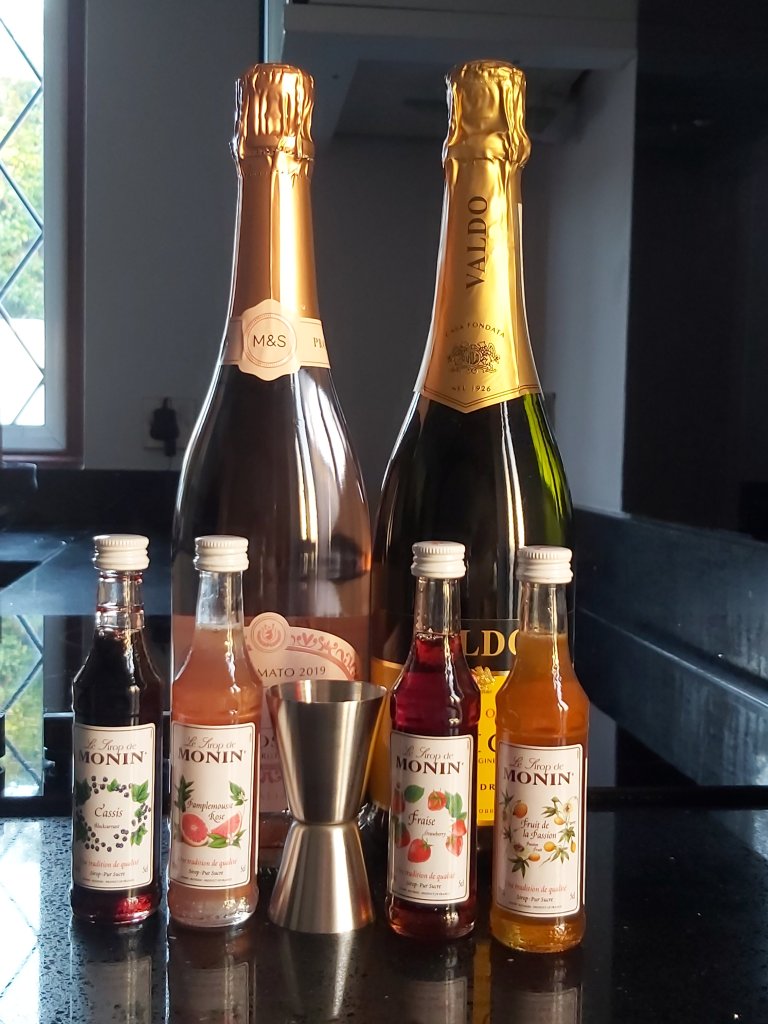

Friday Night Cocktails: 10 songs for the stranded crew of the Ever Given

As Friday night approaches we are sure that avid fans of cocktails will be going easy on the mixers, as news reaches us that all sorts of supplies may be held up by the blockage in the Suez Canal caused by the unfortunate misadvantures of the container ship Ever Given. We at LSS adscribe no blame! We know the Suez canal to be a narrow shallow waterway so treacherous that even sailors as experienced as Captain Birdseye hesitate before pointing their boats along it. The proper course, if readers will pardon the pun, is to wait for the full enquiry, after the flotillas of tugs and cranes have floated the unfortunate hulk once more and vital naval supplies such as rum, gin and bitters can flow once again unimpeded.

So we extend our sympathies and condolences to the stranded Captain and his crew, and heartily recommend this list of songs to play over the ship’s PA system, to keep up morale until help arrives.

10 Sailor Petula Clark Bit of an oldie, we admit. We last heard it in 2018 while stuck ourselves in a massive jam on the aptly-named Kew Bridge. As Londoners will know, Brentford and Kew still retain some of their antique nautical ambience, so it makes the cut nevertheless.

9 Captain Of your Ship Reparata and the Delrons. Achieved its UK chart high water mark this very day, 26th March, back in 1968! It sound effects of ships’ horns and general gear make it an evocative favourite in the seafaring world to this day.

8 Sweet Painted Lady Elton John Less about navigational technique and more about the unsavoury recreations of discharged seamen during their leisure hours, this one too uses marine leitmotifs to evoke its atmosphere.

7 Sailing Rod Stewart The standby chorus for many a free spirited night in rugby club or public house, a real good one for the male bonding so often associated with mariners and their peculiar culture.

6 Harbour Lights The Platters We discovered this Shanty in the much underrated film noir Mulholland Falls. We hope it won’t be long before the Captain and Crew of the Ever Given are snug in a real harbour instead of stuck looking at miles of empty desert and camels, while the traffic piles up behind like a bad day on the M25.

5 The Ship Song Nick Cave A little melancholy and world weary, it may be somehow appropriate for the feelings of all currently waiting their turn in the Gulf of Suez.

4 Dock of the Bay Otis Redding Another classic from 1968! Captures that sad sense of being washed up with nowhere to go “….sitting in the morning sun, I’ll be sitting when the evening comes…”sang Otis.

3 Nightboat to Cairo Madness Who can blame anyone for wanting to take a water taxi and escape to the nearby delights of this famous city? Who would not come back refreshed and ready to jump into the water and push the stricken vessel to freedom?

2 The Theme from Captain Pugwash Alright, not a chart song, and there are no lyrics, But you can hum along to the merry tune from the famous TV show, maintaining good spirits and the proper naval discipline as you go.

1 Ship of Fools Erasure We had entirely forgotten this old album filler from 1988. But for some reason several people have suggested it to us during the research for this little posting, so, without knowing why, it goes in at number one.

Our own nautical experience is confined to command of a small cabin cruiser on the River Thames at Bourne End, several decades ago. And we crashed that a couple of times. So we point no fingers, engage in no schandenfreunde, and abjure all smirking and quips. But we do say to all our readers- avast, splice the main brace and belay that second rum cocktail until happier times.

#evergiven #evergreen #shipping #suezcanal #trafficjams #containership #worldtrade #redsea #egypt #meditteranean #tugs #cranes


10 great environmental books via Nature

If you’re really stuck for something to do in the dog end of lock down, why not broaden your mind with some great reading? We at LSS take no credit for this, we’re just passing on some suggestions from a site called The Revelator-via that superb site Nature Briefings, Ten Great Green Books:

Lessons from plants, science fiction with a real-world twist and a meatless cookbook are among the top ten environmental books of the year so far as picked by The Revelator (an editorially independent publication of the US Center for Biological Diversity).The Revelator | 5 min read

We at LSS see loads of good stuff about wild spaces and defending them. An inspiring tale of how the people of El Salvador fought to keep their water clean. There’s science fiction, something for kids, and tough legal fights against corporate giants. Which is why we have singled out this as the most intriguing and are going to shamelessly plug:

The New Climate War

The Fight to Take Back Our Planet

by Michael E. Mann

BUY NOW:AMAZONAPPLE BOOKSBARNES & NOBLEGOOGLE PLAYSee All

EBOOK / ISBN-13: 9781541758223USD: $15.99  /  CAD: $19.99

the blurb goes:

A renowned climate scientist shows how fossil fuel companies have waged a thirty-year campaign to deflect blame and responsibility and delay action on climate change and offers a battle plan for how we can save the planet.”

LSS got all the above because we subscibe to Nature Briefings. Honestly, go to this link and sign up-you won’t be sorry. And they are thinking about bringing them out in other languages as well!

briefing@nature.com

#climatechage #globalwarming #environment #conservation #corporate #elsalvador

Heroes of Learning:Bacon the Superbrain

Were you ever at school, or university, with one of those super clever people? You know, the ones who came top in nearly every subject? And outside class they could draw, play the guitar, drink everyone under the table, crack the best jokes, and still manage to be amazingly popular and well liked? Years later you run across them on the internet and they are multimillionaires running large companies. Or you find their books cramming the science section in your local Waterstones, and you can’t even understand the blurb on the back.

But is there another class of person even beyond your average, run of the mill genius, a person so clever that they have changed the world forever? We think we have found a possible candidate. Ladies and Gentleman, may we introduce Francis Bacon, 1st Viscount St Alban Kt PC QC (1561-1626)or Lord Verulam as he was known to his friends. In our age, where it seems impossible to get anything done without intense specialisation, Bacon managed to be Attorney General, Lord Chancellor, Master Librarian, Counsellor to Monarchs, and inventor of the scientific method. And that was where he counted. Bacon it was who more or less invented inductive reasoning. That is, you come up with an idea, gather all the evidence you can, assess and test it, then make a final judgement, which can only ever be a probability statement. That’s why we have vaccines, space travel, electric lights, powered flight, and understand so much about the depths of space and time.

If you want to read more about Bacon, his friends and enemies, his sexual proclivities, and his achievements in general, the Wikipedia article below is a good place to start. He was born in the last days of the Renaissance, and paved the way for the Enlightenment, whose early thinkers such as Spinoza, Hobbes and Descartes were just over the horizon. That’s quite a guy.

Francis Bacon – Wikipedia

#francisbacon #renaissance #enlightenment #inductivereasoning #science #philosophy

Rhinovirus trumps Coronavirus.This could be the start of something BIG

News that infection with a rhinovirus such as common cold, can protect you from Coronavirus infections may yet turn out to be very significant indeed. Let’s start with the story; today we’ll use the BBC but most outlets are covering it. According to James Gallagher, * researchers at the University of Glasgow Virus Research Unit have found :

If rhinovirus and Sars-CoV-2 were released at the same time, only rhinovirus is successful. If rhinovirus had a 24-hour head start then Sars-CoV-2 does not get a look in. And even when Sars-CoV-2 had 24-hours to get started, rhinovirus boots it out.

What impresses us at LSS is the surprising, counter-intuitive nature of the discovery. When that happens, you usually find that you’re on to something bigger. Older readers will probably recall the furore1887, when the strange results of the Michelson-Morley experiment showed that the speed of light was the same in all directions. It eventually opened the way to the Theory of Relativity. Darwin and Wallace‘s observations of anomolous patterns in animal distribution eventually led to the Theory of Evolution by Natural Selection. And so we at LSS think the University of Glasgow researchers could be onto something very deep in the ways that cells and viruses control the processing of RNA and DNA, and with it the flow of information. If so, it could save many more lives indeed.

Coronavirus: How the common cold can boot out Covid – BBC News

Human rhinovirus infection blocks SARS-CoV-2 replication within the respiratory epithelium: implications for COVID-19 epidemiology | The Journal of Infectious Diseases | Oxford Academic (oup.com)

#rna #dna #rhinovirus #coronavirus #sars-cov-2 #commoncold #universityglasgow #interferon

Nawal El Saadawi. A Woman for All Seasons

Courageous. Indomitable. Erudite. Intelligent. Humane. These are only a few of the adjectives we could apply to Nawal El Saadawi. It’s one thing to be a feminist on a western university campus. Try your faith in somewhere like Egypt if you want to see what its application is really like. Because she did.

Born in a family of nine children, in a culture whose prevailing ethos was summed up by her own grandmother as “one boy is worth fifteen girls” she managed to qualify as a doctor before setting out on a lifetime of writing, political activism and public health. On the way she managed to upset just about every ruler of Egypt. Nasser, Sadat, Mubarak, Morzi- secular or Islaamist, she rubbed them up the wrong way with equal gusto. Read her obituary by Sarah A Smith in the Guardian * below, but do see that as a place to begin, not end, this remarkable life.

Those who have lived comfortable lives, where beliefs can more more like hobbies or career vehicles, or who imagine their lives ruined by a failure to acquire the very latest Armani suit, should take heart. Because there are people who surpass us in intelligence,bravery and imagination, and it will be them who save all our lives.

Nawal El Saadawi obituary | Feminism | The Guardian

#feminism #womensrights #egypt

Where has all the antimatter gone?

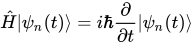
Ask the average man in the street “Oi-mate-what’s the antimatter?” and he’d probably tell you that antimatter is a particulate wave-particle phenomenon, obeying the laws of quantum mechanics exactly as matter does, except it’s negative. If pushed, and he had time to spare from, say, putting up a bit of scaffold or clearing your rubbish bins, he would probably quote the well known Schrodinger equation, which says it all as far as we’re concerned:

{\displaystyle {\hat {H}}|\psi _{n}(t)\rangle =i\hbar {\frac {\partial }{\partial t}}|\psi _{n}(t)\rangle }

or to put it layman’s terms:

{\displaystyle {\frac {1}{{c}^{2}}}{\frac {{\partial }^{2}{\phi }_{n}}{{\partial t}^{2}}}-{{\nabla }^{2}{\phi }_{n}}+{\left({\frac {mc}{\hbar }}\right)}^{2}{\phi }_{n}=0}

reproduced courtesy of wikipedia

Now that’s cleared up, let’s get to the point. Which is that anti matter is the direct opposite of matter. When they meet they mutually annihilate. With a huge bang. Which could be an enormous source of energy. Or a great new weapon to fight baddy aliens. The problem is finding it. Because to make even a tiny sample is incredibly tricky and expensive, and it only lasts for about one million billionth of a microsecond.

All of which raises a problem. If antimatter and matter are completely equal and symmetrical they must have been present when the Big Bang went off, right? Which must must have left equal amounts of both scattered around the universe, like old chips from a carelessly-discarded take away meal. Except it isn’t like that. Everywhere you look, it’s about 99.99999% matter. So have we got it wrong about antimatter? Or the big bang? Or what? That excellent web site Live Science has a great take on this at number #5 on the link below-and there’s a few more headbreakers as well. Enjoy.

The Biggest Unsolved Mysteries in Physics | Live Science

Antimatter – Wikipedia

#antimatter #matter #bigbang #quantumphysics #unsolvedproblems #space #time

Weekly roundup:Greening cities and much more

Welcome to our weekly collection of things we thought were good, but didn’t have the space to cover in bigger pieces.

Greening the cities If we are going to survive at all, we need to make our cities much much greener. There are enormous ecological bonuses in refurbishment, if it’s done correctly. Here Phineas Harper of the Guardian discusses exciting new ideas from those prize winning Parisiens Anne Lacaton and Jean-Phillipe Vassal

There’s a simple way to make our cities greener – without a wrecking ball | Architecture | The Guardian

Immunity-don’t follow the herd About a year ago there was an enormous buzz around herd immunity, and how it would protect us from Covid-19 wihout the need for lock downs and vaccines. We at LSS always had our doubts. However Nature seems to have shot that fox once and for all. Read this,if you dare

Even with vaccination efforts in full force, the theoretical threshold for vanquishing COVID-19 looks out of reach, say scientists who are modelling the pandemic’s progress. Most estimates had placed the threshold at 60–70% of the population, but several factors seem to be pushing it up:

  • Authorized vaccines can prevent people from getting sick with COVID-19. But it is still unclear to what extent they block infection and transmission. If vaccines don’t prevent SARS-CoV-2 from spreading, then many more people must be vaccinated to achieve herd immunity.
  • A perfectly coordinated global vaccination campaign might have wiped out COVID-19, but the roll-out is wildly uneven. For example, Israel is closing in on the theoretical herd-immunity threshold, but its neighbours Lebanon, Syria, Jordan and Egypt have yet to vaccinate even 1% of their respective populations. This leaves pockets of vulnerability where the disease can surge and then spread.
  • There are no authorized vaccines for children, so most adults would need to be immunized to achieve herd immunity.
  • We’re in a race with new variants of SARS-CoV-2 that might be more transmissible and resistant to vaccines. A new variant could undo our progress.
  • It’s not yet clear how long naturally acquired immunity to SARS-CoV-2 infection lasts, but it’s probably not forever. As immunity wanes, people become susceptible to reinfection and no longer contribute to herd immunity.
  • The herd-immunity threshold gets higher when people relax their vigilance. “The vaccine is not bulletproof,” says biomedical data scientist Dvir Aran. Imagine that a vaccine offers 90% protection: “If before the vaccine you met at most one person, and now with vaccines you meet 10 people, you’re back to square one.”

So what does the future look like without herd immunity? The spectacularly speedy development of vaccines that reduce hospitalizations and deaths still implies a hopeful outcome. But in the long term, scientists think COVID-19 might become an endemic disease, much like influenza.Nature | 10 min read
Read more: The coronavirus is here to stay — here’s what that means (Nature | 11 min read)

Lightning never strikes twice Lots of planets moons and asteroids seem to have some of the conditions for life-but why did seem to have kicked off only on earth? One theory is that lightning strikes gave our ancestral molecules the necessary push. Seems a bit like those old Frankenstein films, doesn’t it? Here’s The Conversation with Benn Hess and his pals.

https://theconversation.com/origin-of-life-lightning-strikes-may-have-provided-missing-ingredient-for-earths-first-o

We too have an enormous reading programme this weekend, gentle readers. It’s the sign of an open mind. So let’s all get on with it-now!

#originoflife #astrobiology #sars-cov-2 #covid-19 #herdimmunity #greencities #environment #pollution #globalwarming

Cocktail Night Friday 19 March 1971

Let’s get in a time machine and fly back exactly fifty years. It’s Friday 19th March 1971. The year that Britain will vote to join the fledgling EEC. Decimal money has arrived. Most people are relieved to get their letters and parcels back after a six week postal strike. Imagine you had just bought your brand new executive home on the outskirts of London, and were about to receive guests for a housewarming party, where doubtless you would discuss the above, and many other issues. But what would you have served?

If you hadn’t lined one up, you could rely on one of your guests to show up with a Watneys Party Seven. This was a large can which held seven pints of cheap beer and was designed to slake thirsts all night. Watneys , brewers of the famous red barrel were incredibly succesful at this time. Yet the real ale boom of the1970s was about to cover their brand names in obloquy and by 1979 they were no more.

Ladies (it was a less equal and enlightened age, remember) might have preferred Babycham. This was a cool light sparkling perry which had taken the 1960s by storm, and would not go into decline until the late seventies, when it looked to be going the same way as Ben Truman, cheap aftershave, and the British Motor Industry. Luckily for mankind, die hard enthusiasts kept this one on life support, and recently modest increases in sales have been reported.

Elsewhere in the room a new beast was stirring. Before the 1970s, the further you went down the social scale in Britain, the stronger was the regrettable assumption that drinking wine was somehow foreign, an unusual practice associated with those whose jobs were considered to be slightly -er-unmanly. Yet the sophisticated crowd (those who had been on a 10 day package holiday to Alicante) were bringing back exciting tales of wicked foreigners and their strange goings on-and wanted more. Up sprang a whole range of bottles with funny names like Hirondelle, Blue Nun, Black Tower, Mateus Rose– to cater to the tastes of this elite segment who knew, in the words of the old song “the future belongs to me!”

No seventies evening was complete without nibbles. (canapes were something you put over the patio when it rained) First there was The Snack with No Name. This comprised a single cocktail stick bearing a square lump of cheese and another of pineapple. Ubiquitous throughout the 1970s, they were abolished by Act of Parliament as one of the first actions of the Thatcher Government in 1979, and were never seen again. Peanuts came in one form only-salted. Of crisps, there were but three-salted, cheese and onion and prawn cocktail. Talking of which, it was the height of sophistication to put real prawn cocktail into hollowed out advocados-and assure doubtful guests that you did not own a cat.

So now lets drop the diamond stylus of our new Decca stereo on the first of tonights selection from the Hit Parade. It’s Resurrection Shuffle by Ashton Garner and Dyke. Coming up are Bridget the Midget by Ray Stevens and My Sweet Lord by George Harrison. But best of all, the number one sound. Hot Love by T Rex. We feel sure the publishers will not mind if we quote a line from its sophisticated, almost Wildean lyrics, and leave you to enjoy the weekend

She ain’t no witch and I love the way she twitch, oh ho ho (there’s a link below)

Happy 1971

Watney Combe & Reid – Wikipedia We understand the party seven is making a come back-wow!)

Worthington Brewery – Wikipedia

Products | Babycham

#cocktailnight #watneys #babycham #hirondelle #1971

Green Aviation-Faradair shows the way

Even before the release of Frank Sinatra‘s immortal classic Come Fly With Me, we at LSS have always been staunch fans of aviation. It’s not just the hackneyed cliches about business and pleasure, important though these may well be. It’s the way that planes have made the word smaller, forcing even the most inveterate xenophobes to at least admit that other people may actually exist-which is a lot.

The trouble is that old skool planes are noisy, intrusive and unbelievably polluting. Yes the industry is trying to work with governments to clean up its act. But it’s proving really tricky and we would hate to find a juncture where one had to choose between giving up the connectedness of flying in order to save the planet. Now a company called Faradair thinks it may have found a way around the dilemma. Writng in the Guardian, * Colin Tennant expounds on a genuinely exciting plane development called the BEHA (bio electric hybrid aircraft). It’s a lovely coffee break read.

For those with only time for an espresso, the facts are these. It’s got three wings, takes off on electric motors, cruises on biofuels at 230 mph (370km). It can take people or cargo, and can get in to all those pesky short runway inner city airports without waking all the residents. Colin’s piece has lots,lots more including lots of good pictures.

For us at LSS there are several learning points. Firstly really good imaginative thinking can solve problems. Secondly, it’s always a good idea to use transitional technologies like hybrids when you make a change. As in automotives, it’s much easier to go from petrol to electrics via hybrids, rather than trying to make it in a single jump. And from an English point of view-why, oh why, does yet another manufacturer with a good idea still have to complainn about lack of Government support? We bet the story would have been very different in South Korea.

But let’s end on a high, not a low. Hats off to Faradair and its brave chief exec Neil Cloughley. We wish them happy flying and a fuel order book.

Will a British bioelectric hybrid plane really take off? | Environment | The Guardian

#faradair #neilcloughley #biofuels #greenaviation #hybridplanes #climatechange #globalwarming #airports #transport

Could Leonardo Da Vinci have been a Neanderthal?

Well no, he couldn’t, as all the pictures of him prove. But could a Neanderthal have been Leonardo da Vinci? Ah, that’s a different story. Up to now, the general consensus is that only modern humans, Homo Sapiens, created art. Now a new book by Professor Tom Higham of the University of Oxford, suggests that Neanderthals and other early types of human may have been artistically minded as well. At least, they could learn art from modern humans, even if they didnt invent it. We link to Dalya Alberge in The Guardian below. * But we want to go further.

There’s been hints and suggestions about this idea floating around for years . So to throw you all some more red meat, we link to a piece in National Geographic which gives some fine leads on the artistic accompishments of our much-disparaged cousins. * And New Scientist think that the mysterious Denisovans might have warmed to the Royal Academy Summer Show-assuming you could bring them back to life and safeguard them from Covid. All well and good, we hear you say- these were very modern types of humans, with brains as big as our own. Why, we even bred with them. But can we go back further. Evidence is scant, tantalising and of course open to interpretation. But there are intriguing hints that even Homo erectus may just, might, maybe have been making symbolic sketches on things as much as 500 000 years ago. See wikipedia link * below.

In which case, we think it is all rather moving. Art is sometimes produced in desperate circumstances. But the lives of early prehuman ancestors must have been desperately nasty, brutish and short. To think of one of them producing anything symbolic, and meant to last, is fascinating indeed.

Neanderthals helped create early human art, researcher says | Archaeology | The Guardian

Cave Paintings Found in Spain Are First Known Neanderthal Art (nationalgeographic.com)

Prehistoric art – Wikipedia

#homoerectus #homosapiens #neanderthals #denisovans #art #cavepaintings #paleolithic