Forget the Middle East:Here’s the real crisis to watch out for

With the current tensions in the Middle East flooding the channels, you could be forgiven for thinking that benighted region is the only part of the planet that counts. It isn’t. It soon won’t count for much at all. And once again we are indebted to that most erudite of writers, George Monbiot of the Guardian[1] for telling us why. George has got hold of a report called the UK National Security Assessment, written by some of the sharpest minds in the country- MI5, GCHQ, that lot. And when we say they’re bright, trust us -they are. We won’t deprive you of the pleasure of reading all of George’s article. But the essence is simple: rapidly accelerating climate change is completely upending the normal relationships between nations, and taking us all to a dark and dangerous place

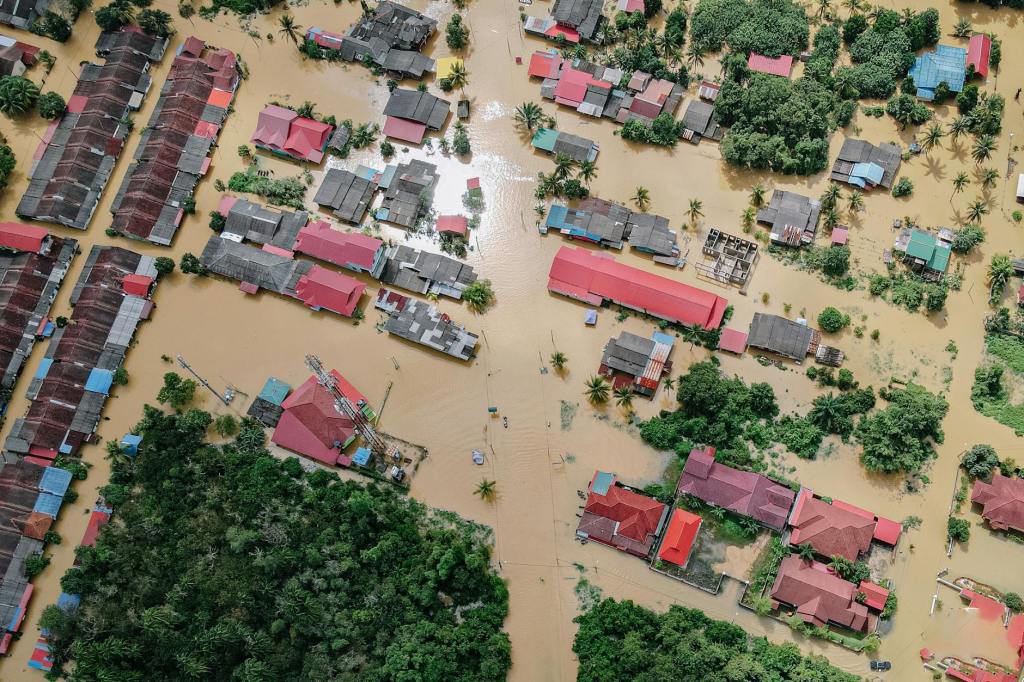
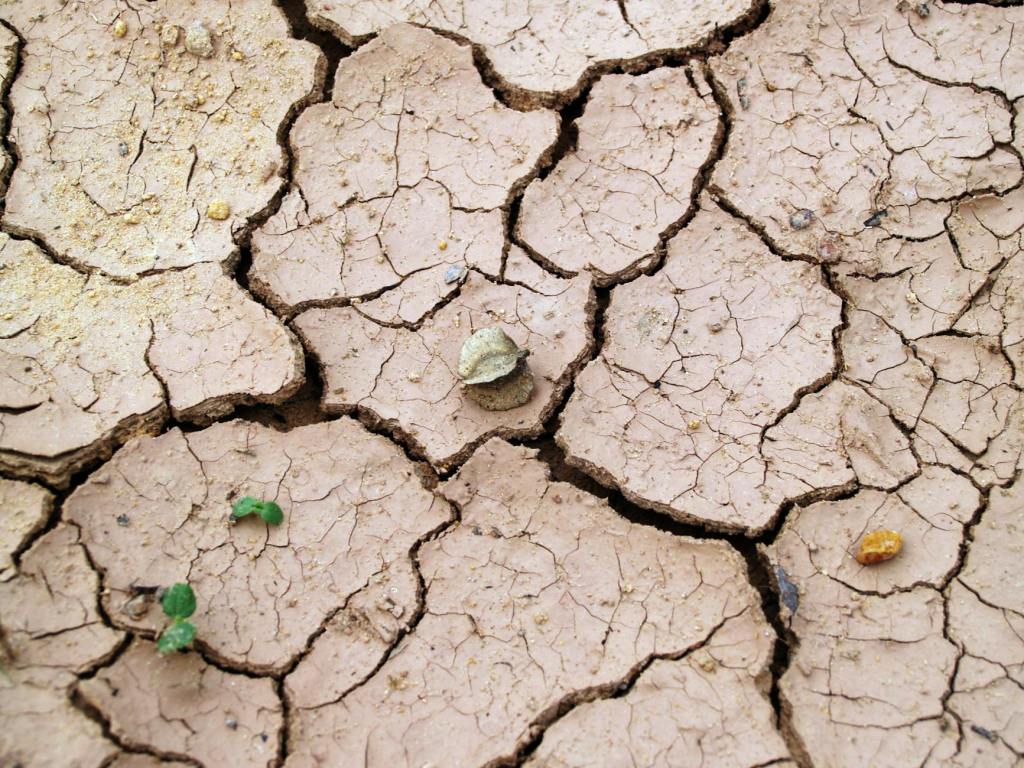
Let’s take one example. The glaciers of the mighty Himalaya-Karakoram system supply the water to some of the largest and most economically important rivers in the world. Among them are the Yangtse, the Mekong, the Brahmaputra and Ganges. All in all, they are the lifeblood of about 2 billion people in some of the world’s most progressive economic areas. And now those glaciers are melting-fast.[2] Leading to both short term floods and long term water shortages. At the moment this region is divided among three major powers_ Pakistan, India and China. All are nuclear-armed. All, being nations will attempt to defend their own local interest and local potentials, for that is what nations do. Each will reach for the water it must have to survive. And sooner or later these interests will clash. Mightily.

Now there will be a temptation among some of our readers, particularly those who hang out in the Dog and Duck, to say “let them get on with it- we can just sit it out” (That is a very polite way of conveying what they will say). But you can’t, gentle readers. As you may have noticed from your History, world wars are like beach parties, they tend to draw everyone in. Powers like Russia the USA and the EU will be forced to choose sides if only to protect their supply chains. Add to that the effects on migration numbers from all those refugees, world prices, supply chains and collapsing currencies and you have a mess to make the financial crash of 2008 look like, like-well one of those beach parties we alluded to above, really. Here then at last will come the consequences of doing nothing serious or substantail about global warming. And it will be well deserved by us all.

[1]https://www.theguardian.com/commentisfree/2026/jan/27/uk-government-report-ecosystem-collapse-foi-national-security?CMP=Share_iOSApp_Other

[2]https://iccinet.org/landmark-report-himalayan-glaciers-disappearing-two-thirds-faster-than-before/

#global warming #himalaya #glacier #ganges #flood #yangtse #drought #China #India #Pakistan #world war three

Pollution: Devi Sridhar is a breath of fresh air

If any one writer gets showcased more than any here, it’s probably Professor Devi Sridhar. Over the years we’ve showcased some pretty brainy sorts-Larry Elliott, Simon Kuper, Gillan Tett to name but a few, and we admire them all. But as this is still primarily a medicine and science blog, and because that’s Devi’s manor, she takes the biscuit. To say nothing of her acuity, which nowhere is more sharply displayed than in today’s article for the Guardian about the mortiferous effects of Air pollution.[1]

Once again we will do little more than hand you over to the Sage of Edinburgh, who will tell you all you need to know in just the right amount of words; not too many and neither too few. But check out this killer quote , for that is exactly what it is:

According to the World Health Organization, 99% of the global population is exposed to air-pollution levels that exceed its health-based guidelines and air pollution is now the world’s single largest environmental risk, linked to nearly 7 million premature deaths each year

Thanks Devi. You were a real breath of fresh air during the COVID-19 pandemic. You’re even more so now

[1]https://www.theguardian.com/commentisfree/2026/jan/27/air-pollution-kills-thousands-london-ulez

#pollution #premature death #heart disease #stroke #health #medicine

Can Cancer really save you from Alzheimer’s? Some great research, but also some caveats

Could having cancer really protect you from Alzheimers? For years epidemiologists  have noticed that  people who have had cancer — especially certain solid tumours — seem to have a reduced statistical risk of developing Alzheimer’s, but the mechanisms have been unclear. Now an exciting mew study suggests a possible explanation. Some cancer cells overproduce a protein called Cystatin C. This enters the brain where it interacts with the amyloid-β plaques which many researchers associate with the development of Alzheimer’s. Now, we can’t do better than put you onto Nature Briefing  Why Cancer and Alzheimer’s don’t mix. and their admirable analysis of a paper that originally appeared in then Journal Cell. It contains all the links and primary source matter you will need. But we’ll make a couple of observations( see below); for that is our wont.

Cystatin C, a protein produced by cancer cells, could partially explain why people who have had cancer have a lower risk of Alzheimer’s disease. In a study in mice, researchers found that the protein can infiltrate the brain and bind to the molecules that make up the hallmark brain plaques of Alzheimer’s disease. This interaction draws the attention of immune cells, which then degrade the plaques. If confirmed in humans, the findings could suggest a path toward new therapies for Alzheimer’s, says cancer researcher Jeanne Mandelblatt. Nature | 5 min read
Reference: Cell paper

Firstly the research is obviously tip-top and exciting- regular readers will know our love of an  unexpected truth hiding in plain sight .   There’s potential here for some really radical treatments for Alzheimer’s and goodness knows what other neurological conditions. However: so far, the work only pertains to mice. That’s usual: but as it scales up to humans, there’s many a slip ‘twixt cup and lip as the old adage would have it. What’s more,  the relationship between cancer and Alzheimer’s is complex and multifactorial — immune system changes, metabolic shifts, treatment effects and environmental and epigenetic factors may all have their say.  And Cystatin C itself has been implicated in both protective and harmful processes in the brain, depending on context.

And there is a deeper problem which has nothing to do with the earnest efforts of the researchers but everything to do with the less than acute hominins who surround them and who will read about this in popular daily newspapers and in mediabytes on dubious feeds. Ever prone to believe stories rather than weigh evidence some will conclude that “ a cure for Alzheimer’s has been found!” Others will ignore the old warnings of the logic teachers, ever suspicious of over hasty correlation between cause and effect. Yes, this is exciting research, But cautious people will expect no life changing applications any time soon.

#Cystatin C #cancer #alzheimer’s #neurology #brain #health #medicine

Neo Liberalism to National Market Liberalism: is this a Great Global Transformation?

“The nine most terrifying words in the English language are: ‘I’m from the government, and I’m here to help.’”

These words of  Ronald Reagan were  the  best and most concise  summary ever of the creed of Neoliberalism, which he shared so avidly with Margaret Thatcher. They called themselves Conservatives: but their belief was utterly radical, dominating all public discourse and transforming the world at least until the Great Crash of 2007-2008.

The radical nature of that transformation is laid out by Branko  Milanović in The Great Global Transformation. We have two reviews for you, one via the inestimable Nature Briefing [1] and the other by Ivan Radanović for the equally prestigious London Review of Books [2] As ever we won’t spoil these excellent pieces, humbly begging you to read both.  However we  could not resist this  passage from Radanović’s review. For it highlights the contradiction at the heart of the Reagan led project which would ultimately bring it crashing down:

For Branko Milanović and many others, China is at the centre of the current ideological paradigm shift. China’s rise, enabled by global neoliberalism, also made the end of global neoliberalism inevitable, by growing too big to be integrated into a global order whose rules are written by the US and its allies.

The Chinese saw a blindspot which the complacent westerners had missed: if you build an economy where the private sector is good and the state bad, how do you cope when foreign governments act like private companies? In Britain many utilities privatised by Thatcher are owned by foreign governments: is that Socialism or Capitalism? The shrewd rulers of China simply flipped this conundrum: the State and the Communist Party oversee the activities of a thriving private sector. Is that Socialism or Capitalism? In which case, what do words like “Conservative”, “Liberal” and Neo Liberal” really mean?

 Milanović worthily joins a list of critics of the Neoliberal project including Wilkinson and Pickett, Thomas Piketty,  and Will Hutton. It is easy to see Neoliberalism’s faults now, but it was very popular once. And before we rejoice its final passing, what follows may be very much darker indeed.

[1]“Nationalism grows on the terrain of never-satiated mass plenty and greed,” writes economist Branko Milanovic in his new book, The Great Global Transformation. Milanovic argues that globalization benefited previously poor populations, notably those in China, and the already rich, but left the middle and lower classes in countries such as the United States behind. The result is “the exponential growth of ‘nationalism, greed and property’”, writes sociologist Roberto Patricio Korzeniewicz in his review. “For Milanovic, greed is the iron cage of our times, and our future is bleak.”

Nature | 7 min read

[2] Branko Milanović – is neoliberalism being replaced by something more capitalist? – LSE Review of Books

The Great Global Transformation: National Market Liberalism in a Multipolar World. Branko Milanović. Allen Lane. 2025.

#politics #economics #Ronald Reagan  #free markets #capitalism #socialism #communism

Larry Elliott on Davos-and why things have gone wrong for all of us

Bewilderment, incomprehension, despair, rage; there’s plenty around at the moment, both inside the privileged halls of the Davos World Economic Forum and outside, where more humble folk gather. If you want to know why, then  a good place to start is this piece by  Larry Elliott of the Guardian . We don’t want to put a spoiler on Larry’s article: but we note the following, just to ease you in:

1 The old liberal rules-based order is creaking because it’s really, truly ancient: it was  set up in 1944 at the Bretton Woods conference

1.5 2026-1944 =82. That’s a lot of time

2 Emerging countries such as such as China, India and Brazil see no reason why the governance of anything need reflect the world as it was in 1944, rather than as it is in 2026.

2.5 What’s wrong with that?

3 Bretton Woods depended on two assumptions: that the United States was the worlds undisputed hegemon, and that its manufacturing, financial and intellectual leaderships were supreme. And Europe was second. Both of these assumptions have since become laughable.

4 It’s one thing to have a lovely, cosy, open, democratic, liberal,swinging, rules-based order or whatever, when everyone is doing well out of it.  But quite another in a world where the rich are getting richer while those on middle incomes and below are struggling, as Larry points out.

5 At Bretton Woods Keynes saw two institutions as vital: the World Bank and the IMF. The latter, he insisted, could only succeed if both creditor and debtor nations had a role to play. Especially the Creditors who by increasing imports, would help Debtor nations to overcome problems like balance of payments crises. Instead the US as the world’s creditor par excellence decided they weren’t going to risk their own surpluses to help anyone else.  Let them adjust for their feckless ways with budget cuts, austerity monetary discipline and lovely lower living standards!

5.5 There is a delicious irony here: for despite doing all that, the US has still wound up importing gargantuan quantities of goods from poorer countries, And its trade deficits,  government and private debts are equally a source of domestic shame and international amusement.  

6 Larry concludes “ A properly functioning rules-based system would remedy this defect.”

You know our thoughts on that gentle readers.(LSS 16 1 25 et seq) But this is not the time to blow our own trumpet. In fact, we forbid you to read those blogs! Instead click to Larry’s article. Read it. Read it again. And you shall understand.

[1] The ‘rules-based order’ Davos craves has bigger problems than Trump: it represents a world that no longer exists | Larry Elliott | The Guardian

#economics #international relations #world economic forum  #BRICS #finance #IMF #JM Keynes

How the Emperor Justinian tried to Make Rome Great Again-and failed

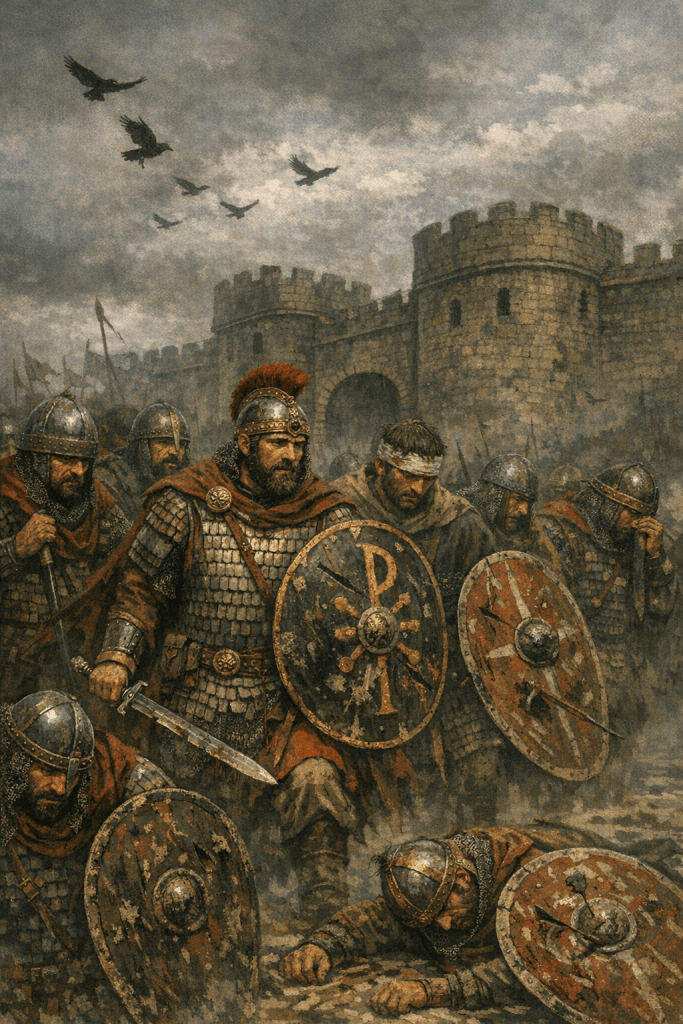
When the Emperor Justinian succeeded to the Roman Empire in 527 AD it was already well past its best. All the western provinces-lands we now call Britain, France, Spain, North Africa, even Italy and Rome-had been lost in the previous century. What was left, the Eastern Empire governed from Constantinople, was still the most powerful state, primus inter pares. But no longer the sole hegemon it had been. However Justinian had big ideas: he would fully restore the glory of the Roman Empire. He would rebuild all the cities and defences which had decayed. He would reunite all Christians under his leadership and build a series of new churches across his domain. Above all decided “to reconquer all the countries possessed by the Romans to the limits of the two oceans”[1]

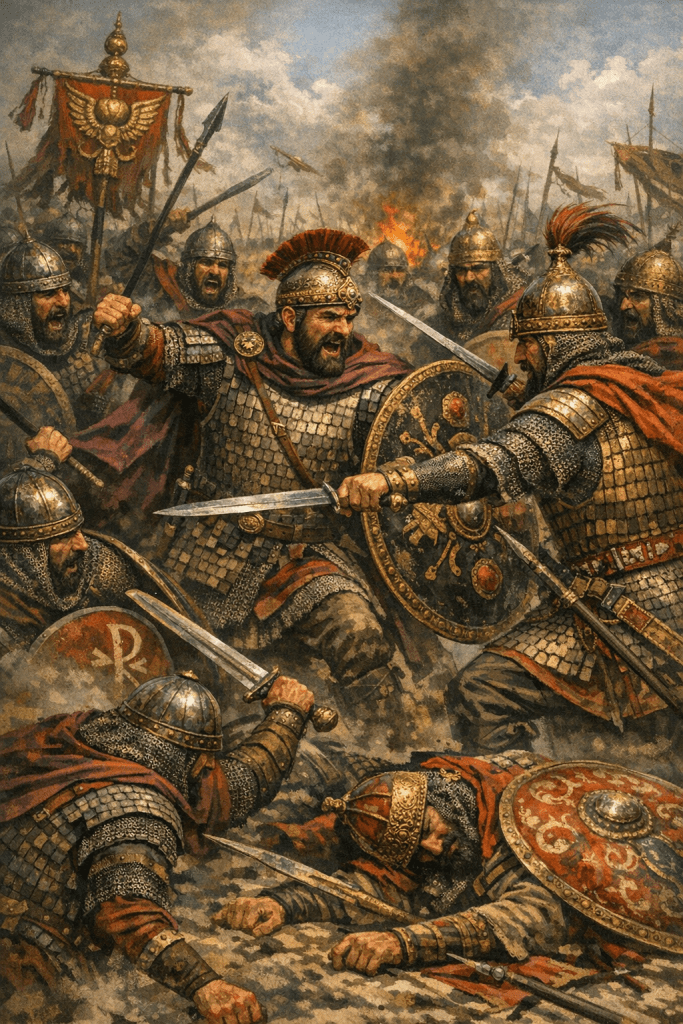
At first it went well. North Africa was captured, after a struggle. Forces were despatched as far as parts of Spain, with limited success. But it was in Italy that things started to go wrong. When Justinian became Emperor, Italy still had a thriving economy: there were big cities, Catholics, even a Pope. It was Roman in everything but name, being ruled by barbarian Ostrogoths. But names and titles mattered to Justinian. Accordingly he launched a series of wars (535-554 AD) designed to reconquer what he saw as Rome’s ancient homeland, and thereby restore its former glories. It didn’t matter that he had the help of able men like Belisarius and Narses: nor that he spent immense amounts of money and lost thousands of men; nor that he tried, and kept on trying. The contending armies swept back and forth across the peninsula, killing. taking and re-taking cities, destroying farms, aqueducts and roads. Even Rome suffered a long and disastrous siege. When the Empire finally prevailed, it wasn’t for long because the Lombards invaded in 568 AD and quickly wrested most of it away from Imperial control.

And back home did anyone thank their ambitious Emperor? Effectively, the citizens were bankrupted by the cost of all those armies, churches and palaces. Constantinople was torn apart by riots between sports fans. And the Christians, whom Justinian so loved, were divided into two irreconcilable factions, the Monophysites and the Orthodox, a feud which would have disastrous consequences for his successors. Of course Justinian was not to blame for the plague that struck the empire. But there was little left in the kitty to repair the ravages it unleashed., When Justinian died in 565AD he left the Empire larger-but fatally weakened in economic and human terms. He was a consequential Emperor, but he was a dreamer, unable to grasp that some things are truly lost forever. We shall leave the last damning words to Professor Davis

But the historian of Europe is forced to admit that by undertaking a reconquest of the West when all his forces were needed to defend his empire on the Persian and Slavonic frontiers, Justinian exhausted the resources of his Empire in pursuit of a policy which could not possibly succeed,[2]

Can anyone think of any modern parallels?

1] RH Davis A History of Medieval Europe Longman 1989 p 50

[2] ibid.p61

#roman empire #politics #economics #history #justinian #church #christianity

Debra MacKenzie on microplastics-and a master class in balanced reporting

So-are all our bodies full of microplastics, ready to reach out their oily hands and strike us all down with heart disease, tumours and goodness knows what else, or not? It’s a story we’ve covered before (LSS 9 4 24) and to be fair we even approached it with a certain moderation (LSS 12 3 25)

But who are we to advise you, when we can point you at once to the works of science journalist Debra Mackenzie, writing in the Guardian? [1] Not only is the science interesting. She also gets to the heart of why scientific controversies arise. In the case of microplastics, because one lot of researchers (medical folk) are approaching the problem one way. And another lot (analytical chemists) come from somewhere different, with other methodologies And this is ominous: as we have seen time and again, with CFCs, with tobacco and with fossil fuels, there could be interested parties who will be waiting to pounce on those disputes , to use them to allege that the science is not certain, that no action is needed. To quote one of the more chilling passages of Debra’s article

The plastics industry is more powerful than the CFC-makers were, and it has friends who know how to manufacture doubt. (Researchers I spoke to said that their papers have been denounced to journal editors by chemical industry figures who were not analytical experts.)

Now we at LSS are not medical experts. gentle readers. We do not know where the truth lies, although we may suspect. And, as in many scientific debates, there may be actors with differing levels of enthusiasm about where the evidence ultimately points. In any case, you should read Mackenzie’s article. You will learn a great deal more than just about plastics..

[1]https://onlinescientias.wordpress.com/wp-admin/post.php?post=13505&action=edit

#health #pollution #microplastics #science

Gold is King #3: How one of our old blogs really has come true!

Long standing readers (surely “long suffering”?-ed) will recall our two blogs Gold is King….(LSS 26 10 24) and ….Did we actually get something right?(LSS 23 4 25).Which severally predicted that a deteriorating security situation in general, and the policies of the Trump Administration in particular, would have two consequences. First that the dollar would start to lose reserve status. And that in the absence of any credible alternative, Gold would become the only reliable safe haven, and that its price had la way to rise. Now help has arrived from someone who really knows what they are talking about, the astute Richard Partington of the Guardian. Have a look at this killer quote from his succinct article The Dollar is losing Credibility: why Central Banks are scrambling for Gold: [1]

Investors – private and sovereign – believe their strategic reserves are no longer safe in dollar terms, as they can be confiscated overnight. The dollar is losing the credibility as the nominal anchor of the global monetary system because the Fed is losing credibility, and US Congress is losing its credibility.

And he explains how and why all the most astute and powerful people in the world can see nothing but gold as the only safe place in which to park their assets in the foreseeable future.

At the risk of blowing our own trumpet,(oh, come on!-ed) and in the sure and secure knowledge that we never offer financial advice, only economic commentary, and that wistful, we wish to adduce the following points:

1 Is LSS possessed of an eeerie mystic prescience? No. Even a stopped clock is right twice a day. But when real professionals like Partington confirm our thoughts, it means the facts are pretty grim indeed.

2 Isn’t this a lot of log rolling by the Guardian, which has a bit of a reputation for being a Lefty at times? No-all commentators are starting to agree, including a pretty astute lot at the Financial Times. And if you believe they are Lefties, then you might as well believe in a Flat Moon and the Abominable Yeti.

3 Is the dollar finished as the world’s reserve currency? Not yet. But its fall from 66% of global reserves to 57% in a single decade suggests all is not as healthy as it once was and that alone gives cause for concern.

4 So why has another currency not replaced the dollar? The experts we consulted think that Europe is too weak for the Euro to be a runner. While China’s yuan is just not convertible, and its political system is so different, that they rule it out altogether

5 What about all these ‘ere funny digital currencies, wotsit? We don’t even go there, we know nothing about them.

6 Is this more Trump-bashing? No. We think Mr Trump has a right to act in what he believes is America’s interests. We merely report the consequences of what happens when everybody acts like that.

7 Does LSS like what’s happening? No. we hate it. A world in which the principle economic activity becomes digging a metal out of the ground and then burying underground again somewhere else is operating far, far below its optimal economic potential. It would do much better with a single reserve currency, peaceful trade and stable international relations based on Law. But some of you will have found our thoughts on that matter elsewhere in our sequence of blogs.

[1]https://www.theguardian.com/business/2026/jan/16/the-dollar-is-losing-credibility-why-central-banks-are-scrambling-for-gold?CMP=Share_iOSApp_Other

#dollar #gold #economics #trade #currencies #international relations

Friday Night: How about a Glass of Sherry?

Southwest Spain, the Costa de la Luz, that tucked-away corner where the Atlantic meets the mouth of the Guadalquivir is off the beaten track as far as many tourists are concerned. Its empty marshes and estuaries, flat low farmlands and ancient cities as about as far as one can imagine from the concrete canyons of the Costa del Sol, Benidorm and all those tattoos. Which is odd because this region was civilised for thousands of years while all the beer and paella  joints were tiny  fishing hamlets. Famous too, for many things. And one of them is Sherry wine  to which we devote today’s little blog

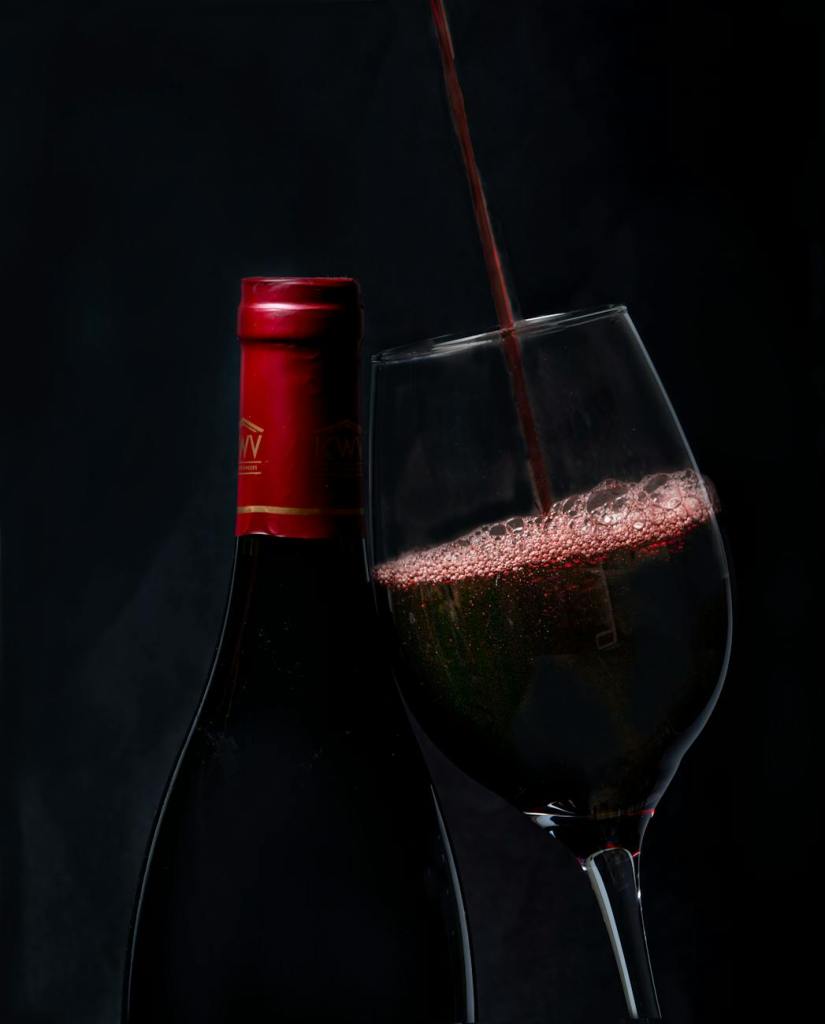
Sherry from the D.O. Jerez–Xérès–Sherry spans a small but wildly expressive family of wines, all born in the “Sherry Triangle” of Jerez, Sanlúcar, and El Puerto. Fino is the palest and driest: crisp, saline, aged under flor, tasting of almonds and sea‑spray—drink it fridge‑cold with olives, almonds, jamón, or seafood. Manzanilla, made only in Sanlúcar, is even more briny and delicate, perfect with fried fish or prawns. Amontillado begins life under flor but finishes oxidatively, giving a haunting mix of hazelnut, caramel, and dried herbs; serve cool with artichokes, consommé, or mushrooms. Oloroso is fully oxidative—rich, nutty, sometimes leathery—best slightly cool with game, stews, or hard cheeses. Palo Cortado sits mysteriously between Amontillado and Oloroso: elegant, aromatic, and complex, a contemplative wine for roasted meats or simply a quiet evening. Sweet styles—PX and Moscatel—are luscious, raisiny, and dessert‑like, wonderful with blue cheese or poured over ice cream  But we found this excellent site called the Sherry Region [1] will tell you everything you want to know, and for which we have no room here, including history, types of wine and lots, lots more about this fascinating part of Iberia.

No trip to the Sherry Country would be complete without a trip around one of the fascinating  Bodegas  belonging one of the different companies These are not tiny lodges, but large production facilities which face each other across the streets like the  premises old car companies did  in Birmingham in the 1970s. We dare not advertise: but the one which  we often choose offers wine trains, guided tours and huge vaults with ancient barrels containing the chalked autographs of some of the most famous people who have ever lived in the last 126 years. Yes they liked a drop of this stuff too. And you will find out why when you attends the generous  tasting at the end, which can become convivial indeed. We will close with this warning: don’t go to the one in the morning, or that’s the rest of the day written off.

[1] Sherry Region | El Marco de Jerez | Sherry Wines Origin – Sherry Wines

#Spain #Jerez de la Frontera #Cadiz #sherry #wine #Atlantic #tourism

Do the Twistronics-and change the world

What happens if you take two sheets of graphene and rotate one slightly relative to the other?” It’s a question all of us must have asked ourselves at one point or another (it is?-ed) but never really found time to answer. But two remarkably intelligent  men did: Allan MacDonald, a theoretical physicist who posed it; and Pablo Jarillo‑Herrero who answered it by building ultra‑clean, precisely controlled graphene heterostructures –you know: the kind of devices where quantum subtleties become visible. Well, we said they were clever! Their work, and the prize which they won for it are admirably summarised by the erudite Selva Vargas Reátegui for El País [1]

Her excellent article contains much more on the details, so read it. Suffice it to say, the discovery not only revealed all sorts of weird and wonderful properties in graphene. It actually created a whole new field of learning: Twistronics.  Because researchers soon learned to twist not just bilayers as in graphene, but trilayers, multilayers, and heterostructures of many 2D materials. The field exploded because twist angle becomes a new starting point for designing quantum matter. While still early, the work hints at possibilities such as: designer superconductors, quantum simulation platforms, ultra‑sensitive sensors and  novel electronic devices based on correlated phases. Ok we are a tad shaky on one or two of these ourselves, but if it helps build something to do the ironing, we’re all in.

But the real point for us is conceptual. Changing the geometry alone can utterly change the properties of a material. It feels a bit like the time when some unknown genius in Old Mesopotamia started mixing tin with copper. As small, as unexpected and as potentially world changing. Oh, and another point: economics. The more you spend on basic science and research, the more your chances rise of repeating the trick somewhere else. Leaders of the world, you have nothing to lose but your accountants.

Premio Fronteras para los descubridores del ‘ángulo mágico’ que genera supermateriales | Ciencia | EL PAÍS English speakers: you need to hit the translation button

#Twistronics #graphene #quantum physics #geometry #bronze age #materials science